Gaiters are essential equipment for hiking, trekking, and mountain walks, helping protect your legs and feet from water, snow, mud, sand, and small stones. During mountain hikes, gaiters help prevent moisture and debris from entering your boots, making the walk more comfortable. Especially on rainy, snowy, and muddy routes, using hiking gaiters helps keep your feet dry and clean. Properly selected gaiters provide additional protection and comfort on challenging terrain.
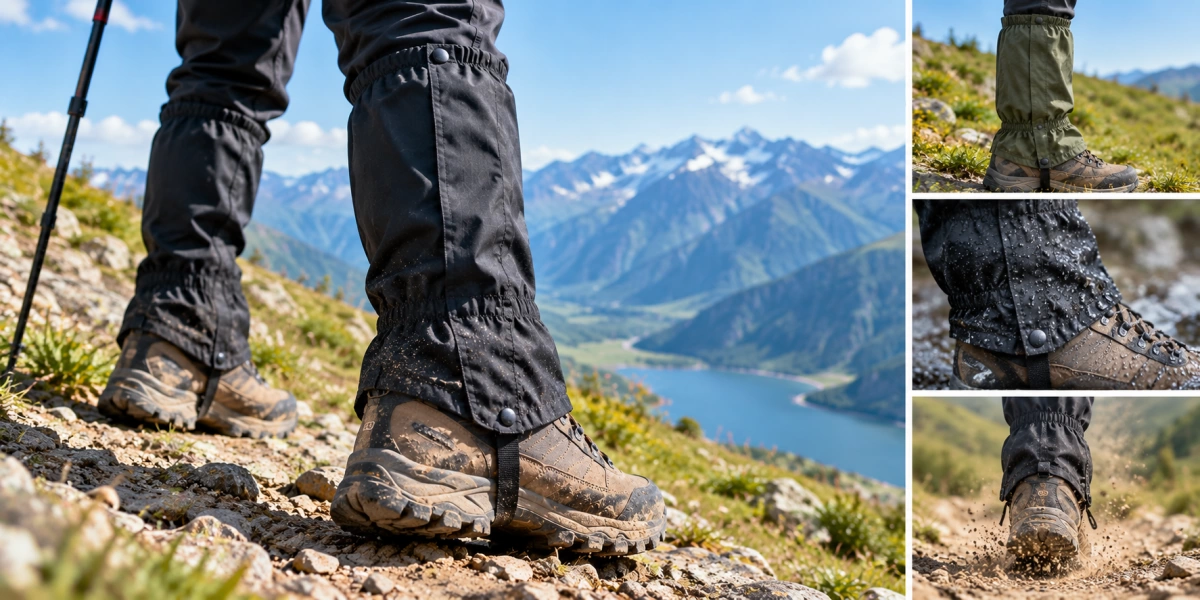
A small piece of equipment can make a big difference in the mountains!
Mountain hiking and trekking are not just about enjoying beautiful landscapes. Changing weather conditions, mud, snow, rocky trails, dense vegetation, and varied terrain require the use of appropriate equipment. One often overlooked but highly useful piece of hiking gear is the gaiter. Gaiters extend from the ankle to the upper part of the calf and cover the gap between your boots and trousers. They help prevent water, snow, mud, sand, and small stones from entering your boots. So, why are gaiters important for hiking and outdoor walks?
1. Protection from Water and Mud
During rainy weather, on muddy trails, through wet grass, and when crossing small streams, water and mud can enter your boots from the upper part. Even if your boots are waterproof, water can still get in through the opening around the ankle.
Gaiters cover this gap and help reduce the amount of water and mud entering your boots. This feature is especially useful during long trekking trips and in wet weather conditions.
2. Additional Protection from Snow and Wind
On snowy mountain routes, snow getting inside your boots can cause discomfort and make your feet wet. Gaiters protect the upper part of your boots and lower legs from direct contact with snow.
They also provide an additional protective layer in cold and windy conditions. Although gaiters are not primarily designed for thermal insulation, they help reduce direct exposure of your legs to snow and wind.
3. Protection from Thorns and Dense Vegetation
Mountain and forest trails are not always wide and easy to follow. Sometimes you may need to pass through dense vegetation, thorny plants, and off-trail slopes.
In such areas, gaiters provide additional protection for your lower legs and can help prevent your trouser legs from getting caught or torn. They also help reduce direct contact between your skin and thorns, branches, and other vegetation.
4. Prevents Sand and Small Stones from Entering Your Boots
On rocky, gravelly, and sandy trails, small stones entering your boots can be one of the most common sources of discomfort during a hike.
This problem is particularly noticeable during long descents and on loose, rocky slopes. Gaiters cover the opening of your boots and help prevent sand, gravel, and small stones from getting inside.
This reduces the need to stop frequently, remove your boots, and clear out the stones during your hike.
5. Additional Protection from Ticks and Other Insects
During spring and summer hikes, you may encounter ticks and other insects in tall grass, forests, and subalpine meadows.
Gaiters cover the gap between your trouser legs and boots, making it more difficult for insects to reach your legs. However, gaiters do not provide complete protection against ticks. In areas with tall grass and forests, it is also important to check your body regularly, wear appropriate clothing, and take other recommended precautions.
What Should You Consider When Choosing Gaiters?
When choosing gaiters for hiking and trekking, the first thing to consider is the type of terrain and conditions you will encounter. Waterproof and durable models may be more suitable for snowy and rainy environments, while lightweight and breathable models can be a better choice for warm weather and dry trails.
When choosing gaiters, it is useful to consider the following features:
- Waterproof or water-resistant material;
- Durable and tear-resistant fabric;
- A secure instep strap for attaching the gaiters to your boots;
- A properly fitting size;
- A reliable zipper and fastening system;
- Material suitable for the season and type of route.
Gaiters Are Not Just for Winter
When people think of gaiters, they often associate them primarily with snow and winter hiking. In reality, gaiters can be useful hiking equipment throughout the year.
They can be used in winter to protect against snow and wind, in spring against mud and rain, and in summer against dust, sand, tall grass, and dense vegetation. Therefore, when preparing for a long or challenging mountain hike, it is worth considering whether gaiters are suitable for your planned route.
```