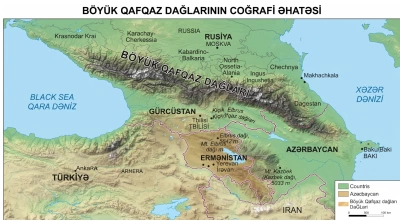
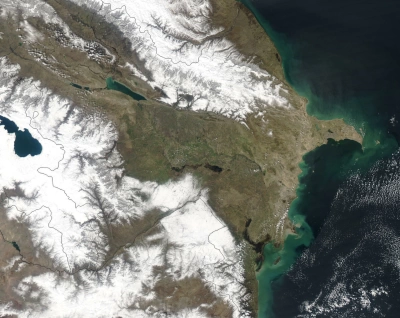
A complete guide to preparing for Mount Bazarduzu, Azerbaijan’s highest peak at 4,466 metres, covering preparation, routes, and equipment. Learn essential information about physical fitness, acclimatization, mountain conditions, and safety guidelines for the Bazarduzu expedition. This guide is designed for hikers and mountaineering enthusiasts planning to climb Mount Bazarduzu.
Have you decided to climb Mount Bazarduzu, the highest peak in Azerbaijan? Proper preparation for the expedition is one of the key factors in ensuring a successful and safe summit ascent.
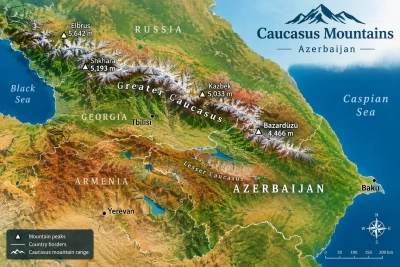
At 4,466 metres, Bazarduzu is the highest point in Azerbaijan. Although the route to the summit is not among the most technically demanding mountaineering routes, it requires good physical endurance, the ability to cope with high altitude, preparation for long hikes, and readiness for changing weather conditions.
In this article, we explain how to prepare for the Bazarduzu expedition, what level of physical fitness is required, what equipment you should bring, and what to expect on summit day.
Do You Need Special Experience to Climb Mount Bazarduzu?
You do not need to be a professional mountaineer or have specialised technical climbing skills to reach the summit of Bazarduzu. However, Bazarduzu is a high mountain standing at 4,466 metres, and a successful summit attempt requires good physical fitness, appropriate equipment, and, most importantly, an experienced guide who can correctly assess mountain conditions.
Most of the Bazarduzu route does not involve rock climbing or technically difficult passages. Especially after June, when the snow cover begins to decrease, paths gradually form along the tracks left by previous climbers. In clear weather and favourable conditions, it is possible to follow these paths towards the summit.
However, one important point must be understood: a visible trail in the mountains does not always mean that the route is safe.
Weather conditions on high mountains such as Bazarduzu can change very rapidly. Sometimes, in just 5–10 minutes, clear skies can give way to fog, strong winds, and poor visibility. In such conditions, a trail that was previously easy to follow may become difficult to identify, making it impossible to navigate safely by relying solely on footprints.
This is often where the danger begins.
At first glance, Bazarduzu may seem relatively easy: there is a trail, footprints are visible, and the weather is good. As a result, some people decide to attempt the summit without adequate preparation or with guides who lack the necessary skills to assess mountain conditions properly.
However, when mountain conditions change, the situation can become completely different.
The main role of an experienced mountain guide is not simply to lead the group along a trail. A guide continuously assesses the weather, visibility, snow and ice conditions, route safety, and the physical condition of each participant, adjusting the plan whenever necessary.
Sometimes, the right decision is not to continue towards the summit but to turn back.
Therefore, when preparing for the Bazarduzu expedition, it is not enough to ask only, "Is the route difficult?" More important questions include:
-
Will we be able to navigate the route if the weather changes?
-
Can the guide correctly assess mountain conditions?
-
Is the group's physical condition suitable for the summit ascent?
-
What equipment is required in snowy and icy conditions?
-
Will the decision to turn back be made in time if conditions become dangerous?
Climbing Bazarduzu is achievable, but the fact that a mountain looks easy does not mean it is safe.
With good physical preparation, appropriate equipment, and an experienced local mountain guide, the Bazarduzu expedition can become both a safe and unforgettable summit experience.
The goal in the mountains is not simply to reach the summit. The real objective is to reach it safely and return safely as well.
What Level of Physical Fitness Is Required for the Bazarduzu Expedition?
You do not need to be a professional athlete to climb Bazarduzu. However, you must be prepared for a long and physically demanding mountain hike at an altitude of 4,466 metres.
The main objective is not to run fast. It is to maintain a steady pace over an extended period, manage your effort on uphill sections, and distribute your energy effectively throughout the day.
We recommend starting your physical preparation at least several weeks before the Bazarduzu expedition.
How Should You Train?
Being physically active 3–4 times a week can produce good results. You can include the following activities in your training programme:
-
Long-distance walks;
-
Trekking on uphill and downhill terrain;
-
Running or brisk walking;
-
Climbing stairs;
-
Cycling;
-
Mountain hikes with a backpack.
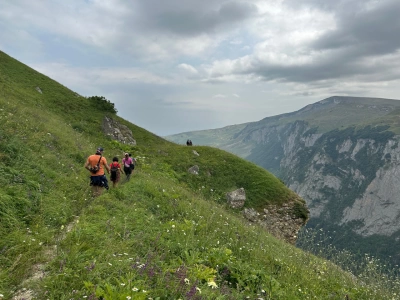
Walking on uphill terrain is particularly beneficial when preparing for Bazarduzu. During the summit ascent, your legs carry much of the workload, and you need to gain elevation over an extended period.
How Much Should You Train?
If you exercise regularly, weekend mountain hikes of 10–15 km can be good preparation. Whenever possible, choose routes with elevation gain and gradually increase the distance you cover.
You can assess your preparation for Bazarduzu using the following benchmark:
If you can complete a 10–15 km mountain hike at a comfortable pace, manage uphill sections without becoming completely exhausted, and move around normally the following day, this is a good indication of your physical readiness.
Of course, everyone's physical condition is different. The goal is not to push yourself to the maximum during training but to develop long-lasting endurance.
What Level of Physical Fitness Is Required for the Bazarduzu Expedition?
You do not need to be a professional athlete to climb Bazarduzu. However, you must be prepared for a long and physically demanding mountain hike at an altitude of 4,466 metres.
The main objective is not to run fast. It is to maintain a steady pace over an extended period, manage your effort on uphill sections, and distribute your energy effectively throughout the day.
We recommend starting your physical preparation at least several weeks before the Bazarduzu expedition.
How Should You Train?
Being physically active 3–4 times a week can produce good results. You can include the following activities in your training programme:
-
Long-distance walks;
-
Trekking on uphill and downhill terrain;
-
Running or brisk walking;
-
Climbing stairs;
-
Cycling;
-
Mountain hikes with a backpack.
Walking on uphill terrain is particularly beneficial when preparing for Bazarduzu. During the summit ascent, your legs carry much of the workload, and you need to gain elevation over an extended period.
How Much Should You Train?
If you exercise regularly, weekend mountain hikes of 10–15 km can be good preparation. Whenever possible, choose routes with elevation gain and gradually increase the distance you cover.
You can assess your preparation for Bazarduzu using the following benchmark:
If you can complete a 10–15 km mountain hike at a comfortable pace, manage uphill sections without becoming completely exhausted, and move around normally the following day, this is a good indication of your physical readiness.
Of course, everyone's physical condition is different. The goal is not to push yourself to the maximum during training but to develop long-lasting endurance.
Is Walking Around the City Enough?
Ordinary city walks provide some benefits, but they are not sufficient preparation for the Bazarduzu expedition.
Walking around a city for several hours is not the same as climbing uphill for an extended period in the mountains. Mountain terrain, prolonged physical exertion, and changing weather conditions place additional demands on your body.
Another particularly important factor is altitude.
Baku is located approximately 28 metres above sea level, whereas the summit of Bazarduzu stands at 4,466 metres. This means your body must cope with a substantial change in altitude during a relatively short period while attempting the summit.
As altitude increases, the partial pressure of oxygen in the air decreases. Some people may experience shortness of breath, headaches, fatigue, weakness, and reduced physical performance. Being in good physical shape does not guarantee that you will adapt to altitude without difficulty. Every person responds differently to high altitude.
Acclimatising Before Bazarduzu
If you have never been above 4,000 metres before, trekking at different elevations before the Bazarduzu expedition can be beneficial both physically and psychologically.
For example, you can start by hiking at elevations of:
2,000 m → 3,000 m → 3,500 m
Gradually working your way up to these elevations can help you prepare for the expedition.
This does more than improve your physical fitness. It also helps you understand how your body responds to altitude.
For example, knowing in advance how you feel at 3,000 or 3,500 metres, how your breathing changes, how you respond to fatigue, and what pace allows you to move comfortably can help you feel more confident during the Bazarduzu expedition.
However, it is important to understand that having previously reached 2,000 or 3,500 metres does not guarantee that your body will adapt to 4,466 metres without difficulty. These hikes are useful for gaining preparation and experience, but they cannot guarantee successful acclimatisation.
Therefore, when preparing for Bazarduzu, do not rely solely on gym workouts or walking around the city. If possible, go on actual mountain hikes at different elevations and observe how your body responds to altitude.
One of the best ways to prepare for Bazarduzu is to gain mountain experience in advance.
And remember: if you feel unwell at altitude, never hide it from your guide. The summit can always wait. The main objective is to climb safely and return in good health.
The Most Important Thing on Summit Day
On summit day at Bazarduzu, the main objective is to avoid exhausting yourself during the first few hours. A slow, steady pace is often more effective than starting too fast and running out of energy later.
Follow your guide's pace, drink water regularly, and take short breaks when necessary.
Remember that the Bazarduzu expedition is not a race. The goal is not to reach the summit as quickly as possible but to manage your energy effectively, reach the 4,466-metre summit safely, and return safely.
If you are not accustomed to long hikes, begin training gradually before the expedition. If you have any health conditions or physical limitations, it is advisable to consult a doctor before participating in a high-altitude expedition.
The Bazarduzu route starts from the village of Khinalig.
Khinalig is not only one of Azerbaijan's highest inhabited settlements but also one of the main starting points for the Bazarduzu expedition.
The main stages of the route are:
Baku → Guba → Khinalig → 4x4 transfer to Shahyaylag → Yatukhchay Valley → Trekking → Camp at 3,250 m → Bazarduzu Summit at 4,466 m → Camp → Khinalig → Baku
The main objective of this itinerary is to gain as much elevation as practical on the first day and prepare for summit day.
How Many Days Does the Bazarduzu Expedition Take?
The standard Bazarduzu summit expedition usually takes 3 days. During this period, we travel from Baku to Khinalig and then to the high-altitude camp. The following day, we climb Bazarduzu at 4,466 metres, and on the third day, we return to Baku.
Day 1 – Baku → Guba → Khinalig → Bazarduzu Base Camp
The expedition begins in Baku in the morning. We travel towards Guba and then continue to the village of Khinalig.
After Khinalig, the off-road section of the expedition begins. We travel in a 4x4 vehicle to the end of the accessible road, at approximately 2,900–2,950 metres.
From here, we continue on foot.
After approximately 4 km of mountain hiking, we reach the Bazarduzu base camp at an elevation of 3,250 metres.
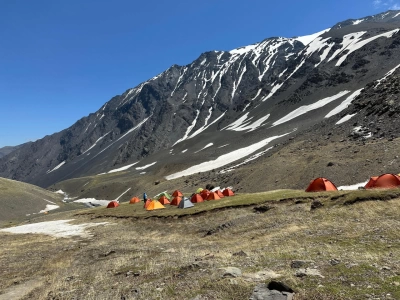
Upon arrival, participants settle in, rest, and prepare for the summit ascent the following day. The night is spent in tents at approximately 3,250 metres.
The main objective of the day is to gain elevation at a comfortable pace, settle into camp, and prepare the body for the longer summit hike ahead.
Note: The driving and hiking sections of the Bazarduzu expedition may vary depending on weather and road conditions. In the mountains, safety always takes priority over following the original itinerary exactly.
Day 2 – Bazarduzu Summit Day
The second day is the most important and physically demanding day of the expedition: summit day on Bazarduzu.
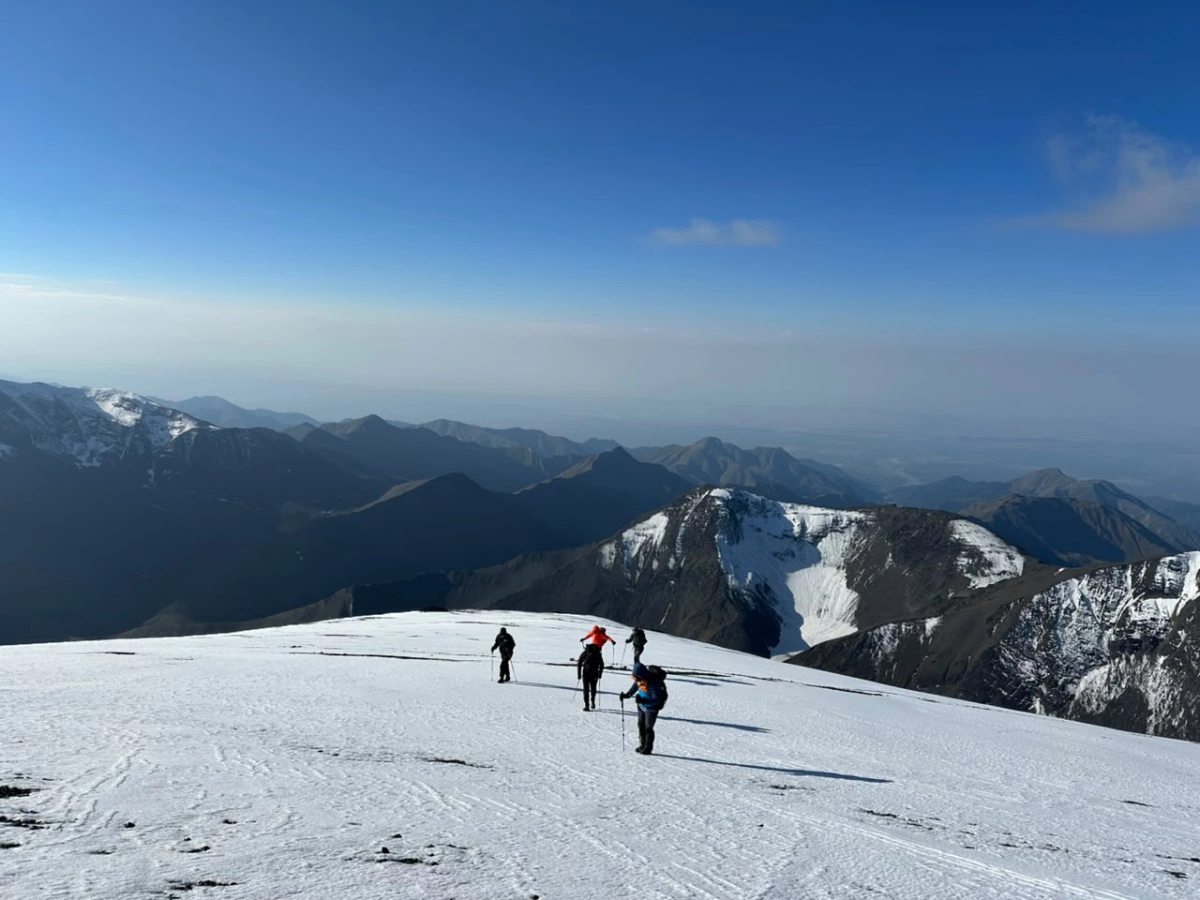
We leave the camp early in the morning, depending on the weather and route conditions. Ahead lies a long ascent to Bazarduzu at 4,466 metres, followed by the descent back to camp.
The duration of the summit hike may vary depending on weather conditions, snow and ice, visibility, and the group's physical fitness. For this reason, it is not possible to determine the exact duration of summit day in advance.
The objective is not to move quickly but to maintain a steady pace and manage energy efficiently. As altitude increases, breathing may become more difficult and progress may slow. The guide continuously assesses the group's condition and the mountain environment to determine an appropriate pace.
If weather and route conditions are favourable and it is safe to continue, we reach the 4,466-metre summit, take a short break and photographs, and then begin descending towards camp.
Reaching the summit is only one part of the expedition. Returning safely to camp along the same route is equally important.
After returning to camp, we rest, eat, and spend another night in tents at an elevation of 3,250 metres.
The principle of this day is simple: the summit is the objective, but safety comes first. If the weather or route conditions become dangerous, the decision may be made to turn back instead of continuing towards the summit.
Day 3 – Camp → Khinalig → Baku
In the morning, we pack up the camp and descend towards Khinalig.
After a short rest in Khinalig, we return to Baku by vehicle.
What Is the Bazarduzu Route Like?
Why Is Acclimatisation Important on the Bazarduzu Expedition?
Acclimatisation is the process by which the body adapts to altitude and the lower oxygen pressure found there.
The summit of Bazarduzu stands at 4,466 metres. At this elevation, atmospheric pressure is significantly lower than at sea level, meaning that the body receives less oxygen with each breath. As you climb higher, breathing may become more difficult, physical performance may decrease, and fatigue may develop more quickly.
Some people may experience headaches, weakness, dizziness, loss of appetite, disturbed sleep, and shortness of breath while adapting to altitude. These reactions vary from person to person, and being physically fit does not guarantee that you will adapt to altitude without problems.
How Can You Prepare Before Travelling to Bazarduzu?
If you have not previously hiked in high mountains, it is useful to gain experience by hiking at elevations of 2,000, 3,000, and, where possible, 3,500 metres before the expedition.
For example, trekking around Khinalig and on nearby high-altitude mountain routes allows you to experience these conditions in advance and understand how your body responds to them.
These hikes cannot guarantee that you will adapt successfully to the altitude of Bazarduzu, but they can help you better understand your physical capabilities and improve your psychological readiness for high-altitude conditions.
How Does Acclimatisation Work During the Bazarduzu Expedition?
In our standard expedition programme, we ascend from Khinalig on the first day and spend the night at a camp located at approximately 3,250 metres. This gives the body an opportunity to rest at a higher elevation than the previous night.
The following day, we continue towards the summit at 4,466 metres.
However, it is important to understand that spending one night at altitude does not mean that full acclimatisation has taken place. Acclimatisation is an individual process, and the rate at which it occurs varies from person to person.
For this reason, you must inform your guide about how you feel throughout the expedition. Headaches, severe weakness, nausea, dizziness, or serious breathing difficulties must never be concealed.
Feeling unwell in the mountains is not a sign of weakness. For an experienced guide, knowing about a participant's condition in time is one of the most important factors in making the right decision.
The most important rule is simple: the summit is never more important than your health and safety.
The objective of the Bazarduzu expedition is not simply to reach 4,466 metres. It is to assess mountain conditions correctly, take your own abilities into account, reach the summit safely, and return safely.
An Important Note About the Duration
We recommend travelling from Baku and spending the first night in Khinalig before beginning the expedition the following day. This option allows your body to begin adapting to Khinalig's elevation of approximately 2,170 metres, recover from the long journey, and start the high-mountain expedition in better condition.
In this case, the entire expedition takes 4 days:
Day 1: Baku → Guba → Khinalig, overnight in Khinalig
Day 2: Khinalig → Bazarduzu base camp
Day 3: Bazarduzu summit → Base camp
Day 4: Base camp → Khinalig → Baku
In practice, however, most of our guests join the Bazarduzu expedition over a weekend. Since taking an additional day off work is not always possible, we organise the standard programme over 3 days.
For physically well-prepared groups with experience in high-altitude trekking, it is also possible to complete the expedition in 2 days, starting from Baku. This is a more intensive itinerary and is only offered when the group's physical fitness, weather conditions, and route conditions allow it.
For us, the group's safety, acclimatisation, and proper assessment of route conditions are more important than the number of days the expedition takes.
The Main Stages of the Bazarduzu Route
The Bazarduzu summit hike is not simply a matter of setting off and climbing directly to the summit in one day. The expedition consists of several main stages, each with its own physical and practical considerations.
Stage 1 — From Khinalig Village to the Start of the Mountain Road
The expedition begins in Khinalig. Located at approximately 2,170 metres, the village is one of the main starting points for the Bazarduzu expedition.
From here, we travel higher up the mountain in a 4x4 vehicle. The mountain road ends at approximately 2,900–2,950 metres. The 25 km drive takes around 2 hours.
The main objective of this stage is to gain as much elevation as possible by vehicle and reach the starting point of the hike.
Stage 2 — From the End of the 4x4 Road to the High-Altitude Camp
Above approximately 2,900–2,950 metres, the expedition continues on foot.
Participants hike approximately 4 km along a mountain trail, carrying their personal backpacks, to reach the camp at an elevation of approximately 3,250 metres.
This stage is particularly important because the effects of altitude become more noticeable. It is essential to manage your pace carefully and conserve energy for summit day. This section follows the banks of the Yatukhchay stream, with occasional stream crossings and sections over patches of ice. Participants carry their own personal loads during this stage.
Stage 3 — Overnight at the High-Altitude Camp
We establish camp at approximately 3,250 metres. Participants rest here and prepare for the summit hike the following day.
Spending the night at camp is an important stage for both physical recovery and the body's adjustment to higher elevations.
Since summit day starts very early, it is important to plan the evening rest properly. After arriving at camp, having an early dinner and taking a short walk above the camp may help you settle down and sleep more comfortably at night.
Stage 4 — Summit Ascent: From 3,250 to 4,466 Metres
This is the main and most demanding stage of the Bazarduzu expedition. The summit ascent usually begins early in the morning. The difficulty of the route may vary depending on snow and ice conditions, the weather, visibility, and the physical condition of the group.
After leaving the camp at 3,250 metres, we gradually ascend towards the summit. To better understand this part of the journey, the ascent can be divided into several smaller stages.
3,250 m — Departure from Camp
We leave camp early in the morning and begin moving towards the Bazarduzu summit. Temperatures can be low at this time, making a headlamp an essential piece of equipment.
The main objective during the initial section is not to increase speed but to manage energy effectively and maintain a steady pace.
The Spring at the Foot of the Mountain
One of the first sections of the summit route leads to a beautiful spring at the foot of the mountain. This is a suitable place to take a short break, drink water, and prepare for the next section.
After this point, one of the more physically demanding sections of the route begins.
The Switchbacks — The Section That Requires the Most Patience
After the spring, the route begins to climb in a series of switchbacks. This is one of the sections where many participants become particularly tired and experience the greatest psychological challenges.
As the elevation increases, breathing can become more difficult, and every step may require more energy. It is therefore particularly important not to rush, to maintain a steady pace, and to conserve energy throughout this section.
4,000 m — Rest Point
After completing the switchbacks, we reach a rest point at approximately 4,000 metres.
This is an important stage of the expedition. By this point, participants have completed one of the longer and more demanding sections of the route. We take a short break, assess everyone's condition, and continue towards the summit.
Reaching 4,000 metres does not guarantee that you will reach the summit, but successfully completing this section is an encouraging sign of progress towards the objective.
4,100 m — Point Where Mobile Phone Signal Becomes Available
At the next stage, we reach an area at approximately 4,100 metres where mobile phone reception becomes available again.
From this point, the Bazarduzu summit may become more clearly visible. Seeing the 4,466-metre summit ahead can provide additional motivation, both physically and psychologically.
After a short break, we continue towards the final section.
4,200 m — The Final Ascent to the Summit
Above approximately 4,200 metres, we enter the final and more demanding section leading to the summit.
At this stage, the effects of altitude become more noticeable, and we adjust our pace to the condition of the group. Weather, snow, and ice conditions can significantly affect the difficulty of this section.
4,466 m — Bazarduzu Summit
Finally, after completing all these stages, we reach the summit of Bazarduzu at 4,466 metres.
This is the most memorable moment of the expedition. We spend a short time at the summit, rest, take photographs, and prepare for the descent according to the weather conditions.
However, one important point must not be forgotten: reaching the summit is not the end of the expedition. Returning safely is an equally essential part of the climb.
Every metre of the Bazarduzu route feels different. The ascent from 3,250 metres continues through the spring, the switchbacks, the rest point at 4,000 metres, the mobile signal area at 4,100 metres, the final ascent from 4,200 metres, and finally the 4,466-metre summit. Each stage requires patience, a steady pace, and effective energy management.
Stage 5 — Descending from the Summit to Camp
Reaching the summit is not the end of the expedition. Returning safely from the 4,466-metre Bazarduzu summit to camp is one of the most important parts of the entire journey.
After a short break and photographs at the summit, we begin descending towards camp along the same route. The descent is usually faster and physically less demanding than the ascent. However, this does not mean it is risk-free.
In fact, accidents and falls during mountain hikes can occur during the descent, when participants are tired and their concentration has decreased. Fatigue after reaching the summit, the temptation to descend quickly, and slippery snow or rocky surfaces make it particularly important to remain alert.
For this reason, it is important not to rush during the descent, to watch your footing carefully, and to follow the guide's instructions. Keeping the group together and monitoring the condition of each participant are essential for safety.
When a steady pace is maintained, the descent from the summit to camp is usually considerably faster than the ascent. However, the main objective is not to descend as quickly as possible but to reach camp safely from the summit.
The success of the Bazarduzu expedition is not measured solely by reaching 4,466 metres. True success means bringing the entire group safely down from the summit and back to camp.
Stage 6 — Returning from Camp to Khinalig and Baku
During the next stage, we pack up the camp and descend on foot to the vehicle access point at approximately 2,900–2,950 metres.
From there, we return to Khinalig in a 4x4 vehicle and continue the journey towards Baku.
Thus, the Bazarduzu expedition is a multi-stage mountain adventure that begins in Khinalig, continues through a high-altitude camp and an ascent to the 4,466-metre summit, and concludes with a safe return to Khinalig and Baku.
What Equipment Do You Need for the Bazarduzu Expedition?
Choosing the right equipment when preparing for the Mount Bazarduzu summit is essential for both comfort and safety.
Mount Bazarduzu stands at 4,466 meters, and weather conditions in the mountains can change within a short period. Therefore, even on a summer expedition, you should carry clothing that protects you from cold, wind, and rain.
Clothing and Personal Equipment
Essential clothing and personal equipment include:
-
trekking or mountaineering boots;
-
a waterproof and windproof jacket;
-
a fleece jacket or mid-layer;
-
thermal base layers;
-
trekking trousers;
-
a warm hat;
-
warm, waterproof gloves;
-
sunglasses;
-
sunscreen;
-
personal medication;
-
a headlamp;
-
a water bottle or hydration system.
Pay special attention to your choice of footwear. Your boots should fit properly and be broken in before the expedition. Wearing brand-new boots on the Mount Bazarduzu expedition can cause blisters and foot pain.
Backpacks
It is more convenient to use two different backpacks for the expedition:
A 60–65-litre main backpack — for carrying personal belongings needed at camp, warm clothing, sleeping equipment, and other gear.
A 30–40-litre summit backpack — for summit day, allowing you to leave most of your main backpack at camp and carry only the equipment you need for the day.
Your summit backpack will usually contain water, warm clothing, rain and wind protection, personal items, energy-rich snacks, a headlamp, and any additional mountaineering equipment required by the weather conditions.
Camping Equipment
The following equipment may be needed for camping during the Bazarduzu expedition:
-
a sleeping bag;
-
a sleeping mat or foam mat;
-
a tent;
-
trekking poles;
-
gaiters;
-
a cooking set;
-
personal food and snacks.
It is advisable to confirm before the expedition which items, such as tents, sleeping mats, gas, and cooking equipment, will be provided by the organizer.
Are Crampons and an Ice Axe Essential?
Crampons and an ice axe are not necessarily required on every Bazarduzu expedition.
During the summer months, much of the snow melts, and under normal conditions, this equipment may not be needed on many sections of the summit route.
However, mountain conditions can vary from year to year and from one date to another. For example, heavy snowfall can occur even in summer, or temperatures may drop and freeze the existing snow cover, making certain sections of the route hard and slippery. In such conditions, travelling without crampons may be dangerous or even impossible.
For this reason, the best approach is to discuss the need for crampons and an ice axe with your guide a few days before the expedition.
Your guide can assess the forecast, snow cover, temperatures, and actual route conditions to determine which equipment is necessary.
The basic principle of mountaineering equipment is simple: choose your gear according to actual mountain conditions, not the calendar.
The fact that it is July or August does not guarantee that crampons will be unnecessary on Mount Bazarduzu. Likewise, a summer expedition does not mean you can leave your warm clothing behind.
A Quick Equipment Checklist for Mount Bazarduzu
Personal equipment:
-
Mountaineering boots
-
Trekking poles
-
30–40 L summit backpack
-
60–65 L main backpack
-
Headlamp
-
Water bottle
-
Sunglasses
-
Sunscreen
-
Personal medication
Clothing:
-
Thermal base layers
-
Fleece or mid-layer
-
Windproof and waterproof jacket
-
Trekking trousers
-
Warm hat
-
Gloves
-
Spare socks
Camping equipment:
-
Tent
-
Sleeping bag
-
Sleeping mat
-
Cooking set
-
Personal food and snacks
Depending on conditions:
-
Crampons
-
Ice axe
-
Gaiters
Crampons and an ice axe may also be required depending on snow and ice conditions. Therefore, the route and weather conditions should be reassessed a few days before the expedition.
We recommend checking your equipment with your guide before the expedition. In high mountains such as Mount Bazarduzu, having the right equipment is sometimes not just a matter of comfort, but of safety.
What Is the Weather Like on Mount Bazarduzu?
Mount Bazarduzu stands at 4,466 meters. As a result, weather conditions at the summit can be completely different from those in Baku or even Khinalig.
Sunny, calm weather in Baku or Khinalig does not mean that conditions will be the same on Mount Bazarduzu. As altitude increases, temperatures drop, winds can become stronger, and the weather can change very quickly.
Even during the summer months, you may encounter the following conditions around Mount Bazarduzu:
-
strong, cold winds;
-
low temperatures;
-
snow or snowfall;
-
fog;
-
poor visibility;
-
rain;
-
icy and slippery surfaces;
-
sudden weather changes.
How Quickly Can the Weather Change on Mount Bazarduzu?
Weather conditions in high mountains can sometimes change very rapidly. On Mount Bazarduzu, a route that initially appears clear can become covered in fog within 5–10 minutes, causing visibility to decrease dramatically.
In such situations, a trail that was previously visible may no longer provide a reliable guide to the route. Therefore, simply following the trail is not enough on a Bazarduzu expedition. Assessing the route and weather conditions correctly requires experience.
Can You Rely on the Weather Forecast?
Checking the weather forecast before the expedition is important. Before each trip, we also review information about temperatures, wind, precipitation, and snow conditions.
However, forecasts do not always fully reflect actual conditions in high mountains. Wind and visibility, in particular, may differ from what was predicted.
For this reason, the weather forecast is an important source of information for decision-making, but it should not be the only factor. Your guide's practical experience is also essential.
During the expedition, the guide assesses the actual weather, route conditions, snow and ice cover, visibility, and the physical condition of the group together.
If conditions become dangerous, the decision may be made to stop the summit attempt or turn back.
Do You Need Warm Clothing if You Visit Mount Bazarduzu in Summer?
Absolutely.
The assumption that summer means warm weather is not a reliable approach to Mount Bazarduzu. At an altitude of 4,466 meters, temperatures can be low, and strong winds can make your body lose heat even more quickly.
Therefore, even on a summer expedition, your backpack should contain thermal base layers, a fleece or mid-layer, a windproof and waterproof jacket, a warm hat, and gloves.
The goal of a Bazarduzu expedition is not simply to prepare for a day with good weather. It is to be ready for the range of weather conditions the mountain may bring.
Remember: the weather determines the conditions on the route to the summit of Mount Bazarduzu. One of an experienced mountain guide's main responsibilities is to recognize changes in weather and mountain conditions in time and make the safest possible decisions for the group.
When Is the Best Time to Go on a Mount Bazarduzu Expedition?
Choosing the right season is very important when planning a climb to Mount Bazarduzu.
During summer and early autumn, weather conditions are generally more favourable, and snow is often less of an obstacle. However, mountain conditions can vary from year to year.
June, July, August, and September are among the most popular months for Mount Bazarduzu expeditions.
Nevertheless, the decision to proceed with a summit expedition depends not only on the calendar but also on the weather, snow, wind, and route conditions on the scheduled date.
What Can You Expect on Summit Day on Mount Bazarduzu?
Summit day is the earliest-starting part of the expedition.
You leave camp early in the morning. During the first hours, temperatures may be low and it may still be dark. That is why a headlamp is one of the essential pieces of equipment. Your guide determines the departure time.
As you gain altitude, the pace becomes slower. The goal is not to move as quickly as possible, but to maintain a steady pace and conserve energy for the summit.
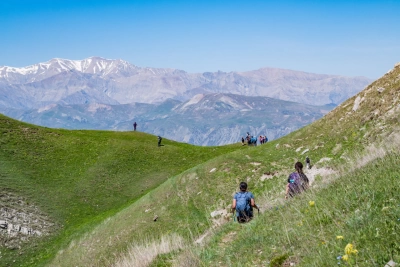
When you reach the summit of Mount Bazarduzu, a magnificent panorama of the Caucasus awaits you from one of the highest points in Azerbaijan.
Who Can Join the Mount Bazarduzu Expedition?
Mount Bazarduzu is suitable for people who are physically fit, prepared for long mountain hikes, and ready to adapt to high-altitude conditions.
Previous experience with high-altitude trekking or long mountain hikes is an advantage, but professional mountaineering experience is not an absolute requirement for climbing Mount Bazarduzu. Although the route is not technically difficult from a mountaineering perspective, the altitude of 4,466 meters, long hiking distances, and changing weather conditions make the expedition physically demanding.
If this is your first time climbing a peak above 4,000 meters, we recommend paying special attention to physical preparation, high-altitude experience, and choosing the right equipment before the expedition.
The most important consideration is the actual condition of the group and each participant. The decision to continue to the summit may change depending on the weather, route conditions, physical fitness, and how each participant feels at altitude.
Final Tips for Preparing for the Mount Bazarduzu Expedition
Climbing Mount Bazarduzu is more than just a trekking tour. At 4,466 meters, it is a true mountain expedition that requires physical and mental endurance, proper preparation, and a strong focus on safety.
For a successful and safe summit hike on Mount Bazarduzu, pay attention to the following points before the expedition:
-
Start your physical preparation early. Gradually prepare your body for long hikes, uphill climbs, and high-altitude conditions.
-
Break in your mountaineering boots in advance. Do not arrive for the expedition wearing brand-new boots. Your boots should fit properly and remain comfortable during long hikes.
-
Carry enough water. Staying hydrated is important during long and physically demanding hikes.
-
Dress appropriately for the weather. Conditions on Mount Bazarduzu can change quickly. Be prepared for wind, cold, rain, snow, and poor visibility.
-
Check your equipment in advance. Make sure your headlamp, clothing, backpack, trekking poles, sleeping equipment, and other gear are in good working order.
-
Allow time to acclimatize. If possible, take part in hikes at 2,000–3,000 meters and higher before the expedition, and observe how your body responds to altitude.
-
Follow your guide's instructions. Decisions concerning the route, weather, pace, and safety may change according to mountain conditions.
-
Do not hide it if you feel unwell. Inform your guide immediately if you experience a headache, severe weakness, dizziness, shortness of breath, or any other discomfort.
-
Never put the summit ahead of safety. Weather, route conditions, or the condition of the group may sometimes make it impossible to continue to the summit. In such circumstances, turning back is the right and professional decision.
The Main Goal Is More Than Reaching the Summit
The main goal of the Mount Bazarduzu expedition is not simply to take a summit photo at 4,466 meters. It is to reach the summit safely and return safely.
Proper physical preparation, suitable equipment, high-altitude experience, readiness for changing weather conditions, and the guidance of an experienced mountain guide all help make the expedition safer and more successful.
Are You Ready for the Summit of Mount Bazarduzu?
The Mount Bazarduzu Expedition is an unforgettable mountain adventure leading to Azerbaijan's highest peak. The route starting from Khinalig village, the high-altitude base camp, and the 4,466-metre summit of Mount Bazarduzu make this expedition a special trekking and summit experience in the Caucasus.
At AMG Team, we organize Mount Bazarduzu expeditions with experienced local mountain guides. We accompany our guests throughout the planning process, obtaining the necessary permits, arranging transportation, setting up the high-altitude base camp, and conducting the summit hike as safely as possible.
If you would like to climb Mount Bazarduzu, experience the magnificent panorama of the Caucasus at an altitude of 4,466 meters, and reach Azerbaijan's highest peak, start preparing for the expedition well in advance.
Mount Bazarduzu is waiting for you. The journey to the summit begins with preparation. If you are ready, contact us and explore our tour program below.