The southern tour of Azerbaijan brings together rich natural landscapes and ancient history stretching from the subtropical shores of the Caspian Sea to the misty peaks of the Talysh Mountains. This special travel route offers a great opportunity to explore the top attractions of Lankaran, Astara, Lerik, Masalli, and Yardimli, including the UNESCO-listed Hyrcanian forests and mountain waterfalls. Alongside the region's emerald tea plantations, citrus orchards, and renowned lavangi cuisine, travelers experience unique village life and therapeutic mineral springs firsthand. Designed for ecotourism, hiking, and photography enthusiasts, this southern guide helps you plan an unforgettable and comfortable journey to the region.
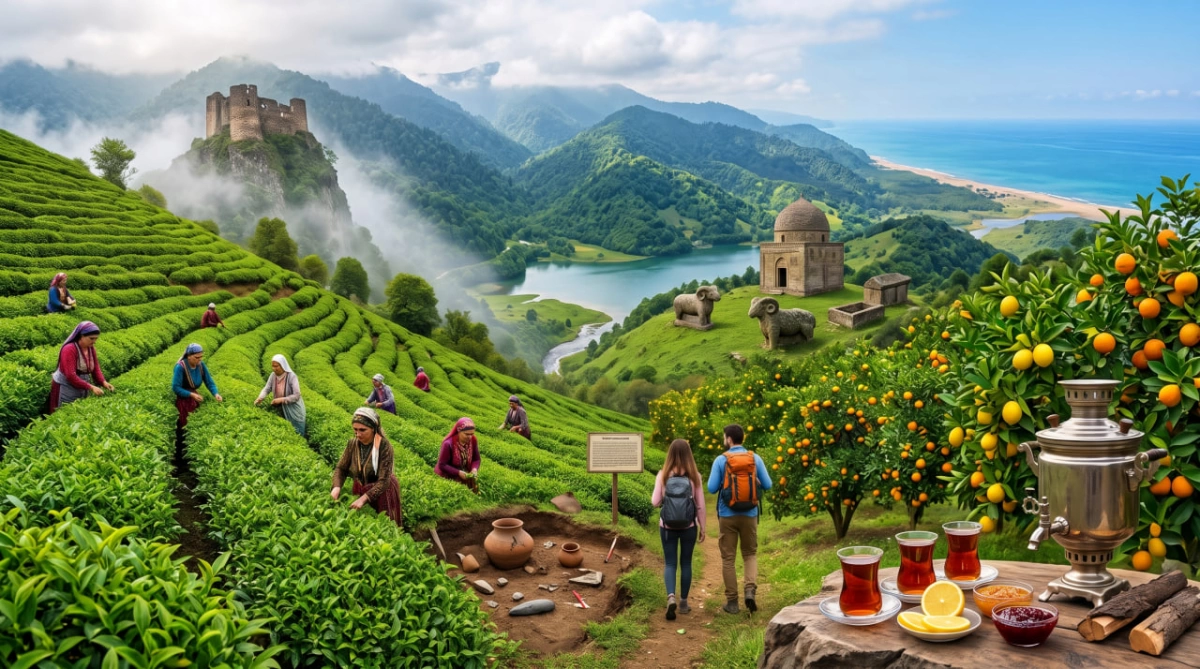
The southern region of Azerbaijan is one of the country's most fascinating travel destinations, renowned for its diverse nature, rich cultural heritage, subtropical climate, and distinctive cuisine. From the shores of the Caspian Sea to the verdant slopes of the Talysh Mountains, and from tea plantations and citrus orchards to ancient forests and thermal springs, this region offers travelers a multifaceted experience.
A southern tour of Azerbaijan is an excellent choice for those seeking to discover nature, experience the local way of life, savor traditional delicacies, and escape the hustle and bustle of city living.
What Awaits You in the Southern Region?
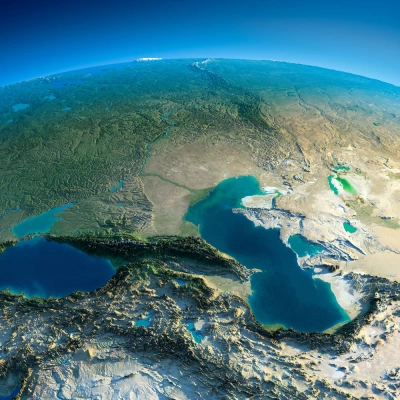
Azerbaijan's south stands out with its Caspian shoreline, subtropical forests, mountain landscapes, and vibrant wildlife. Traveling toward Lankaran and Astara, you can witness scenic views where lush greenery meets the sea, take coastal strolls, and discover rural lifestyle firsthand. The route southward from Baku can also incorporate Gobustan's rugged landscapes and mud volcanoes. Shirvan National Park serves as an intriguing stop for observing semi-desert wildlife and gazelles, while the Kura River offers a glimpse into Azerbaijan's geography and riverbank countryside. Located along the Caspian shore, Gizilaghaj National Park attracts visitors with its wetlands and immense bird diversity. Among the region's top natural landmarks is Hirkan National Park, celebrated for its ancient relict forests, dense flora, and humid subtropical climate. Near Lankaran, Lake Khanbulan—framed by green hills and woodlands—provides an ideal retreat for relaxation and photography. Completing the natural tapestry, the Talysh Mountains add a memorable dimension to the journey with their forested slopes, mountain trails, remote hamlets, and sweeping panoramas. A trip to southern Azerbaijan is a wonderful opportunity to experience changing vistas from coastal shores to highland woodlands, engage with local traditions, and unwind in the serenity of nature.
Attractions, Historical Monuments, and Nature of Astara
Situated in southern Azerbaijan along the Caspian coast bordering Iran, Astara is a prominent tourism destination marked by rich greenery, ancient heritage, and a unique local culture. Notable attractions in the district include the Astara Seaside Boulevard, the Caspian coast, the Astara River, Sim Village, Sim Waterfall, and the Yanar Bulag (Burning Spring) in Archivan village. Sim Village is renowned for its old-growth forests, tumbling mountain streams, waterfalls, and preserved pastoral life, while Yanar Bulag is famous for its naturally combustible spring water.
Astara also draws attention with its ancient settlements and architectural landmarks. Shindan Castle stands as one of the district's most captivating historic fortresses. Archivan village and surrounding areas are home to historic mosques, mausoleums, old cemeteries, and traditional structures. The local History and Ethnography Museum in Astara town offers insight into regional archaeology, material culture, and history. The district's frontier location and its historical placement along caravan routes have played a key role in shaping its heritage.
Nature in Astara is defined by subtropical forests, river canyons, mountain settlements, and marine vistas. Sections of the Hirkan forests within Astara, the rugged terrain of Sim Village, cascading waterfalls, and verdant ravines create great settings for ecotourism, hiking, and photography. Visitors can unwind by the sea, observe pastoral traditions in upland hamlets, and study the area's rich botanical diversity. A trip to Astara also provides an opportunity to taste fresh fish dishes, traditional lavangi, local citrus fruits, and regionally grown tea. With its historic landmarks, scenic landscapes, and culinary traditions, Astara is an essential stop along any southern itinerary.
Attractions, Historical Monuments, and Nature of Lerik
Nestled deep within the Talysh Mountains, Lerik is a prominent highland destination known for its long history, cultural heritage, and dramatic mountain scenery. Significant historical landmarks include the Paleolithic Buzeyir Cave—an ancient site of early human habitation—as well as the Khoja Seyid Mausoleum in Khanagah village, the Jabir Mausoleum in Jangamiran, and the ancient Khalifa Zakariyya cemetery. Medieval remnants such as the Oghlan and Giz fortresses, the 19th-century mosque in Lulekaran, along with kurgans, stone box graves, and sculpted stone rams, illustrate the area's historical depth. To explore local ethnography, travelers can visit the Lerik History and Ethnography Museum, while the Museum of Longevity offers a distinctive look into the region's famed centenarians.
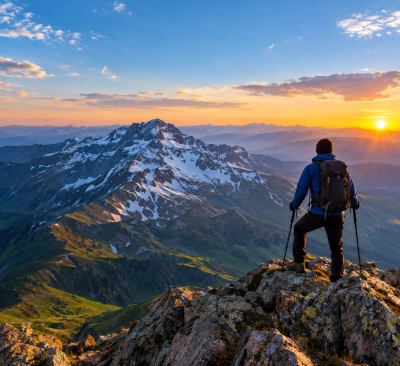
Lerik is equally rewarding for outdoor enthusiasts. Thick mountain forests, wide panoramas across the Zuvand plateau, cool mountain rivers, valleys, and secluded hamlets provide excellent conditions for ecotourism, trekking, and landscape photography. The trails around Buzeyir Cave and rural routes connecting highland settlements offer scenic walking options. The district takes on vivid hues throughout the year—bright wildflower meadows in spring and summer, followed by vibrant foliage in autumn. Visitors can experience highland village life, learn about the customs of the Talysh people, sample regional dishes, and enjoy the clean mountain air. Lerik perfectly balances cultural heritage with alpine wilderness on a southern tour.
Attractions, Historical Monuments, and Nature of Masalli
Situated between the Caspian Sea and the foothills of the Talysh Mountains, Masalli is a popular travel destination known for its hot mineral springs, ancient history, lush woodlands, and rich culture. Archaeological excavations confirm human habitation here dating back to antiquity. Among Masalli's key historical monuments are Arkivan Castle, the 14th-century Nazira Khanum Mausoleum in Hishkadara, the 16th-century Baba Seyidagha Mausoleum in Mahmudavar, the 19th-century Juma Mosques in Masalli and Boradigah, old bathhouses, and the Amir Mausoleum. Remnants of Sehhet Castle in Ninelov village, prehistoric settlements, Bronze and Iron Age kurgans, stone ram figures, and other relics highlight the district's storied past. Visitors can explore these archaeological and ethnographic treasures at the Masalli History and Ethnography Museum located in Hishkadara.
For nature and wellness seekers, Masalli offers diverse recreational points. The district's most renowned draw is the Istisu thermal mineral springs, surrounded by forested hills and peaceful outdoor spaces. The scenic landscapes around the Vilashchay Reservoir, wooded foothills, cool mountain springs, and river valleys create pleasant environments for nature hikes and photography. The Yanardagh (Burning Mountain) phenomenon near Dambalov village is another fascinating natural curiosity. In nearby villages, guests can observe traditional rural lifestyle, local handicrafts, and farming practices.
Tasting the local cuisine is one of the best ways to connect with Masalli's heritage. The area is famous for lavangi, an assortment of aromatic rice dishes, freshly brewed tea, and seasonal garden produce. Combining historical sites, therapeutic springs, mountain-forest scenery, and culinary traditions, Masalli forms a well-rounded stop. When combined with Lankaran, Lerik, and Astara, it functions both as a cultural landmark and a tranquil wellness retreat.
Attractions, Historical Monuments, and Nature of Lankaran
Lankaran is the cultural and historical heart of southern Azerbaijan, situated on the shores of the Caspian Sea and characterized by its subtropical landscapes, historic architecture, and rich traditions. Prominent heritage sites include the ruins of Lankaran Fortress, the Circular Castle (Zindan), the historic Lankaran Lighthouse, the Kichik Bazar and Boyuk Bazar Mosques, and the Palace of the Lankaran Khans (Khan's House). The Khan's House stands as a key architectural monument reflecting the regional nobility's heritage. In addition, the Hazi Aslanov House Museum and the Lankaran History and Ethnography Museum offer detailed perspectives on local history, prominent figures, and material culture.
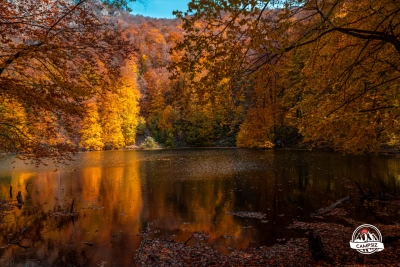
Lankaran is equally compelling for nature enthusiasts. Hirkan National Park is celebrated for its ancient relict broadleaf forests, rare endemic flora, and rich biodiversity. The park's humid trails, dense canopy, and mountain slopes provide great routes for ecotourism and guided hikes. Lake Khanbulan, a reservoir surrounded by wooded hills, is a picturesque setting for photography and outdoor leisure. Lankaran's Caspian coastline, subtropical greenery, tea plantations, and citrus groves complete its scenery. Touring local agricultural estates allows visitors to learn about tea cultivation, citrus farming (lemons, mandarins, and oranges), and sample locally produced teas paired with homemade preserves.
A key highlight of visiting Lankaran is experiencing its culinary traditions. Delicacies such as fish lavangi, chicken lavangi, traditional rice dishes, freshly brewed samovar tea, and varied fruit preserves allow travelers to savor the distinctive tastes of the south. With its architectural monuments, the relict forests of Hirkan, Lake Khanbulan, tea plantations, and rich dining culture, Lankaran is a centerpiece of southern travel. Combined with Masalli and Lerik, it delivers a comprehensive blend of culture, nature, and gastronomy.
Attractions, Historical Monuments, and Nature of Yardimli
Set amidst the Talysh and Peshtasar mountain ranges, Yardimli is characterized by its alpine settings, historical heritage, dramatic river valleys, and clean mountain environment. The territory is dotted with ancient settlement remains, archaeological sites, medieval fortifications, and historic cemeteries. Among its notable heritage sites are the Oghlan and Giz Castles, Chuzun Castle, Moran Castle, the Abidarda Mausoleum in Arsila village, and the Alaf Cave. Kurgans, stone box graves, and ancient artifacts uncovered on the Saribulag pastures near Alar village indicate long-standing human presence. Preserved stone ram statues and rural cemeteries across local villages represent meaningful examples of its cultural past.
Yardimli is also a prime destination for outdoor lovers. One of the district's most recognized natural landmarks is Yardimli (Takdam) Waterfall. Cascading through a rocky gorge surrounded by woodlands, the waterfall area is ideal for day hikes and photography. The slopes of the Talysh and Peshtasar ridges, forest tracts, river valleys, mountain springs, and expansive summer pastures define the area's natural profile. The landscape shifts gracefully with the seasons—from blooming alpine meadows in late spring to rich autumn palettes across the canopies. Visiting upland villages offers a close look at rural life, pastoral traditions, and regional mountain customs.
Yardimli's culture is closely tied to local folklore, traditional music, domestic crafts, and regional culinary flavors. In local villages, guests can taste home-cooked foods, rest in natural surroundings, and walk panoramic mountain trails. With its historic ruins, archaeological landmarks, waterfalls, and alpine valleys, Yardimli adds an authentic rural and wilderness dimension to a southern route alongside Masalli, Lerik, Lankaran, and Astara.
Attractions, Historical Monuments, and Nature of Bilasuvar
Located on the historic Mughan Plain in southern Azerbaijan, Bilasuvar stands out with its archaeological heritage, ancient history, and wide open steppe vistas. Settlement history here traces back to the Bronze Age, as evidenced by burial mounds and ancient site remnants indicating continuous human habitation over millennia. Primary historic landmarks include the Shahriyar Fortress, the early medieval settlements of Chol Aghdam and Icheri Aghdam, medieval Aghdam Fortress, and the Shahriyar Tepe settlement mound. The Yedditepe kurgans in Baydili village, Goshetepe in Tazakand, along with Toraghaytepe, Seyidallitepe, and Ceyrantepe, illustrate the area's early antiquity. Some of these sites represent archaeological digs, and their preservation status should be verified prior to visiting.
To learn about Bilasuvar's past and material culture, travelers can visit the Bilasuvar History and Ethnography Museum, which features exhibits on ancient tools, medieval relics, archaeological discoveries, and Mughan folk traditions. The Flag Museum in the town center serves as an additional cultural stop showcasing national symbols and state history. Bilasuvar's past is deeply connected to the Mughan Plain, which historically supported irrigated agriculture, animal husbandry, and trade settlements.
The landscape of Bilasuvar is largely defined by vast lowlands, cultivated fields, pastures, and semi-arid terrain. Wide horizon lines, rural farmlands, and changing steppe scenery present unique opportunities for agricultural tourism and landscape photography. The district's wetlands and reedbeds, particularly around the Mahmudchala system, are noteworthy for nature watching and seasonal birding. Depending on the time of year, various migratory waterfowl can be observed here.
Bilasuvar's local traditions are shaped by Mughan heritage, agriculture, and hearty plain cuisine. Traveling through the area allows visitors to observe rural farm life, sample regional cooking, and experience the distinct expanse of the Mughan steppe. Rather than mountain or forest trekking, Bilasuvar appeals to travelers interested in archaeology, local history, agrarian lifestyle, and open plains. On an extended southern itinerary, Bilasuvar can be comfortably combined with Jalilabad and Masalli for a culturally focused program.
Attractions, Historical Monuments, and Nature of Jalilabad
Located in the southwestern section of the Mughan Plain, Jalilabad is recognized for its ancient settlements, significant archaeological record, viticulture heritage, and productive agriculture. The district's history spans thousands of years, anchored by prehistoric sites like Alikomektepe, Misharchay, and Khudutepe, the 4th-millennium BCE settlement of Gurudara, and Bronze Age mounds including Jinlitepe, Goytepe, and Fatkhtepe. Remains of the ancient towns of Mughan and Bajravan, the Bajravan kurgans, the Uzuntepe necropolis, and medieval sites such as Kazan Koshku highlight the region's historic prominence. During excavations at Khudutepe near Chamanli village, medieval ceramics, hearths, tandoors, and Hulagu-era coinage were discovered. For an organized overview of these findings, visitors can tour the Jalilabad History and Ethnography Museum.
Jalilabad's natural setting consists of rolling plains, open steppe landscapes, cultivated agricultural parcels, vineyards, and river terraces. The valleys along the Misharchay and Injachay rivers, country roads, and sweeping views of the plain offer scenic angles for landscape photography and agritourism. Farming communities around Goytepe and Uzuntepe provide a realistic view of daily agrarian life and traditional cultivation methods. Jalilabad is especially noted for its grape-growing and winemaking heritage; seasonal excursions can be arranged to visit vineyards and local processing facilities.
The cultural life of the district is closely interwoven with the customs of the Mughan region, local gastronomy, and rural traditions. In Jalilabad town, the Heydar Aliyev Promenade, town park, and Flag Square provide pleasant walking spaces. Visiting local villages enables guests to experience authentic rural settings, sample traditional food, and learn about the area's viticulture history. Jalilabad offers a distinct focus on archaeological heritage, agrarian culture, and plains history. Combined with Bilasuvar, Masalli, and Yardimli, it serves as an informative cultural and historical stop along the southern route.
Tour Planning Note: Several archaeological landmarks, such as Alikomektepe, Misharchay, and Khudutepe, are open-air excavation or settlement mounds without formal tourist facilities. It is advisable to check road accessibility and local guidance before arranging visits.
Attractions, Historical Monuments, and Nature of Salyan
Situated in southeastern Azerbaijan along the banks of the Kura River, Salyan is a historic district characterized by an ancient past, archaeological sites, and semi-desert terrain. Salyan historically occupied a key position on major trade routes. Mentioned in chronicles since the 13th century, it played a vital role in commercial exchanges connecting Azerbaijan with Iran, the North Caucasus, and neighboring regions. The operation of a local mint in the 18th century underscores the town's historical economic importance.
Among Salyan's most prominent natural attractions is **Shirvan National Park**. Encompassing portions of both Salyan and Neftchala districts, this national park is renowned for its semi-desert plains, lakes, marshlands, and coastal-adjacent reserves. The park's primary highlight is its thriving population of goitered gazelles (ceyran). Visitors can also observe numerous migratory and resident waterbirds, as well as mammalian and plant species adapted to semi-arid climates. For wildlife watching, safari photography, and ecotourism, Shirvan National Park is a key centerpiece of any Salyan visit.
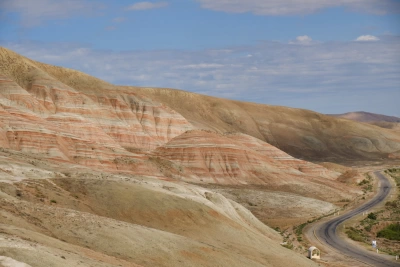
Another notable natural feature is Mount Babazanan and the surrounding mud volcano fields. Located across the district's plains, areas such as Babazanan and Durovdagh feature mud volcanoes, gryphons, and unique geological formations. These landscapes attract visitors with their unusual, moon-like appearance. When visiting mud volcanoes, travelers should observe safety precautions, avoid stepping directly onto active vent rims, and check ground conditions in advance.
Salyan's archaeological heritage is equally substantial. The ancient settlement and jar-burial necropolis at Kursangi reflect early habitation, with excavations revealing medieval occupational layers, pottery, and structural remains. Other locations, including the Birinci Babazanli settlement, the Marishli settlement and necropolis, the Mahmudabad jar-burial site, and the Nokhudlu ancient settlement, provide significant insights into the region's antiquity. Because several of these are open archaeological areas, they may not feature formal tourist infrastructure or paved paths.
To explore the district's past in greater detail, the Salyan History and Ethnography Museum is well worth a visit, presenting artifacts related to local archaeology, crafts, and riverine culture. The Kura riverfront in the town center serves as an accessible stop for a brief walk and photography, while the Heydar Aliyev Park and Flag Square can easily be included in an urban tour.
Salyan is also recognized for its sturgeon and freshwater fishing traditions, river-based lifestyles, and agricultural fields. The open plains, irrigation canals, farming villages, and vineyards around the district offer travelers an authentic look into day-to-day life along the Kura.
Overall, a tour of Salyan can be structured around the Kura riverfront, the History and Ethnography Museum, the town park, the Babazanan mud volcanoes, and Shirvan National Park. For those keen on early history and archaeology, Kursangi, Marishli, and Mahmudabad can be added. For trips to Shirvan National Park, coordinating with park authorities in advance ensures up-to-date details regarding access points, safari routes, and optimal gazelle-watching times.
Attractions, Historical Monuments, and Nature of Neftchala
Located in southeastern Azerbaijan where the Kura River nears its delta into the Caspian Sea, Neftchala district is recognized for flat open plains, coastal shorelines, expansive wetlands, and ancient settlements. Neftchala appeals to both nature enthusiasts and travelers interested in Azerbaijan's coastal history and traditional fishing lifestyle.
A key natural preserve in the area is Gizilaghaj National Park, renowned for its coastal bays, reed beds, and rich birdlife. It is an internationally important sanctuary for observing migratory waterfowl, flamingos, pelicans, and waders. The lower reaches of the Kura River and the Caspian beaches also offer serene views, featuring working fishing settlements, coastal flatlands, and quiet sunset spots.
One of Neftchala's most unusual sites is Kurdili Island. Situated in the Caspian Sea, this landmass once supported residential settlements. Over time, rising sea levels and altered geography led to its isolation and abandonment. Today, Kurdili is known for its remote character, wild horses, silent coastlines, and unique atmosphere. Anyone planning a trip to Kurdili must carefully confirm water transport options, sea levels, and prevailing weather conditions beforehand.
Among the district's historical sites, the ancient settlement of Bandovan holds special significance. Archaeological investigations along the coast uncovered glazed ceramics, pottery workshop remains, and medieval coins, demonstrating that maritime trade and settlements flourished here centuries ago. Neftchala's heritage is deeply entwined with the Kura River, the Caspian Sea, fishing traditions, and pastoral farming.
Neftchala is also famous for its local fish cuisine and seafood preparations. Sampling regional dishes, touring the town center, and visiting local waterfront areas provide a balanced experience. In summary, Gizilaghaj National Park, the Kura River delta, the Caspian coastline, Kurdili Island, and Bandovan stand as the core landmarks of a Neftchala journey.
Southern Tea, Paddy Fields, and Citrus Orchards
The southern region of Azerbaijan is famous for tea cultivation and citrus growing. Across Lankaran and nearby valleys, terraced tea plantations, along with orchards of lemons, mandarins, and oranges, form a central part of the rural landscape.
When traveling through southern villages, visitors can visit family-run farms and learn about the seasonal harvesting and processing of tea and citrus crops. Irrigated rice paddies also lend a distinct, picturesque character to the lowlands.
A traditional tea table is an indispensable part of any southern journey. Freshly brewed tea served from a samovar, accompanied by local fruit preserves and traditional sweets, offers a direct taste of warm southern hospitality.
Cuisine of Southern Azerbaijan
Southern Azerbaijan—particularly Lankaran and Astara—is celebrated for its distinctive culinary specialties and time-honored cooking techniques. The undisputed centerpiece of the region's cuisine is lavangi: a filling made from crushed walnuts, finely chopped onions, and tart fruit paste (such as sour plum or wild cherry plum), baked inside poultry or fish. Fish lavangi, often prepared using Caspian kutum, is especially prized in Lankaran cooking.
The southern table also features aromatic Lankaran pilafs, fisinjan, kuku, skewered fish kebabs, and various fresh herb dishes. Rice-based mains, seasonal vegetables, and locally sourced ingredients are widely utilized. Thanks to long-standing tea-drinking traditions, tea brewed in a charcoal samovar remains a staple of every meal, typically paired with lemon, homemade fruit jams, and regional sweets.
Lankaran and Astara are also renowned for their citrus production, including lemons, mandarins, and sweet oranges. Exploring the local gastronomy allows visitors to sample specialty jams made from these fruits, as well as home-preserved delicacies. With its complex flavors, farm-fresh ingredients, and welcoming table culture, southern Azerbaijani cuisine is an essential highlight of any tour.
Who Is the Southern Tour Suitable For?
This travel route is particularly well-suited for:
-
Nature and ecotourism enthusiasts
-
Travelers who appreciate forest trails and mountain panoramas
-
Birdwatchers and landscape photographers
-
Those interested in regional heritage and authentic village life
-
Food lovers eager to explore regional Azerbaijani cuisine
-
Visitors looking to combine the Caspian coast, tea plantations, and subtropical nature in a single journey
Discover Your Southern Journey with Azerbaijan Mountain Guide
Southern Azerbaijan is a comprehensive travel destination where nature, culture, and local lifestyles converge. From the shores of the Caspian Sea to the relict Hirkan forests, and from Lake Khanbulan to the heights of the Talysh Mountains, every stop unveils a different facet of the country.
Discover southern Azerbaijan with Azerbaijan Mountain Guide (AMG), connect with local traditions, and experience one of the country's most diverse natural landscapes.