Novruz is one of Azerbaijan’s oldest national holidays, symbolizing the arrival of spring, the awakening of nature, and renewal. Included in UNESCO’s Intangible Cultural Heritage List, this celebration is distinguished by its rich customs and traditions, bonfire ceremonies, samani (sprouted wheat), traditional sweets, and festive tables. Discover how Novruz is celebrated in Azerbaijan, the meaning of the four Tuesdays leading up to the holiday, and the ancient traditions of the Azerbaijani people.
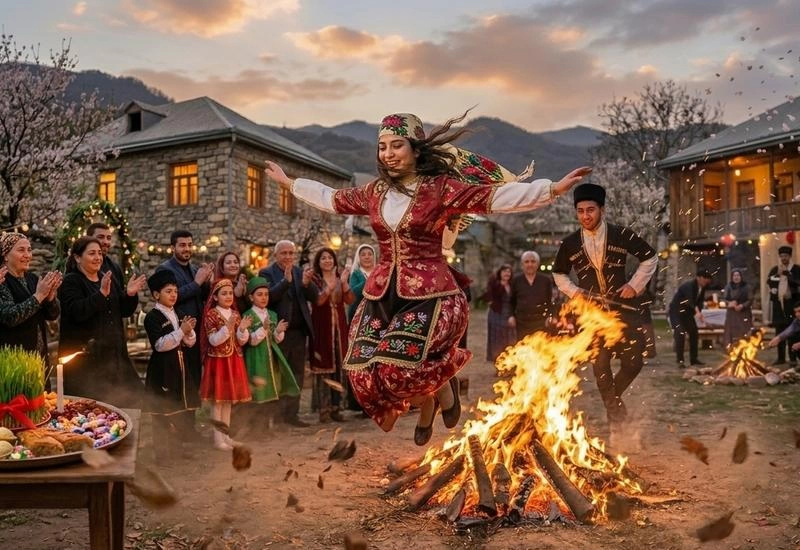
Novruz is one of the oldest and most beloved holidays of the Azerbaijani people. Celebrating the awakening of nature, the end of winter and the arrival of spring, this holiday is distinguished by its rich traditions, folk ceremonies and national cuisine, which have been preserved for centuries. Novruz is not only an important part of Azerbaijan's cultural heritage but also a shared tradition of many nations across a wide geographical region.
The word Novruz is of Persian origin and means "New Day". The holiday is associated with the spring equinox and is celebrated every year on March 20–21. This date marks the beginning of astronomical spring and the start of a new natural cycle. People welcome Novruz as a symbol of the end of the old year, renewal, abundance, prosperity and new beginnings.
The History and Ancient Origins of Novruz
The history of Novruz dates back thousands of years. Its origins are associated with ancient people's observations of natural phenomena, the changing seasons, the awakening of the earth and beliefs surrounding the beginning of the agricultural season.
The holiday also has historical connections with ancient Persian and Zoroastrian cultures. However, it would not be accurate to attribute the origins of Novruz to a single religion or culture. Having a unique place in the history and folklore of various nations, this celebration has evolved over time, incorporating different traditions and customs that have been passed down to the present day.
The main ideas behind Novruz are the renewal of nature, the continuity of life, family unity, friendship and strengthening friendly relationships among people.
Novruz and UNESCO – A Shared Cultural Heritage of Humanity
The international recognition of Novruz further confirms its importance to world culture.
On September 30, 2009, Novruz was inscribed on UNESCO's Representative List of the Intangible Cultural Heritage of Humanity following a joint nomination by Azerbaijan, India, Kyrgyzstan, Pakistan, Turkey, Iran and Uzbekistan.
In 2016, this multinational nomination was further expanded to include Afghanistan, Iraq, Kazakhstan, Tajikistan and Turkmenistan.
In 2010, the United Nations declared March 21 as International Nowruz Day. This decision highlights the role of the holiday in promoting universal values such as peace, solidarity, friendship, mutual respect and cultural diversity.
Thus, Novruz has become an important celebration that brings different nations together, is passed down from generation to generation and preserves shared cultural values.
Novruz Preparations in Azerbaijan and the Four Tuesdays
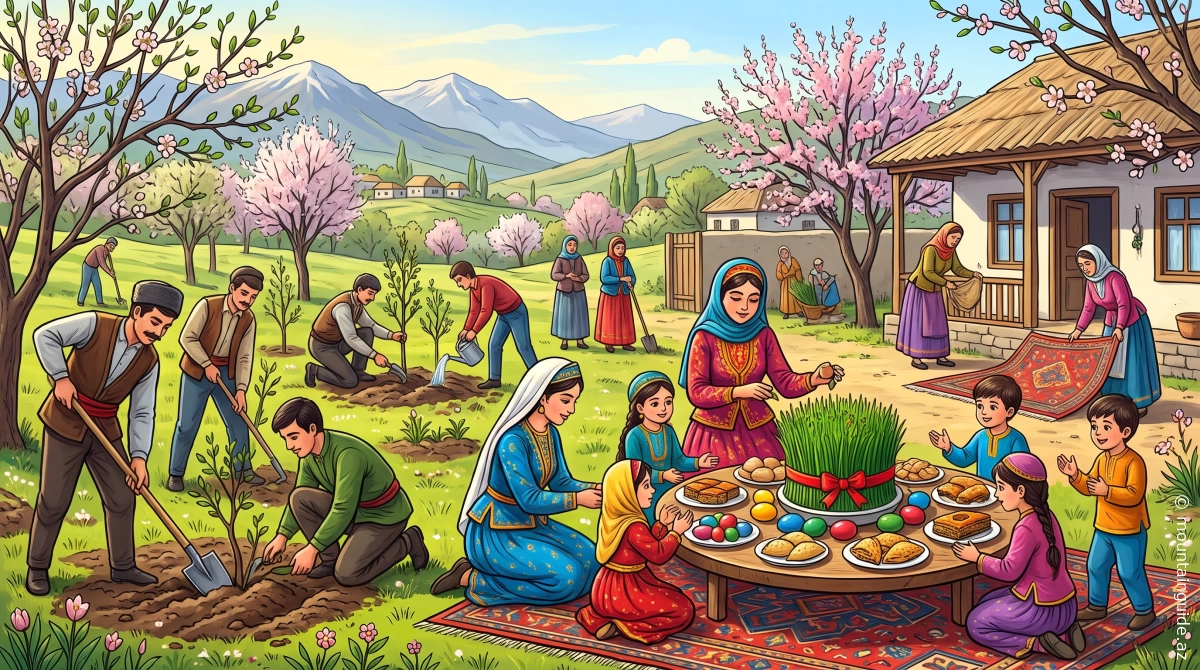
Preparations for Novruz in Azerbaijan begin well before the actual holiday. From the final month of winter onwards, people clean their homes, tidy their yards, prepare traditional holiday sweets and grow samani (sprouted wheat).
The four Tuesdays celebrated in the weeks leading up to Novruz are among the holiday's most interesting and ancient traditions. According to folk beliefs, these Tuesdays symbolise the awakening of the four elements of nature: water, fire, wind and earth.
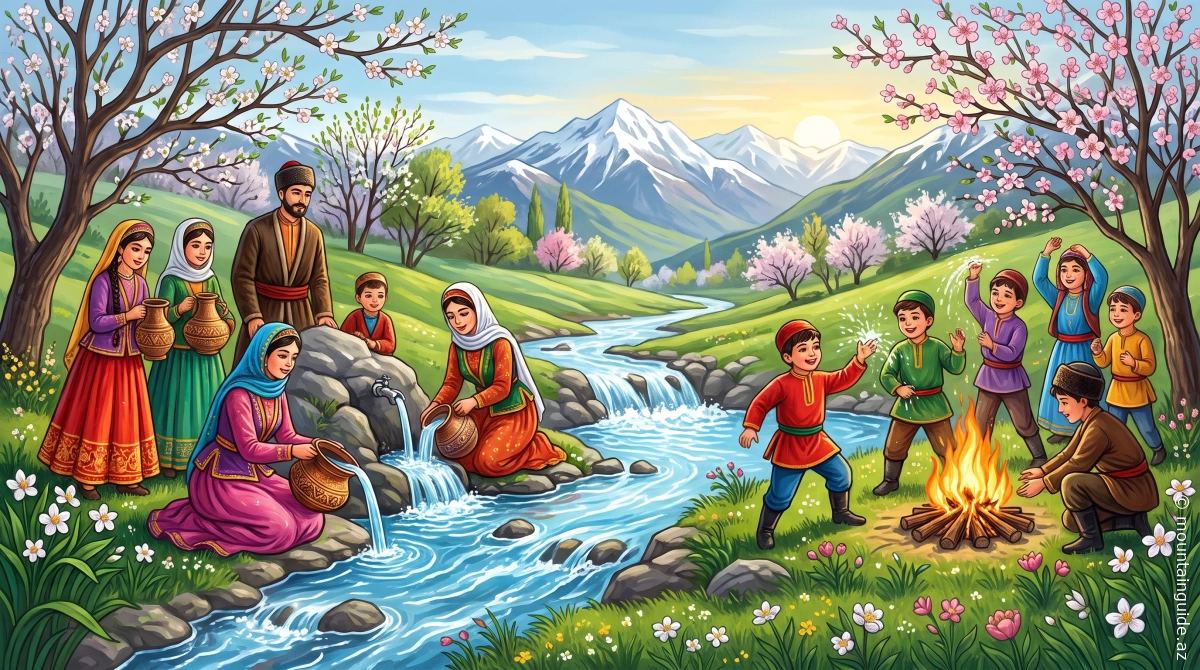
Su Chershenbesi (Water Tuesday)
Water Tuesday is the first of the four Tuesdays preceding Novruz. Water is considered a symbol of life, purity and renewal. According to folk beliefs, on this day the waters begin to flow and nature starts to free itself from the harshness of winter. Early in the morning, people bring water from springs and rivers and sprinkle it on one another, wishing each other good health and happiness.
Od Chershenbesi (Fire Tuesday)
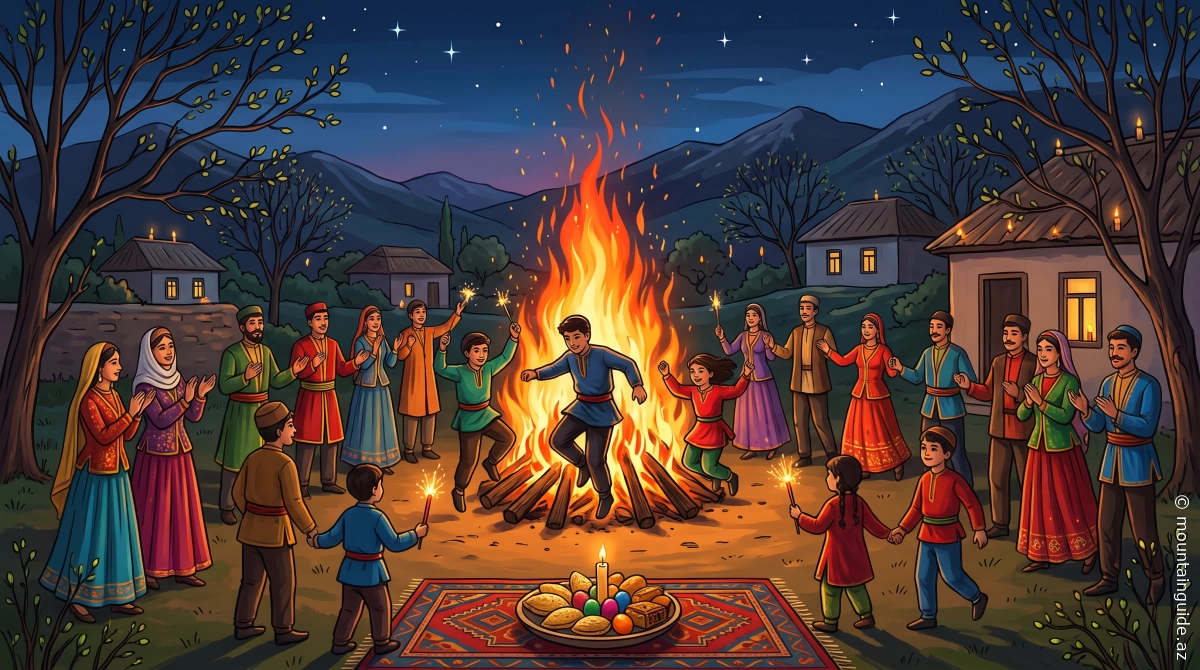
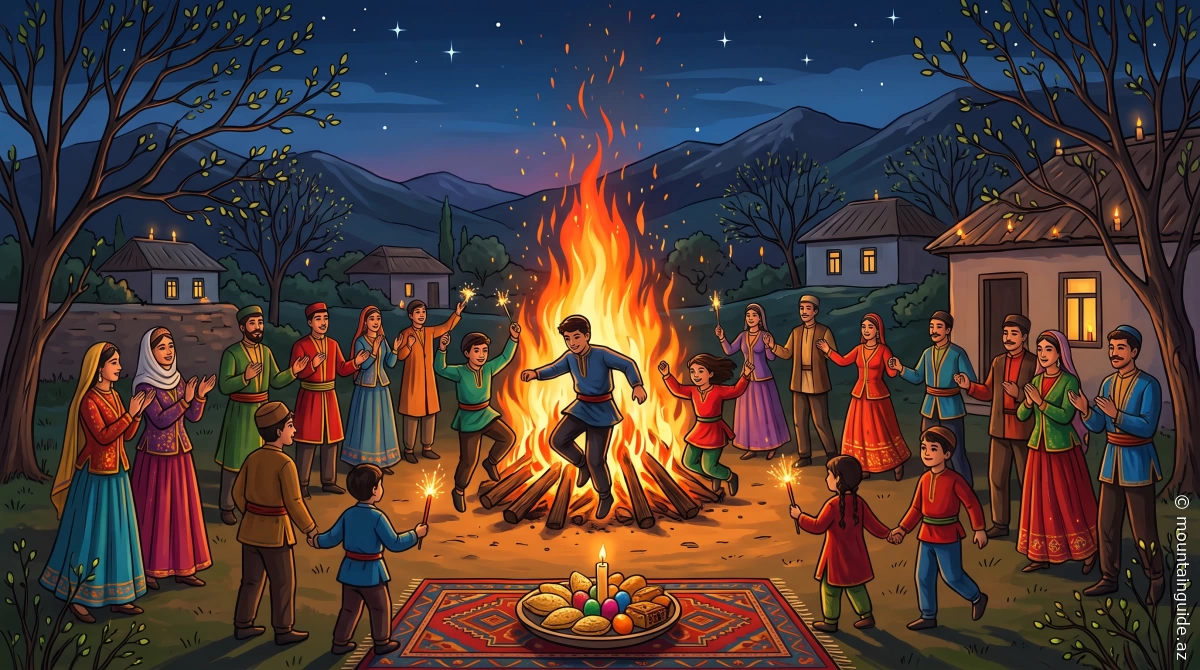
Fire Tuesday symbolises warmth, light and the energy of life. On this day, bonfires are lit in courtyards, and family members and neighbours gather around them. According to ancient beliefs, jumping over a bonfire represents cleansing oneself of troubles and illnesses and welcoming the new year with better health and happiness.
Yel Chershenbesi (Wind Tuesday)
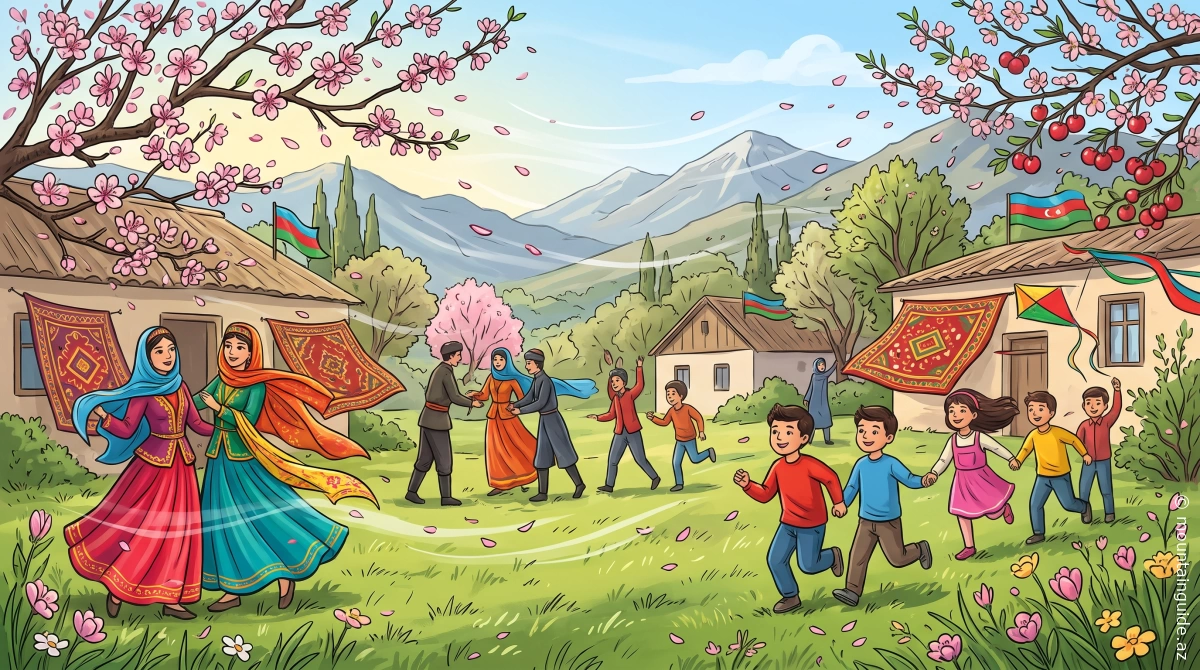
Wind Tuesday is associated with the awakening of the wind and the revival of nature. According to folk beliefs, warm spring breezes awaken the trees, bring life to the earth and announce the arrival of spring. This Tuesday symbolises the beginning of movement and transformation in nature.
Torpaq Chershenbesi (Earth Tuesday)
Earth Tuesday is the last of the four Tuesdays and the one closest to the Novruz holiday. It is associated with the awakening of the earth, the beginning of the agricultural season and the revival of nature. People clean their homes, prepare the festive table, bake traditional sweets and complete their final preparations for the holiday.
The four Tuesdays are an important part of the preparations for Novruz. Each Tuesday holds a special place in Azerbaijani folklore through its unique customs, beliefs and ceremonies.
The Most Interesting Novruz Traditions and Customs
Novruz in Azerbaijan is celebrated with numerous folk traditions and ceremonies. Many of these customs have been preserved for centuries and are still enthusiastically practised by families, especially children.
Lighting Bonfires and Jumping Over Them
One of the best-known symbols of Novruz is the bonfire. Bonfires are traditionally lit in courtyards and open spaces, especially on the evening of the Last Tuesday before Novruz and on the eve of the holiday. By jumping over the flames, people follow an ancient tradition believed to help them leave their troubles and difficulties behind and enter the new year with good health and happiness.
Hat Throwing (Papaq Atmaq)
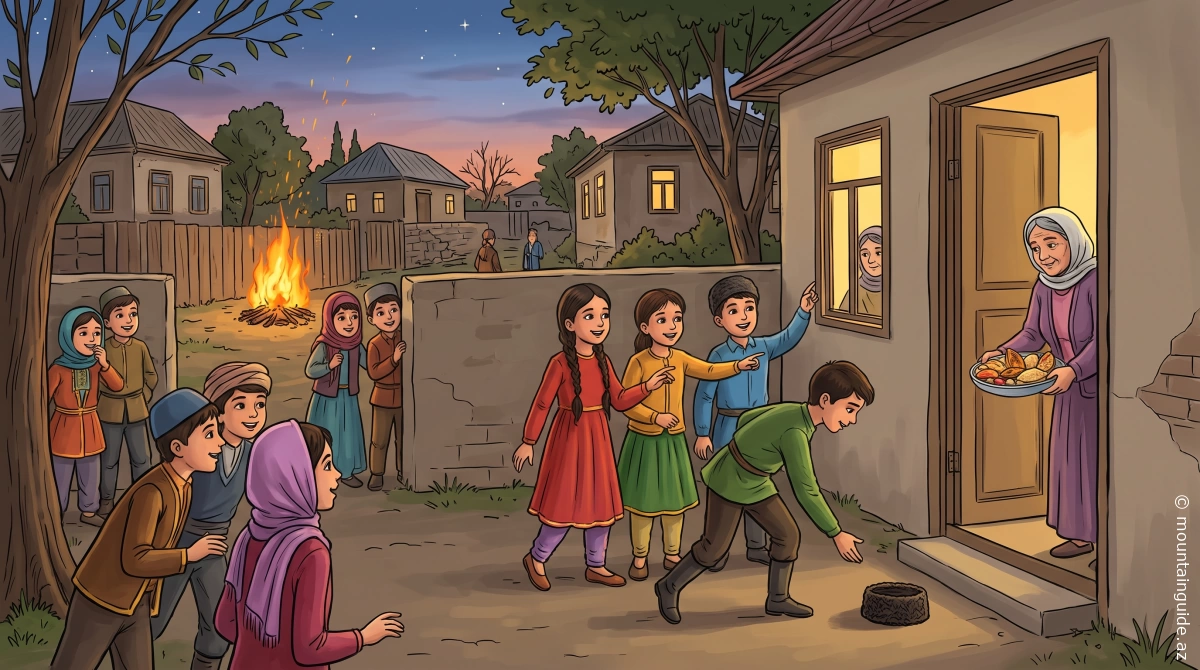
One of the Novruz traditions most loved by children is hat throwing. Children leave their hats at their neighbours' doorsteps and hide nearby. The homeowner fills each hat with sweets, nuts and other festive treats. This custom is a lovely example of sharing, hospitality and bringing joy to children.
Listening at Doors (Gulag Falı)
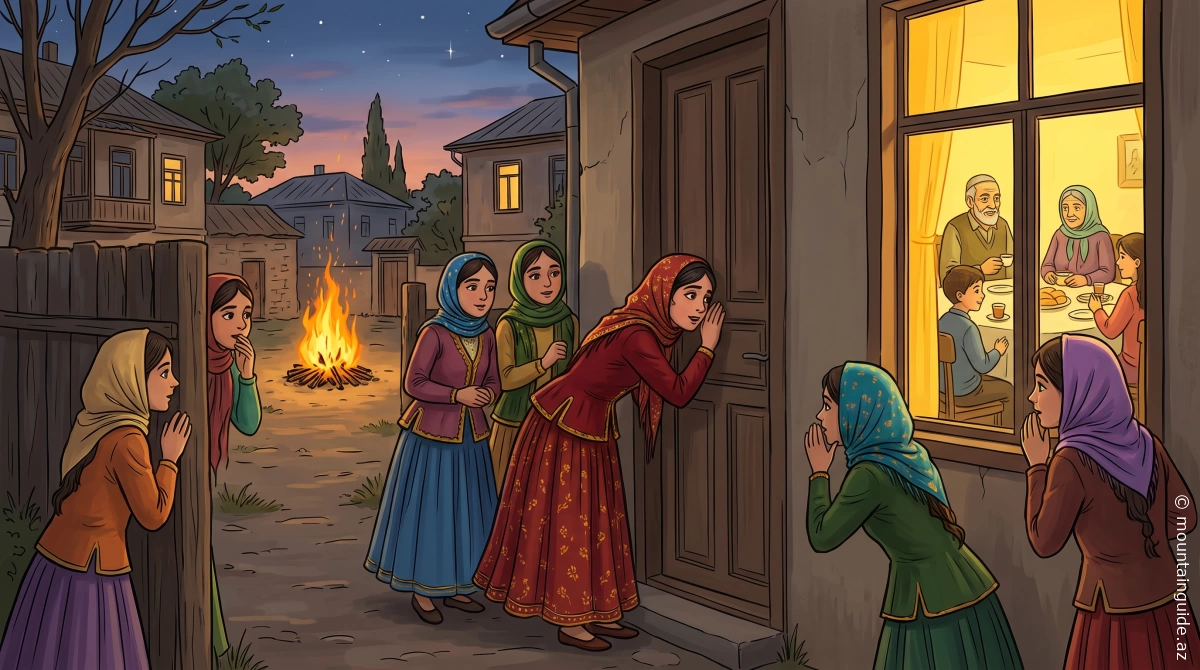
Gulag Falı is an interesting folk tradition practised on the eve of Novruz, particularly on the evening of the Last Tuesday. People quietly approach their neighbours' doors and listen to the first conversation they hear inside. It is believed that the words they hear offer signs or clues related to their wishes and future plans.
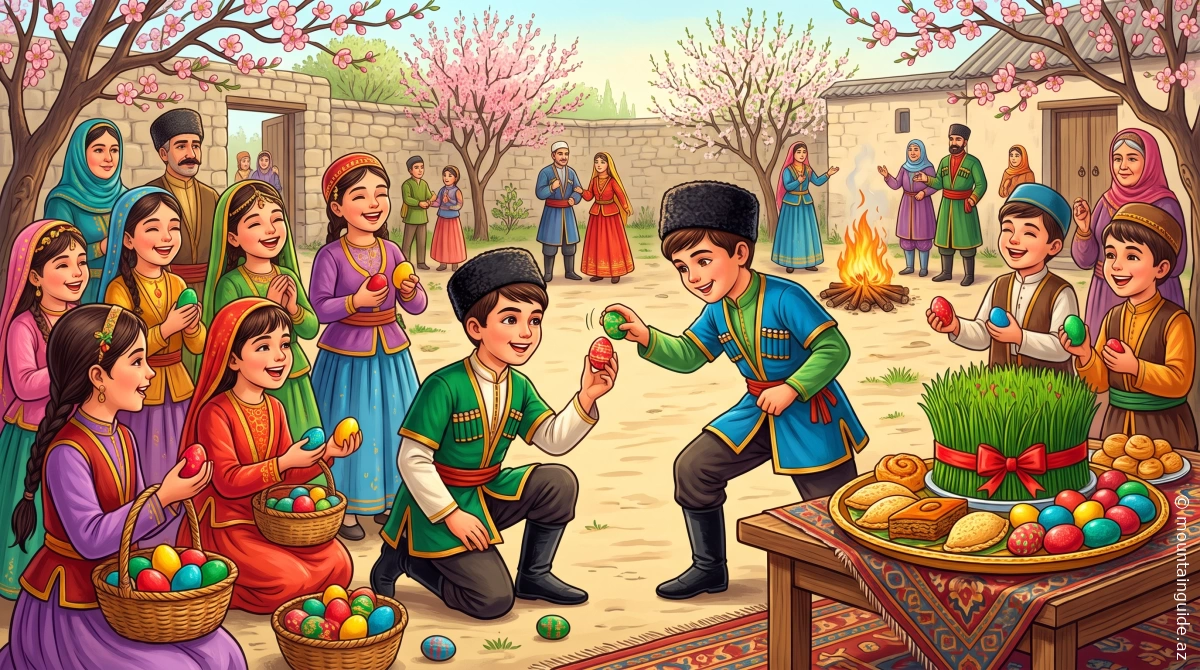
Egg Tapping
Coloured eggs are an essential part of the Novruz festive table. Children and adults tap their eggs against one another to see whose egg has the strongest shell. This traditional game remains one of the most popular holiday activities today.
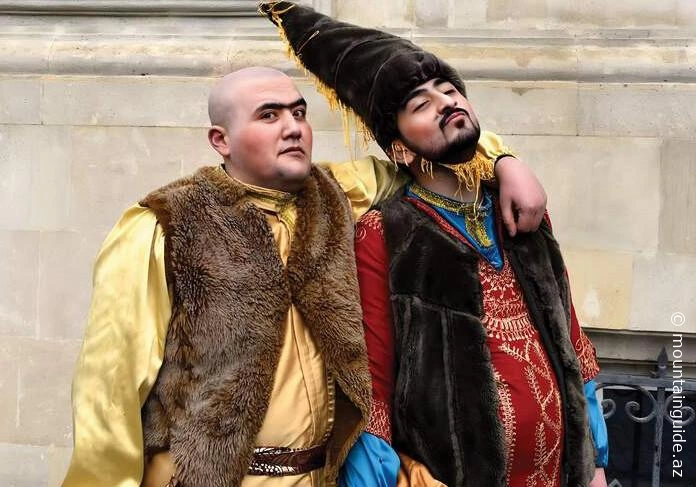
Kosa and Kechel
Kosa and Kechel are two of the most entertaining characters in Novruz celebrations. They perform humorous sketches in public squares, streets and villages, making people laugh and creating a festive atmosphere. In folk tradition, Kosa represents winter, while Kechel represents spring. Their encounters symbolise the struggle between winter and spring.
The Novruz Khoncha and Festive Table
One of the most beautiful features of Novruz is its richly prepared festive table. Azerbaijani families pay special attention to preparing the holiday feast, with a decorative tray called a khoncha, usually adorned with samani (sprouted wheat), placed at its centre.
The khoncha is decorated with various traditional sweets, coloured eggs, walnuts, hazelnuts, chestnuts, fruits and candles.
The main traditional sweets served during Novruz include:
-
The Most Interesting Novruz Traditions and Customs
Novruz is celebrated in Azerbaijan with numerous folk traditions and ceremonies. Many of these customs have been preserved for centuries and are still enthusiastically practised by families today, especially by children.
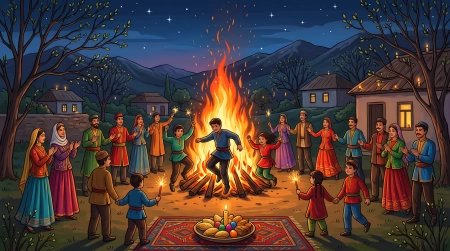
Lighting Bonfires and Jumping Over Them
One of the best-known symbols of Novruz is the bonfire. Bonfires are traditionally lit in courtyards and open spaces, especially on the evening of the Last Tuesday before Novruz and on the eve of the holiday. By jumping over the flames, people follow an ancient tradition believed to help them leave their troubles and difficulties behind and welcome the new year with good health and happiness.
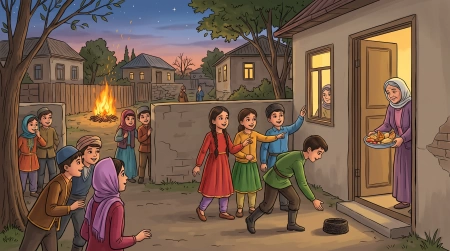
Hat Throwing (Papaq Atmaq)
One of the Novruz traditions most loved by children is hat throwing. Children leave their hats at their neighbours' doorsteps and hide nearby. The homeowner fills each hat with sweets, walnuts, hazelnuts and other festive treats. This custom is a lovely example of sharing, hospitality and bringing joy to children.
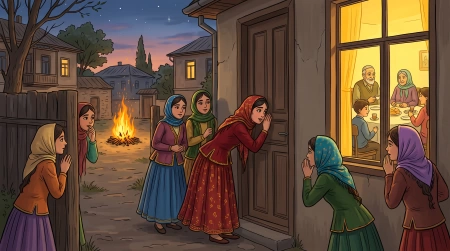
Listening at Doors (Gulag Fali)
Gulag Fali is an interesting folk tradition practised on the eve of Novruz, particularly on the evening of the Last Tuesday. People quietly approach their neighbours' doors and listen to the first conversation they hear inside. It is believed that the words they hear may offer clues or signs related to their wishes and future plans.
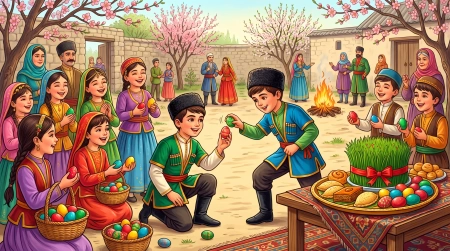
Egg Tapping
Coloured eggs are an essential part of the Novruz festive table. Children and adults tap their eggs against one another to find out whose egg has the strongest shell. This traditional game remains one of the most popular forms of entertainment during the holiday.
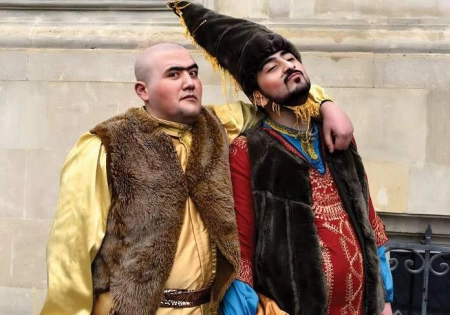
Kosa and Kechel
Kosa and Kechel are two of the most entertaining characters in Novruz celebrations. They perform humorous sketches in public squares, streets and villages, making people laugh and creating a festive atmosphere. In Azerbaijani folk tradition, Kosa represents winter, while Kechel represents spring. Their encounters symbolise the struggle between winter and spring.
The Novruz Khoncha and Festive Table
One of the most beautiful features of Novruz is its richly prepared festive table. Azerbaijani families pay special attention to preparing the holiday feast, with a decorative tray known as a khoncha, usually adorned with samani (sprouted wheat), placed at its centre.
The khoncha is decorated with various traditional sweets, coloured eggs, walnuts, hazelnuts, chestnuts, fruits and candles.
The main traditional sweets served during Novruz include:
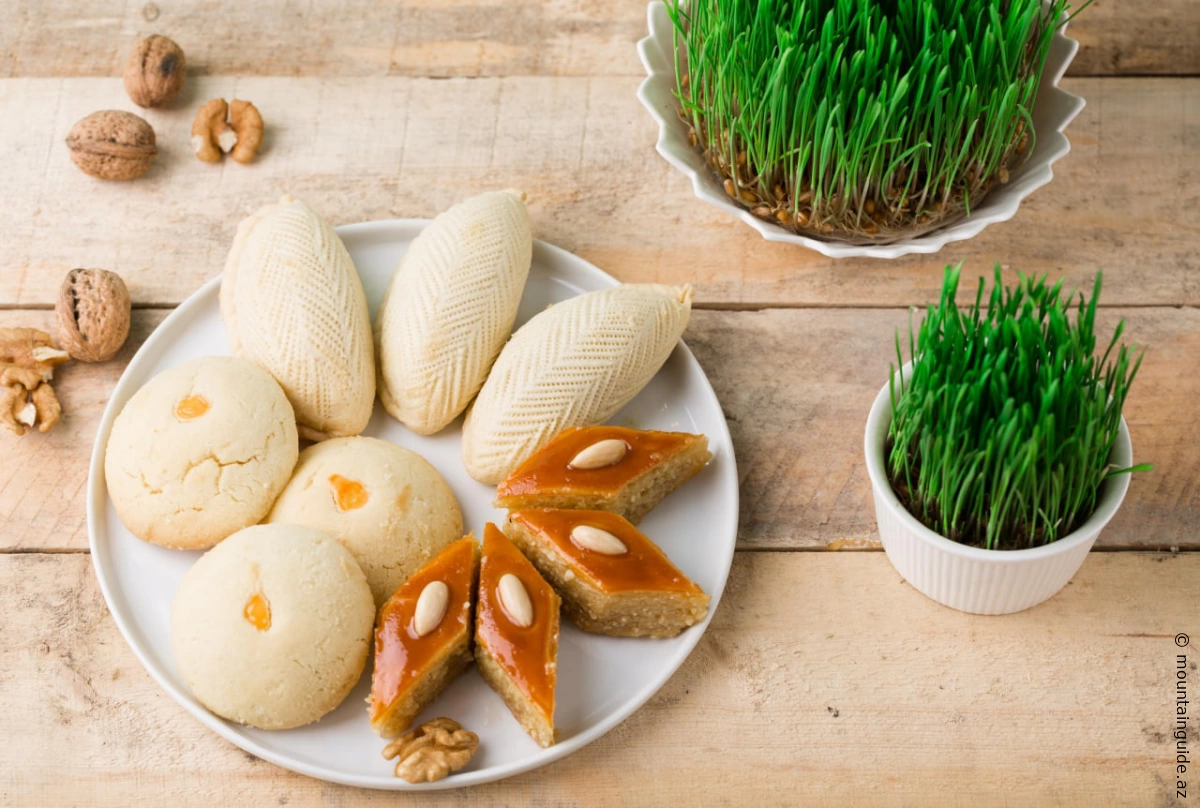
Pakhlava – One of the main highlights of the festive table, symbolising richness and abundance.
-
Shekerbura – A traditional crescent-shaped pastry filled with ground walnuts or hazelnuts.
-
Shor Gogal – With its round shape and golden-yellow colour, reminiscent of the sun, it is considered one of the symbols of Novruz.
-
Samani Halva – An ancient festive delicacy made from sprouted wheat, requiring considerable time and effort to prepare.
According to folk traditions, each of these sweets carries a symbolic meaning. For example, gogal represents the sun, shekerbura symbolises the moon, while pakhlava represents the four cardinal directions of the world.
The Novruz festive table also features shah plov, various meat dishes, dried fruits, nuts and other traditional Azerbaijani delicacies. Samani, one of the central symbols of the festive table, represents life, abundance and the arrival of spring.
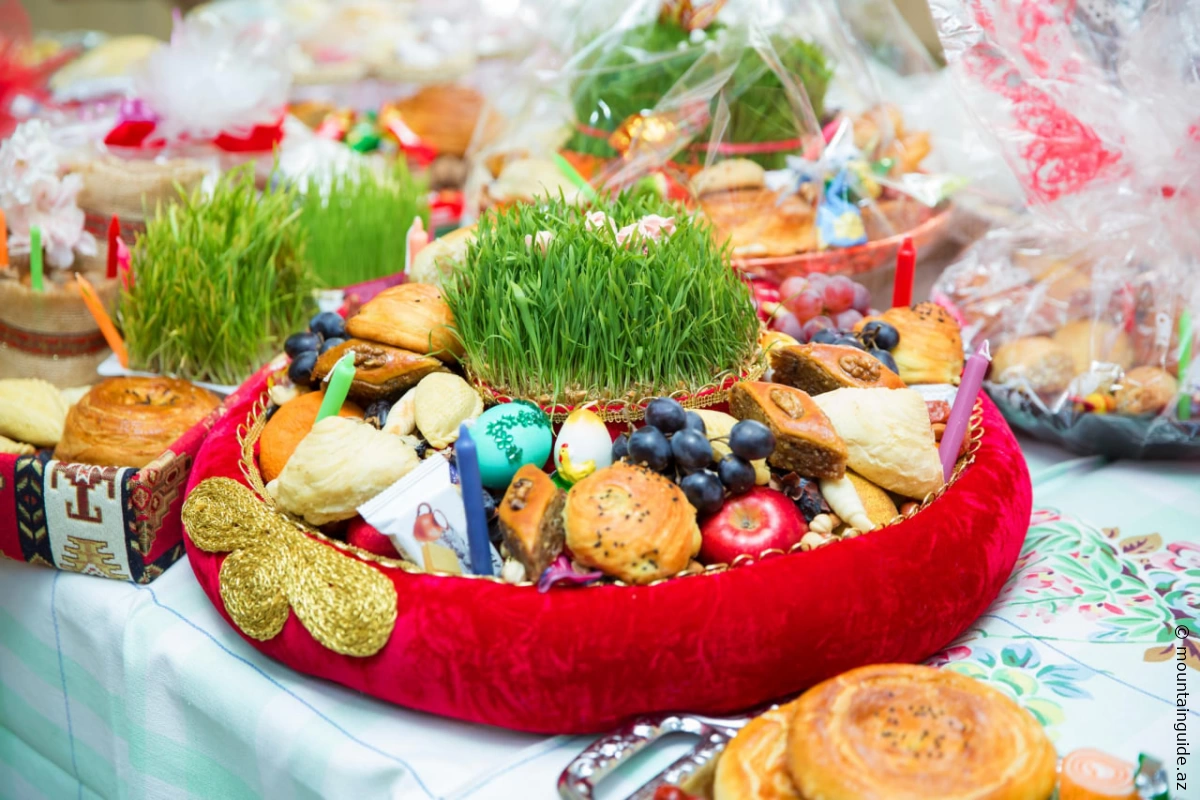
Samani – A Symbol of Life and Spring
Samani is one of the most important symbols of the Novruz holiday. Several weeks before the celebration, wheat grains are soaked and left to sprout until they grow into fresh green samani. On Novruz Day, the samani is placed in the centre of the khoncha and decorated with colourful ribbons.
With its green colour and freshly sprouted wheat, samani represents the awakening of the earth, the beginning of new life and people's hopes for a prosperous and abundant year ahead.
In some regions of Azerbaijan, preparing samani halva is also preserved as an ancient tradition. During this process, family members and neighbours come together and take part in the preparation, which can last for several hours.
Hospitality and Family Traditions During Novruz
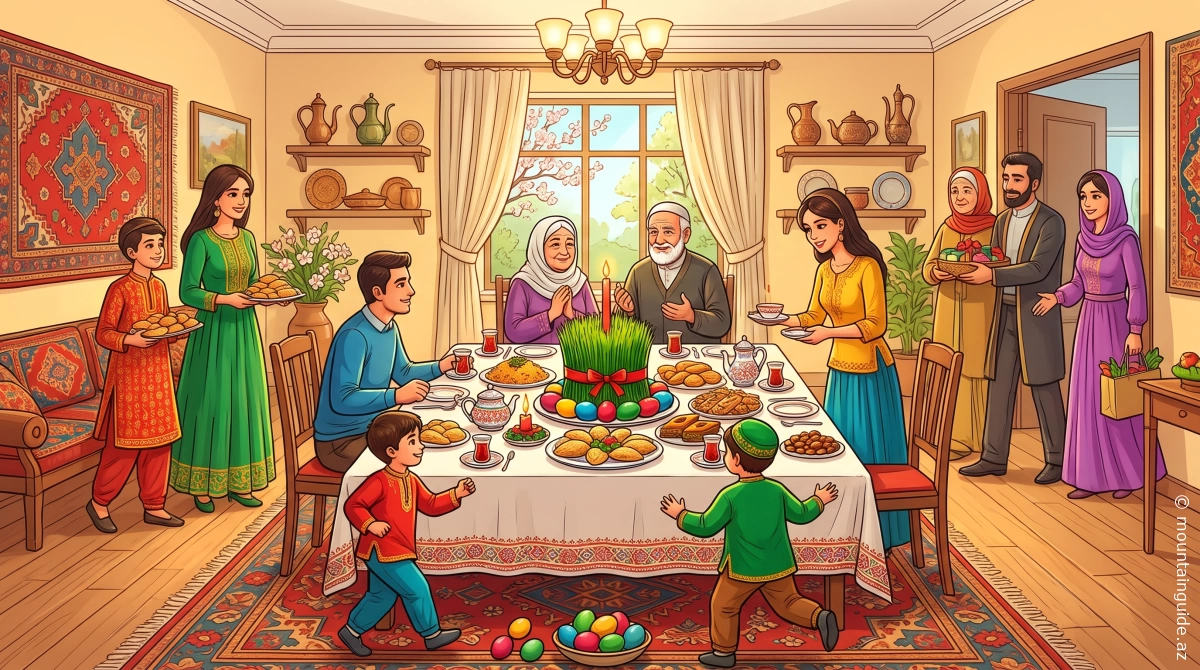
Novruz is one of the holidays that best reflects the hospitality and family values of the Azerbaijani people. During the celebrations, people visit their relatives, friends and neighbours, exchange festive gifts and share their holiday meals.
Visiting elderly family members, reconciling with those with whom they have had disagreements and helping people in need are among the important values associated with Novruz.
Family gatherings, sharing meals and keeping ancient traditions alive during the holiday help preserve cultural connections between generations.
Where to Celebrate Novruz in Azerbaijan
Although Novruz is celebrated throughout Azerbaijan, each region has its own distinctive customs, cuisine and festive traditions.
In Baku, holiday celebrations organised around the Old City (Icherisheher) and the Maiden Tower offer visitors an opportunity to experience Azerbaijani culture through traditional music, folk performances, handicrafts and local cuisine.
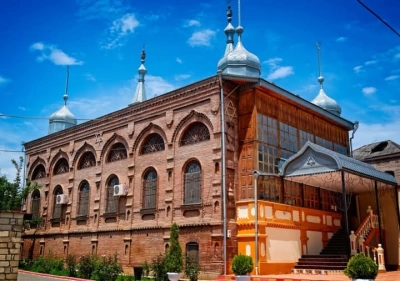
Sheki is renowned for its rich cuisine, historic architecture and traditional sweets. Visitors travelling to this region during Novruz can discover Azerbaijan's ancient urban culture and enjoy its distinctive festive atmosphere.
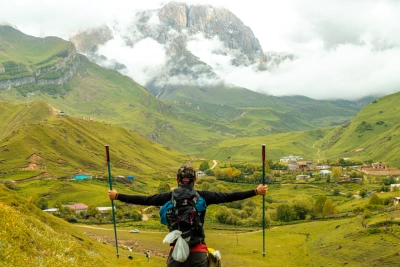
In the Guba and Gusar regions, Novruz takes on a special atmosphere shaped by village life, family traditions and beautiful mountain landscapes. By visiting local villages, travellers can experience how residents prepare for the holiday, enjoy traditional dishes and discover the region's renowned hospitality.
Shamakhi, Lahij, Basgal and other historic settlements are also fascinating destinations for discovering Azerbaijan's traditional way of life and rich handicraft heritage.
Foreign visitors travelling to Azerbaijan during Novruz have the opportunity not only to explore historical monuments and natural landscapes but also to experience the everyday life, national traditions and hospitality of the Azerbaijani people.
Novruz – Azerbaijan's Living Cultural Heritage
Novruz is much more than a date marked on the calendar. It is a major cultural celebration that brings together the history of the Azerbaijani people, their relationship with nature, national cuisine, folklore and family values.
Gathering around bonfires, growing samani, preparing khonchas, baking traditional sweets and exchanging holiday greetings with loved ones are traditions that have been passed down from generation to generation for centuries.
Today, Novruz is one of the important elements of Azerbaijan's cultural heritage presented to the world. For visitors travelling to our country, this celebration offers a wonderful opportunity to discover the history, traditions and way of life of the Azerbaijani people more closely.
Novruz is a celebration of spring, renewal, friendship and unity. Every year, it brings people new hopes, warm wishes and wonderful beginnings.