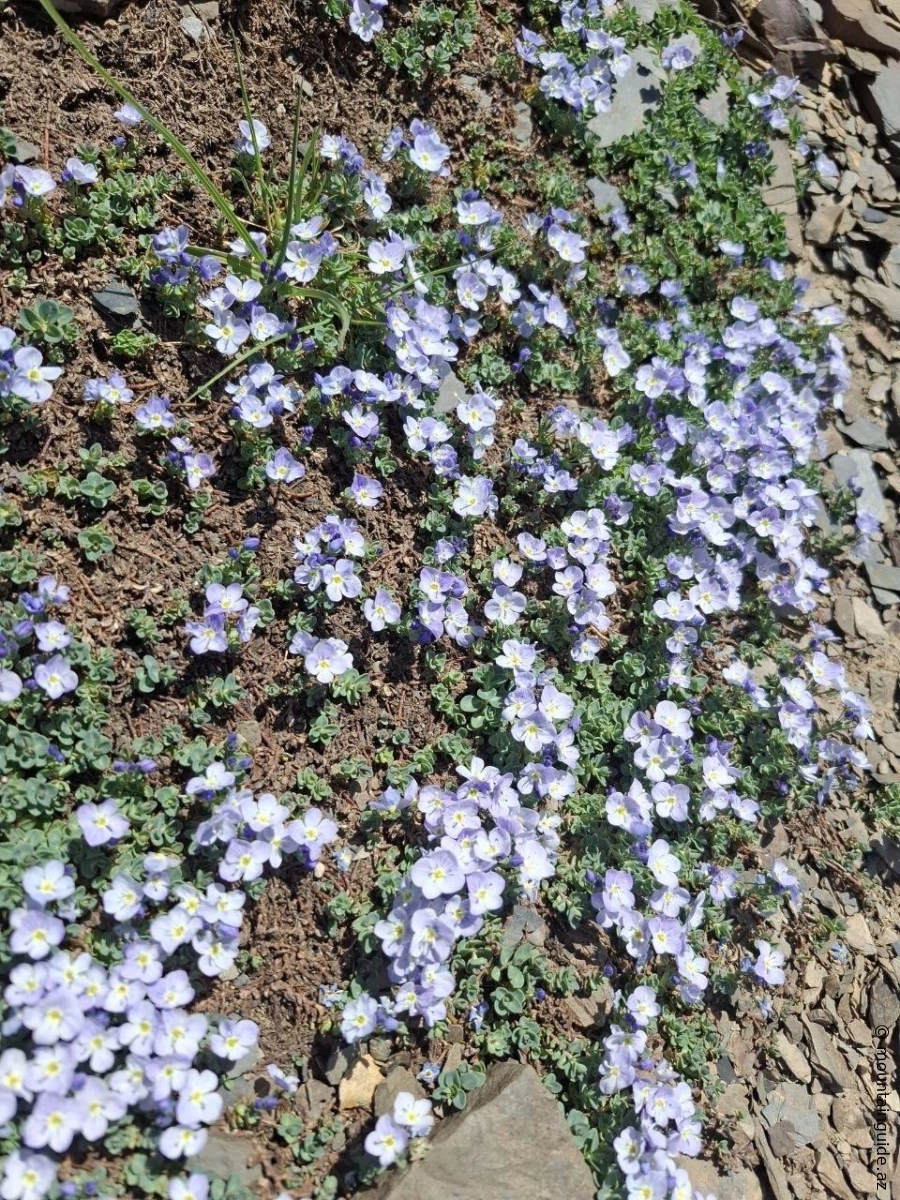
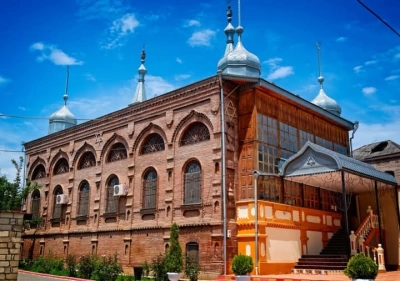
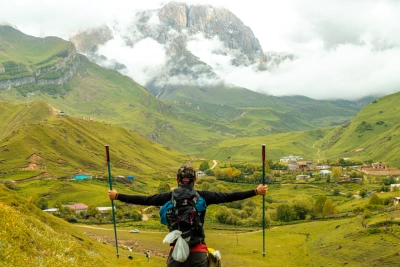
Various plant species belonging to Azerbaijan's rich mountain flora can be found on the slopes of Mount Bazarduzu. Along the trails leading to the base camp, hikers can observe mountain flowers, alpine plants, and rare flora species adapted to high-altitude environments. The mountain vegetation of Bazarduzu is one of the features that makes this area particularly interesting for nature lovers and hiking enthusiasts. During a hike on Mount Bazarduzu, you can discover the mountain's natural beauty and unique flora up close.
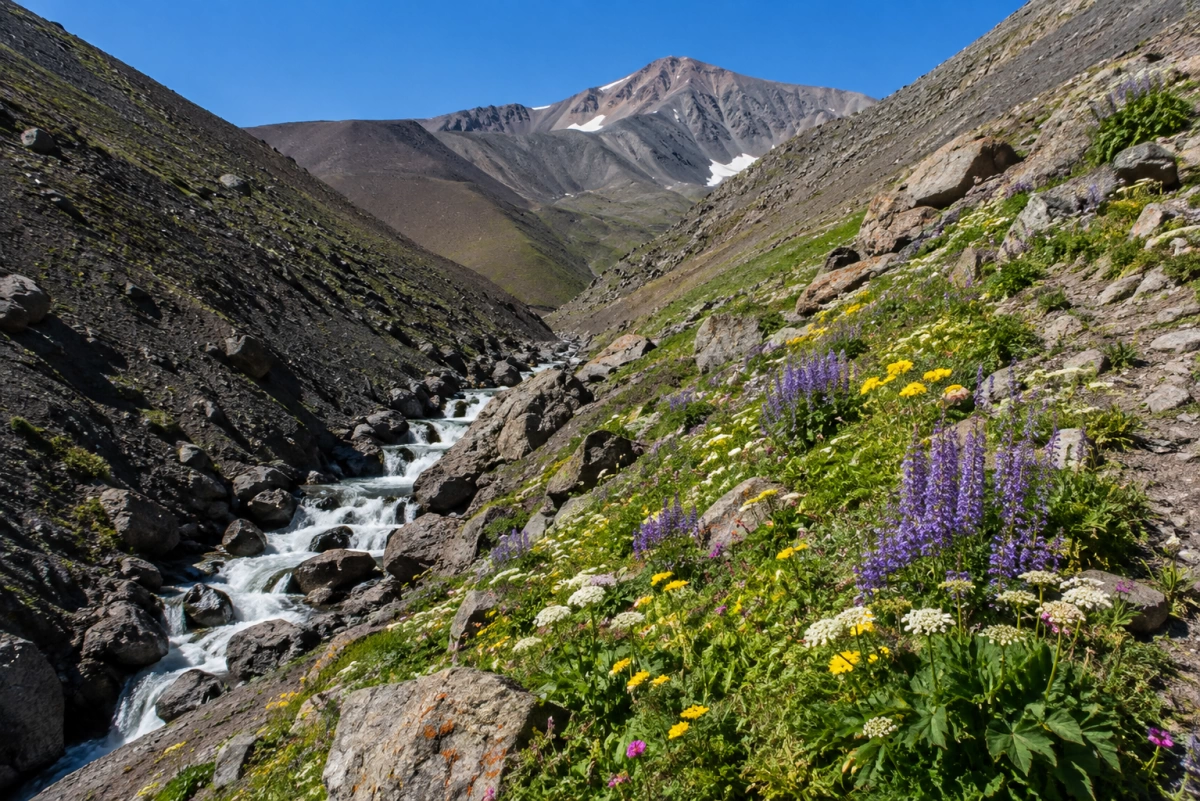
Azerbaijan's highest peak, Mount Bazarduzu — 4,466 m, is located in the Main Caucasus Range, on the Azerbaijan–Russia border, within the Gusar district.
The journey to this magnificent summit is not only a challenge of altitude and physical endurance. The trails leading to the base camp pass through rocky and gravelly terrain, as well as slopes that are slippery and difficult to cross in some places. The surrounding landscape is characterised by rocky outcrops, deep valleys, scree slopes and high-altitude mountain meadows.
As the altitude increases, nature becomes harsher. Strong winds, low temperatures, sudden weather changes, a short growing season and limited soil make plant life difficult in this environment.
Yet even in these harsh conditions, the mountains are full of life.
Along the trail, various plants can be spotted between stones, in rock crevices, on gravelly slopes and in mountain meadows. Some attract attention with their colourful flowers, others protect themselves with thorns, while some are so small that they require careful observation to be noticed.
These plants are not simply elements that add beauty to the mountain landscape. Each one is a unique example of adaptation to the harsh environment in which it lives. Some grow low and close to the ground to shelter from the wind, others have hairy or fleshy leaves to protect themselves from the cold, while some can survive almost without soil, growing only among rocks.
Among the many plants found along the route to Bazarduzu, several distinctive species are particularly worth noticing. Each is a small but fascinating part of the mountain environment.
Now, let us take a closer look at the plants found along these trails. Together, we will discover where they grow, the conditions they thrive in, how they adapt to high-altitude environments and what interesting characteristics they possess.
Sometimes, the most fascinating discoveries on the way to a summit are not found on distant peaks, but in the living world beneath our feet.
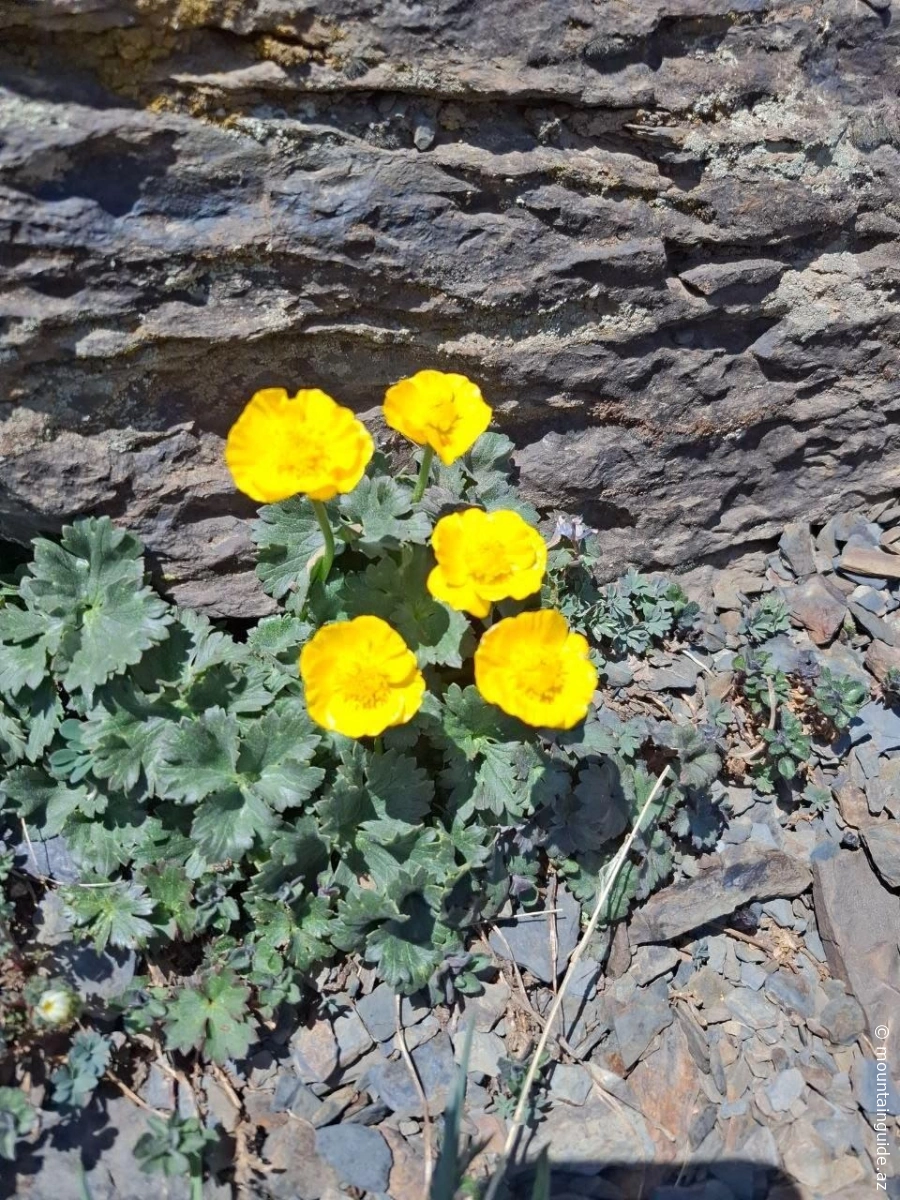
1. Altai Buttercup — Ranunculus altaicus
Altai Buttercup (Ranunculus altaicus) is one of the notable plants found on the slopes of Mount Bazarduzu and in high-altitude areas. This species is mainly distributed across the mountainous regions of Eurasia and grows in harsh natural environments such as rocky slopes, gravelly areas and mountain meadows.
One of the plant's most distinctive features is its bright yellow flowers and divided leaves. The yellow flowers stand out clearly against the mountain landscape, especially on sunny days. They attract various pollinating insects and play an important role in the mountain ecosystem.
Like many wild plants found in nature, Altai Buttercup should be observed with care. As the plant contains substances that may irritate the skin, it is best to avoid touching it or using it in its wild form.
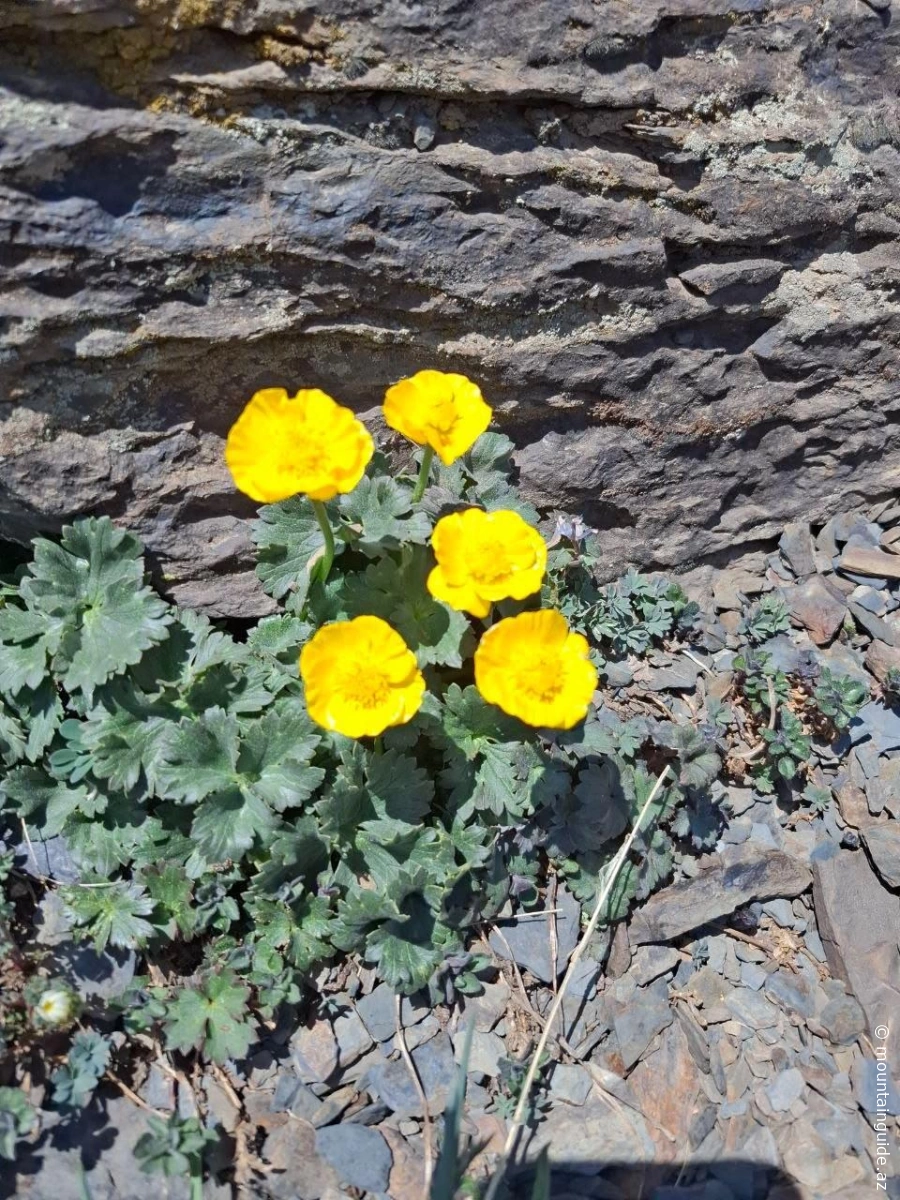
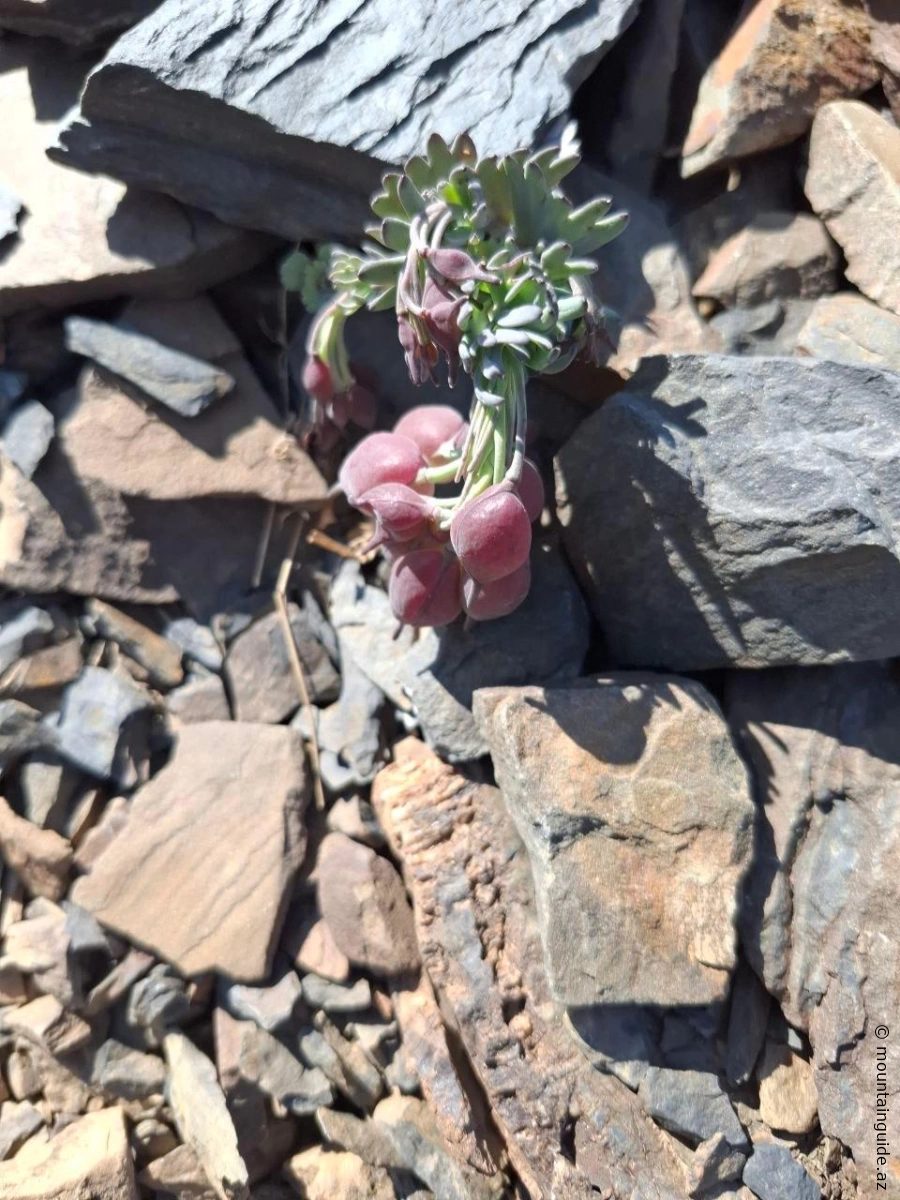
2. Fingered Pseudovesicaria — Pseudovesicaria digitata
Fingered Pseudovesicaria (Pseudovesicaria digitata) is one of the rare plants found in the high-altitude regions of the Greater Caucasus, including the mountainous areas of Azerbaijan. This plant mainly grows on rocky and schistose scree slopes, in alpine and subnival zones. Despite the harsh climatic conditions, it has adapted to survive in rocky areas with almost no soil.
One of the most characteristic features of Fingered Pseudovesicaria is its fleshy, grey-green leaves. These leaves help the plant adapt to changing temperatures, strong winds and limited water availability in high-altitude environments. Its ability to grow among rocks is another fascinating feature that demonstrates how it survives in the harsh conditions of the high mountains.
This species attracts attention not only because of its appearance and adaptation to high-altitude conditions, but also because of its rarity. Fingered Pseudovesicaria is one of the protected plant species included in Azerbaijan's Red Book. Therefore, if you encounter this plant in the wild, it is important not to pick it or damage it, but to leave it undisturbed in its natural habitat.
The slopes of Mount Bazarduzu and the high-altitude trails leading to it are among the special ecosystems where such rare plants can be found.
3. Common Hogweed — Heracleum sphondylium
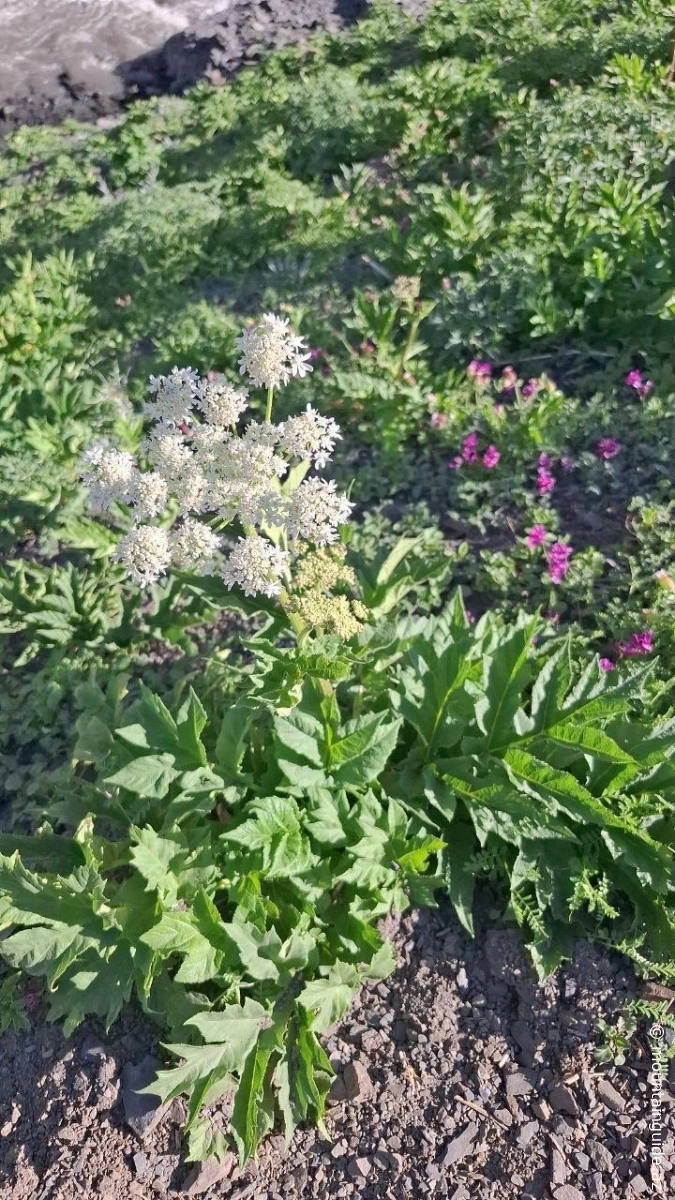
Common Hogweed (Heracleum sphondylium) is a large herbaceous plant distributed across various parts of Europe and Western Asia. It mainly grows in meadows, on moist slopes and among tall grasses. It can also be found on the slopes of Mount Bazarduzu and in suitable areas of the surrounding mountainous region.
Common Hogweed is easily recognisable by its large, deeply divided leaves and white, umbrella-shaped flower clusters. During the flowering period, its large flower heads stand out among the surrounding vegetation. Its flowers provide a food source for various insects, giving the plant a role in the mountain ecosystem.
However, caution is necessary when dealing with Common Hogweed. If the plant's sap comes into contact with the skin and the affected area is then exposed to sunlight, it may cause irritation and skin reactions in some people. Therefore, if you encounter this plant in nature, it is advisable not to touch it and, in particular, to avoid getting its sap on your skin.
4. Thistle — Cirsium sp.
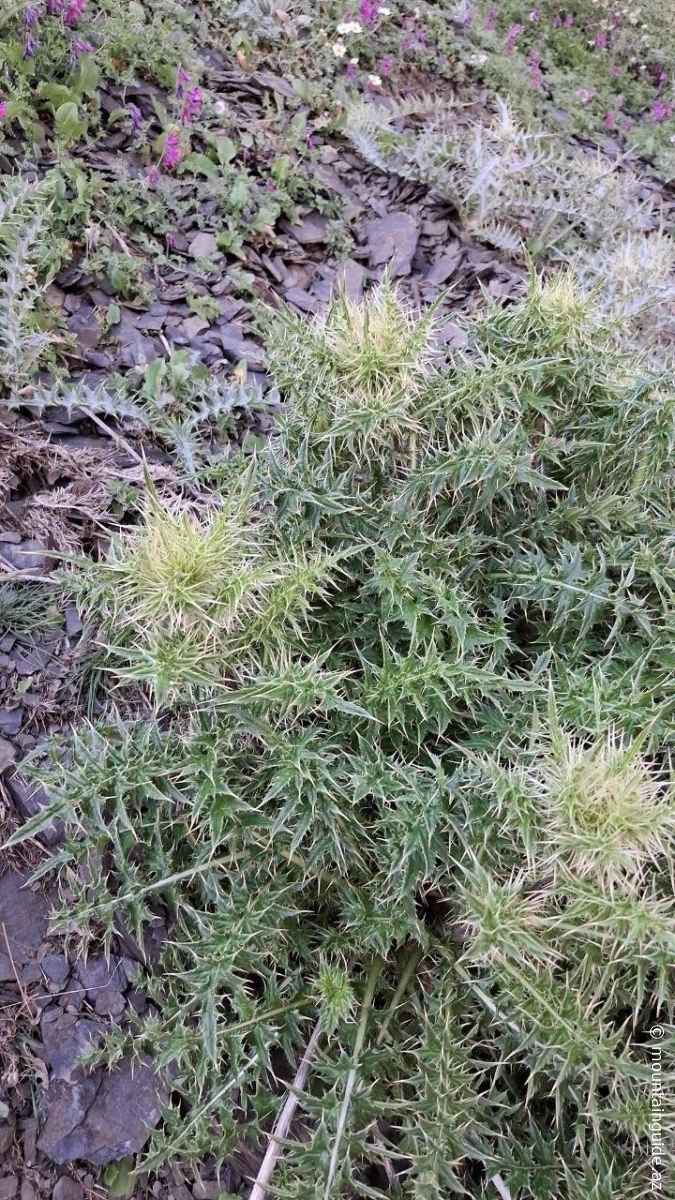
Thistle (Cirsium sp.) is a genus of plants distributed across various regions of Europe, Asia and the Caucasus. These plants can be found in different habitats on the slopes of Mount Bazarduzu and in high-altitude areas, including mountain meadows, pastures, rocky slopes and scree fields.
One of the most characteristic features of thistles is the sharp spines along the edges of their leaves. These spines serve as a natural defence mechanism, protecting the plant from grazing animals. Along mountain trails, thistles are easily recognisable among other herbaceous plants thanks to their spiny leaves.
The flowers of these plants also play an important role in the mountain ecosystem. During the flowering period, bees and other pollinating insects are particularly attracted to thistle flowers and feed on their nectar. Thus, despite its seemingly simple and prickly appearance, this plant forms part of the complex relationships between living organisms in the high-mountain ecosystem.
Care should be taken when approaching thistles, as their sharp spines can injure the skin. Observing these plants in their natural habitat without picking or damaging them is the best approach, both for personal safety and for the conservation of mountain flora.
5. Minuartia — Minuartia sp.
Minuartia (Minuartia sp.) is a genus of small plants widely distributed in the mountainous regions of Eurasia and the Caucasus. On the slopes of Mount Bazarduzu and in high-altitude areas, rocky outcrops, stony slopes and places with very little soil provide suitable habitats for these plants.
This plant is characterised by its slender stems and small white flowers. Due to its diminutive size, it can easily go unnoticed among rocks and stones at first glance. However, upon closer observation, its delicate stems and flowers become visible among the rocky terrain.
Minuartia is one of the fascinating plants adapted to the harsh conditions of high mountains. It can grow even in areas where soil is scarce, winds are strong and temperatures change frequently. Its ability to survive among rocks is one of the most remarkable examples of its adaptation to the high-mountain environment.
This small plant, found along the trails of Mount Bazarduzu, shows us that extensive areas of soil and favourable climatic conditions are not always essential for life in the mountains. Sometimes, a small crevice in a rock and a few handfuls of soil are enough for a plant to survive. 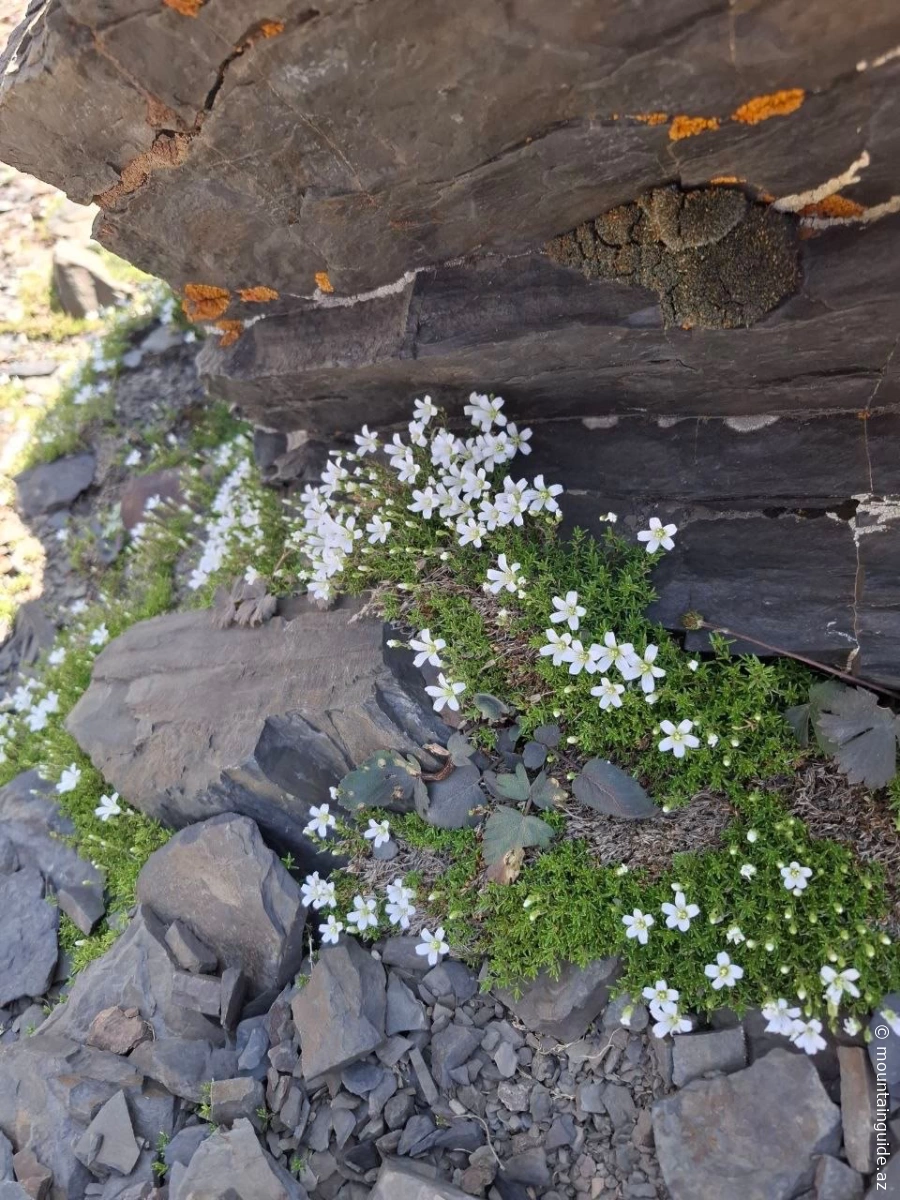
6. Forget-me-not — Myosotis sp.
Forget-me-not (Myosotis sp.) is a delicate flowering plant found in various regions of Europe, Asia and the Caucasus. Different species of this plant can be found in mountain meadows, as well as in rocky and moist areas on the slopes of Mount Bazarduzu and in the surrounding high-altitude regions.
The most striking feature of forget-me-nots is their delicate blue flowers. The yellow centre of each flower creates a beautiful contrast with the blue petals, making the plant even more distinctive.
These small and delicate flowers are particularly eye-catching in mountainous areas. Against the backdrop of grey rocks, stony slopes and green mountain meadows, their blue blossoms add a special touch of colour to the landscape.
Despite its small size, the forget-me-not is one of the plants that reveals the delicate beauty of nature along the Bazarduzu trails. The fact that such delicate flowers can grow amid the harsh and rocky landscapes of high mountains highlights the remarkable diversity of plant life in these areas. 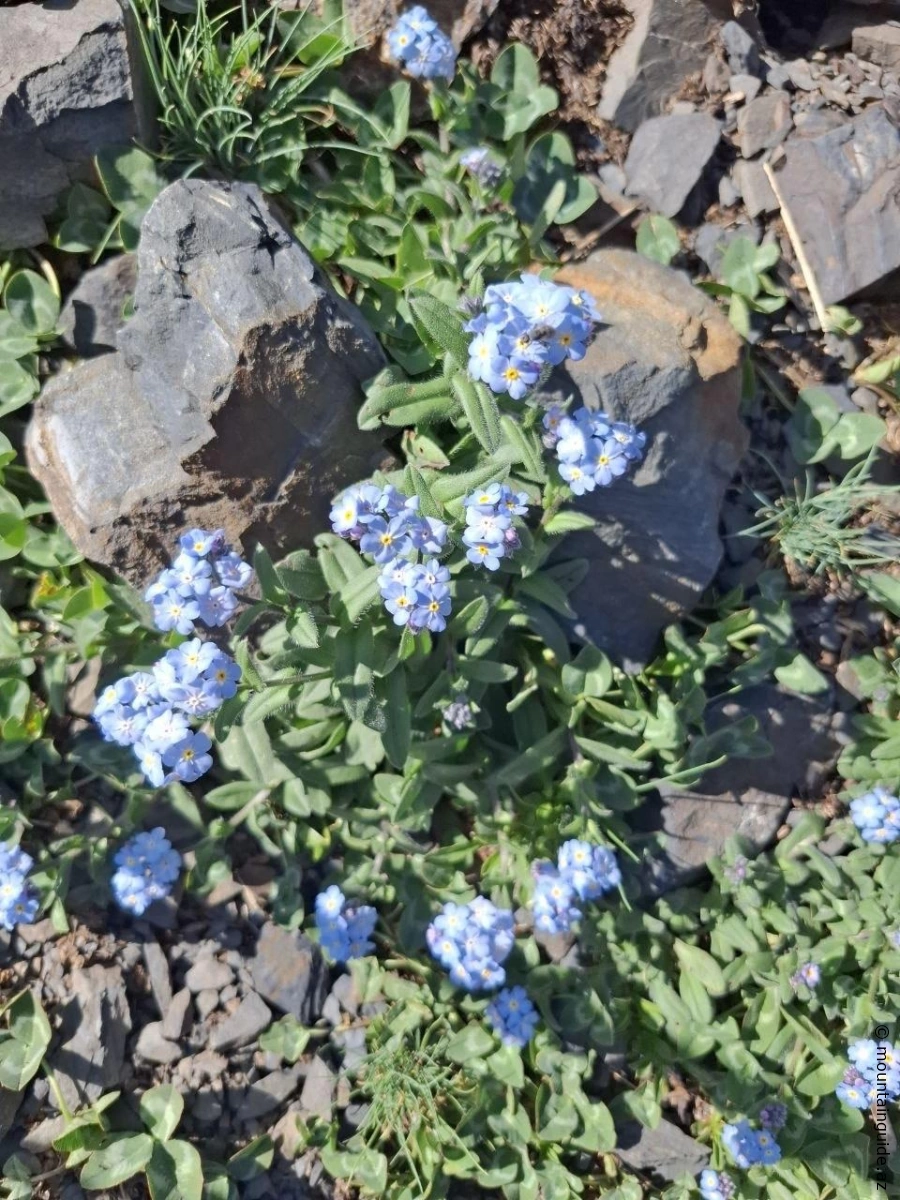
7. Houndstongue — Cynoglossum officinale
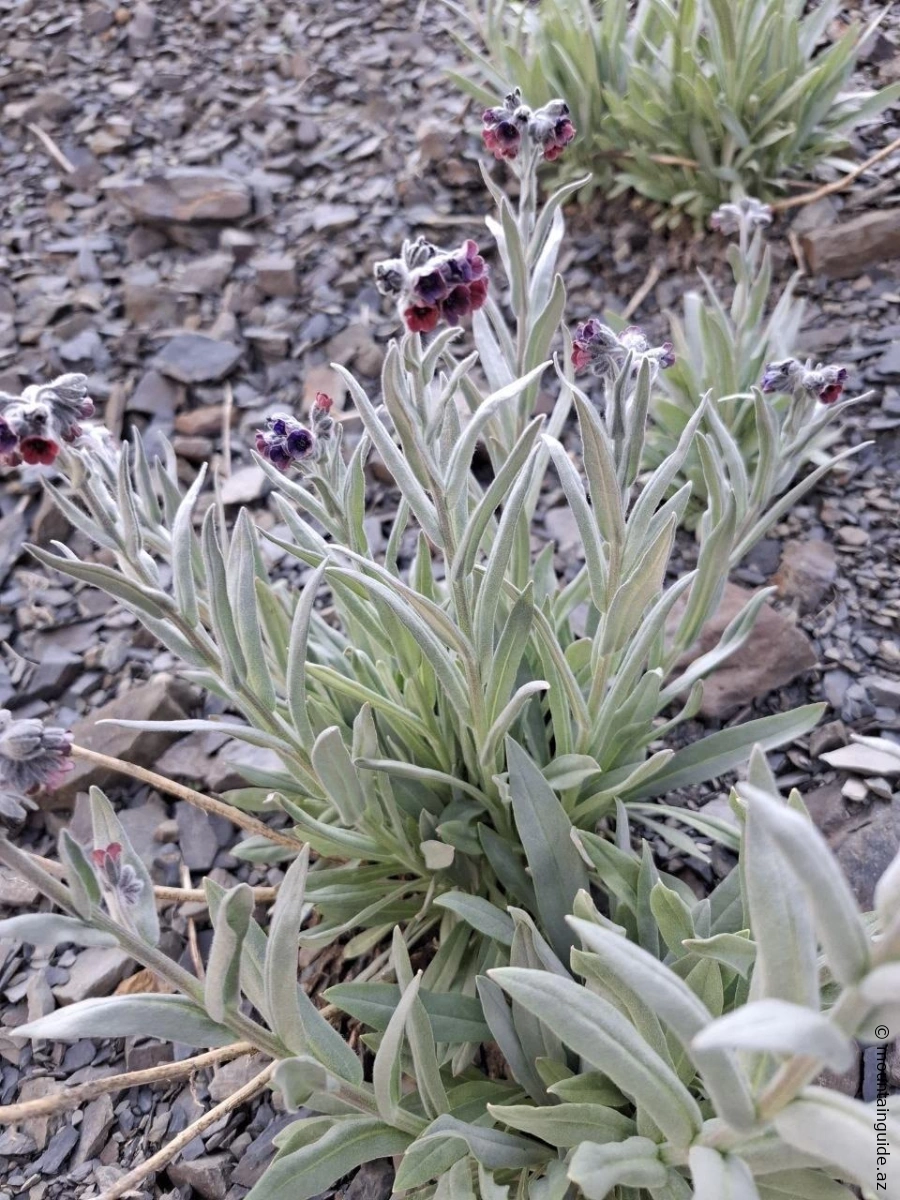
Houndstongue (Cynoglossum officinale) is a plant found in various regions of Europe and Asia. It can also be found on the slopes of Mount Bazarduzu and in mountainous areas, particularly in dry open spaces, on rocky slopes and in sunny locations.
The plant's leaves are covered with fine greyish hairs. Its reddish-purple flowers distinguish it from other plants, especially during the flowering period. Its overall appearance reflects its adaptation to the dry and rocky environments of high-altitude regions.
One interesting feature of houndstongue is the origin of its name. The plant's root is dark in colour, and in various languages its name is associated with the colour and shape of the root.
However, this plant should be handled with caution. As it contains toxic substances, ingesting it is dangerous. If you encounter it in nature, it is best to observe it in its natural habitat rather than collect or use it.
8. Astragalus / Milkvetch — Astragalus / Oxytropis
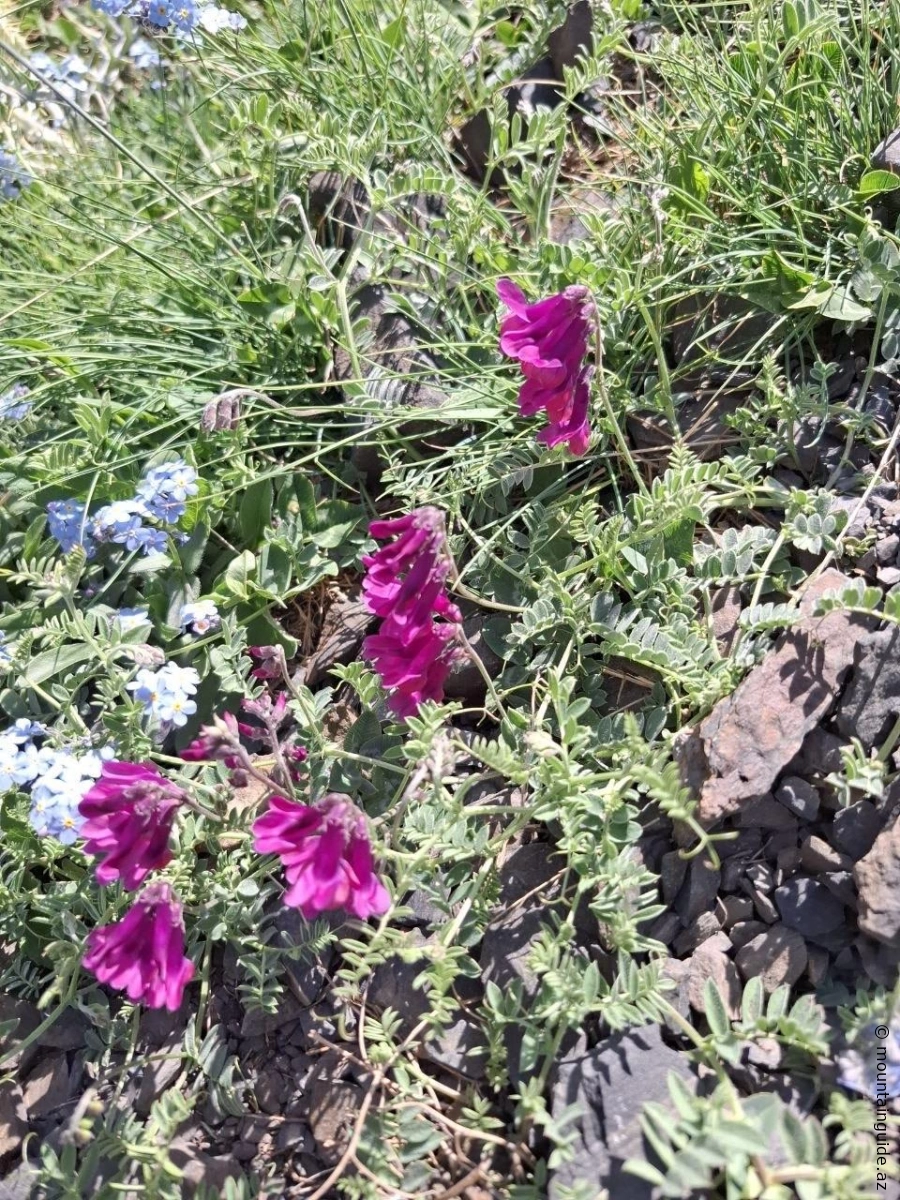
Plants belonging to the genera Astragalus and Oxytropis, commonly known as milkvetches, are widely distributed across the mountainous regions of Eurasia, including the Caucasus. Various species of these plants can be found on the slopes of Mount Bazarduzu and in high-altitude areas, particularly on dry rocky slopes, scree fields and alpine meadows.
Although the appearance of milkvetches varies from species to species, many are characterised by their small leaves and pinkish-purple flowers. Their low-growing form on rocky and dry slopes helps them adapt to strong winds and harsh mountain conditions.
These plants are particularly important in the flora of the Caucasus. The genera Astragalus and Oxytropis are represented by numerous species in the region and form an important part of the Caucasus's rich plant diversity.
The rocky slopes and alpine meadows around Mount Bazarduzu provide suitable natural habitats for observing these fascinating plants. Although small and seemingly modest, the milkvetches found along the trails are important representatives of the rich high-mountain ecosystem.
9. Catmint — Nepeta sp.
Catmint (Nepeta sp.) is one of the aromatic plants found in various regions of Europe, Asia and the Caucasus. Different species of this plant can be found on sunny rocky slopes and in dry mountain meadows on the slopes of Mount Bazarduzu.
One of the most distinctive features of catmint is its aromatic leaves and purple flowers. Its purple blossoms stand out clearly against the green background of mountain meadows, giving the plant a distinctive appearance.
The plant's characteristic aroma is associated with the essential oils found in its leaves and other parts. This scent becomes particularly noticeable when the leaves are crushed.
Finding catmint along the Bazarduzu trails shows that the mountain flora is rich not only in colour but also in fragrance. Growing on sunny, dry slopes, this plant is an interesting representative of the high-mountain environment. 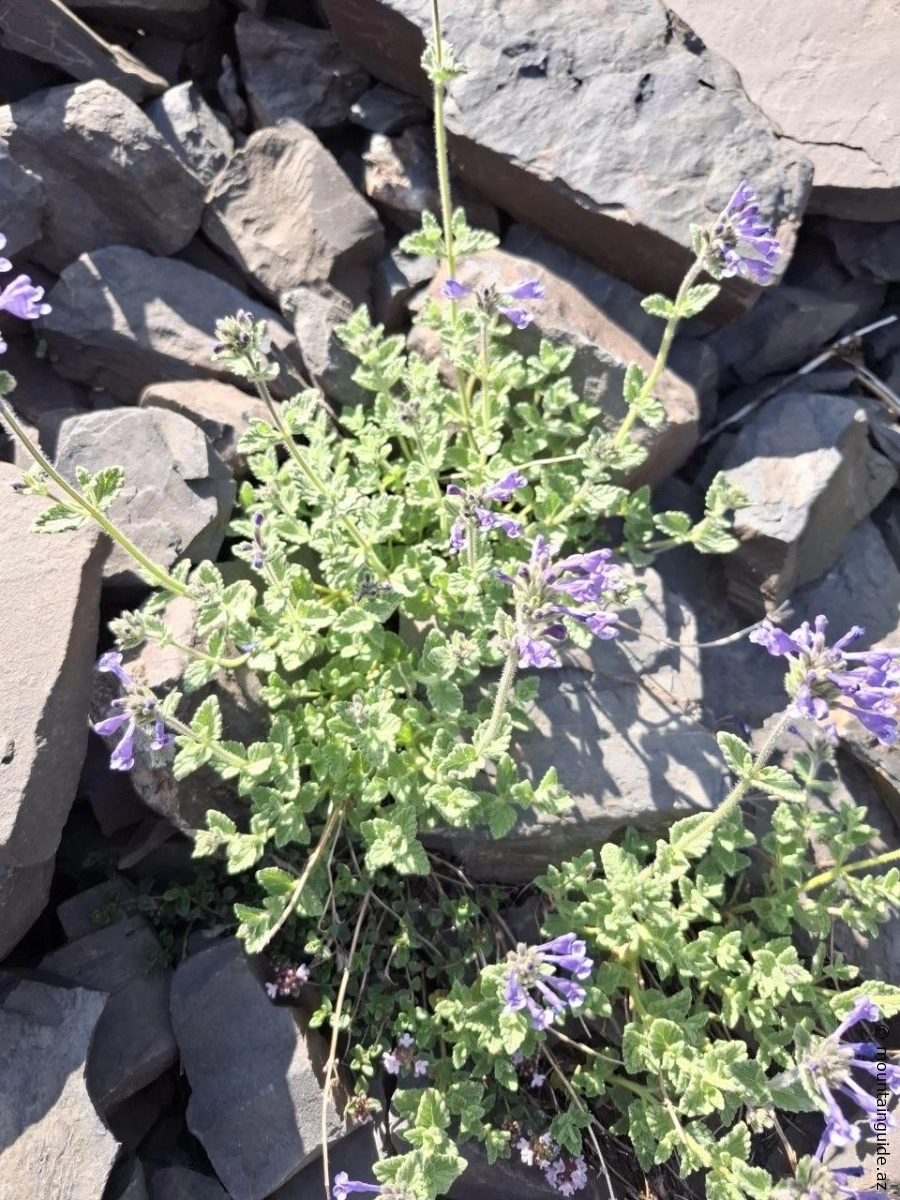
10. Creeping Thyme — Thymus serpyllum
Creeping Thyme (Thymus serpyllum) is a plant widely distributed across various regions of Europe and Asia and well adapted to dry, sunny mountainous environments. It can be found on dry rocky slopes and in mountain meadows on the lower slopes of Mount Bazarduzu.
Creeping Thyme is characterised by its spreading stems, small leaves and pinkish-purple flowers. During the flowering period, it forms colourful, dense patches of vegetation among the rocky slopes.
Its creeping growth habit provides an important advantage in high-mountain environments. Growing close to the ground helps protect it, to some extent, from strong winds and allows it to adapt to harsh weather conditions. This characteristic makes it easier for Creeping Thyme to survive on open, rocky mountain slopes.
Growing among the stones along the Bazarduzu trails, Creeping Thyme is a beautiful example of the resilience of mountain flora and nature's ability to adapt to harsh conditions. Despite its small size, it attracts attention in the mountain landscape through both its appearance and natural distribution. 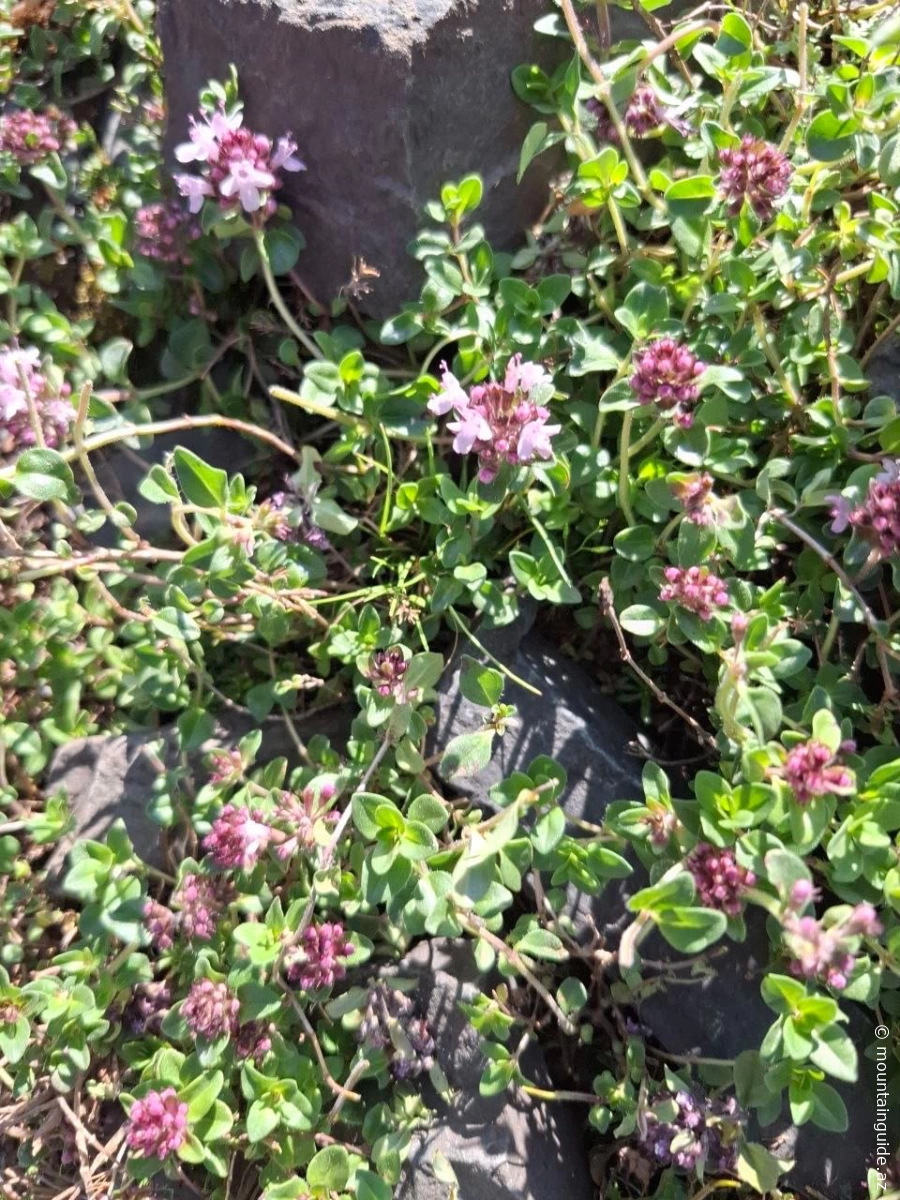
11. Brush-like Dragonhead — Dracocephalum botryoides
Brush-like Dragonhead (Dracocephalum botryoides) is one of the interesting plants found in the high-altitude regions of the Caucasus, including Azerbaijan. It mainly grows on rocky slopes, scree fields and in the alpine zone. Its occurrence at elevations of approximately 2,200–3,500 metres demonstrates its adaptation to harsh high-mountain conditions.
The hairy stem and purple flowers are among the main characteristic features of Brush-like Dragonhead. Its purple blossoms stand out particularly well against the grey background of rocky slopes. Its hairy structure may also help it adapt to temperature fluctuations and other unfavourable environmental conditions in high-altitude areas.
This plant is a rare and noteworthy representative of high-mountain flora. Therefore, if you encounter Brush-like Dragonhead in the wild, it is important not to pick it or damage its natural habitat. Protecting mountain plants helps preserve the unique ecosystems of these areas for future generations. 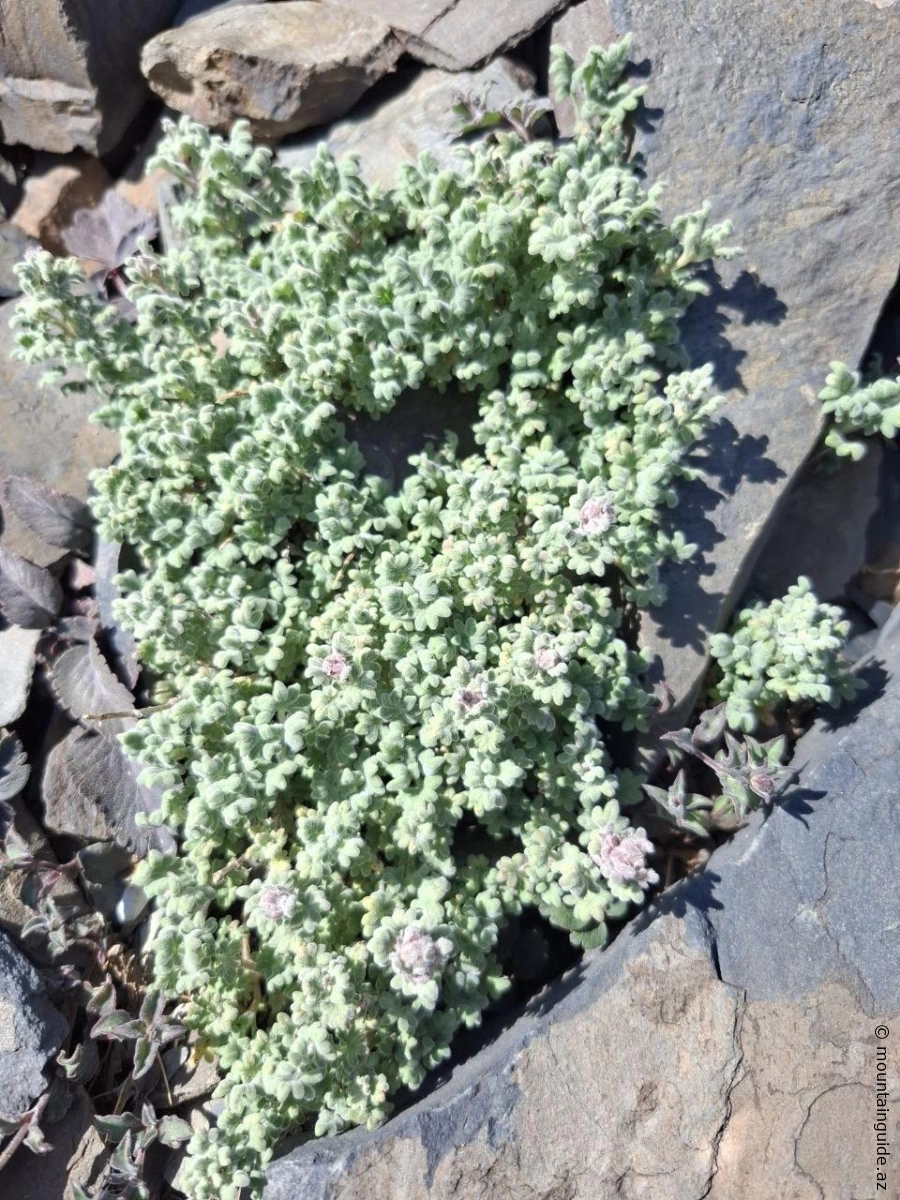
12. Bellflower — Campanula sp.
Bellflower (Campanula sp.) is one of the flowering plants widely distributed across the mountainous regions of Europe, Asia and the Caucasus. Various species of this plant can be found in alpine meadows, on rocky slopes and in rock crevices on the slopes of Mount Bazarduzu and in the surrounding high-altitude areas.
One of the most striking features of bellflowers is their purple, bell-shaped flowers. These delicate blossoms look particularly beautiful against the backdrop of rocky slopes and green alpine meadows. Their ability to grow even in rock crevices demonstrates how well these plants can adapt to different mountain environments.
The genus Campanula is distinguished by its rich species diversity in the flora of the Caucasus. Numerous species belonging to this genus can be found at different elevations and in various habitats throughout the region.
Finding bellflowers along the Bazarduzu trails reveals the colourful diversity of high-mountain nature. With their purple flowers blooming among the rocks, these plants bring a delicate and vibrant touch to the rugged mountain landscape. 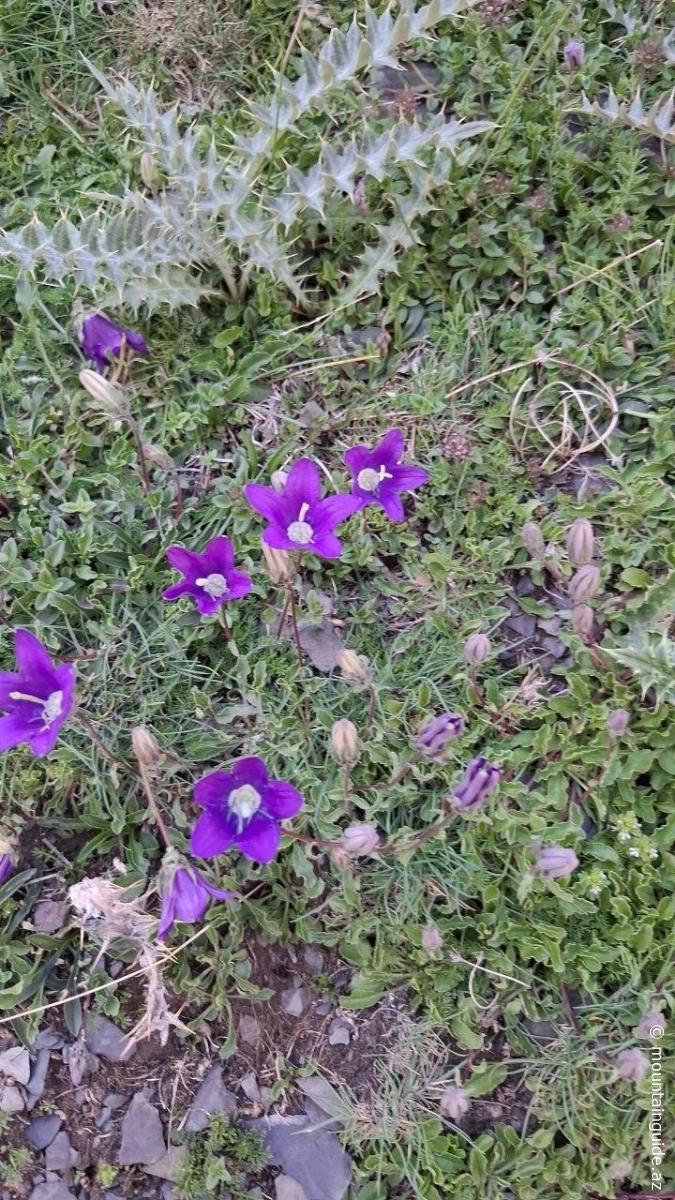
13. Beautiful Vavilovia — Vavilovia formosa
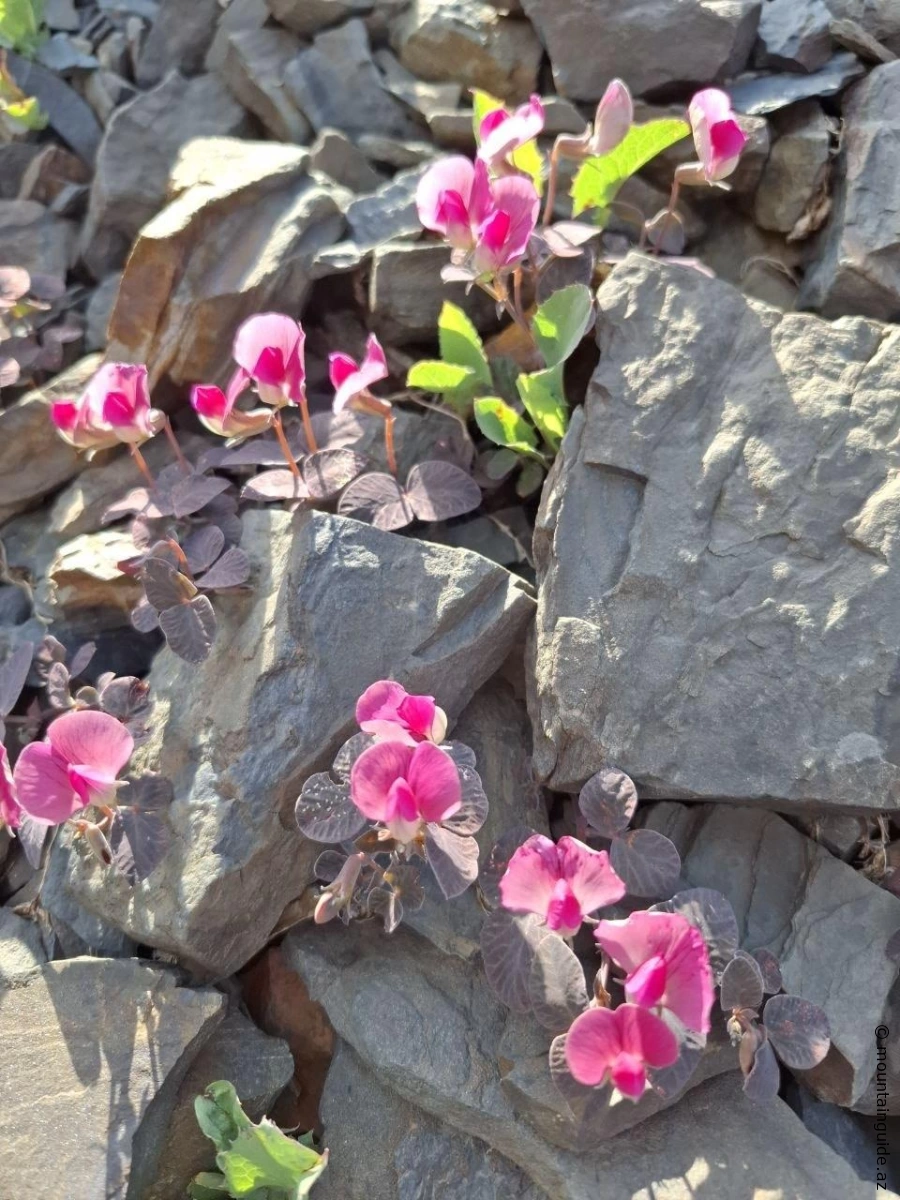
Beautiful Vavilovia (Vavilovia formosa) is one of the rare and fascinating perennial plants found in the high-altitude regions of the Caucasus and Western Asia. It mainly grows on rocky and gravelly slopes in high-mountain areas characterised by harsh climatic conditions.
Its pinkish-purple flowers are among the main features that distinguish Beautiful Vavilovia from other mountain plants. These delicate blossoms are particularly striking against the grey background of rocky slopes. Its perennial nature allows it to survive for many years in unfavourable high-altitude conditions.
One of the most fascinating features of this plant is that it is the only species in the genus Vavilovia. In this respect, Beautiful Vavilovia is considered a remarkable representative of the ancient and distinctive high-mountain flora of the Caucasus.
Due to its rarity, protecting Beautiful Vavilovia in its natural habitat is particularly important. If you encounter this plant in the wild, it is essential not to pick it or damage its habitat.
The rocky and gravelly slopes extending towards the higher elevations of Mount Bazarduzu provide special natural habitats for such rare plants. Beautiful Vavilovia is one of the most fascinating examples of how rich and diverse life can be even in these harsh mountain conditions.
14. Corydalis — Corydalis sp.
Corydalis (Corydalis sp.) is a flowering plant found in various regions of Europe, Asia and the Caucasus. Different species of this genus can be found on the slopes of Mount Bazarduzu and in high-altitude areas, particularly on rocky slopes, in mountain meadows and in crevices between rocks.
Corydalis is characterised by its divided grey-green leaves and tubular flowers. The shape and colour of its flowers can vary depending on the species. Its ability to grow among rocky slopes and rugged terrain demonstrates its adaptability to different mountain environments.
Some species of the genus Corydalis contain biologically active alkaloids. Therefore, these plants found in the wild should never be used for medicinal purposes without professional guidance. When observing mountain flora, the best approach is to avoid touching the plants and leave them undisturbed in their natural habitats.
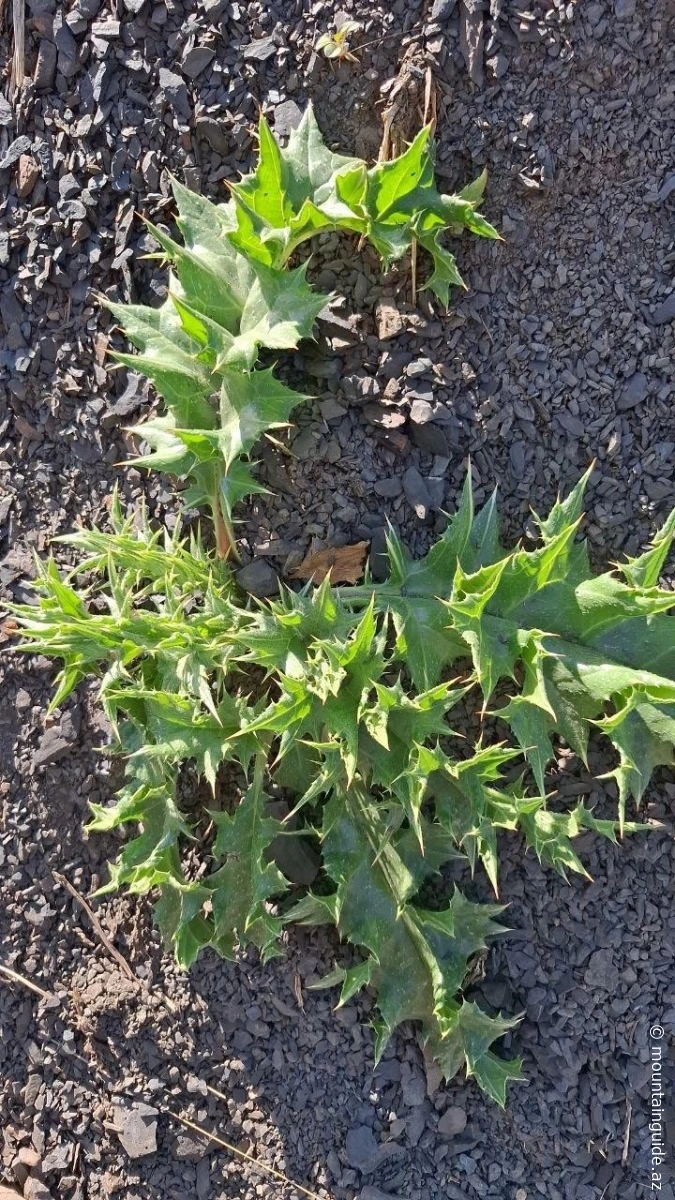
15. Tournefort's Gundelia — Tchenger / Kenger — Gundelia tournefortii
Tournefort's Gundelia (Gundelia tournefortii), known in Azerbaijan as tchenger or kenger, is a plant found in the dry regions of the Caucasus and Western Asia. It can be found on the slopes of Mount Bazarduzu, particularly on dry, rocky slopes and gravelly soils.
One of the most distinctive features of Gundelia is its tough, heavily spined leaves. This spiny structure is part of the plant's adaptation to life in dry and harsh environments. Its distinctive appearance makes it easily recognisable against the backdrop of rocky slopes.
As the plant's spines are quite sharp, care should be taken when approaching it. If you encounter this plant in nature, it is best to observe it without picking or damaging it.
Tournefort's Gundelia is considered one of the characteristic plants of dry and rocky environments.
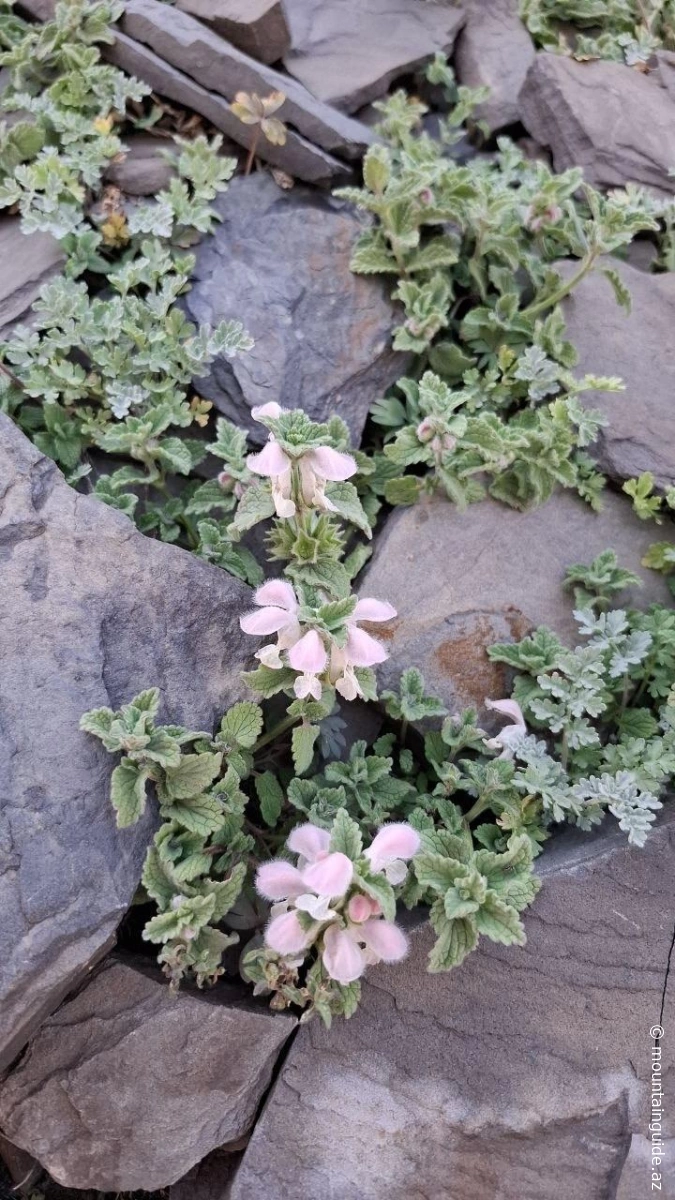
16. White Dead-nettle — Lamium album
White Dead-nettle (Lamium album) is a perennial herbaceous plant distributed across various regions of Europe and Asia. It can also be found on the slopes of Mount Bazarduzu and in mountainous areas, particularly in meadows, on slopes and along woodland edges.
At first glance, it looks very similar to common stinging nettle. However, unlike true nettles, Lamium album does not have stinging hairs on its leaves and does not cause the burning sensation associated with nettle contact. Its white flowers are another key feature that distinguishes it from true nettles.
Because of this characteristic, White Dead-nettle is also commonly known as "blind nettle". Despite its visual similarity to stinging nettle, the two plants should not be confused.
White Dead-nettle, found in the meadows and on the slopes around Mount Bazarduzu, is another interesting representative of mountain flora. Its resemblance to stinging nettle, despite lacking stinging hairs, shows how fascinating it can be to observe plants closely in their natural environment.
17. Chamomile — Anthemis sp.
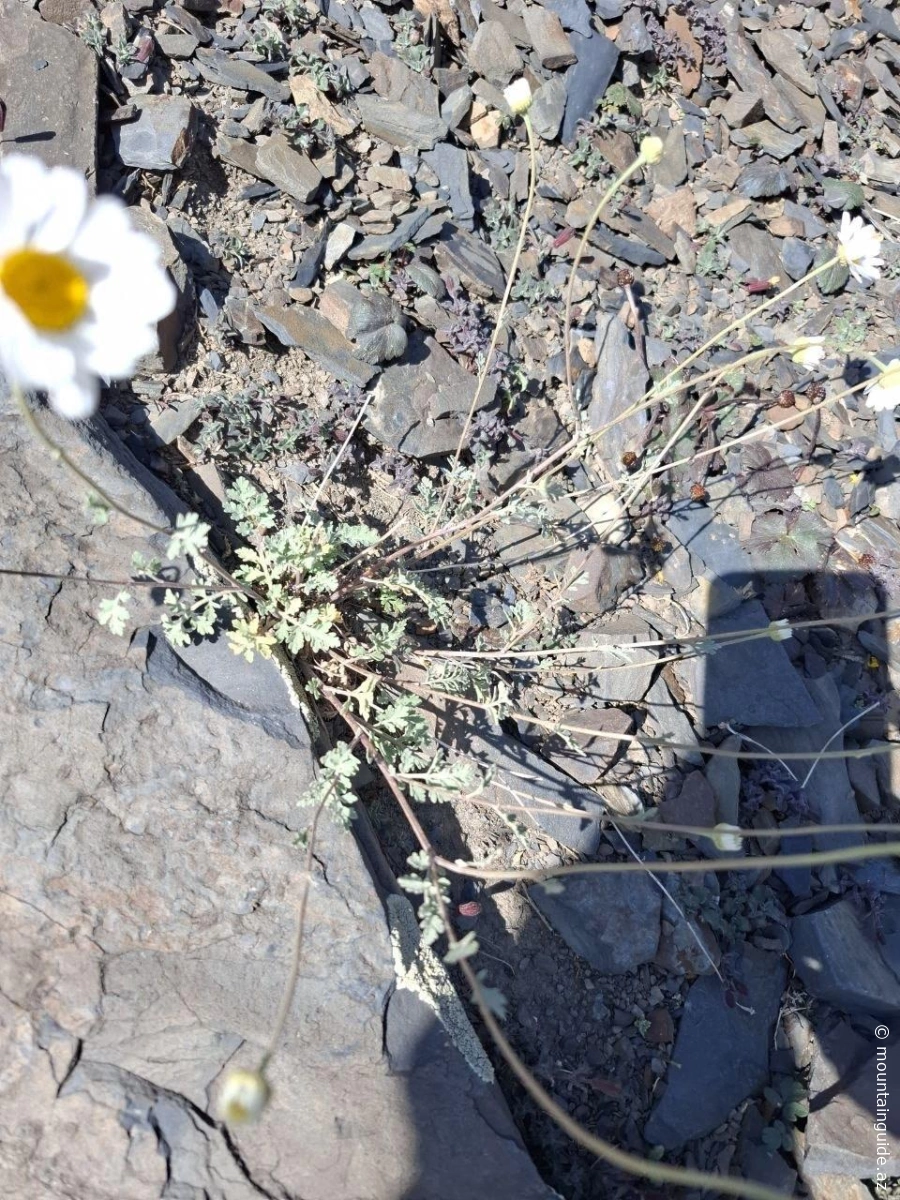
Chamomile (Anthemis sp.) is a group of flowering plants commonly found in mountainous regions of Europe, as well as in high-altitude ecosystems. At the foothills of Mount Bazarduzu and along the trails leading to higher elevations, plants belonging to this genus can be found in rocky areas and alpine meadows.
The small flowers of chamomile are distinguished by their white petals and yellow centres. Against the backdrop of green mountain meadows and grey rocky slopes, their white flowers can be noticeable even from a distance.
The plant's low-growing, ground-hugging form provides an important advantage in high-altitude environments. This growth habit helps reduce the impact of strong winds and improves its ability to withstand low temperatures. As a result, chamomile has its own distinctive place among the plants capable of surviving in harsh mountain climates.
18. Figwort — Scrophularia sp.
Figwort (Scrophularia sp.) belongs to a group of flowering plants distributed across various regions of Europe, Asia and the Caucasus. At the foothills of Mount Bazarduzu and in high-altitude areas, plants belonging to this genus can be found on rocky slopes, among rock formations, in mountain meadows and in damp locations.
Plants belonging to the genus Scrophularia are generally distinguished by their upright stems and oppositely arranged leaves. Their flowers are usually small and have an unusual shape. These characteristics make them stand out from other plants found along mountain trails.
Figwort mainly grows in natural and relatively undisturbed areas. Its ability to adapt to different habitats, including rocky slopes, cliffs and mountain meadows, makes it an interesting group of plants within mountain ecosystems.
Along the trails around Mount Bazarduzu, such small plants, which may easily go unnoticed at first glance, reveal the richness of the mountain flora. Figwort is also one of the distinctive flowering representatives of the high-mountain environment. 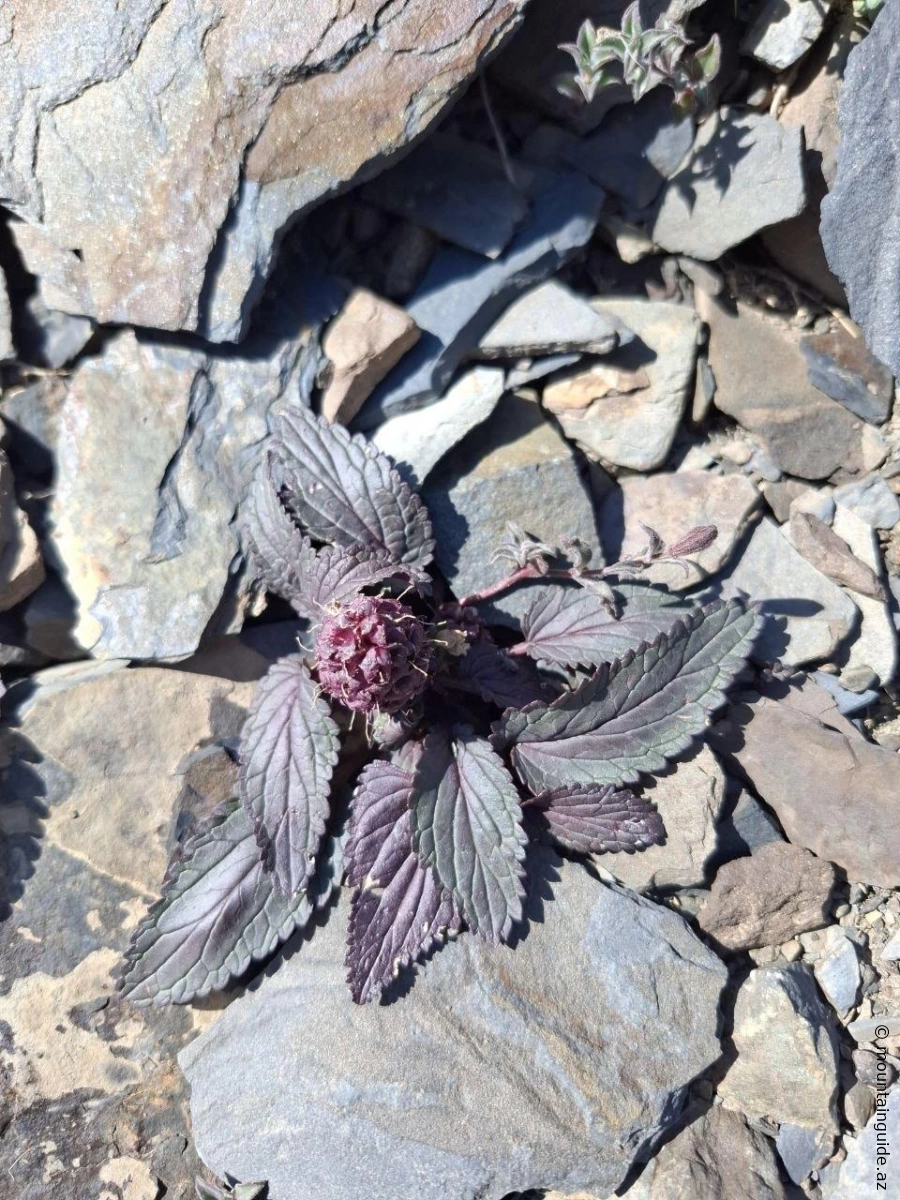
19. Campion — Silene sp.
Campion (Silene sp.) belongs to a group of flowering plants distributed across various regions of Europe, Asia and the Caucasus. At the foothills of Mount Bazarduzu and in high-altitude areas, different species of the genus Silene can be found on rocky and gravelly slopes, among rock formations and in mountain meadows.
Campions are distinguished by their pink or purple flowers and slender stems. In some species, the flower calyx is swollen, making the plant stand out from other mountain flowers. The shape and appearance of the flowers may vary depending on the species.
There are numerous species within the genus Silene, some of which are well adapted to the harsh natural conditions of high mountains. Their ability to grow in rocky and gravelly soils and withstand strong winds and temperature fluctuations demonstrates their adaptation to mountain environments. 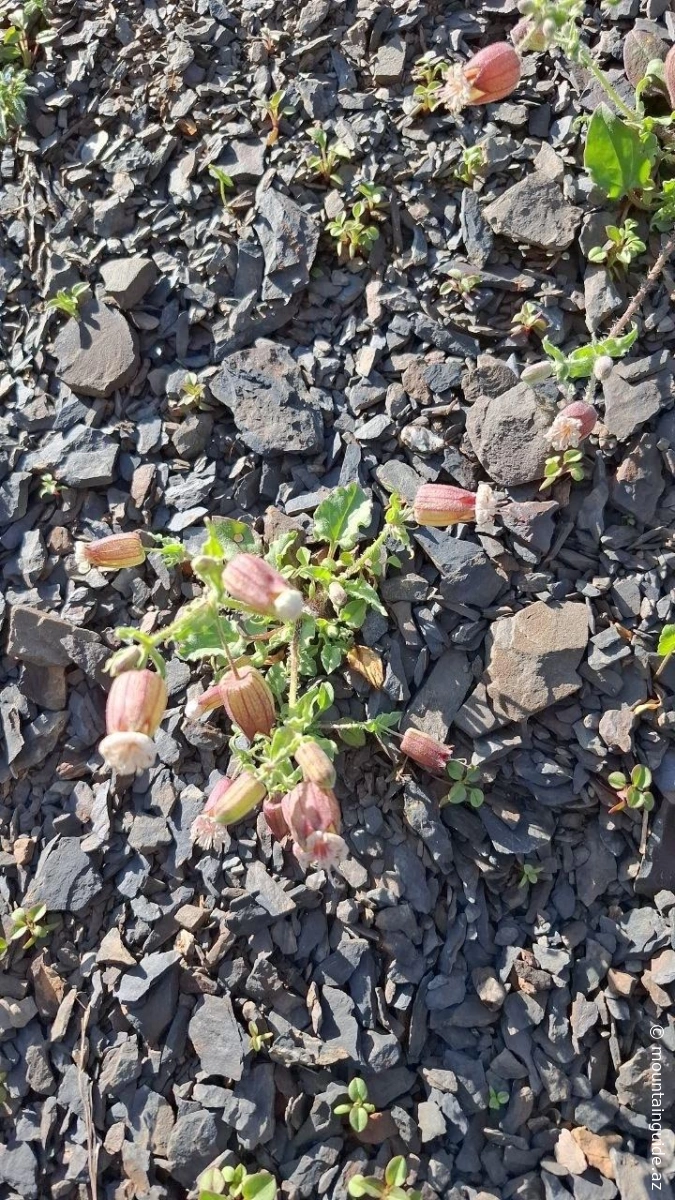
20. Slender Speedwell — Veronica filiformis
Slender speedwell (Veronica filiformis) is a delicate flowering plant whose natural range is associated with Asia Minor and the Caucasus. At the foothills of Mount Bazarduzu and in suitable mountainous areas, this plant can be found in meadows, damp locations and cool environments.
One of the plant's most distinctive features is its thin, creeping stems. Its delicate blue flowers stand out particularly well among green meadows and against the backdrop of rocky areas. Due to its small size, it can sometimes go unnoticed at first glance.
One interesting characteristic of slender speedwell is its ability to spread easily through vegetative reproduction. It can develop roots at the nodes of its stems and spread into new areas. This allows it to expand rapidly in suitable habitats.
Although touching the plant is not considered dangerous, it is not advisable to use wild plants found in nature. The best approach is to observe and protect them in their natural habitats.