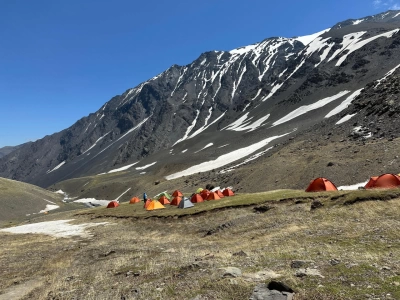
Bazarduzu weather can change rapidly on Azerbaijan’s highest peak, rising to 4,466 meters above sea level. Weather conditions on Mount Bazarduzu can differ significantly from lower elevations in terms of temperature, strong winds, snow, fog, and visibility. Before attempting the summit, it is important to check the Bazarduzu weather forecast and the actual conditions on the route. In this article, you can learn about seasonal weather conditions, temperatures, and the main weather factors to consider for mountaineering on Bazarduzu.
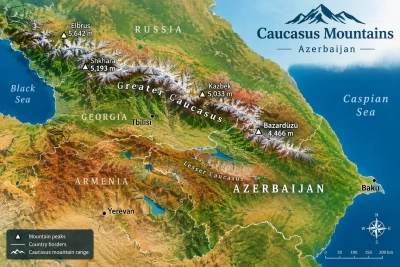
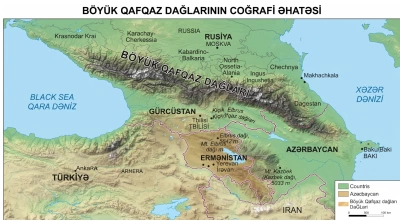
Mount Bazarduzu rises to 4,466 meters and is the highest peak in Azerbaijan. Located in the high-mountainous part of the Greater Caucasus, the weather conditions on the summit are significantly different from those in Baku, Quba, Khinalig, and other lower-elevation areas.
Understanding Bazarduzu weather in advance is important for every trekker and mountaineer planning to climb the summit. As elevation increases, temperatures drop, winds can become stronger, visibility can decrease, and weather conditions can change within a short period of time.
What Is the Weather Like on the Bazarduzu Summit?
At an elevation of 4,466 meters, Bazarduzu has a typical high-altitude alpine climate. Even during the summer months, temperatures at the summit can be low, and freezing conditions may occur at night.
Warm and sunny weather at lower elevations does not mean that the same conditions will exist on the summit. While the weather around Khinalig or Shahyaylag may be relatively mild, temperatures above 4,000 meters can approach or fall below freezing.
Wind is also an important factor. Strong winds can make the air feel significantly colder than the actual temperature and can make movement more difficult across exposed mountain terrain.
How Does the Weather Change with Elevation?
As you move from the lower elevations towards the summit along the Bazarduzu route, weather conditions gradually change.
As elevation increases:
-
temperatures decrease;
-
wind speeds may increase;
-
clouds and fog may develop;
-
visibility decreases;
-
rain may turn into snow;
-
snow and ice fields may be encountered;
-
route-finding may become more difficult.
For this reason, checking only the weather forecast for Khinalig does not provide a complete picture of the conditions on the Bazarduzu summit.
Bazarduzu Weather in Summer
Summer is the most commonly used period for climbing Mount Bazarduzu. However, summer does not mean that the weather on the summit will be warm.
June
Snow may still remain at higher elevations in June. The amount of snow and the condition of the route can vary from year to year.
Although conditions may be relatively favorable during the day, snow and cold weather can still be encountered at high elevations.
July
July is one of the most popular months for Bazarduzu expeditions. The days are long, and weather conditions are generally more favorable than during other parts of the year.
Nevertheless, temperatures at 4,466 meters can still be low, especially during the early morning hours. Strong winds and sudden weather changes are also possible.
August
August is also a popular month for Bazarduzu. Snow conditions on high-mountain routes may be significantly different compared with the beginning of summer.
However, a clear weather forecast does not guarantee good weather on the summit. Mountain weather can change within a short period of time.
September
In September, the weather becomes cooler, and temperatures can drop significantly during the morning hours.
Although suitable weather conditions are possible at the beginning of the month, the probability of snow, strong winds, and unstable weather increases as autumn approaches.
Bazarduzu Weather in Autumn
From October onwards, signs of winter conditions become increasingly noticeable on Bazarduzu.
Temperatures decrease, the probability of snow increases, and daylight hours become shorter. The combination of snow, ice, and strong winds can significantly increase the difficulty of the route.
During autumn hikes, decisions should be based not only on the calendar but also on the actual conditions present on the mountain on those days.
Bazarduzu Weather in Winter
During winter, Bazarduzu becomes a much harsher high-altitude environment.
Heavy snow, low temperatures, strong winds, icy conditions, and poor visibility can make the route more difficult and hazardous. Winter expeditions may require specialized mountaineering experience and appropriate technical equipment.
Depending on snow conditions, crampons, an ice axe, a helmet, and other mountaineering equipment may be required in winter.
Bazarduzu Weather in Spring
Although temperatures begin to rise at lower elevations in spring, winter conditions may still persist in the higher parts of Bazarduzu.
Snow cover, ice, and water flows caused by snowmelt can affect the condition of the route.
Therefore, spring should not automatically be considered an easier hiking season.
Wind on Bazarduzu
When checking the Bazarduzu weather forecast, it is important to consider not only the temperature but also the wind speed.
Strong winds can:
-
make the temperature feel colder;
-
increase the risk of hypothermia;
-
accelerate physical fatigue;
-
make movement more difficult in exposed and steep areas;
-
change conditions on snow and ice;
-
create additional challenges at the tent camp.
For example, a forecast temperature of +2°C can still feel quite cold if the winds are strong. The wind mainly comes from the west and can make the summit climb more difficult.
Snow and Ice Conditions
Snow can remain on the higher parts of Bazarduzu for much of the year. The amount of snow and ice conditions depend on the season, previous weather conditions, and the specific route.
Whether crampons or an ice axe are required should not be determined solely by the calendar. This decision should be based on the actual snow and ice conditions on the route on the day of the climb.
Fog and Visibility
Fog is one of the important factors that should be considered on the Bazarduzu route.
Terrain and directions that are easy to see in clear weather can become difficult to recognize in fog. Reduced visibility makes route-finding and maintaining the correct direction more challenging.
Especially during a summit attempt, if weather conditions deteriorate, continuing along the route should be reassessed.
How to Check the Bazarduzu Weather Forecast?
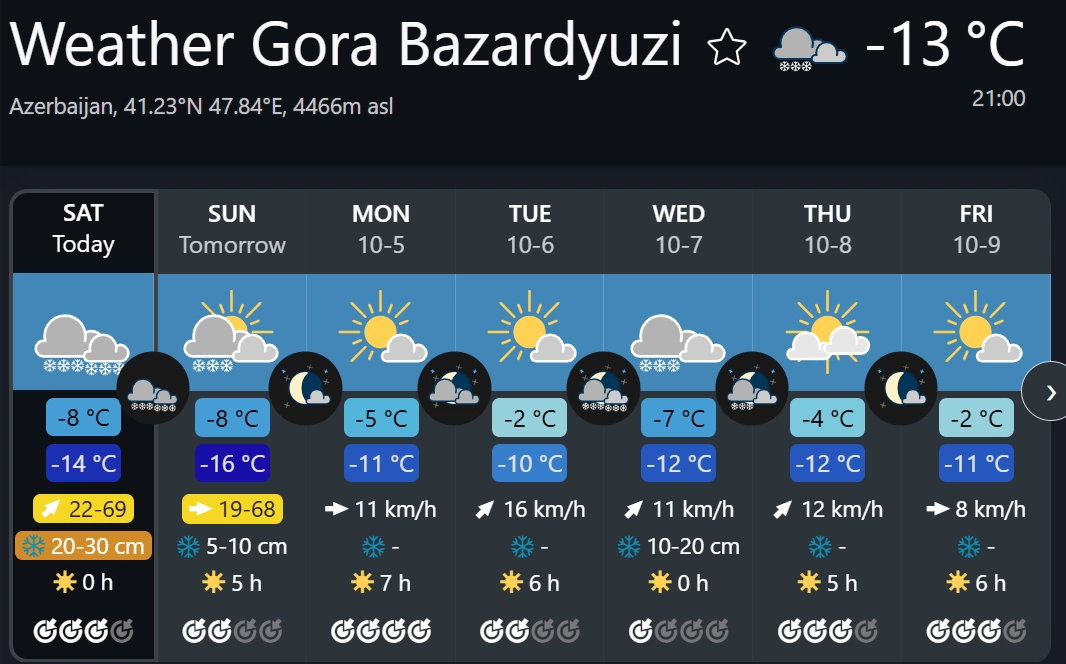
Before a Bazarduzu expedition, checking the weather forecast for only one location is not enough.
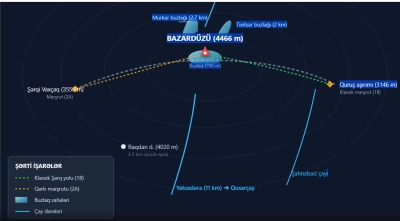
It is useful to compare weather information at different elevations whenever possible:
-
Khinalig and the lower approach;
-
base camp – approximately 3,250 m;
-
the route from the base camp to the summit;
-
the Bazarduzu summit – 4,466 m.
Particular attention should be paid to the following indicators:
-
temperature;
-
feels-like temperature;
-
wind speed;
-
wind gusts;
-
precipitation;
-
snow;
-
cloud cover;
-
visibility;
-
freezing level;
-
weather conditions during the summit attempt.
Since the summit climb usually starts early in the morning, the forecast for those specific hours is particularly important.
What Should You Do If the Weather Changes?
A mountain weather forecast can never provide a 100 percent guarantee. Weather that is clear in the morning can become cloudy and windy several hours later.
If strong winds, snow, rain, dense fog, icy conditions, or other dangerous weather changes are observed, the summit attempt may need to be stopped.
Turning back from the summit is not a failure. In high-altitude mountaineering, adapting the route and plans to the prevailing conditions is an essential part of safety.
What Clothing Is Needed for Bazarduzu?
Even during a summer expedition, clothing suitable for high-altitude conditions should be brought.
Essential clothing and equipment may include:
-
thermal base layers;
-
a warm mid-layer;
-
a windproof jacket;
-
a waterproof outer layer;
-
warm trousers;
-
gloves suitable for wind and cold;
-
a warm hat;
-
suitable mountaineering footwear;
-
spare dry clothing;
-
sunglasses;
-
sun protection.
Equipment selection should be adapted to the season and the actual snow and ice conditions present on the route on the day of the climb.
What Weather Can You Expect on Bazarduzu?
During a Bazarduzu expedition, it is possible to encounter different weather conditions. While lower elevations may have sunny and mild weather, temperatures above 4,000 meters can be close to or below freezing.
Calm weather can turn into strong winds, while clear skies can become cloudy and foggy.
For this reason, the main consideration when preparing for a Bazarduzu expedition is not simply finding the answer to the question, “Which month has the best weather?” The key is to assess the current weather forecast for the specific expedition dates together with the route conditions and the preparedness of the participants.