Although bear encounters are rare, knowing how to behave correctly can help ensure your safety. Black bears may exhibit predatory behavior, brown bears are generally defensive, while polar bears may view humans as potential prey. Bear spray, staying calm, and maintaining a safe distance are essential protective measures. With proper preparation and knowledge, safe camping and hiking in the wilderness are possible.
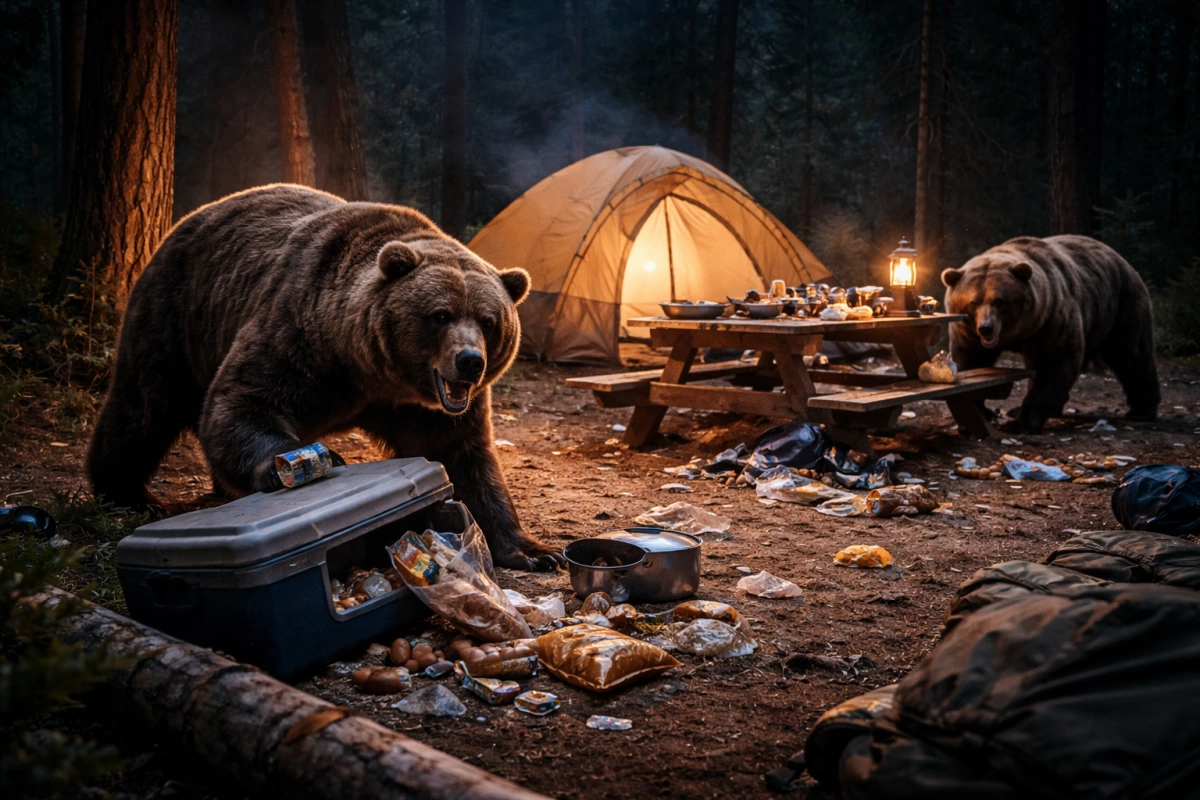
One of the greatest pleasures of spending time in the wilderness is observing animals in their natural habitat. Seeing a bear can be an exciting and unforgettable experience. However, it is understandable to be afraid of bears. The most important thing is knowing how to behave when you encounter one. In this article, we explain the essential rules for staying safe in bear country.
Do Not Attract Bears to Your Campsite
Having a bear wandering around your campsite can pose a serious danger. Bears have an exceptionally strong sense of smell — even stronger than that of dogs. For this reason, all potential sources of odors around your campsite must be properly managed.
-
Store food in bear-resistant containers or use bear hangs to keep it out of reach.
-
Change your clothes after cooking, and never cook inside your tent.
-
Keep cooking utensils, rubbish, and the clothes worn while cooking at least 100 meters away from your sleeping area.
-
Scented personal items such as toothpaste, soap, deodorant, and sunscreen should also be stored securely.
-
Never leave rubbish exposed, scatter food scraps, or leave your cooking area uncleaned.
-
When choosing a campsite, avoid animal trails, water sources, berry bushes, and fruit trees. Choose open areas with good visibility.
Bears can remember places as sources of food, potentially putting both your safety and the safety of others at risk.
Observing Bears from a Distance
If you have the opportunity to see a bear from a safe distance, the most important rule is to maintain that distance. Bears generally avoid humans, and the likelihood of a confrontation is very low when they are given enough space.
-
Do not attract the bear's attention or approach it.
-
Do not move closer to take photographs or videos, and avoid sudden movements.
-
Calmly turn back or carefully pass by, giving the bear plenty of space.
-
Never block the bear's escape route.
A Close Encounter – Defensive Behavior
Bears rarely become aggressive. This usually happens when they are protecting their cubs or food, feel threatened, or believe they are trapped.
-
Make occasional noise while hiking, especially in dense forests.
-
Bear bells, talking calmly, and hiking in groups help alert bears to your presence in advance.
-
Larger groups are generally safer than hiking alone.
If you come face to face with a bear:
-
Stay calm. Do not run or scream.
-
Speak in a calm voice and slowly raise your arms to make yourself recognizable as a human.
-
Pay attention to the bear's body language: flattened ears, paw swatting at the ground, and loud vocalizations are signs of defensive behavior.
-
If you have bear spray, keep it ready and use it if the bear rapidly approaches.
-
Bears may make bluff charges. Stand your ground, avoid direct eye contact, and slowly back away.
A Close Encounter – Predatory Behavior
If a bear is silent, has its ears pointed forward, and is following you, these may be signs of predatory behavior.
-
Make yourself appear larger, create noise, and speak loudly.
-
Spread your arms and clothing to make yourself look bigger and show that you are not an easy target.
-
Do not run or panic.
-
Keep your protective equipment, such as bear spray, rocks, or a stick, ready for use.
-
Do not corner the bear or prevent it from escaping.
What to Do If a Bear Attacks
The appropriate response to an attack depends on the bear species and the nature of the attack:
Black bears are generally shy, but their attacks can be predatory. In such situations, playing dead is not recommended. Instead, fight back and use anything available to you, aiming especially at the bear's eyes and nose. This is considered the most effective way to stop a black bear attack and protect yourself.
Brown (grizzly) bears generally make defensive attacks. They may become aggressive towards humans when protecting their cubs, food, or territory. If the attack is defensive rather than predatory, playing dead is recommended: lie face down, protect your head and neck, spread your legs, and use your backpack for additional protection if you are carrying one. However, if the attack is predatory, playing dead can be dangerous. In this situation, it is essential to fight back with all your strength and use any available objects to defend yourself.
Polar bears are considered the most dangerous bear species and may view humans as potential prey. For this reason, playing dead during an encounter with a polar bear is not a safe option and will not stop an attack. To survive such a situation, it is essential to use every available means of defense, make yourself appear large and threatening, actively resist, and try to force the bear to retreat.
Bear Pepper Spray – Additional Tips
Effective range and direction: Use the spray only when a bear poses an immediate threat and is approximately 3–10 meters away. Aim directly towards the bear's face and spray.
Preparation and easy access: Keep the spray within easy reach while hiking, preferably in a holster that allows quick access. In an emergency, every second counts.
What to do after using it: After spraying, step back and give the bear an escape route. Once the canister has been discharged, it may not be possible to prepare it for immediate reuse, so always have a backup plan.
Additional safety precautions:
-
Pay attention to wind direction when using the spray. Avoid positioning yourself in a way that could cause the spray to blow back towards you.
-
Keep children and animals away from the spray area.
-
If the bear does not stop its attack, be prepared to use other defensive tools, such as rocks or sticks.
Storage and regulations: Avoid storing bear spray in hot places or direct sunlight, as high temperatures can affect its effectiveness. Carry it only in areas where it is permitted under national park regulations.
Quick Reference Guide
What to do when you encounter a bear:
-
Stay calm.
-
Assess the bear's behavior and intentions.
-
Identify the bear species.
-
Make a decision appropriate to the situation.
What not to do when you encounter a bear:
-
Do not run.
-
Do not scream.
-
Avoid sudden movements.
-
Do not approach the bear.
-
Do not block the bear's path.
Recommendations
-
Pick up small children immediately.
-
Do not scream or make sudden movements.
-
Hike in groups.
-
Make yourself appear larger, for example, by standing on higher ground.
-
Do not allow the bear to get your food.
-
If you can use your backpack for protection, do not put it down.
-
Move sideways slowly. Never run.
-
Do not climb trees.
-
Keep away from female bears with cubs.
Conclusion
Bear attacks on humans are rare, and fatal incidents are extremely uncommon. There is no need to be afraid of bears, but knowing how to behave properly when hiking in areas where they live is essential for your safety.
With the right knowledge, preparation, and respect for wildlife, you can camp safely and observe bears without putting yourself or the animals at risk.