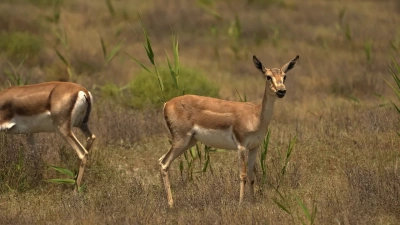
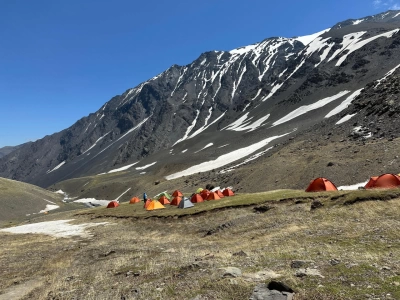
Hirkan National Park is one of Azerbaijan's rare natural treasures, renowned for its rich diversity of flora and fauna. In the park, it is possible to observe rare tree species, gazelles, waterfowl, and other wild animals in their natural habitat. Thanks to its greenery and forest ecosystems, Hirkan National Park is an ideal place for ecotourism and nature lovers. Every visitor here can experience an unforgettable encounter with nature.
About Hirkan National Park
Hirkan National Park is a protected natural area located in southeastern Azerbaijan. Established in 2004 to preserve the unique ecosystems of the Hirkan forests along the Caspian Sea coast, the park covers 40,358 hectares across the administrative districts of Lankaran and Astara, encompassing lowland and mountainous terrains of the Talysh Mountains. Here, humid subtropical landscapes dominated by ancient broad-leaved forests remain almost untouched for millions of years.
The park includes the core components of the UNESCO Transboundary Hirkan Forests World Heritage Site. Initially, Iranian sections were included in 2019, and in 2023, elements from Azerbaijan's Dangyaband and Istisu valleys were added. These areas are significant not only for their biodiversity but also for illustrating evolutionary processes in temperate broad-leaved forests dating back 25–50 million years. These components are strictly managed by the Ministry of Ecology and Natural Resources of Azerbaijan, providing a 1,000 km ecological link with neighboring Iranian forests.
Approximately 90% of the park is forested, hosting over 1,900 vascular plant species. Among them, 162 are endemic, and 95 are rare, including the iron tree (Parrotia persica), chestnut-leaved oak (Quercus castaneifolia), and Hirkan fig (Ficus hyrcana).
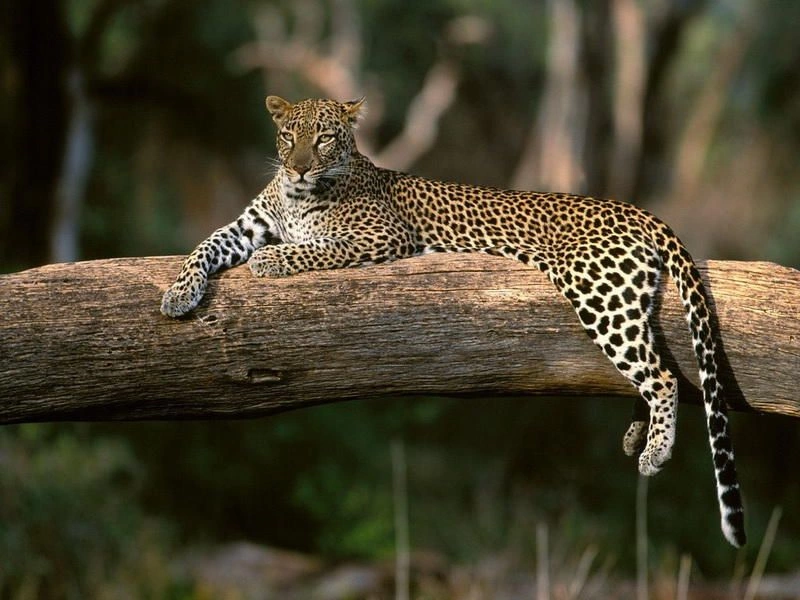
The fauna of Hirkan National Park is diverse and of great conservation importance. The park is home to 58 mammal species, including the endangered Caucasian leopard (Panthera pardus ciscaucasica), brown bear, and wild goat. Additionally, more than 180 bird species can be observed, such as the Eastern imperial eagle (Aquila heliaca) and Caspian tit (Parus lugubris). The park's subtropical climate is geographically isolated, fostering rare ecosystems that support endemic invertebrates, mollusks, and other taxa. Since 2015, infrastructure and forest restoration have been carried out with support from international organizations like the Caucasus Nature Fund, strengthening efforts against threats such as illegal logging and climate change.
History and Establishment
Origins as Hirkan State Reserve
Hirkan State Reserve was established in 1936 during the Soviet era in southeastern Azerbaijan, in the Talysh region, covering the administrative districts of Lankaran and Astara. Its goal was to protect the unique ecosystems of the Hirkan forests. Initially covering 2,906 hectares of mountainous terrain, the reserve focused on conserving ancient lowland and mountainous ecosystems, dense humid subtropical broad-leaved forests. It was one of the first protected areas in Soviet Azerbaijan and played a key role in preserving the flora and fauna of the Tertiary period in ice-free conditions.
The main reasons for establishing the reserve were the protection of relic endemic species such as Parrotia persica and Quercus castaneifolia. After World War II, extensive logging and land clearing for agriculture (tea and rice plantations) severely reduced forest cover in the Hirkan zone, fragmenting ecosystems. These pressures, combined with uncontrolled grazing and firewood use, threatened over 150 endemic plant species. The Soviet administration declared the reserve a strict protection zone to maintain ecological integrity.
After Azerbaijan's independence in 1991, the reserve faced significant administrative challenges. During the economic transition, state funding declined, and the Karabakh conflict strained resources. Biodiversity surveys by organizations such as WWF in the 1990s revealed that only about 12% of the ecosystems remained in their original state due to illegal logging and hunting. These assessments formed the basis for initial conservation strategies, although limited budgets made implementation challenging. International support at the end of the 1990s improved the situation, leading to the expansion and re-establishment of Hirkan National Park in 2004.
Establishment as a National Park and Expansion
Hirkan National Park was officially established on February 9, 2004, by a decree signed by President Ilham Aliyev. The decree upgraded the existing Hirkan State Reserve to national park status, strengthening biodiversity protection and sustainable management. The decree replaced the reserve's previous status, introducing stricter rules prohibiting human settlement, livestock grazing, and other activities potentially harmful to ecosystems, prioritizing conservation over traditional uses.
The park initially covered 29,760 hectares, encompassing various forest and lowland areas in Lankaran and Astara. On April 23, 2008, it underwent its first major expansion, increasing its area to 40,358 hectares. This expansion included remnants of the historically significant lowland "Moscow Forest," known for its relic plant species. The expansion aimed to enhance the protection of threatened flora and fauna and create buffer zones to mitigate external pressures like urbanization. In 2019, park components were incorporated into the UNESCO Transboundary Hirkan Forests World Heritage Site.
Administratively, the park is managed by the Ministry of Ecology and Natural Resources of Azerbaijan. The ministry applies a zoning system, including core protection zones with minimal human interference, to preserve ecological integrity. The legal framework is based on national environmental legislation and international obligations such as the Ramsar Convention, ensuring integrated management strategies.
In 2024, the park celebrated its 20th anniversary with conferences and events, highlighting conservation achievements, monitoring, and community involvement.
Geography
Location and Physical Features
Hirkan National Park is located in southeastern Azerbaijan, covering the Talysh Mountains and the Lankaran Lowlands within the Lankaran and Astara districts. The park's central coordinates are approximately 38°38′N, 48°42′E, placing it close to the Caspian Sea coast and the international border with Iran. The park forms an essential part of the wider Hirkan ecoregion, characterized by relic forests from the Tertiary period (around 25–50 million years ago). It features a humid subtropical climate with annual precipitation ranging from 1,400–1,600 mm, supporting dense vegetation.
Covering 40,358 hectares, the park is predominantly forested, with around 90% of its area covered by dense forests. Elevations range from sea level in the lowlands to 1,700 meters in mountainous areas, creating diverse terrain. The relief consists of steep slopes of the Talysh Mountains and high-relief deciduous hills, interspersed with lowland valleys, linking humid subtropical lowlands to moderate mountain forests.
The park's boundaries encompass fully protected natural areas with no permanent human settlements, ensuring ecological connectivity with the neighboring Hirkan forests across the Azerbaijan-Iran border. Its location safeguards landscapes from ancient Tertiary times and protects them from lowland agricultural pressures.
Hydrology and Soils
The park's hydrology is characterized by rivers, springs, and streams originating from the Talysh Mountains, all draining into the Caspian Sea and maintaining the park's humid subtropical environment. Main rivers include the Lankarançay and Astaraçay, fed by numerous tributaries such as Bolgarchay and Vileshchay. Mountain streams and seasonal waterfalls also arise from high relief areas, raising groundwater levels and generating frequent fog, which helps retain humidity in forest ecosystems. Seasonal floods may occur in lowlands during periods of intense rainfall.
Soils vary according to terrain. Fertile alluvial and brown forest soils dominate low valleys, while mountainous areas have podzolic, yellow, and mountain-yellow soils. These soils are rich in organic matter from accumulated leaf litter, supporting strong nutrient cycling and dense vegetation. High humidity increases erosion risk, but forest cover prevents significant soil loss, especially in primary forest zones.
Geologically, the area is part of the South Caspian depression, with sedimentary rocks, sands, clays, and marine deposits formed over millions of years. These layers determine soil acidity and mineral content. Coastal titanomagnetite sands and inland clay deposits provide essential nutrients for endemic flora.
Climate
Precipitation and Humidity
Hirkan National Park experiences high annual precipitation: 1,400–1,600 mm in lowlands and up to 1,800 mm in mountainous areas, influenced by the Caspian Sea and making it one of Azerbaijan's wettest regions. Precipitation varies regionally from 1,200–1,700 mm annually.
Seasonally, winters (October–March) are humid, accounting for about 70% of annual rainfall, while summers are drier. Stable winter weather frequently produces fog, enhancing humidity, particularly in lowlands. Local meteorological stations in Lankaran confirm maximum monthly precipitation exceeding 200 mm in autumn and early winter.
Relative humidity remains 80–90% year-round, rising to 84–86% during the cool months of October–April. Forest cover further enhances humidity by reducing evaporation by 1.2–1.6 times compared to rainfall. Microclimate variations exist; forested lowlands are more humid than open slopes, and elevation influences orographic precipitation in high relief areas.
Elevation-Based Climate Zones
Low zones (below 400 m): Humid subtropical climate. Summers are hot (average 25–30 °C), winters mild (average 5–10 °C). Summer temperatures may reach 35 °C; winter rarely drops below 0 °C.
Middle elevation zones (400–600 m): Approaching oceanic climate; cooler and more humid with persistent fog increasing humidity levels.
High mountain zones (above 600 m): Humid continental climate. Winters are cold (average -3–2 °C), occasional frosts occur; minimum temperatures may drop to -10 °C.
Flora and Vegetation
Hirkan National Park is renowned for its rich flora, with over 1,200 vascular plant species, including more than 435 tree and shrub species. Approximately 150 are endemic trees and shrubs, relics of the Tertiary period, representing living fossils from ancient geological times. The park serves as a major reservoir of paleo-endemic flora in the Caspian Hyrcanian mixed forests ecoregion.
Notable Hirkan species include:
- Hirkan boxwood (Buxus sempervirens)
- Chestnut-leaved oak (Quercus castaneifolia)
- Oriental beech (Fagus orientalis)
- Sweet chestnut (Castanea sativa)
- Laurel bush (Danae racemosa)
These species form the typical composition of broad-leaved forests. Quercus castaneifolia and Fagus orientalis dominate the canopy in various habitats. Other important trees include Parrotia persica and Zelkova carpinifolia, relics of the Arcto-Tertiary geoflora.
Vegetation varies with elevation and subtropical climate influences:
- Lowlands: Mixed broad-leaved forests with iron tree (Parrotia persica) and silk tree (Albizia julibrissin); minimal conifers.
- Mountain slopes (up to ~1,000 m): Eastern beech and chestnut-leaved oak mix with Caucasian evergreen oak and Caucasian alder (Alnus subcordata), forming dense moderate broad-leaved forests. Conifers are rare, with Hyrcanian fir (Abies nordmanniana subsp. bornmuelleriana) occasionally present.
Endemism is high, with around 40% of tree and shrub species unique to the Hirkan region, reflecting its role as a glacial refugium during the Pleistocene and preserving endemic taxa. The mild, humid climate favors the survival of these ancient species.
Fauna and Wildlife
Hirkan National Park, as part of the Hirkan Forests ecoregion, hosts a diverse fauna with a high level of endemism. This isolation has allowed the development of unique evolutionary lineages, with animal communities living in the forest understory for food, shelter, and reproduction.
-
Mammals: 58 species. Key species include the endangered Persian leopard (Panthera pardus saxicolor), Eurasian brown bear (Ursus arctos), Eurasian lynx (Lynx lynx), jungle cat (Felis chaus), wild boar (Sus scrofa), and wild goat (Capra aegagrus). Historically, the Caspian tiger (Panthera tigris virgata) also lived here. Bats feeding on fish include 18 species.
-
Birds: Over 180 species, including endemic subspecies such as the Caspian tit (Poecile hyrcanus) and the Caucasian pheasant (Phasianus colchicus colchicus). Eagles include the white-tailed sea eagle (Haliaeetus albicilla), osprey (Pandion haliaetus), and peregrine falcon (Falco peregrinus). Forest specialists, woodpeckers, and migratory birds are also present. The park’s wetlands are considered an important bird area.
-
Reptiles and Amphibians: Over 20 species, such as the Hirkan forest frog (Rana pseudodalmatina), Mediterranean tortoise (Testudo graeca), two-striped skink (Ablepharus bivittatus), and Nikolsky's viper (Gloydius caucasicus). These species highlight the importance of conserving subtropical habitats and moisture-dependent organisms in the park.
Protection and Management
Conservation Measures and Forest Restoration
Hirkan National Park operates under a strict protection regime managed by the Ministry of Ecology and Natural Resources of Azerbaijan. The core zones of the park are designated as IUCN Category II protected areas; public access, tree cutting, livestock grazing, and hunting are prohibited, ensuring biodiversity conservation as a priority. Buffer zones allow research, limited grazing, and low-impact tourism, while high-intensity land use, new settlements, and infrastructure development are prohibited to minimize anthropogenic pressure.
Anti-poaching efforts are carried out by 50 specialized rangers out of 96 park staff. Rangers conduct mounted patrols in buffer zones to ensure rapid response. Only one illegal hunting incident was recorded in 2020, and none in 2021, demonstrating the effectiveness of these measures.
Forest restoration initiatives focus on rehabilitating degraded lowland areas, including the historical remnants of the "Moscow Forest" in Lankaran Lower Plain, one of the last preserved parts of the Caspian Hirkan forests. Since 2008, afforestation programs on non-agricultural lands have planted native species, promoting natural regeneration and connecting fragmented habitats. These programs comply with Azerbaijani law, prohibiting tree cutting and restoring migration routes for species like the Persian leopard in buffer zones.
International collaborations strengthen these efforts. Since 2002, WWF Azerbaijan has used camera traps for species monitoring and community engagement. Technical assessments and threat analyses are conducted with IUCN. Following its inclusion in the UNESCO World Heritage List in 2019, the park adopted an updated management plan that incorporates sustainable practices, participatory planning with Talysh communities and NGOs, regulated grazing, and prevention of illegal activities. Coordination occurs via the national management committee, with annual work plans and budgets prepared, including cooperation for transboundary management of the Hirkan Forests with Iran. As of 2023, an "Agreement on Cooperation" project is under discussion between Azerbaijan and Iran.
Indicators show positive results: the park area expanded from 21,435 ha in 2004 to 40,358 ha in 2008, contributing to the overall stability of approximately 1.8 million ha of Hirkan forests despite historical losses. These measures have reduced illegal logging and poaching, accelerated ecosystem restoration, and strengthened the park’s role in conserving regional biodiversity.
Threats and Mitigation Strategies
Hirkan National Park faces significant ecological and anthropogenic threats that put its unique Hirkan forest ecosystem at risk.
Illegal logging is a major threat. Historically widespread, it is now limited due to strict enforcement and legal restrictions. Road infrastructure initially facilitated this activity, leading to habitat fragmentation and soil changes. Legal interventions since the early 2000s have stabilized forest cover.
Agricultural expansion into lowlands poses another serious risk. Farming activities in buffer zones cause habitat loss and weaken ecological connectivity. About 10,000 ha of natural resources are used annually in the wider area.
Climate change exacerbates these pressures. Drought and reduced precipitation lower humidity, increase wildfire risk, alter species distribution, and threaten endemic plants like Ruscus hyrcanus.
Wild animals are particularly vulnerable to poaching and invasive species. Illegal hunting is a significant threat to Persian leopards (Panthera pardus tulliana) and deer species, including red deer (Capreolus capreolus), driven by demand for hides and meat. Roadkill increases leopard mortality.
Invasive species, such as exotic vines and pathogens, compete with native vegetation and alter ecosystem dynamics. Global warming can enhance the spread of pathogens affecting species like Buxus hyrcana.
To address these threats, the park implements targeted strategies:
- Community engagement and education: Awareness programs in collaboration with local Talysh villages. Residents, municipalities, and schools receive training to prevent illegal activities, including logging and hunting. Incentive measures, such as providing gas for fuel, reduce firewood collection.
- Technological monitoring: Drone surveillance and ranger patrols strengthen boundary control and enable rapid detection of illegal incursions. Restricted grazing permits and animal removal protocols prevent overgrazing in sensitive areas.
- Biodiversity conservation: Targeted action plans focus on at least 20 threatened species, including leopards and endemic plants. Habitat restoration in migration corridors and transboundary cooperation with Iran strengthen species sustainability.
Ongoing monitoring indicates these measures are effective. Annual IUCN assessments confirm stable populations of key species like the Persian leopard and forest integrity despite high threats.
Forest restoration: Reforestation in degraded buffer zones is a key measure against illegal logging, promoting natural regeneration and habitat connectivity.
UNESCO Recognition
Nomination and Evaluation Process:
The nomination of the transboundary Hirkan Forests, including Hirkan National Park, for the World Heritage List began in the early 2010s. Azerbaijan and Iran collaborated following the initial deferral of Azerbaijan’s standalone Hirkan Forest nomination in 2006.
In 2017, Iran submitted a serial nomination emphasizing ecological significance, later expanded jointly with Azerbaijan. This transboundary approach connected the ecoregion, highlighting Hirkan National Park as the main component in Azerbaijan.
In February 2021, Azerbaijan and Iran submitted a dossier to UNESCO proposing the addition of three components: Dangyaband (2,703 ha), Khanbulan (9,068 ha), and Istisuchay Valley (12,817 ha), totaling 24,588 ha core area. Scientific reports covering the biodiversity of the Hyrcanian Forests were included, noting over 3,200 vascular plant species, assessed under ecological criterion (ix).
The evaluation process included IUCN advisory assessment. From October 25–30, 2021, IUCN field experts assessed integrity, protection, and management of the park components, requested additional information, and species lists and transboundary commitments were submitted by February 28, 2022.
The IUCN report, finalized in April 2022, recommended World Heritage listing for Dangyaband and Istisuchay Valley due to high integrity of ancient forests and ecological connectivity. Boundary changes for Khanbulan were deferred. In 2023, committee reviews highlighted the park’s significance in enhancing the overall coherence of the transboundary site.
Challenges included coordination with Iran and precise component delineation for lowland forests. For Khanbulan, consultations with local communities balanced traditional land use and conservation needs. Incomplete fauna inventories, such as for the Persian leopard, required additional research. Iterative dossier updates resolved these issues, confirming only Dangyaband and Istisuchay Valley.
World Heritage Inscription and Significance:
The Hirkan Forests serial property, including components of Hirkan National Park in Azerbaijan, received expanded approval at UNESCO’s 45th session in September 2023. This marks Azerbaijan’s first natural World Heritage site, recognized under criterion (ix) for representing ongoing ecological and biological processes in ancient temperate broadleaf and mixed forests dating back 25–50 million years.
Azerbaijan components—Dangyaband (2,703 ha) and Istisuchay Valleys (12,817 ha)—cover a total of 15,520 ha within the park, contributing to the 145,004.74 ha total of the serial property. This status places legal obligations on Azerbaijan and Iran for site protection, transboundary management planning, enforcement against illegal grazing and wood collection, and maintenance of ecological connectivity. It also supports funding for conservation management plans and international research collaboration.
Main Benefits of World Heritage Listing:
- Raises global awareness of high endemism and threatened species in the Hirkan Forests;
- Facilitates sustainable ecotourism, provides economic incentives for local Talysh communities, and promotes low-impact visitation;
- Enables nomination for biosphere reserve status under UNESCO’s Man and the Biosphere Program.
Human Dimensions
Tourism and Visitor Access:
Main access to Hirkan National Park is from Lankaran (20–30 min by car) or Astara (30–40 min). Visitors from Baku reach the park by car, taxi, or organized tours in 4.5–5 hours. There are no internal roads; travel is mainly on foot or horseback, starting from border zones near Astara.
Popular activities:
- Marked hiking trails through dense pistachio and ironwood forests;
- Birdwatching points and viewpoints;
- Panoramas of the Talysh Mountains and surrounding valleys;
- Picnics and short hikes around Khanbulan Lake, and trails to Tengerud and Velvele rivers.
Best visiting times:
- Spring: March–May (flowering plants);
- Autumn: September–November (colorful foliage, mild weather).
Facilities are basic: ranger stations provide maps, guidance, and permits for restricted areas; limited roadside picnic sites are available. No internal hotels or commercial lodging exist, but camping is allowed with prior permission to minimize environmental impact. Entry fees are minimal (usually 2–5 AZN), with safe guided tours organized by local operators.
Visitor numbers are kept low to ensure sustainable ecotourism; in the first three months of 2024, only 198 visitors were recorded. After UNESCO inscription, ecotourist numbers have started to rise, but strict rules—staying on marked trails and ranger permits—maintain ecosystem protection.
Cultural and Socioeconomic Role:
Hirkan National Park is of vital importance to neighboring local communities, particularly the Talysh people. Historically, these communities have relied on the surrounding Hyrcanian forests for sustainable livelihoods. In the buffer zones, activities such as seasonal grazing, collecting firewood, and harvesting non-timber forest products (wild fruits, berries, mushrooms, medicinal plants) are conducted within regulated traditional rights. These practices contribute to the long-term conservation of the forest ecosystem and maintain sustainable interactions between the Talysh community and the park's conservation objectives.
The park holds deep cultural significance for both the Talysh and Azerbaijani society as a whole. It contains over 100 natural and cultural sites that reflect historical traditions, a sense of belonging, and recreational values associated with the landscape. The forests also provide cultural ecosystem services: hiking, collecting forest products, and observing biodiversity, including relic species such as the ironwood tree. This enhances life and choice values for both local residents and visitors.
From a socioeconomic perspective, the park generates employment opportunities for local people. Approximately 100 individuals work within the park management structure under the Ministry of Ecology and Natural Resources, with additional jobs in tourism and forestry departments. Ecotourism in the park — attracting attention with its biodiversity and mountainous forest landscapes — draws an increasing number of visitors. In 2006, 218,982 foreign tourist days were recorded in forest areas, increasing to 674,435 in 2012. This contributes to regional income, supports local guides and services, and promotes rural development. The forests also provide clean water for over 2 million people and supply 30–40% of the energy needs in village households through firewood, supporting the local economy.
Challenges in park management include balancing local community rights with conservation goals. Historical conflicts arise from limited community participation in management and pressures such as illegal logging and overgrazing. Following the 2015 National Forest Program, joint management efforts were strengthened by involving volunteer groups from Talysh communities in patrol activities to combat fires and illegal hunting. Initiatives such as providing gas alternatives to villages and insuring livestock from predation also support fair resource use.