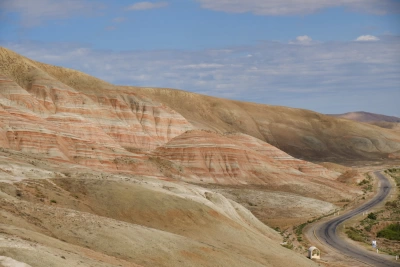
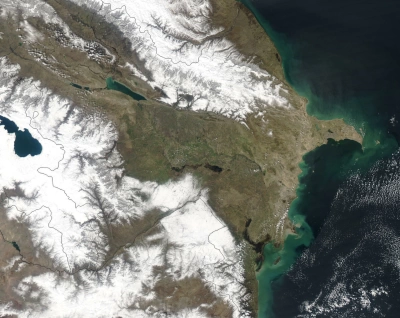
The avalanche disaster that occurred on Tufandag in 2017 remains one of the most tragic events in Azerbaijan's mountaineering history. The avalanche, caused by heavy snowfall and adverse weather conditions, claimed the lives of several climbers. This incident once again highlighted the importance of safety rules and weather forecasting on Tufandag routes. Avalanche risk and mountain safety continue to be top priorities for Tufandag hikes today.
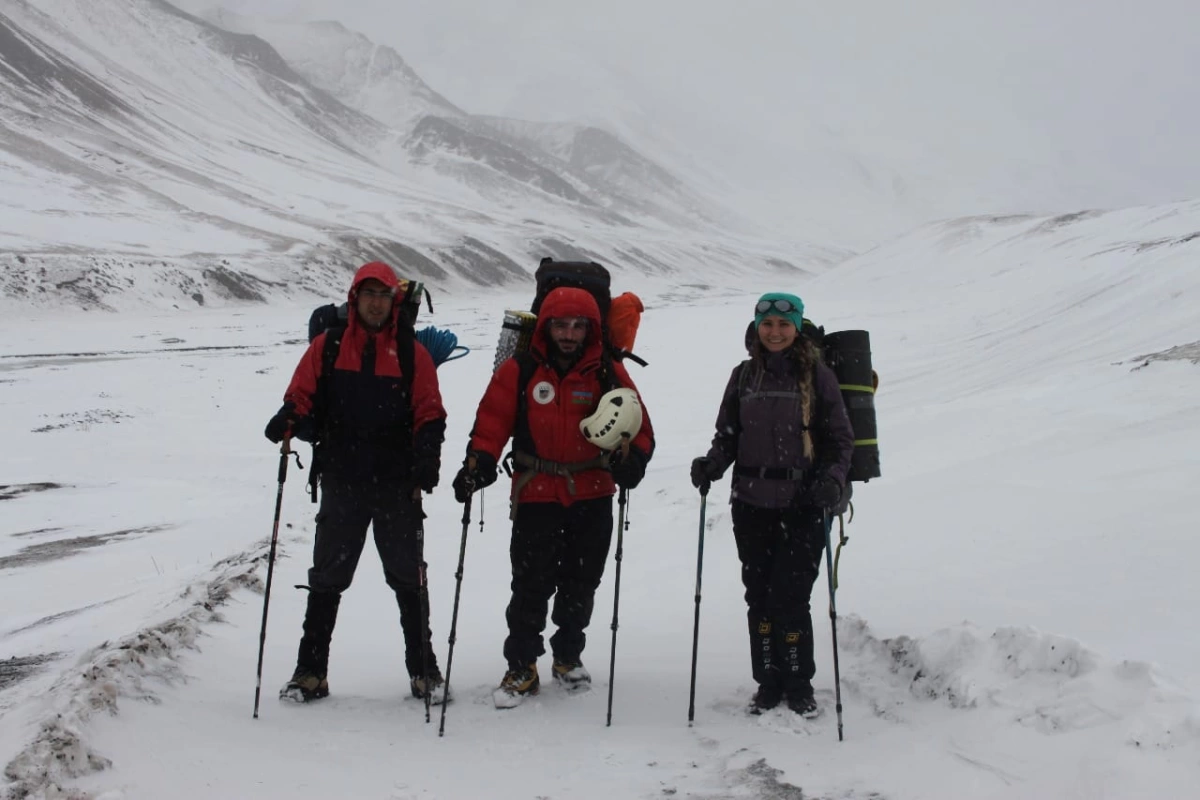
In December 2017, a tragic event occurred in the history of mountaineering in Azerbaijan. On December 23, 2017, three climbers — Babur Huseynov, Namin Bunyadzade, and Farida Jabrayilzade, members of the "Gilavar" Air and Extreme Sports Club — began a winter ascent from the village of Khinalug in the Quba district towards the summit of Tufandag.
The last contact with the climbers was made on the evening of December 24. They reported that the weather had sharply deteriorated and that they had set up a camp. After that, all contact with them was completely lost. Following growing concern from families and friends, authorities were notified, and search and rescue operations began.
Team Members:
Namin Bunyadzade (Team Leader)
Babur Huseynov
Farida Jabrayilzade
Search and Difficult Conditions
The search involved the Ministry of Emergency Situations, the Ministry of Ecology and Natural Resources, the State Border Service, mountaineers from the Air and Extreme Sports Federation, and other organizations. Helicopters, mountain rescue teams, and volunteers were sent to the area. However, heavy snowfall, fog, strong winds, and the high risk of avalanches made the search extremely difficult.
According to initial assumptions, the climbers were caught in a severe avalanche. During the winter season, in high and rugged mountains like Tufandag, the risk of avalanches is extremely high and was considered one of the main causes of this tragedy.
The Tragic End
After prolonged search efforts, in May 2018, the climbers' camp and the bodies of all three members were found under approximately 4 meters of snow in the higher parts of Tufandag. According to the expert examination, they had died from cold under the avalanche, and there were no signs of violence or other injuries on their bodies.
A criminal case was opened by the Prosecutor General’s Office of the Republic of Azerbaijan, and safety issues were investigated. This tragedy was not only a great loss for the mountaineering community but also highlighted the importance of properly assessing risks during winter ascents.
Why did the group get caught in an avalanche?
No one is insured against avalanches. This could happen to anyone. However, there are certain precautions that can prevent falling into an avalanche. In this case, there were many contributing factors.
Lack of regular winter mountaineering training in the country
In Azerbaijan, professional training programs for winter mountaineering, avalanche risk assessment, safety protocols, and practical awareness campaigns are almost non-existent. Federations and organizations responsible for this field have remained passive for years.
As a result, people going to the mountains engage in activities without knowing movement rules in winter conditions, snow behavior, and avalanche risks. Lack of experience and insufficient knowledge, when faced with harsh natural conditions, can lead to tragedies.
This incident again demonstrated that mountaineering requires not only physical strength but also knowledge, preparation, and responsibility. Organizing proper winter mountaineering training, activating federations, and carrying out awareness campaigns is vital to prevent future tragedies.
The group had low knowledge and skills in winter mountaineering. Initially, they applied to the State Border Service and the Ministry of Ecology for permission to go to the mountain. The Ministry of Ecology allows groups to climb if there are at least 3 members. To complete the group of 3, they included Farida, who had no winter mountaineering experience. The mistake of the group started here.
Analysis of the Tufandag Incident
1. Improper assessment of December for winter activity
December is not yet optimal for winter mountaineering. During this month, snow has not fully settled and hardened, making walking difficult. The instability of snow layers significantly increases avalanche risk, posing serious danger for mountaineering.
Additionally, December weather changes frequently, temperatures are very low, and wind increases the risk of cold and snowstorms. These factors make the ascent difficult, endanger participants, and complicate completing the planned routes on time.
Overall, winter mountaineering in December is recommended only for groups with special experience and full safety measures. Additionally, extra safety equipment and backup plans against avalanche risk are essential during this period.
2. Poor route planning – although multiple alternatives existed on the map, real risks were not considered
There were serious weaknesses in planning the route. Although several alternative routes were marked on the map, real risks and winter difficulties were not adequately assessed.
The group could choose between several route options during the ascent: the right or left wing of Tufandag, or a glacier route through the Mahmuda Valley. They chose the route through Mahmuda Valley.
Setting up camp in the valley without considering the short winter days, camp selection, and safe tent setup was risky. Due to short daylight in December, the group had to pitch tents before darkness, creating additional safety and comfort challenges.
3. Inclusion of a participant (Farida) without winter mountaineering experience
Farida had only basic summer mountaineering training and no experience in winter conditions. Including her in the group for winter peaks put both herself and other group members at risk.
4. Improper analysis of weather and forecasts
Failure to properly analyze weather and forecasts in December created serious risks.
In winter, temperature, snow cover, wind, and visibility change rapidly. If these factors are not accurately assessed in advance, unexpected difficulties and hazards can arise during the ascent.
Local weather data indicated strong winds and snow accumulation in valleys, increasing avalanche risk. Snow rapidly accumulated without bonding to lower layers, creating powder avalanches. This explains how the group was caught.
5. The group lacked sufficient winter mountaineering knowledge and skills
Lack of adequate knowledge and skills in winter mountaineering posed serious dangers.
Winter mountaineering requires special experience, avalanche risk assessment, proper camp and route selection, and knowledge for movement and rescue in cold conditions. The group’s insufficient experience increased risks and led to emergencies during the ascent.
6. Failure to assess snow conditions on-site
After entering the area, failure to properly assess snow conditions created serious risks.
The thickness, firmness, and stability of snow layers directly affect avalanche and slide risk. If these factors are not evaluated on-site, the group may face unexpected dangers and risk of injury during the ascent.
7. Lack of pre-scouting of the area during summer before winter activity
Failure to scout the planned winter area during summer caused serious preparation gaps.
Studying routes, camp sites, water sources, and hazardous zones in summer is essential for safe and effective winter activities. Without this reconnaissance, the group may encounter unexpected difficulties and risks in winter conditions.
8. Failure to review official avalanche risk information and bulletins
Not reviewing official avalanche information and bulletins created serious hazards.
Avalanche risk plays a key role in safety planning for winter mountaineering. If official weather data, snow cover information, and avalanche bulletins are not checked, the group may face unexpected avalanche and slide risks.Unfortunately, the responsible authorities are still not capable of preparing this information.
It should be noted that an accurate map of mountains with avalanche risks and areas where avalanche zones are located has not yet been created in our country. This adds extra difficulty in planning winter mountaineering and complicates the proper assessment of risks for the group.
9. Lack of necessary safety equipment – avalanche beacon, probe, and shovel not provided
Especially in areas with avalanche risk, the group did not provide essential equipment such as avalanche beacons, probes, and shovels. The absence of this equipment makes it difficult to locate and rescue group members in emergency situations and significantly reduces safety levels during winter mountaineering.
Additionally, it should be noted that the group fell into an avalanche while in the tent. Even if the necessary safety equipment had been provided, it would not have guaranteed their complete safety. This demonstrates how dangerous it is to set up winter mountaineering camps in areas at risk of avalanches.
10. Weak decision-making by the group leader regarding risk management
The group leader's decisions about route selection, camp location, provision of safety equipment, and assessment of participants' skills directly affect the group's safety. Weak or inexperienced decisions led to poor risk management, significantly reducing the group's safety and resulting in emergency situations.
11. Incorrect calculation of time – short daylight and risk of delays
During winter, daylight is short, and delays along the route are inevitable. If this factor is not properly considered in planning, the group may be left in darkness and unable to set up camp on time, creating additional risks for both safety and comfort.
12. Psychological pressure and the desire to reach the summit overriding safety
Group members or leadership may ignore safety rules due to personal motivation or prestige. This situation affects decision-making, hinders proper risk assessment, and increases the likelihood of accidents and emergencies in winter mountaineering conditions.
13. Official permit granted for 3 days and participants attempting to summit on the same date
Providing an official permit for only 3 days and participants trying to reach the summit on the same date created a serious risk.
The short permit period creates time pressure for group members and prevents proper risk assessment during planning. As a result, the group rushes to reach the summit on the same day, leading to insufficient safety measures, increased fatigue, and a higher probability of emergencies.
Events, Discussions, and Actions During Those Days
On December 24, in the afternoon, around 15:00–16:00, the group descended from the car at the cemetery area at the entrance of Mahmud Valley from Khinalig and started hiking. According to my calculations, the group reached the campsite within a maximum of 1 hour and set up the tent. Due to short daylight in December, they did not move in the dark; by the time they reached the area, the sun had already set and the tents were set up.
Throughout the night and morning, the wind caused a large accumulation of snow in the area. The layer of snow on top of the previous old snow became excessively thick. The group stayed in the tent until the evening of December 25 and did not attempt the summit despite sunny conditions. During this time, they had the opportunity to assess the area and avalanche risk.
However, after 17:00 on December 25, an avalanche occurred, and since the tent was set up at the mouth of the avalanche gully, a large mass of snow fell on it. This tragedy was the result of setting up the camp in a risky area without adequately considering safety measures.
Could they have survived the avalanche?
This situation is very critical, and to assess the real probabilities, we must consider the conditions of the incident.
Location of the tent: The group set up the tent at the mouth of the avalanche gully. This is the exact point where the snow mass would fall. In such conditions, during an avalanche, the tent and those inside are buried under a high-speed snow mass. Escape is impossible.
Safety equipment: The group did not have essential avalanche equipment such as beacon, probe, and shovel. This equipment only facilitates the rescue process; it does not provide protection during an avalanche or help get out from under the snow.
Volume and speed of the snow mass: According to expert opinions, the avalanche hit the tent with a large mass. Under such speed and weight, survival is physically impossible.
Participants' skills and reaction: For participants without winter mountaineering experience (especially Farida), surviving the avalanche was practically impossible.
Considering the conditions, the probability of survival in the avalanche was extremely low and practically impossible. Proper tent location, equipment, and preventive measures could have significantly reduced the risk, but in the selected location and conditions, escaping the avalanche was practically impossible.
My Information and Response
On December 23–24, 2017, the National Championship for duathlon was held at the "Climbaku" climbing gym of the Azerbaijan Federation of Air and Extreme Sports. Farida was supposed to participate as a judge in this competition. When we were preparing the list of judges, Farida informed me that she would be attending a camp on those dates.
After the competition, on December 25, I was sent to Nakhchivan. After completing training there at the federation, I went to Erzurum.
On December 25, I received information from the federation that Babur, Namin, and Farida had gone to Tufandag and there was no contact with them. I knew that Babur and Namin frequently went to the mountains, but I was unaware of Farida's plan. I quickly messaged her on Facebook, but received no reply. Later I asked other friends; they said that a few days earlier Farida was looking for crampons to go to the mountain and this time decided without waiting for my permission.
Since Farida was a student at the Mountaineering School, she always consulted me about her previous activities. After learning that she participated in this group, I quickly informed the federation that the area was an avalanche zone and it was now dangerous to go to the mountain. The Hydrometeorology Service at Shahyaylaq was also informed to inspect the area. The Ministry of Emergency Situations (MES) was notified, and search operations started that day.
I returned urgently: at night from Turkey to Nakhchivan, then to Baku, and finally directly to Khinalig, preparing the necessary arrangements.
Search and Rescue Operation
When I arrived in Khinalig, I learned that hundreds of people were already in the mountains and volunteer groups had been formed. MES had also entered the area.
Observing the search process, I realized the situation was critical. The large number of people in the area and everyone entering at the same time reduced the chances of finding traces of the missing group. The situation upon arrival was tense, as expected. I informed the federation leadership, the Ecology Ministry, and other relevant authorities that search results were ineffective due to the large number of people in the area.
That day and the next morning, all inexperienced groups were removed from the area because they could only create problems. People wandering on the summit and hilltops reduced search efficiency.
The next day, I entered the area with a small mountaineering team and MES team. We followed the plan shared by the group, and the next day I reported that further searching above was pointless.
On December 30, after collecting all information, I entered Mahmud Valley alone from the starting point of the group's hike. The group had approximately 1–2 hours to hike that day; I moved at Farida’s pace. I reached the end of Mahmud Valley where the cirque begins and analyzed the area.
Three avalanches had occurred in the area. The first avalanche zone had already been completely searched by the previous group. I informed everyone in the area that the missing people were under the tent. I directed the entire group to that zone and started excavation in sections, as the snow was already frozen and surface digging was meaningless.
However, other groups searched as they saw fit and did not mark the areas they dug. The next day, we saw that the area we had dug was filled by wind. This greatly reduced the search efficiency. Large snow masses and extensive digging in the area demotivated people, who then moved to easier areas.
The main goal was to focus all forces and groups on the tent's location. They searched that area, while I continued digging and marking section by section.
Misinformation from the media and some individuals caused people to trust it, delaying the search. Effective searching is only possible by excavating in sections and marking properly.
As a result, the search took a long time and could only succeed through excavation. On May 16, 2018, around 18:00, during excavation in the indicated area, the bodies of the missing people were found.
How should Search and Rescue be conducted?
1️. Receiving information and initial assessment
-
Incident location (exact coordinates or last seen point)
-
Name, age, and experience level of the missing person
-
Clothing and equipment
-
Last contact time
-
Weather conditions
-
Terrain type (forest, snow, rocky, etc.)
-
Group size and condition
2️. Establishing headquarters and planning
-
Appoint a responsible leader for the incident
-
Open area map and divide into sectors
-
Use the last seen point (LSP) as a reference point
-
Analyze weather forecast and terrain risks
-
Determine necessary resources (rescuers, equipment, drones, etc.)
3️. Group Mobilization
Depending on the situation, the following are organized:
-
Ground search teams
-
Search dogs
-
Drone and thermal camera
-
In snowy conditions – avalanche equipment
-
Helicopter if necessary
At the same time, contact is maintained with the group at the site and they are given instructions to wait safely.
4. Search Strategy
Typically, three main methods are used:
-
Hasty Search – along probable routes
-
Grid Search – sectorized systematic search
-
Track & Sign – following footprints and physical signs
In snow and cold conditions, the time factor is critical – the risk of hypothermia is taken into account.
5. Most Important Principle
Time = Life.
The first 6–12 hours are considered critical.
6. Discovery and Medical Intervention
When a person is found:
-
ABC assessment (Airway, Breathing, Circulation, consciousness)
-
Check for hypothermia and trauma
-
Stabilize the person
-
Implement evacuation plan
7. The Most Important Things You Must Do as a Tour Leader:
-
Provide precise coordinates
-
Prevent the group from panicking
-
Do not conduct a wide search alone
-
Stay in constant contact with rescuers
What is an Avalanche?
An avalanche is the rapid downward movement of a mass of snow accumulated on a slope, which detaches due to various reasons. It usually occurs on steep slopes (30–45°), fresh snowfall, or after strong winds.
Main Factors Causing Avalanches
Excessive snowfall – rapid accumulation of snow mass destabilizes underlying layers.
Wind-induced snow deposition on slopes – light snow accumulation that does not compact increases avalanche risk.
Sudden temperature changes – melting and freezing of snow increases sliding potential between layers.
Weak snow layers – unstable layered structure makes the top layer prone to sliding.
Human factor – movement of climbers, skiers, or hikers adds extra load to snow layers and can trigger avalanches.
Additional Factors:
Terrain and slope angle – slopes with 30–45° inclination are considered most prone to avalanches.
Past avalanche history and snow condition – previously avalanched slopes are more sensitive.
Sun exposure – melting during the day and freezing at night increases snow instability.
Rain or mixed precipitation – increases load on the top layer and reduces stability of the lower layer.
Shape of valleys and mountainous areas – determines snow accumulation potential and avalanche initiation points.
Avalanche Risk in Tufandag Region
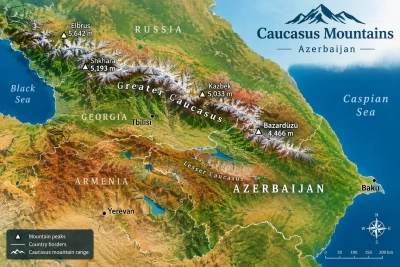
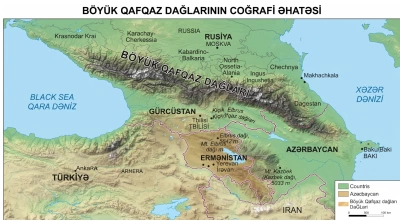
Tufandag and the Greater Caucasus range are zones with high avalanche risk in Azerbaijan. During winter months (December–March), these areas are particularly dangerous. Deep valleys, windy ridges, and northern slopes are risky for avalanches.
Tufandag is one of the regions with the highest avalanche risk in Azerbaijan. Within the mountain’s right and left wings lie the valleys of Gabala River, Qusar River, and Mahmud Valley. Wind flows in Tufanchay and Qudialchay valleys interact, causing large snow accumulations to the north. During summer, these valleys are completely glaciated. The name “Tufan” is related to the strong winds: airflow collisions at the peak always generate strong winds.
Experience shows that hiking and camping in these areas during winter requires serious preparation and safety measures. Snow layers on steep slopes and valleys are unstable, and the risk of avalanche is high. Therefore, when ascending Tufandag, local weather, snow cover, and wind patterns must be carefully assessed, and the group should move only with experienced climbers and necessary equipment.
Lesson to Remember
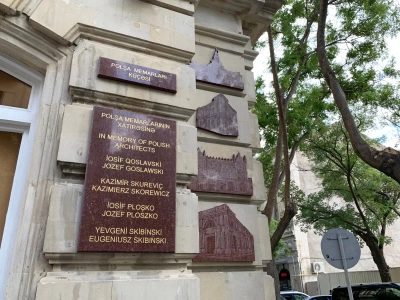
In subsequent years, the memory of climbers was honored by mountaineers, with their names immortalized on special memorial plaques. The Tufandag incident reminds us that safety, weather forecasting, avalanche risk, and proper preparation are crucial in mountaineering and alpine activities in Azerbaijan.
This tragedy again proved that mountains are known not only for their beauty but also for serious risks. Every hike requires maximum responsibility, preparation, and professional approach. Experience shows:
- Pre-training and planning for winter mountaineering is vital.
- Routes and camp locations must be carefully selected, and weather and snow conditions analyzed before movement.
- The group should consist only of experienced climbers, with necessary safety equipment provided.
- Avalanche risk assessment, sliding potential, and contingency plans must be in place before any activity.
- These lessons remain important warnings for both experienced and new mountaineers in the future.
Commemoration of the Tufandag Incident
Every year, on the anniversary of the Tufandag incident, we, as Azerbaijan’s mountaineering and alpine community, remember our lost climbers. Their names are immortalized on memorial plaques, serving as an example for younger generations about responsibility, preparation, and safety.
This tragedy reminds us once more that mountains are known not only for beauty but also for serious risks. Every hike requires maximum attention, planning, and professional approach. The memory of friends lost in Tufandag will always live in our hearts and their lessons guide future climbers’ safety.
We do not forget them; their courage and love for the mountains are always with us.
Conclusion
After the Tufandag tragedy, our mountains were completely closed during winter. Instead of strengthening training and developing mountaineering schools, federations prioritized prohibiting access to mountains. As a result, mountaineering shifted from a sports activity to primarily tourism.
This situation caused several problems:
Federation inactivity: Lack of athlete development and insufficient mountaineering training led young and inexperienced climbers to operate in dangerous conditions.
Ban instead of training: Prohibiting access to mountains instead of systematic training limited opportunities to gain real experience.
Poor selections: Access to mountains was dangerous for inexperienced people, and restrictions hindered professional development of experienced athletes.
As a result, the Tufandag tragedy and subsequent measures demonstrated that strengthening mountaineering training and preparation is essential, and bans may provide only short-term safety without eliminating long-term risks.
"The best mountaineer is not the one who reaches the summit, but the one who returns home safely."