Basqal State Historical and Cultural Reserve is one of Azerbaijan's remarkable tourist destinations, distinguished by its ancient history, rich architectural heritage, and traditional craftsmanship. Located in the Ismayilli region, Basqal attracts visitors with its historic cobblestone streets, traditional bathhouse, Sheikh Mohammad Mosque, and famous kelaghayi silk scarves. Here, visitors can discover Azerbaijan's centuries-old silk-making traditions, medieval urban culture, and local cuisine. A visit to Basqal offers a memorable experience for travellers interested in exploring Azerbaijan's historical and cultural heritage.
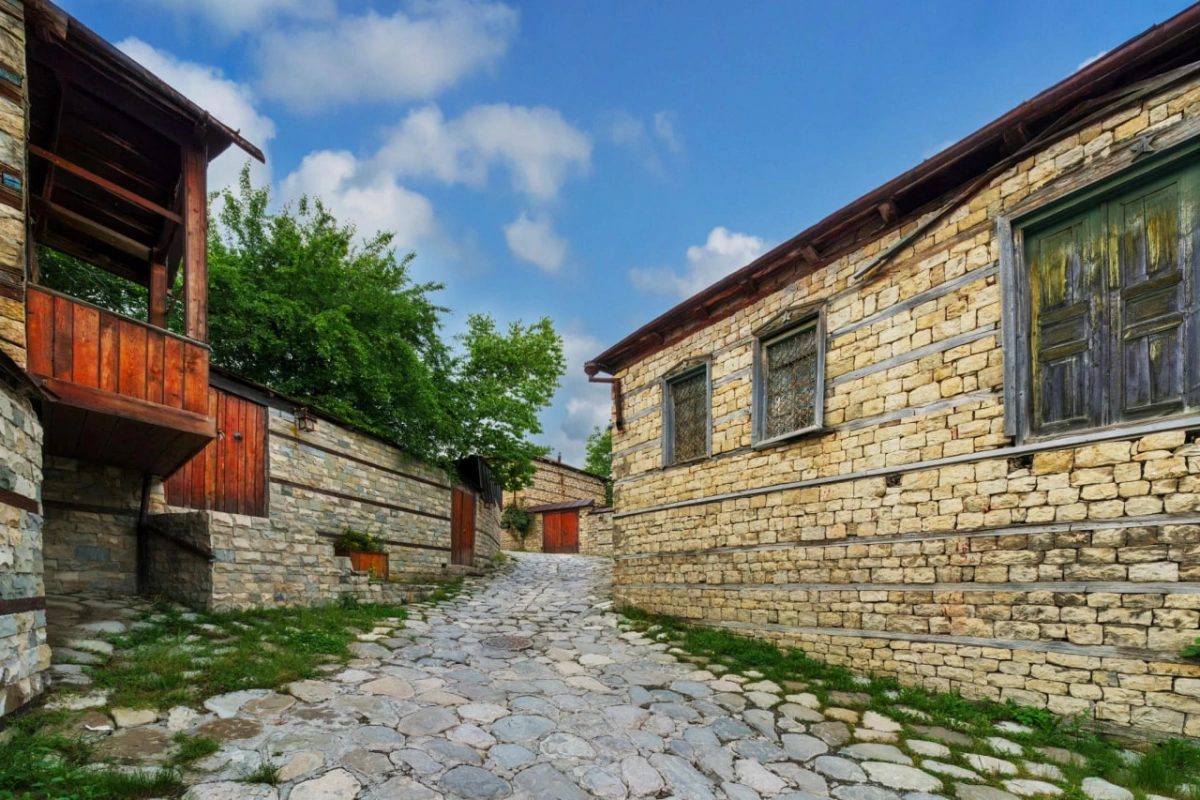
Among Azerbaijan's ancient settlements, Basqal holds a special place thanks to its historic streets, traditional architecture, and centuries-old craftsmanship heritage. Located in the Ismayilli District, at the foothills of the Greater Caucasus Mountains, this small village is one of those rare places where the past and present blend harmoniously. What makes Basqal particularly special is not only its historical monuments but also its ancient traditions, which continue to be preserved as part of everyday life.
As you walk along its narrow cobblestone streets, you will discover traditional Shirvan houses, historic neighbourhoods, examples of local craftsmanship, and the authentic lifestyle of the village. Basqal is an attractive destination for travellers who wish to explore Azerbaijan's cultural heritage and experience the atmosphere of a historic settlement.
A Journey into Basqal's Historical Past
Basqal's history dates back to the Middle Ages. Archaeological research and material remains discovered in the area indicate the existence of an established urban-style settlement centuries ago. In particular, excavations around Sheikh Mohammad Mosque have revealed evidence confirming that Basqal was an important settlement at least as early as the 11th century.
Historically, Basqal played an important role in the economic and handicraft life of the Shirvan region. Silk production, weaving, and kelaghayi craftsmanship greatly contributed to the development of the settlement. Through trade connections, silk products made here reached other parts of Azerbaijan as well as international markets.
Today, visitors walking through Basqal's historic centre can still discover traces of its former economic and social life.
Cobblestone Streets and the Architectural Heritage of Shirvan
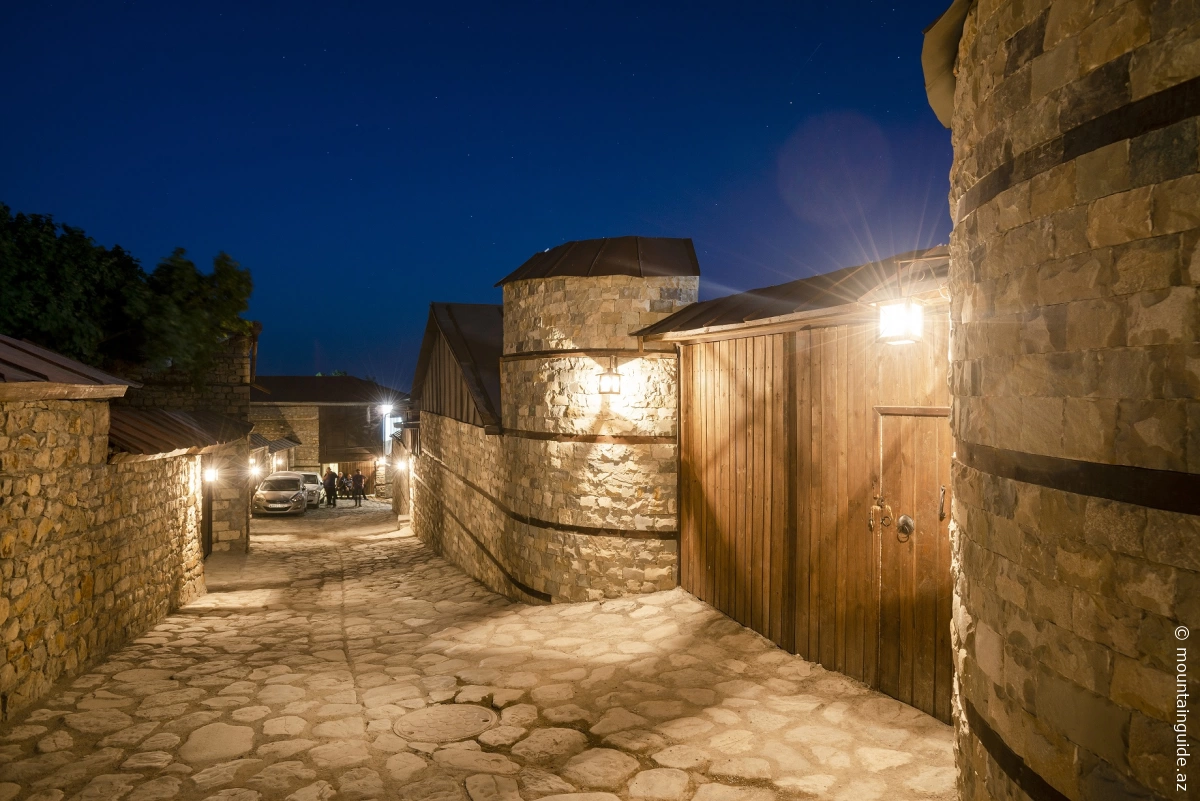
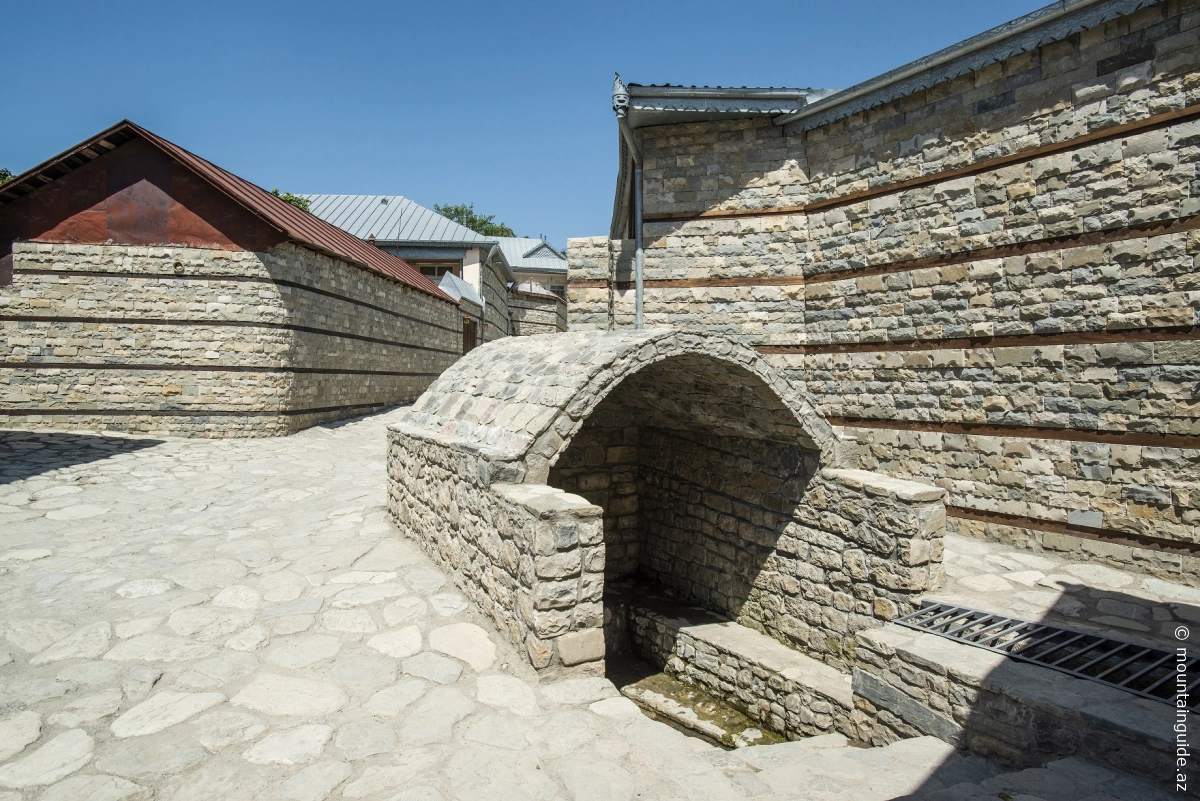
One of Basqal's most remarkable features is its historic street layout. Narrow lanes paved with river stones, traditional courtyard houses built close to one another, and ancient neighbourhoods give the settlement its distinctive appearance.
Local climate and seismic conditions played an important role in the architecture of Basqal's houses. To improve their resistance to earthquakes, wooden structural elements were incorporated into certain sections of the stone walls. This technique helped increase the flexibility and stability of the buildings.
Another interesting architectural feature is the cut-off corners of houses facing the streets. This design helped facilitate movement through narrow lanes and protect building corners from potential damage.
While exploring the village's neighbourhoods, visitors can also notice the traditional metal door knockers. In the past, different types of knockers were used to distinguish between male and female visitors through their distinctive sounds.
Kelaghayi – Basqal's Heritage Woven in Silk
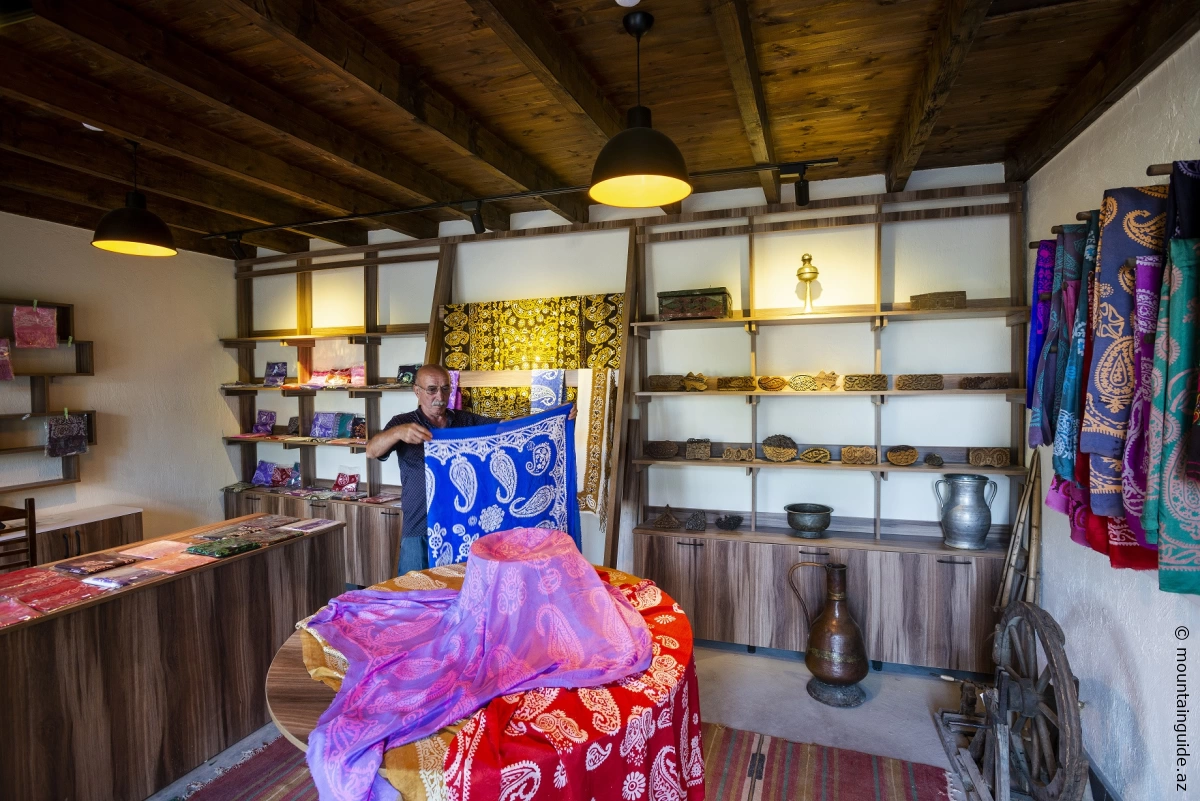
When speaking of Basqal, one of the first traditional crafts that comes to mind is undoubtedly kelaghayi. Made from fine silk fabric and decorated with various colours and patterns, this traditional Azerbaijani women's headscarf is one of the most recognisable symbols of the country's cultural heritage.
Silk production, which has played an important role in the lives of Basqal's residents for centuries, led to the development of a distinctive local craftsmanship tradition. Making a kelaghayi involves several stages, including preparing the silk fabric, dyeing it, and applying decorative patterns. Each stage requires specialised knowledge and considerable skill.
Traditional wooden printing blocks used to create the patterns hold a special place in local craftsmanship. These ornaments reflect nature, different stages of life, and the traditional Azerbaijani worldview.
In 2014, the traditional art and symbolism of kelaghayi were inscribed on UNESCO's Representative List of the Intangible Cultural Heritage of Humanity. This recognition marked an important milestone in bringing Basqal's craftsmanship traditions to international attention.
Today, visitors to the village can learn about kelaghayi production, watch local artisans at work, and take part in practical workshops at selected craft studios.
Basqal's Ancient Water Engineering: The Kureband System
Basqal's history extends beyond architecture and craftsmanship. One of the settlement's most remarkable heritage features is its underground water and sewage system, dating back to the medieval period.
Known as the Kureband system, this engineering network used underground channels and wells to manage water. It played an important role in meeting the sanitation needs of the settlement's neighbourhoods.
The construction of such a sophisticated system in an era without modern technology demonstrates the engineering and urban planning knowledge of Basqal's inhabitants. The Kureband system is an important historical example of the settlement's advanced urban culture during the Middle Ages.
Sheikh Mohammad Mosque and the Ancient Plane Tree
Located in the historic centre of Basqal, Sheikh Mohammad Mosque is one of the settlement's important religious and architectural monuments. Dating back to 1531, the building has played a significant role in the religious and social life of the local community for centuries.
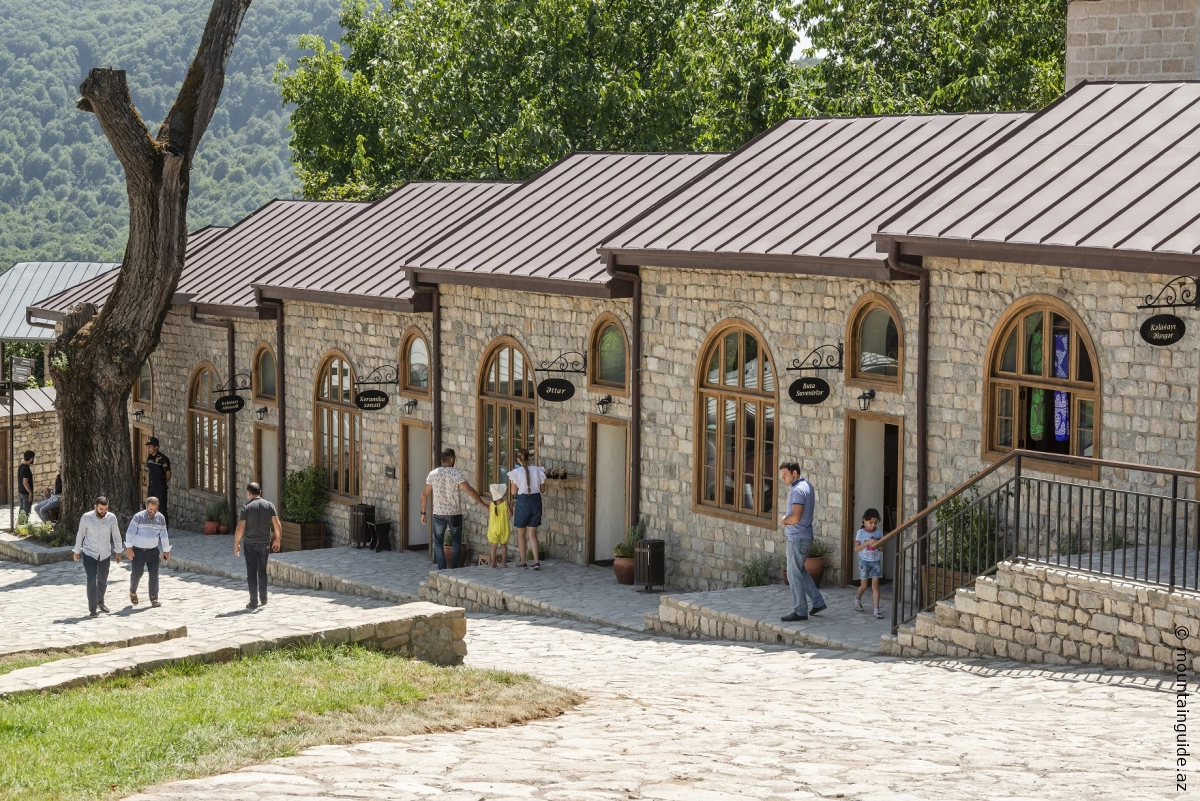
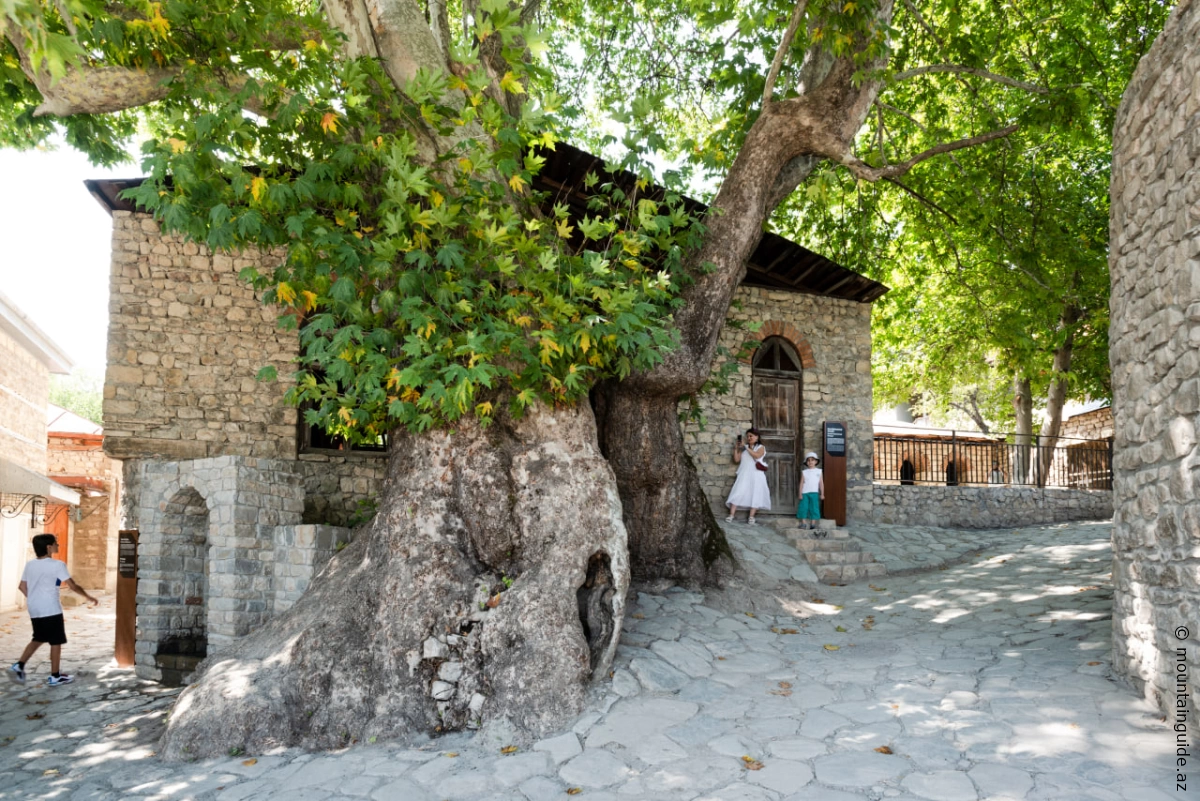
The ancient plane tree near the mosque is another remarkable natural and historical landmark of Basqal. According to a historical inscription, the tree was planted in 1563 by Sheikh Safayi, the son of Sheikh Mohammad.
Over the centuries, the plane tree has grown into an impressive landmark with a massive trunk and spreading branches. It is held in special regard by local residents and symbolically connects Basqal's natural heritage with its historical memory.
The 17th-Century Basqal Bathhouse
Located in the historical centre of the settlement, the Basqal Bathhouse is an interesting example of 17th-century Eastern bathhouse architecture. Distinguished by its domed structure, interior rooms and traditional heating system, the building once played an important role in the daily lives of Basqal residents.
In Eastern urban culture, bathhouses were more than just places for personal hygiene. They were also social spaces where people met, talked and took part in various communal activities and ceremonies.
Following restoration, the bathhouse was adapted for use as a museum. Visitors can learn about the layout of traditional bathhouses, their heating principles and the history of Azerbaijani bathing culture.
Basqal's Neighbourhoods – Traditional Life Preserved in Stone Streets
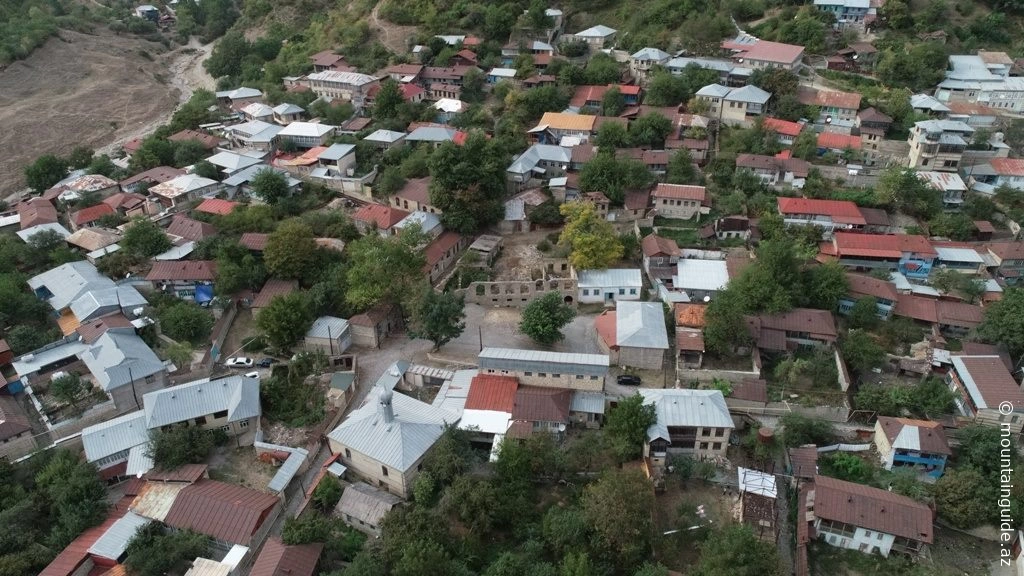
To understand Basqal's distinctive urban layout, it is enough to explore its historic neighbourhoods. Areas such as Qoşabulaq, Dərəməhəllə, Dəmirçibazar, Qəlibgah, Kələküçə, Xarabiyan and Qalabaşı preserve traces of the settlement's social and artisan life, which developed over many centuries. Narrow streets, pathways paved with smooth river stones and traditional houses built close together give Basqal the characteristic appearance of a medieval town.
The names of these neighbourhoods also offer interesting insights into the settlement's past. For example, Dəmirçibazar was once a neighbourhood where blacksmiths lived and worked. Qəlibgah, meanwhile, was known as a place where the wooden moulds used in kelaghayi production were made and where dyers and colour specialists practised their crafts. Today, it is still possible to meet artisans who continue these traditions.
Qalabaşı is one of the higher parts of Basqal, offering wide views over the settlement and the surrounding mountainous landscape. The Qoşabulaq neighbourhood takes its name from a historic spring with abundant, cool water that local residents have used for centuries.
Another remarkable feature of Basqal's neighbourhoods is their carefully planned engineering layout. The Kureband system, dating back to the 13th–14th centuries, played an important role in meeting the water supply and sanitation needs of residential areas. Built around underground channels, this system reflects the advanced urban culture of medieval Basqal.
Walking through these neighbourhoods is about more than simply admiring ancient streets. It is also an opportunity to discover Basqal's craftsmanship traditions, everyday life and historic urban planning at first hand.
Marco Polo and the International Fame of Basqal's Kelaghayi
For centuries, Basqal has been known as one of Azerbaijan's important centres of silk production and weaving. Particularly between the 16th and 19th centuries, silk fabrics and kelaghayi produced here attracted considerable interest not only in local markets but also along international trade routes.
One of the historical sources illustrating the long-standing tradition of silk production in Azerbaijan is the account of the famous Venetian traveller Marco Polo. During his visit to Azerbaijan in 1293, Marco Polo wrote about the Shirvan region, noting that large quantities of silk were produced there and that fine silk fabrics were woven. The high-quality silk-making traditions he described were also reflected in Basqal's flourishing craftsmanship culture in later centuries.
Artisans and merchants from Basqal played an important role in spreading the craft of silk production. Silk products made here travelled beyond Azerbaijan's borders, reaching the Caucasus, Central Asia, India, Russia and various European countries. During the 17th, 18th and 19th centuries, Basqal kelaghayi gained widespread recognition for their quality, variety of colours and delicate patterns.
One of the distinctive features of Basqal kelaghayi is their variety of colours and patterns. These silk headscarves, produced using traditional craftsmanship, were made in different colours to suit various age groups and tastes. Types such as “Heyratı”, “Hələbi”, “Gülvəngi”, “Saçaqlı”, “Sumağı”, “Ağzəmin” and “Bağdadı” demonstrate the richness of Basqal's craftsmanship. Today, designs such as “Basqalı” and “Yeddi rəng” are also recognised as part of the continuation of this artistic tradition.
Special wooden blocks were used to produce kelaghayi. Artisans carefully imprinted various ornaments onto the silk fabric, giving each piece its own distinctive appearance. These blocks and patterns were more than decorative elements; they also reflected the aesthetic outlook, customs and cultural memory of the Azerbaijani people.
In 2014, “Traditional Art and Symbolism of Kelaghayi” was inscribed on UNESCO’s Representative List of the Intangible Cultural Heritage of Humanity. The silk-making and kelaghayi craftsmanship traditions, preserved in Basqal for centuries, played a particularly important role in this international recognition.
Today, visitors to Basqal can meet local kelaghayi artisans, observe the process of creating traditional patterns and learn about the fine details of this ancient craft. Basqal kelaghayi is more than just a silk headscarf; it is a valuable cultural heritage that reflects Azerbaijan’s history, craftsmanship and national identity.
Local Flavours and Cuisine of Basqal
A visit to Basqal would not be complete without discovering its local cuisine. The natural products of the Ismayilli region and traditional cooking methods have shaped the distinctive gastronomic culture of the settlement.
One of the local specialities worth trying is Basqal’s famous pip dolma. Prepared using local plant leaves, this dish represents the region’s unique culinary traditions. Other highlights of the local cuisine include piti, homemade cheeses, natural fruit preserves and mulberry molasses.
Discovering the local cuisine gives travellers an opportunity not only to enjoy new flavours but also to experience the rural lifestyle and traditional hospitality of the region.
Things to Do in Basqal
Basqal is not only a destination for exploring historical landmarks but also an excellent place to enjoy a variety of cultural and leisure activities.
Visit a Kelaghayi Workshop: Discover how silk scarves are made and learn about the traditional techniques used to create their distinctive patterns.
Walk Through the Ancient Streets: Explore the historic neighbourhoods and capture the stone-paved streets and traditional houses in photographs.
Visit Basqal Bathhouse: Discover the architecture of this 17th-century bathhouse and learn about its traditional heating system.
Explore the Historic Market Square: Follow the traces of Basqal’s former commercial life and discover the importance of trade in the settlement’s history.
Taste Local Dishes: Try pip dolma and other traditional specialities of the region.
Discover the Silk-Making Tradition: Learn why Basqal was historically one of the most important centres of craftsmanship in the Shirvan region.
When Is the Best Time to Visit Basqal?
Basqal can be visited throughout the year, with each season offering a different experience. In spring, the surrounding countryside turns green and vibrant. Summer brings pleasant, cooler mountain foothill weather, making it an ideal escape from the heat of the cities. In autumn, the settlement and surrounding mountains are transformed by colourful landscapes. During winter, the stone-paved streets and traditional houses give Basqal a completely different atmosphere.
Basqal can also be combined with visits to other tourist destinations in the Ismayilli region. A trip that includes Lahij, the forests of Ismayilli, mountain villages and local nature trails offers an opportunity to explore more of the region.
Basqal – A Place Where the Past Lives On
Basqal is one of the settlements in Azerbaijan where historical and cultural heritage has been preserved as a living tradition. Its stone-paved streets, ancient architecture, underground engineering system and, above all, the art of kelaghayi reflect a rich cultural legacy that has developed over centuries.
If you want to discover Azerbaijan beyond Baku and its famous tourist attractions, and experience the traditional lifestyle, craftsmanship and customs of its ancient villages and settlements, Basqal is certainly a destination worth including in your travel plans.