Azerbaijan’s summer pastures are places where ancient seasonal migration traditions, shepherd life and rich mountain culture continue to thrive. Khinalig and the Köç Yolu (Transhumance Route), included on UNESCO’s World Heritage List, are among the most fascinating examples of these traditions. The vast highland pastures of the Greater and Lesser Caucasus bring together nature, history and rural life. Discover Azerbaijan’s summer pasture culture and experience the breathtaking mountain landscapes and centuries-old migration traditions.
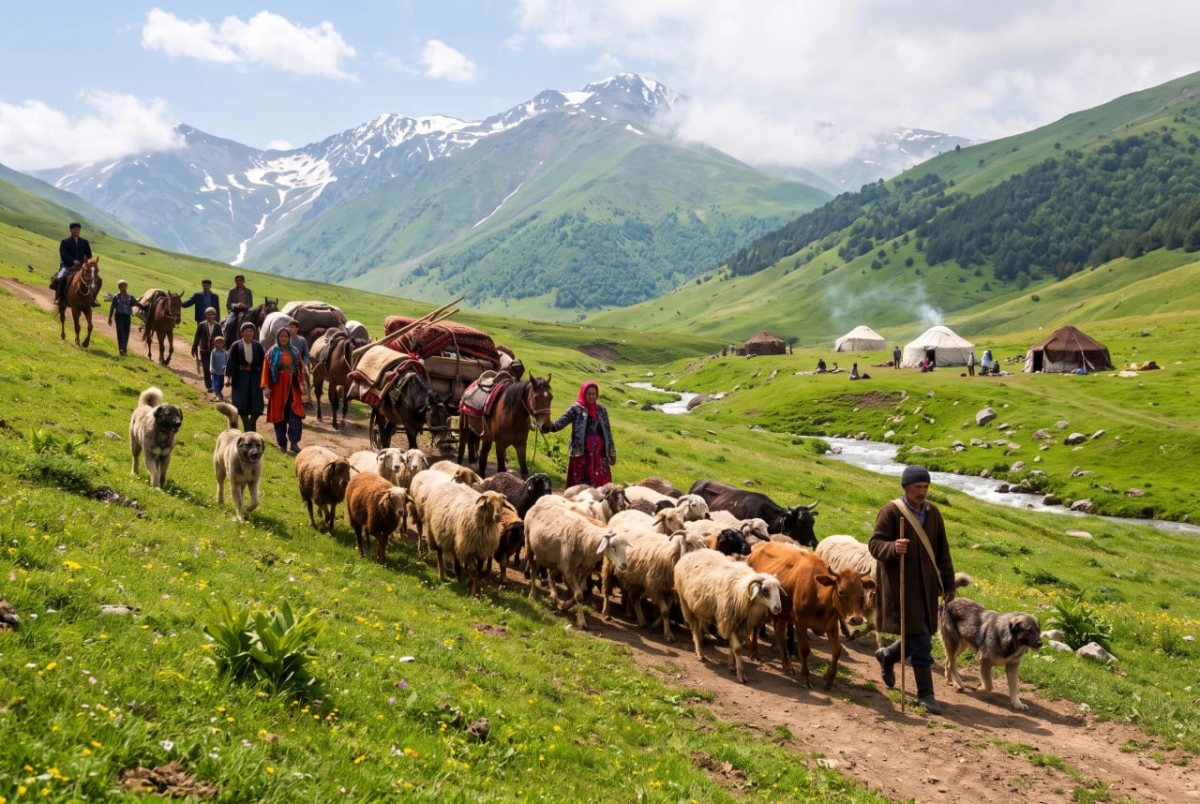
Azerbaijan’s mountains are distinguished not only by their towering peaks, green valleys and magnificent landscapes, but also by the nomadic way of life and shepherd culture that have developed in these regions over centuries. Every year, in late spring and early summer, thousands of sheep and cattle are moved from the lowland regions to the cool mountain pastures. With the arrival of autumn, shepherds and their herds return to their winter pastures.
This seasonal movement is much more than a livestock farming activity. It is an important part of Azerbaijan’s cultural heritage, preserving an ancient way of life, customs, folk knowledge and the deep connection between mountain communities and nature.
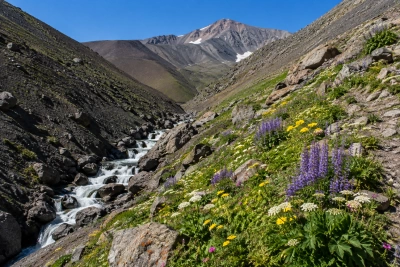
Among local communities, summer pastures are commonly known as "yaylaq". These areas are mainly located in the high mountain regions of the Greater and Lesser Caucasus, among rich alpine and subalpine meadows. During the summer months, the weather here is considerably cooler than in the lowlands, while the extensive pastures provide ideal conditions for grazing livestock.
Seasonal Migration to Summer Pastures – A Tradition Passed Down Through Centuries
The summer and winter pasture system has existed in many parts of Azerbaijan since ancient times. During the colder months, herds are kept in lowland and foothill areas. As the weather becomes warmer, shepherds take their animals to higher mountain pastures. With the arrival of autumn and colder weather, the migration takes place in the opposite direction.
These migrations can sometimes last several days or even longer. Shepherds travel with their herds along mountain trails, across river crossings and over mountain passes until they reach the summer pastures. This process requires extensive experience, physical endurance and a thorough knowledge of the terrain.
During migration, not only livestock but also household belongings, food supplies and farming equipment used in the daily lives of shepherd families are transported. Some families spend the entire summer in the highlands, while others take turns looking after the herds.
The summer pasture tradition is an important part of rural life in Azerbaijan. This way of life encourages people to follow the rhythms of nature and use pastureland and water resources according to the seasons.
Famous Summer Pasture Regions of Azerbaijan
Extensive summer pastures can be found in different regions of Azerbaijan. Each area has its own distinctive natural landscapes, terrain and pastoral traditions.
Summer Pastures of the Greater Caucasus
The high mountain areas of the Guba, Gusar, Gabala, Shaki and Zagatala regions are rich in summer pastures. The mountain meadows around Khinalig, Griz, Laza and Shahdag are remarkable areas both for livestock farming and mountain tourism.
Traditional shepherd life can be experienced particularly in the high mountain areas surrounding the villages of Khinalig and Griz. During the summer months, herds, shepherd camps and seasonal farming settlements become an integral part of the mountain landscape.
Those who wish to explore the mountain villages, alpine meadows and ancient trails of the Greater Caucasus can enjoy the Khinalig–Laza Trekking Route. The Khinalig–Griz Hiking Route is also an excellent option for discovering the natural beauty of this region and the unique lifestyle of its mountain villages.
Summer Pastures of the Lesser Caucasus
The regions of Kalbajar, Lachin, Dashkasan, Gadabay and Goygol are also home to some of Azerbaijan’s important summer pastures. The extensive mountain meadows of Kalbajar and Lachin, in particular, have historically been used for seasonal livestock grazing.
The rich vegetation, cool climate and vast mountain plateaus in these areas provide favourable conditions for keeping livestock during the summer season.
Khinalig and the Köç Yolu (Transhumance Route), Inscribed on the UNESCO World Heritage List
When discussing Azerbaijan’s summer pasture and migration culture, special attention should be given to Khinalig and its centuries-old Köç Yolu (Transhumance Route). This area is distinguished not only by its natural beauty and ancient village architecture but also by its traditional semi-nomadic lifestyle, which continues to this day.
In 2023, during the 45th session of the UNESCO World Heritage Committee held in Riyadh, Saudi Arabia, "Cultural Landscape of Khinalig People and Köç Yolu" was inscribed on the UNESCO World Heritage List. This event was significant in gaining international recognition for Azerbaijan’s mountain culture and traditional pastoral way of life.
The cultural landscape recognised by UNESCO includes the village of Khinalig, the surrounding high-altitude summer pastures, winter grazing areas and the approximately 200-kilometre migration route connecting them. This route forms the foundation of the seasonal livestock farming traditions maintained by the people of Khinalig for centuries.
A 200-Kilometre Seasonal Migration Route
Seasonal migration between summer and winter pastures plays an important role in the traditional lifestyle of the people of Khinalig. In late spring and early summer, shepherds take their sheep herds to high mountain pastures. In autumn, as temperatures drop, they descend towards lowland areas with a milder climate.
During this migration, shepherds travel with their herds along mountain trails, across river crossings and through routes that pass through different elevations. Along the way, it is possible to encounter seasonal camping sites, water sources and various traces of traditional pastoral life.
The Köç Yolu is much more than a route used to move livestock from one area to another. It embodies the collective memory of the Khinalig community, its traditional knowledge, pastoral practices and way of life shaped over generations.
A Living Cultural Heritage
One of the most important features of the Köç Yolu (Transhumance Route) is that it is not merely part of the historical past. This tradition is still alive today. The people of Khinalig pass down knowledge from generation to generation about seasonal migration, pasture management, livestock care and living in mountainous conditions.
This way of life is a unique example of how people adapt to nature and make seasonal use of mountain and lowland ecosystems. UNESCO’s inscription of this cultural landscape on the World Heritage List demonstrates that its significance extends beyond the local community and has universal value.
Khinalig and the Köç Yolu are particularly important for those who wish to explore Azerbaijan’s summer pasture culture more closely. Alongside spectacular mountain scenery, visitors can discover traditional shepherd life, migration customs preserved for centuries and the relationship between the local community and nature.
For those interested in exploring the historic mountain trails around Khinalig on foot, the Khinalig–Griz Trekking Tour is an interesting option. Those looking for a longer and more varied route can explore the Trekking Tour Along the Traditional Migration Routes Between Khinalig, Haput and Galajig Villages. This route combines mountain villages, ancient trails and the magnificent landscapes of the Caucasus.
Shepherd Life – The Daily Challenges of Living in the Mountains
Although life in the summer pastures may seem peaceful and romantic from the outside, it actually requires considerable hard work. Shepherds take their herds to graze early in the morning, monitor their movements throughout the day and bring the animals back to camp in the evening.
Weather conditions in the mountains can change rapidly. A sunny morning may be followed by heavy rain, fog or even snowfall. In such conditions, shepherds must ensure both their own safety and the protection of their herds.
Wild predators, particularly wolves, can also pose a threat to livestock. For this reason, shepherd dogs are an essential part of summer pasture life. They protect the herds day and night and are considered among the shepherds’ most trusted companions.
Summer Pasture Settlements and Traditional Accommodation
Living conditions in the summer pastures vary depending on the region and the resources of each family. Some shepherds stay in small stone huts and seasonal houses, while others use tents and temporary shelters.
These settlements are usually established close to water sources and grazing areas. Access to water is particularly important in summer pasture life, both for people and their livestock.
Despite their simple construction, traditional summer pasture houses are adapted to mountain conditions. Their main purpose is to protect people from strong winds, rain and cold nighttime temperatures.
The Delicacies of the Summer Pastures – Milk, Cheese and Butter
One of the most fascinating aspects of summer pasture life is the natural dairy products prepared there. Milk from animals grazing on mountain meadows is used to make cheese, yoghurt, traditional curd cheese (shor), butter and other local dairy products.
Some families process milk and produce cheese directly in the summer pastures, preserving it using special traditional methods. The techniques for preparing these products are passed down from generation to generation and vary from one region to another.
Summer pasture cheese and fresh dairy products are not simply food; they are also part of local culture and family traditions. For tourists visiting mountain villages, watching how these products are made and experiencing the hospitality of local families can become a memorable experience.
Summer Pasture Culture and Mountain Tourism
Summer pastures are also highly significant in terms of Azerbaijan’s tourism potential. The interests of modern travellers are no longer limited to famous mountain peaks and natural landscapes. Visitors increasingly want to discover the local lifestyles, customs and everyday activities of the regions they explore.
Cultural and ecotourism experiences organised in summer pasture regions can offer visitors a variety of unique activities:
-
Observing shepherds as they take their herds to grazing areas;
-
Learning about the preparation of traditional dairy products;
-
Visiting traditional summer pasture houses and shepherd camps;
-
Exploring mountain meadows and traditional pasture trails on horseback;
-
Discovering the everyday lives of local families;
-
Spending a night in the mountains and tasting traditional summer pasture dishes.
Such journeys allow visitors not only to see Azerbaijan’s mountains but also to understand the lives of the people who inhabit these regions.
For those interested in mountain tourism, the Gizilgaya Circular Trekking Route and the Transcaucasian Trail – Azerbaijan Trekking Tour are also interesting alternatives. These routes offer opportunities to explore the mountain landscapes, natural beauty and villages of the Caucasus on foot.
Preserving Summer Pasture Traditions
Modern lifestyles, migration from villages to cities, changes in livestock farming and climatic factors are also affecting traditional summer pasture life. In some areas, old migration routes are used less frequently, while some families face difficulties in continuing these traditions.
Nevertheless, summer pasture culture remains an important part of Azerbaijan’s rural life and cultural heritage. Preserving these traditions means more than simply continuing livestock farming. It also involves passing local knowledge, traditional practices, food culture and mountain lifestyles on to future generations.
The UNESCO recognition of Khinalig and the Köç Yolu is an important example in this regard. It demonstrates how essential it is to protect traditional mountain life and ensure that it is passed on to future generations.
The sustainable development of summer pasture tourism can also contribute to this process. Involving local families in tourism activities can provide them with additional income while helping preserve their traditions. However, tourism should always be organised with respect for nature, grazing areas and the everyday lives of local communities.
Discover Azerbaijan’s Summer Pastures with Azerbaijan Mountain Guide
Azerbaijan’s summer pastures bring together the country’s natural beauty, ancient migration traditions and rich mountain culture. Stretching from Khinalig and the Köç Yolu, inscribed on the UNESCO World Heritage List, to the extensive summer grazing lands of Kalbajar and Lachin, these regions reveal one of the lesser-known yet fascinating sides of Azerbaijan.
Azerbaijan Mountain Guide (AMG) organises trekking, mountaineering, summit expeditions and cultural journeys in the Greater and Lesser Caucasus Mountains of Azerbaijan. With professional local guides, you can explore the natural landscapes, ancient trails and traditional lifestyles of Khinalig, Griz, Laza and other mountain villages.
When travelling in the mountains, do not focus only on the peaks. Sometimes the most memorable experience is having a conversation with a shepherd, tasting cheese prepared in a summer pasture or watching the sunset from a mountain camp.
To explore the mountains, summer pastures and ancient migration routes of Azerbaijan, plan your journey with Azerbaijan Mountain Guide.