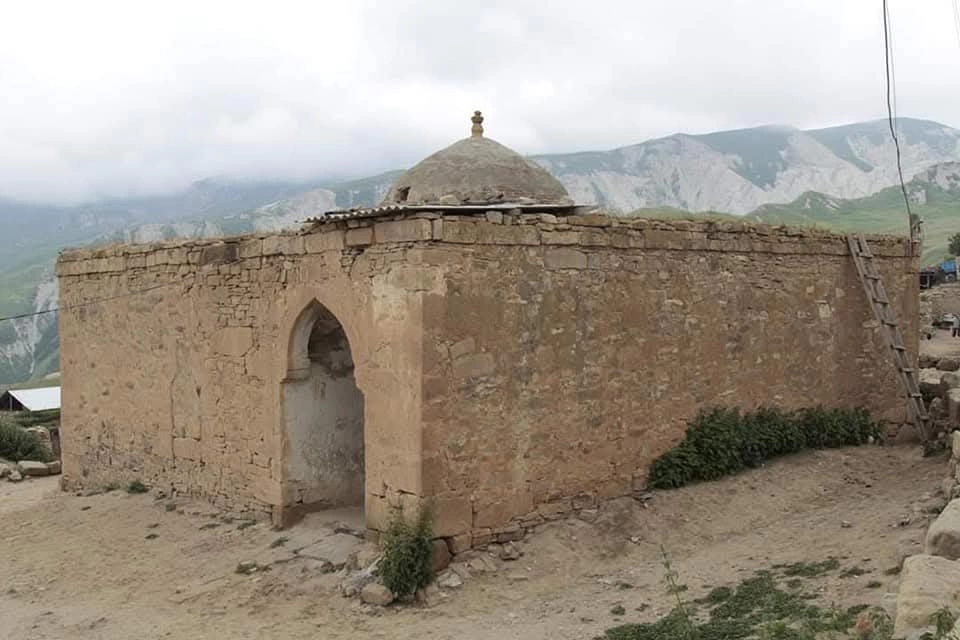
The historic Taghli Mosque, dating back to 1261 AH (1845/1846 AD), is located in Zeyid Village. Built by Haji Salim from river stones and bricks, the mosque consists of a main prayer hall, a corridor, and three chambers. Architecturally, it is one of the rare examples in Quba, constructed entirely of stone without using wood or metal structures. Taghli Mosque reflects the cultural and religious heritage of both Zeyid and neighboring villages.
In Zeyid Village, there is an ancient mosque dating back to 1261 AH (1845/1846 AD). The mosque, built from river stones and bricks by Haji Salim, has a special area for the imam, a corridor, and three chambers. Inscriptions in Arabic script on four plaques above show that the mosque was constructed by three master builders brought from Tabriz. According to reports, the gold bricks used were transported from Derbent by horse. The building’s construction also involved Ashiq Khaltanli Tagi (1776–1890). No wood or metal structures were used in the mosque’s construction. Architecturally, Taghli Mosque is a unique example in Quba. It is also said that the same masters built the two-arched bridge on the Gonagkend–Khaltan road. Haji Salim, who earned the trust and respect of not only Zeyid but also neighboring villages through his charitable deeds, passed away during his pilgrimage to Mecca after the mosque’s completion.
Təcrübə: 13 il Zirvələr: 15+ İxtisas: Dağ bələdçisi, tarix üzrə fəlsəfə doktoru, tarix müəllimi. 1989-cu ildə Bakı şəhərində anadan olmuşam. Tarixə olan marağım məni elm yoluna istiqamətləndirdi və bu sahədə ixtisaslaşaraq, Azərbaycan tarixinin müxtəlif dövrlərini dərindən araşdırmağa başladım. Bakı Dövlət Universitetində bakalavr və magistr təhsilimi fərqlənmə ilə başa vuraraq, akademik fəaliyyətə atıldım. Müəllim, elmi işçi və tədqiqatçı kimi çalışaraq, Səfəvi dövrünün əhalisi üzrə elmi tədqiqatımı tamamlayıb tarix üzrə fəlsəfə doktoru elmi dərəcəsini qazandım. Hazırda Bakı Mühəndislik Universitetində Azərbaycan tarixi üzrə baş müəllim kimi fəaliyyət göstərirəm. Elmi fəaliyyətim təkcə universitet divarları ilə məhdudlaşmır. 1 kitab müəllifi, 5 kitabın həmmüəllifi, 1 Atlasın redaksiya heyətinin üzvü və 7 kitabın redaktoru kimi Azərbaycan tarixinin öyrənilməsinə töhfə verməkdə davam edirəm. 30-dan çox elmi məqalə müəllifi olmaqla yanaşı, beynəlxalq platformalarda — Arizona Dövlət Universiteti, Stenford Universiteti, Kaliforniya Universiteti və digər nüfuzlu ali məktəblərin ixtisaslaşma kurslarını uğurla tamamlamışam. Lakin tarix yalnız arxivlərdə yazılmır — o, dağların zirvələrində, unudulmuş kəndlərdə, insan talelərində yaşayır. 2012-ci ildən etibarən dağ kəndlərinə səyahət edərək, yerli mədəniyyəti və qədim tariximizi araşdırmaq mənim üçün əsl ehtirasa çevrilib. Hər bir səyahətim təkcə keçmişi öyrənmək deyil, həm də tariximizin unudulmuş səhifələrini üzə çıxarmaqdır. Araşdırmalarımı məqalələrdə toplayır, tarixi və mədəni irsimizi geniş auditoriya ilə bölüşməyə çalışıram. Keçmişin izlərini yalnız kitab səhifələrində deyil, torpağın özündə tapmaq üçün yola çıxmışam. Tarix danışır — mən isə onu dinləyir və paylaşmaq üçün buradayam.