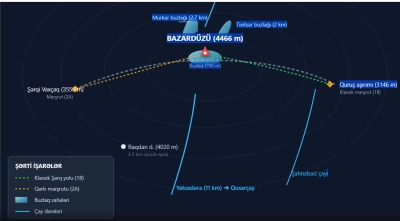
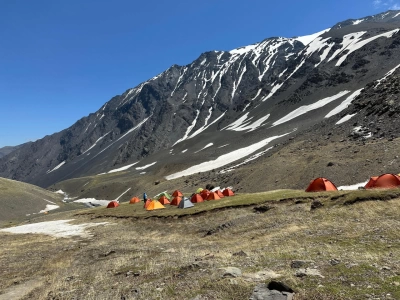
Zeyid village is an ancient mountain village located in the Buduq administrative territory of the Quba district. The village lies along the historic Albanian Trail and attracts attention with its rich history, including an ancient mosque dating back to Hijri 1261. Zeyid village is known for its local culture, traditions, and the tranquility of mountain life. This village is a unique destination for those interested in ethno-tourism and exploring Azerbaijani rural culture.
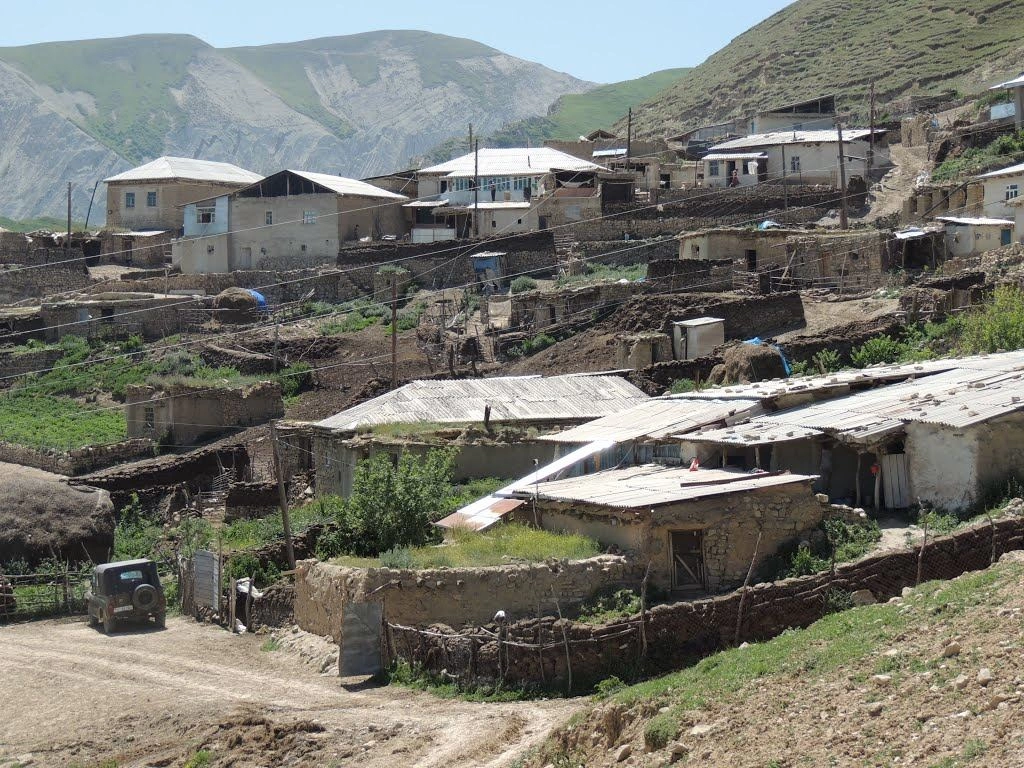
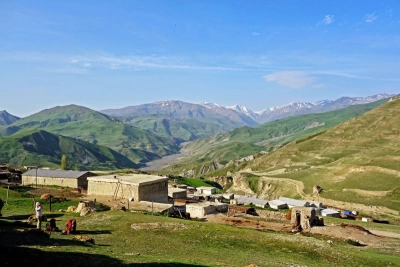
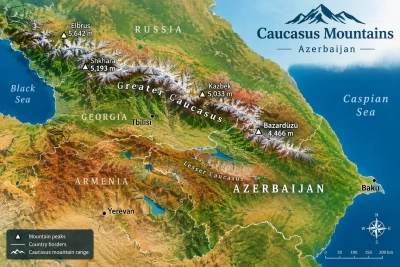
Zeyid village is one of the villages along the Albanian Trail. It is part of the Buduq administrative territory of Quba district and falls under the Buduq municipality. Located on the slopes of the Greater Caucasus, locals believe the village's name derives from the word "Seyid," and it is commonly known as Seyid. Indeed, among the six neighborhoods of the village, the oldest is Amir Seyidli. According to another source, the village's name comes from the word "zəy" (meaning watery or spring-rich place) in some Turkic languages, combined with the plural suffix "-t." The area is rich in water resources and numerous springs. It is said that the name Zeyid existed even before the village was established, and the settlement adopted the same name. The village has relocated five times. Initially settled near the stony area called Ağqaya, the community moved due to snake attacks to a place called Şəhərgah near Babaçay, on the left bank of Qarachay along the Qabala–Khinalug–Shamakhi caravan route. Later, due to floods, the residents settled in the current location of Zeyid village in Quba. Due to lack of roads, some families have moved, and as of 2025, only 20 households remain. The village has a school, a medical center, a library, and a village club. The residents primarily engage in animal husbandry and, in recent years, have also cultivated potatoes on the mountainside. Water has been supplied to the village from Ağqaya, located 3 km away, and it is 40 km from Quba district center. The village is home to an ancient mosque dating back to Hijri 1261 (approximately 1845/1846 CE).
The village later divided into seven parts, five of which are in the Quba and Khachmaz districts: Zeyid (Quba), Lower Zeyid (Khachmaz), Qacar Zeyid (in the Alekseyevka administrative territory), Qaracıq Zeyid (in the Lower Zeyid administrative territory of Khachmaz), and Ağbil (in the Vladimirovka administrative area of Quba). In the mid-19th century, families leaving Zeyid established three new settlements in their winter pastures. These were named Qacar Zeyid, Qaracıq Zeyid, and Ağbil Zeyid, based on their proximity to Qacar, Qaracıq, and Ağbil villages, respectively.
The village settled in its current location at the end of the 17th century and beginning of the 18th century. According to records from 1796, it was one of 18 villages of the Quba Khanate in the Dagestan region. In the 1831 Quba provincial survey, it was recorded that the village head was Abdulla Abdurrəhman oğlu (55 years old), and the village had 213 Sunni males. The villagers led a sedentary lifestyle, engaging in grain farming and sheep breeding. The community paid taxes in cash and grain, and the land included arable fields, meadows, and pastures. There was also a summer pasture measuring approximately 1 verst in length and width.
Today, despite its small population, Zeyid village remains a living example of Azerbaijani rural culture, with its historic memory, ancient mosque, and tranquil mountain setting.
Source: Ancient Albanian Way