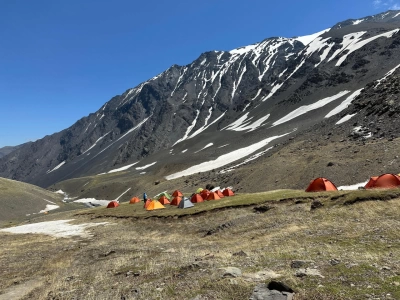
Buduq village is an ancient mountain village located in the northwestern region of Azerbaijan, known for its unique natural landscapes. The village is rich in ancient ethnic culture, a distinct language, and traditions. Here, it is possible to learn about the local way of life and ancient customs. Buduq village is one of the places of special interest for cultural and ethno-tourism.
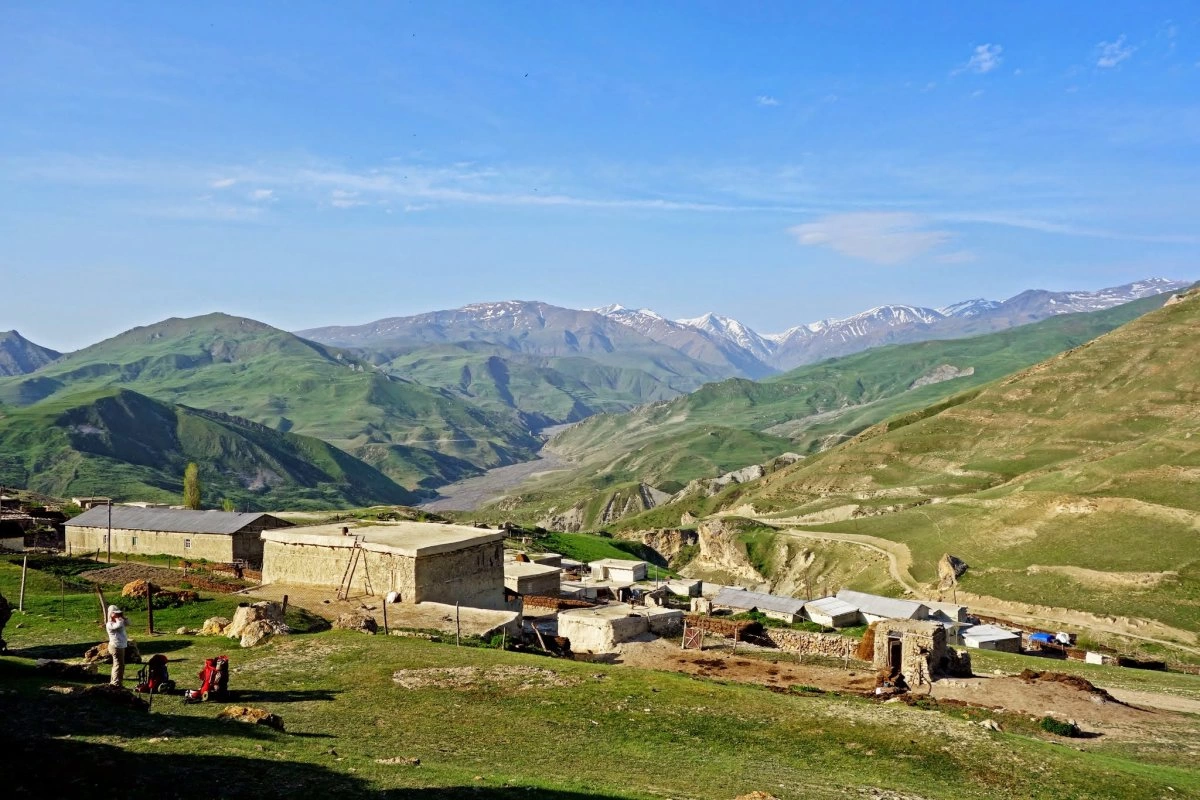
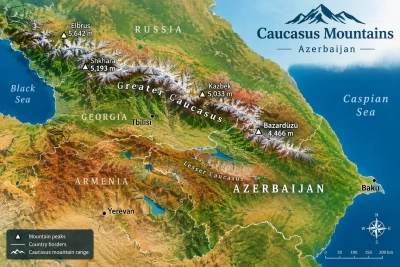
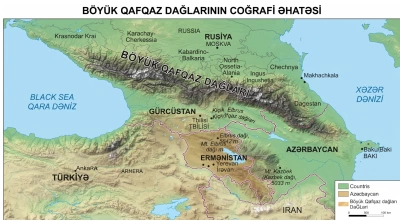
One of the most important villages along the Albanian Way is Buduq. Buduq village is located 64 km southwest of Quba, 2 km from the left bank of the Qarachay River, on the slope of the Yan range of the Greater Caucasus. It is the main settlement of the Buduq people.
In Buduq Yastan, there is the Gulkhana karst cave (also known locally as Çiləxana), as well as the Qosha cave carved by human hands on Mount Əmbərə on the left bank of the Qarachay River.
Buduq, located on a treeless rocky slope, holds strategic importance. Its appearance, natural landscapes, and especially the Buduq Valley – Axçid Waterfall (Axçid means "water falling from a height") captivate visitors with their beauty and structure.
Buduq has long served as a regional center, administering many surrounding villages. The Nizami-named state farm operated here. The Buduq sovkhoz included Buduq, Yalavanc, and Dağüstü villages. Buduq people speak a unified language without dialects and are geographically known by various names – "Baş Buduqlu" (those living in Buduq), Ağyazı; Qarabulaq, Qaraqız (southeast of Buduq); Qaradağ; Qarachay (south of Buduq), Dəliqaya (east of Buduq), Yergüc (northeast of Buduq); Madək, Suxtəkələ Buduq, and others.
In the 1831 Kameral description of the Quba province, Buduq village was noted as follows: "The village, with a total of 993 Sunni men and boys recorded, had mostly settled residents, with a small part leading a nomadic life, engaged in grain farming, weaving cloth, and sheep breeding. Each of the two captain families paid 3 rubles 50 kopecks to the treasury, each peasant family paid 1 ruble 50 kopecks and 1 ruble worth of barley, and additional obligations to the landowner. The village had 750 rubles of arable land, 3000 rubles of non-arable land, 1000 rubles of hayfields, 1000 rubles of pastures, and 5 mills." Buduq village was granted as a tiyul to the ancestors of Rustam Bey by the khans, who were the local governors, and the Russian authorities confirmed this right. The first four families of non-taxpaying peasants belonged to Rustam Muhammad Bey (granted by Fatali Khan of Quba to his ancestors), two families to Ismayil Bey Aga, two families to Mustafa Bey Huseynkhan, two families to Mustafa Efendi, and two families to Shikhijan Efendi.
Historically, the village had 2,500–3,500 residents. By 1991, only 527 people (98 households) remained. In the Buduq sovkhoz, there were 780 people in 154 households. Poor road conditions leading to Buduq and within the village caused the population to decline. Over the past 50 years, mass migration of Buduq people, combined with the lack of a specific alphabet and written literature, led to a distancing from their ethnic roots. In the 1990s, many Buduq families could be found in villages such as Qaradağ-Buduq, Güney-Buduq, Bədirqala, Bostançı, Qıraqlı, Qəcər-Zeyid, Vəlvələcə, Qudyalçay, İqriq, Həsənqala, Ködüklü, Amsar Palace, Hacıqayıb, Ərməki, Mirzəqışlaq, Yelenovka, Cek Palace, Sudur Oba, and others. Suxtəkələ, Dəliqaya, and Yalavanc consist entirely of Buduq families. In the 1990s, 20 Buduq families lived in Qaradağ-Buduq, while Ağyazı-Buduq had 101 Buduq families totaling 462 individuals, of whom slightly over 100 could speak the Buduq language. Bağbanlı was one of the villages with the largest concentration of Buduq residents. Interestingly, in the 1950s, all residents spoke Buduq. In the 1990s, more than 75% of the Bağbanlı population were Buduq (about 600 people), with roughly half (282) speaking the Buduq language. Suxtəkələ consists entirely of Buduq families. Today, most Buduq people live in Quba, Khachmaz, and Baku. According to 1990s estimates, their total number slightly exceeded 15,000. Most modern Buduq people no longer speak or barely know their language. In the 1990s, only 30–35% of Buduq people, approximately 3,000 individuals, spoke Buduq. Currently, the Buduq language is almost entirely forgotten in Buduq village itself. Buduq residents still engage in animal husbandry, while most in Khachmaz focus on vegetable farming.
(This material is mainly based on Vagif Buduqlu – Piriyev's book "Buduq and the Buduq People" (1994).)
Source: Ancient Albanian Way