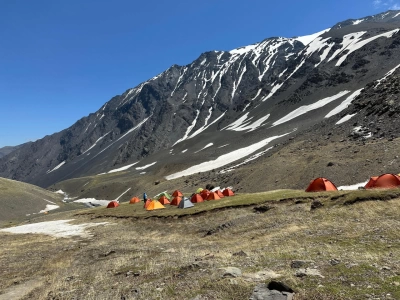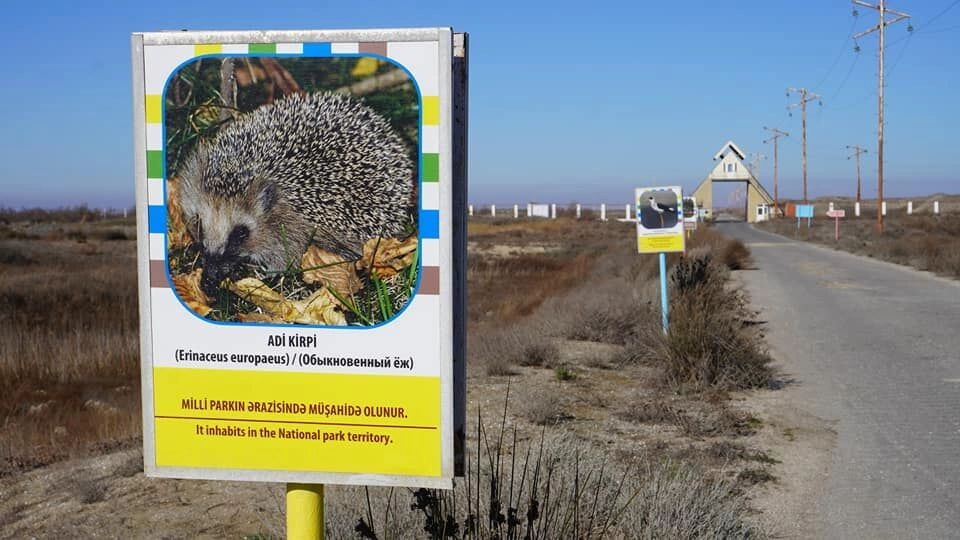
National parks are areas with special ecological, historical, aesthetic, and other significance, designated for the protection of nature and used for educational, scientific, cultural, and other purposes. They hold the status of a nature protection and scientific institution or organization. In the Republic of Azerbaijan, national parks were established to protect the environment, preserve biodiversity, and transfer natural resources to future generations.
The primary purpose of creating national parks is to protect rare and endangered animal and plant species, their natural habitats, maintain ecological balance, and minimize the negative impact of human activities on nature. At the same time, national parks serve as an important means for conducting scientific research, expanding ecological awareness, and fostering a positive attitude of the population towards nature.
In addition, national parks provide favorable conditions for the development of ecotourism. Clean air, natural beauty, unique landscapes, and rare wildlife make these areas attractive for both local and foreign tourists. National parks are also places where cultural and historical heritage is preserved, people relax, and connect directly with nature.
Thus, Azerbaijan's national parks are irreplaceable areas that serve both the function of nature conservation and strengthening society's connection with nature.
Shirvan National Park
Established: 2003
Area (hectares): 54,373.5
Location: Territories of Salyan, Qaradağ, and Neftçala districts.
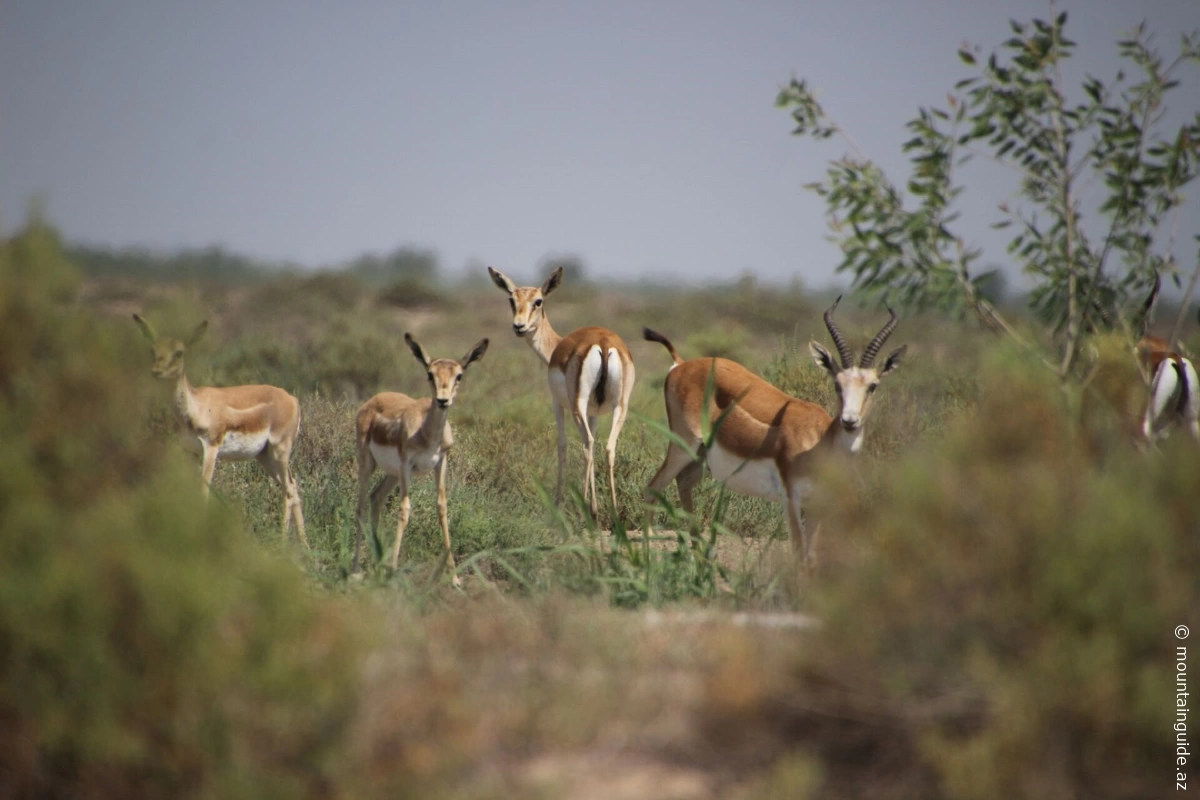
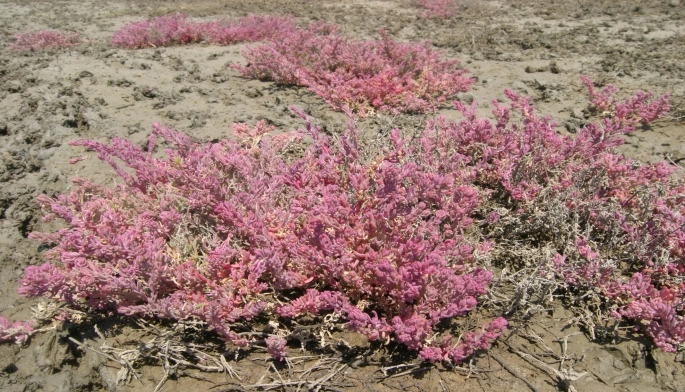
The main purpose of establishing the National Park is to preserve the key components of the semi-desert landscape, protect gazelles listed in the "Red Book" of the Republic of Azerbaijan, and conserve the characteristic fauna of the area, implement ecological monitoring, educate the public, and provide conditions for tourism and recreation. The diversity of relief, vegetation, and soil cover in the park allows for the identification of several natural landscape areas. The main part of the territory consists of wormwood, saline semi-desert small hills, and saline semi-desert plains. The climate is predominantly mild-hot semi-desert and dry steppe, with hot dry summers. The park's vegetation is dominated by halophyte, wormwood, ephemeral, desert, sandy, and salt-tolerant plant formations. Shirvan National Park is home to four amphibian species: the Syrian spadefoot toad (Pelobates syriacus), the green toad (Bufo viridis), the little Asian tree frog (Hyla arborea savigini), and the marsh frog (Rana ridibunda). The Syrian spadefoot toad is rare and endangered, listed in the "International Union for Conservation of Nature (IUCN) Red List" and the Republic of Azerbaijan's "Red Book" and is legally protected.
The herpetofauna of Shirvan National Park includes 17 species of reptiles. The Mediterranean or land tortoise, being rare and endangered, is listed in the "IUCN Red List" and Azerbaijan's "Red Book" and is legally protected. The Southern Caucasus viper is one of the widely distributed reptile species in the park. Due to its venom, vipers are considered valuable reptiles. During bird migration and wintering periods, shallow areas of lakes and the sea host gatherings of mallards (Anas platyrhynchos), teal (A. crecca), gadwall (A. strepera), common pheasant (A. penelope), ruddy shelduck (A. aguta), garganey (A. querquedula), northern shoveler (A. clypeata), flamingo (Phoenicopterus ruber), swan (Cygnus cygnus), coot (Fulica atra), and in deeper waters red-crested pochard (Netta rufina), common pochard (Aythya ferina), tufted duck (A. fuligula), long-tailed duck (A. marila), goldeneye (Bucephala clangula), among other duck species. The same habitats also host grebes (Podicipedidae), pelicans (Pelcanidae), cormorants (Phalacrocoracidae), and gulls (Laridae). In open marshlands, coastal sandy wetlands, and lagoons, waders (Jharadridae), stilts (Recurvirostridae), and snipes (Scolopacidae) form gatherings.
Among bird species globally and locally at risk, 34 species are found in the park. Of these, 14 are listed only in Azerbaijan's "Red Book," 10 only in the "IUCN Red List," and 10 in both Azerbaijan's "Red Book" (1989) and the "IUCN Red List" (2002). The gazelle, safsar, and desert cat are included in Azerbaijan's "Red Book." Caspian seal, gazelle, and safsar are protected under various statuses in the "IUCN Red List." All bat species are protected under the EUROBATS Agreement.
Tourism Importance of Shirvan National Park
Shirvan National Park offers unique opportunities for nature lovers, photographers, researchers, and ecotourism enthusiasts due to its rare flora and fauna diversity. The main tourist attraction of the park is observing gazelles in their natural habitat and exploring the semi-desert ecosystems.
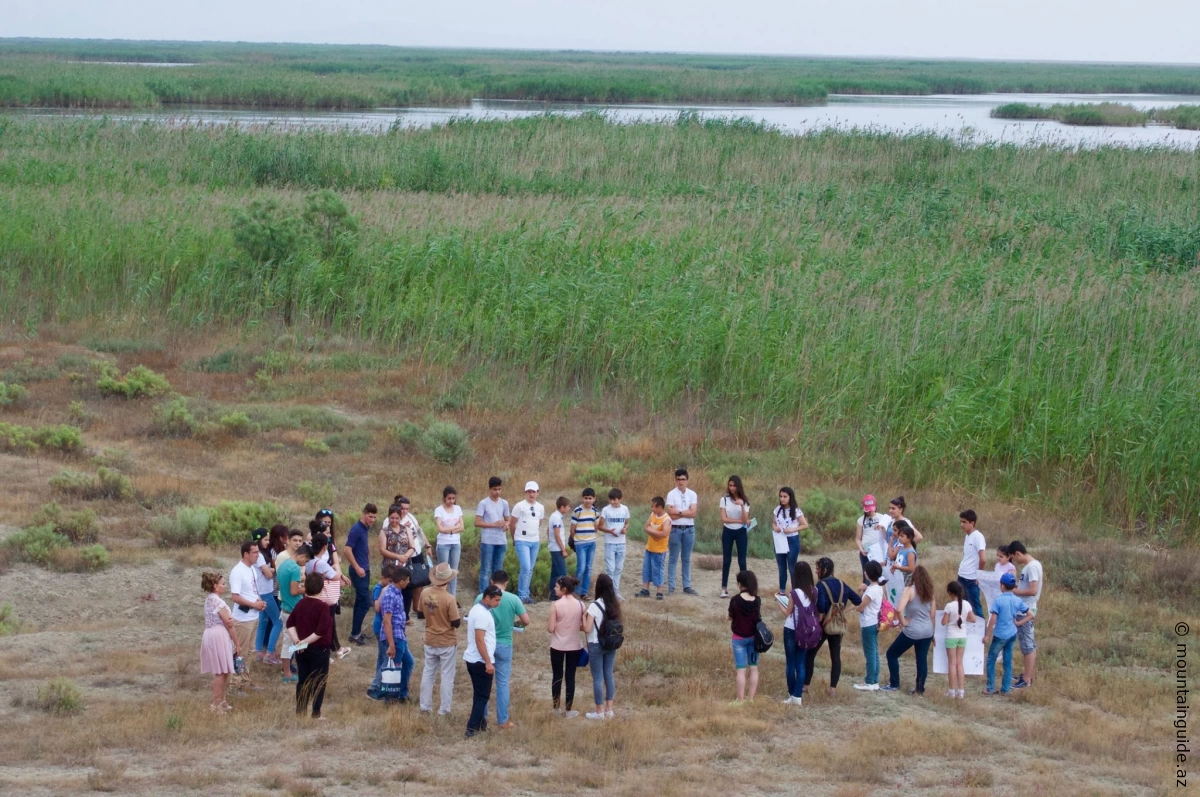
The park's plains and lakes are highly suitable for birdwatching – particularly in the winter season, flamingos, ducks, and other migratory waterfowl gather here in large numbers. The park’s significance in ecotourism also lies in its role in nature conservation and education. Observation points, walking trails, and guided services allow tourists to explore the area without harming the environment. Additionally, Shirvan National Park has potential for scientific research, photo safaris, hiking, and cycling activities. Its favorable climate, road infrastructure, and proximity to Baku (approximately 130 km) further enhance its tourism appeal. For local communities, tourism provides an alternative source of income and supports sustainable development.
Aghgol National Park
Established: 2003
Area (hectares): 17,924
Location: Territories of Aghjabadi and Beylagan districts.
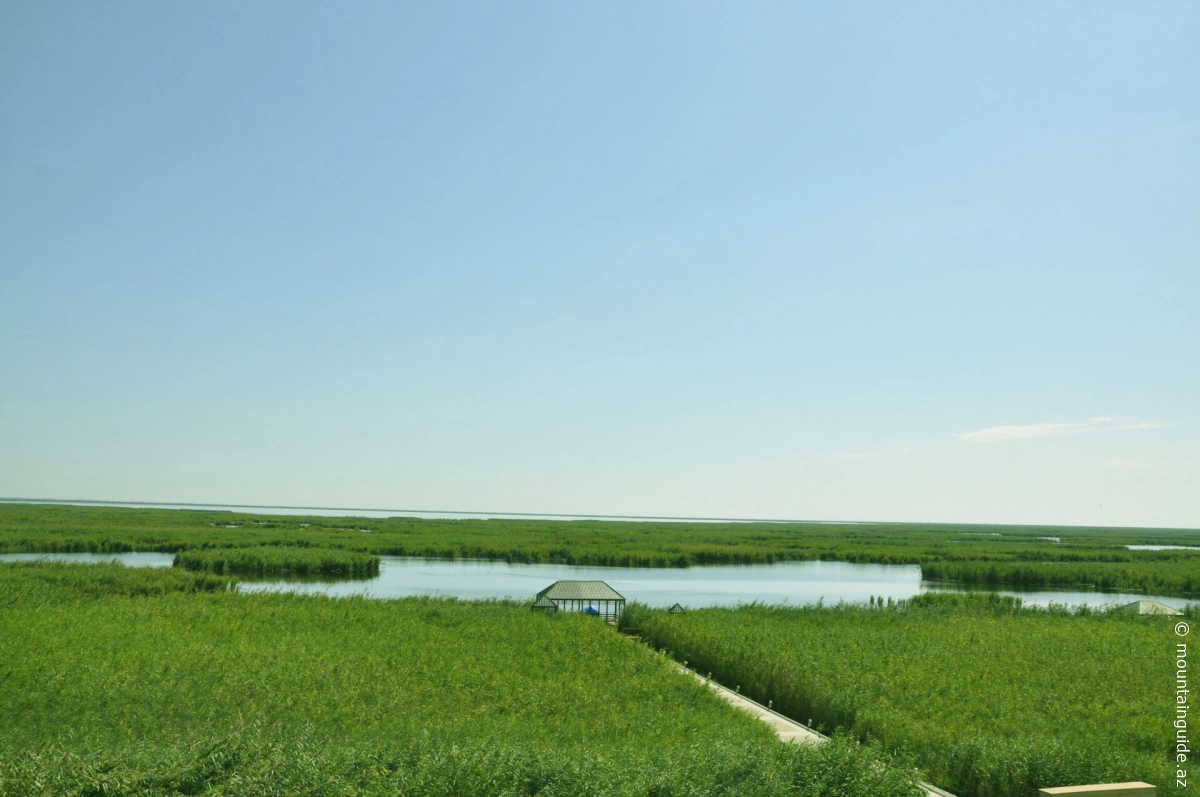
Aghgol is Azerbaijan’s most famous lake-desert ecosystem and serves as a habitat for both migratory and resident birds and other animals. Its conservation holds international significance due to the presence of bird species listed in the IUCN Red List and Azerbaijan’s Red Book. Aghgol serves as a key wetland for migratory birds to overwinter and was included in the Ramsar List on May 25, 2001, under the "Ramsar Convention on Wetlands of International Importance, Especially as Waterfowl Habitat." The main purpose of establishing Aghgol National Park is to protect critical wetland areas, the characteristic semi-desert landscapes, endangered fauna in and around the lake, reintroduce certain characteristic fauna to the area, monitor the environment, educate the public on ecological matters, and promote ecotourism. The lake is mainly surrounded by reed beds.
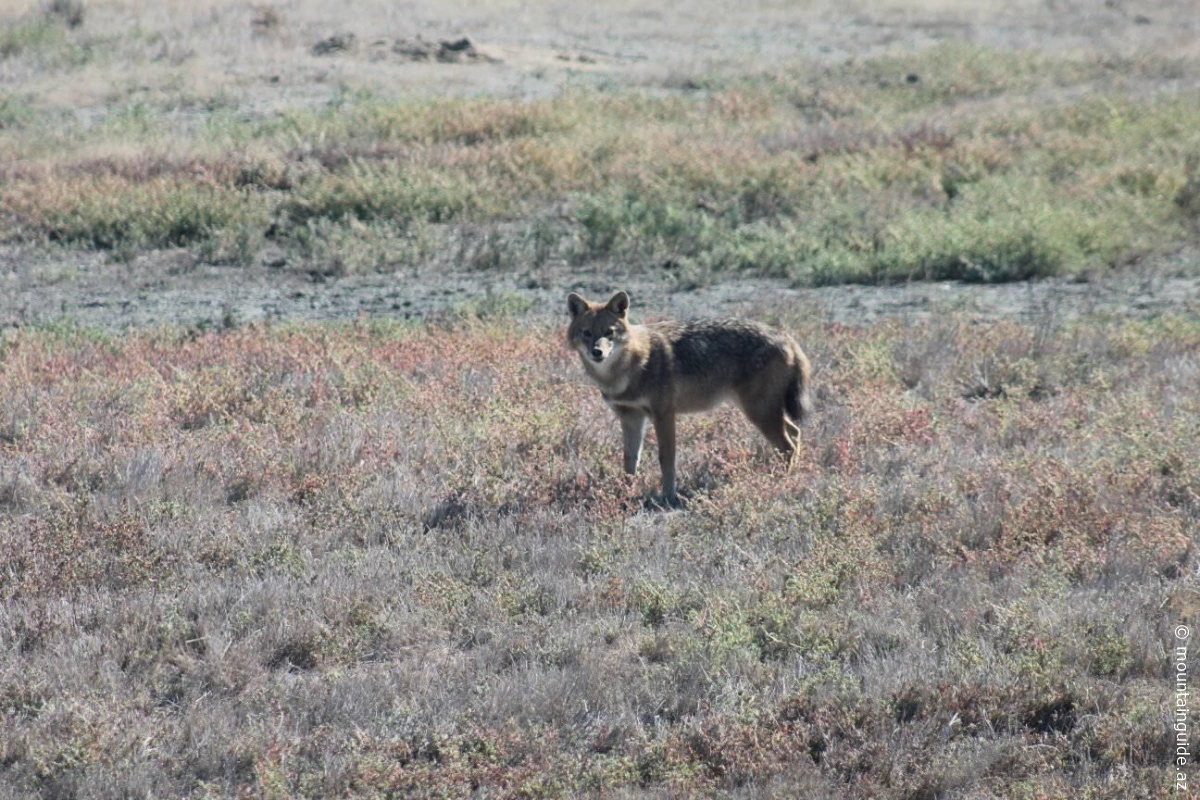
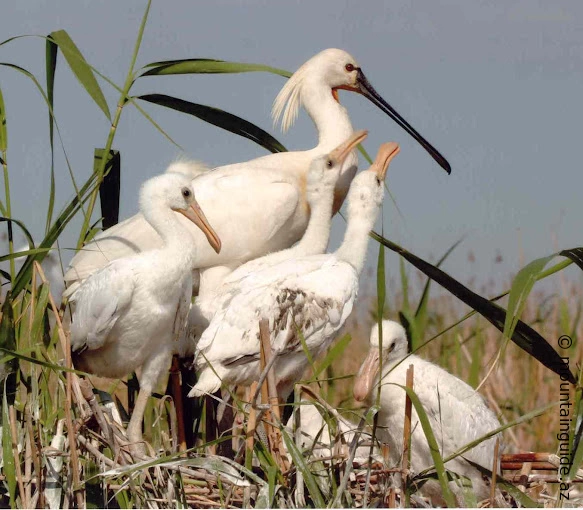 The park’s climate is predominantly mild-hot semi-desert and dry steppe during summer. This climate (except for occasional freezing of the lake in winter) provides suitable conditions for birds and mammals. Birds found in Aghgol National Park include marbled teal, partridge, lapwing, black stork, large and small coots, whistling ducks, Egyptian goose, shepherd’s snipe, muskrat, common pheasant, waders, tufted duck, white-tailed sea eagle, white-eyed diver, common golden goose, mallards, and geese (grey, greylag, and red-breasted). Mammals include wolves, jackals, wild boars, foxes, hares, and various bat species. Reed beds host a strong population of the reed cat.
Tourism Importance
Aghgol National Park, with its rich wetland ecosystem, bird diversity, and tranquil natural landscapes, is an invaluable location for ecotourism and nature tourism. Particularly strong in birdwatching, the park can attract both local and international nature enthusiasts. Observing rare and migratory bird species protected under the Ramsar Convention makes it a point of interest for ornithologists and photographers.
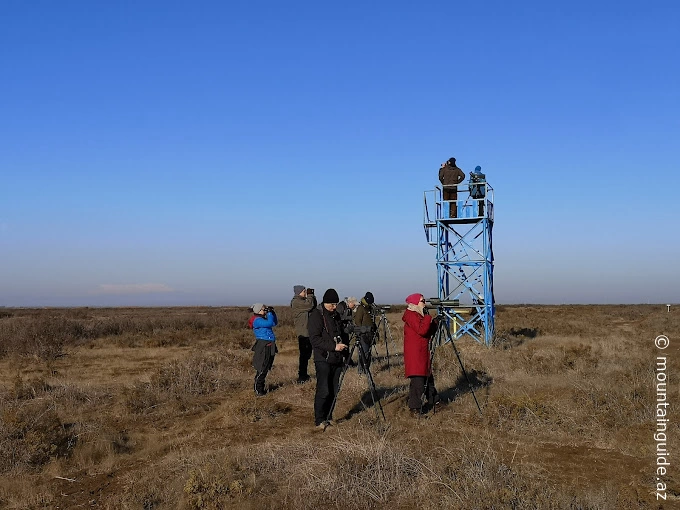
The park also provides favorable conditions for nature researchers, ecological education programs, and educational tours. The reed beds, open plains, and semi-desert landscapes around the lake showcase ecosystem diversity, giving visitors a unique nature experience.
Aghgol’s mild climate and undisturbed nature create an excellent environment for photography and nature walks. For nearby villages, the park can play a significant economic and ecological role by providing sustainable tourism activities and alternative sources of income. The tourism potential of the park can be developed through managed and responsible tourism without conflicting with its protected status.
Akademik H. Aliyev Zangezur National Park
Established: 2009
Area (hectares): 42,797.4
Location: Lesser Caucasus and Nakhchivan Autonomous Republic.
By the decree of the President of the Republic of Azerbaijan dated June 16, 2003, Ordubad National Park was established on 12,131.0 hectares of the Ordubad district administrative territory. The National Park was named after academician Hasan Aliyev. On November 25, 2009, by the decree of the President of the Republic of Azerbaijan, the area of Ordubad National Park was expanded using lands from the Shahbuz, Julfa, and Ordubad districts, reaching 42,797.4 hectares.
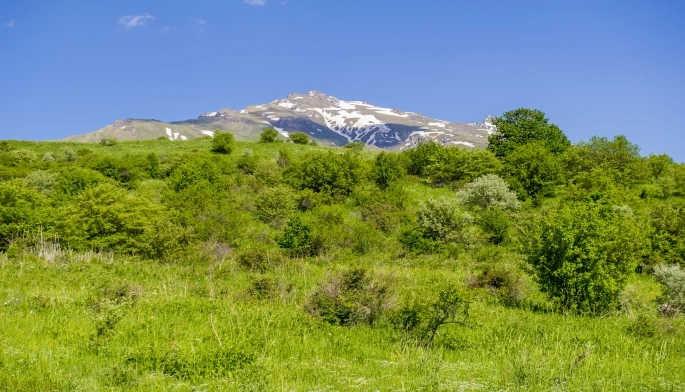
By the same decree, the park was renamed Akademik H. Aliyev Zangezur National Park. In addition to the National Park, the Ordubad State Nature Reserve covers 27,870.0 hectares of specially protected natural areas. The Zangezur mountain range, with an average elevation reaching 3,200 meters, is the highest of all Lesser Caucasus ranges.
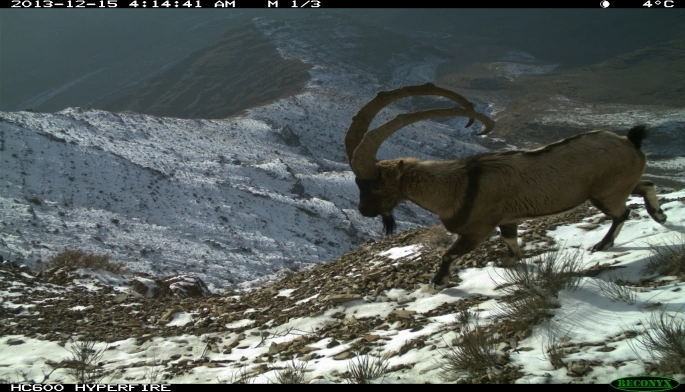
Its highest peak, Gemigaya, located within Zangezur National Park, reaches 3,906 meters. This is also the highest peak of the Lesser Caucasus within Azerbaijan. The last third part of the Zangezur range is Soyuq Mountain, which is also within the park. Its absolute height ranges between 2,000–3,000 meters. Most of the park’s territory is mountainous, with a cold, dry summer climate. The average temperature is 3–10°C in January and 10–25°C in July, with annual precipitation of 300–800 mm. The park's water network mainly consists of rivers flowing through the area. In the Ordubad district, the river network is unevenly developed. Rivers such as Gilanchay, Duyulunchay, Vanandchay, Aylischay, Ordubadchay, Ganzaçay, Kotamçay, and Kilitchay originate from springs and rain and snow waters. The Sagharsu River, originating from Goygol, flows into Gilanchay. The Nakhchivan Autonomous Republic hosts 38 species and subspecies of reptiles, including 5 species of turtles and 12 species and subspecies of snakes. Nakhchivan is notable for its rich bird fauna, with 217 species and subspecies, 15 of which are listed in the "Red Book". Up to 62 species and subspecies of mammals are also found in Nakhchivan.
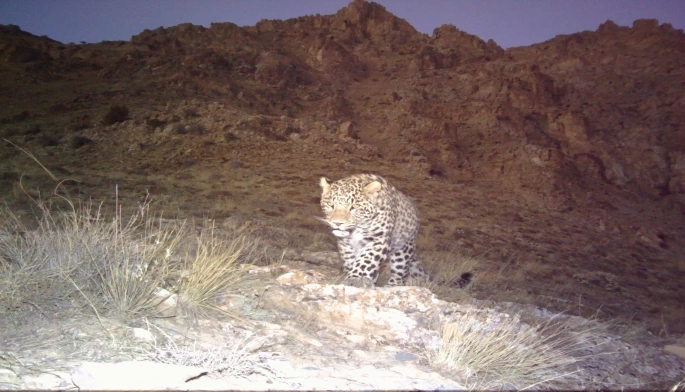
Of these, 32 species and subspecies are found within Zangezur National Park and the Ordubad State Nature Reserve. Twelve species of predatory mammals inhabit the Nakhchivan Autonomous Republic, including wolves, jackals, common foxes, striped hyenas, stone martens, badgers, and wildcats within the park. Over 100 fish species live in Azerbaijan’s waters, 16 of which are found in Nakhchivan. The park and reserve are also rich in higher and rare plants: of the 110 species found in Nakhchivan, 77 are located in the park and reserve, most of which are included in the "Red Book". Zangezur National Park and Ordubad State Nature Reserve are regions of rich fauna and flora as well as natural and historical monuments.
Tourism Importance
Akademik H. Aliyev Zangezur National Park offers vast opportunities for mountain tourism, ecotourism, nature tours, and scientific tourism thanks to its unique nature, rich biodiversity, and spectacular mountain landscapes. Gemigaya peak (3,906 m) and the Soyuq mountain range provide attractive routes for alpinists and hiking enthusiasts. The mountainous terrain, extreme climate variations, and inaccessible nature make the park appealing to adventure-seeking tourists. The Zangezur range is known for its rare flora and fauna, particularly species included in the "Red Book".
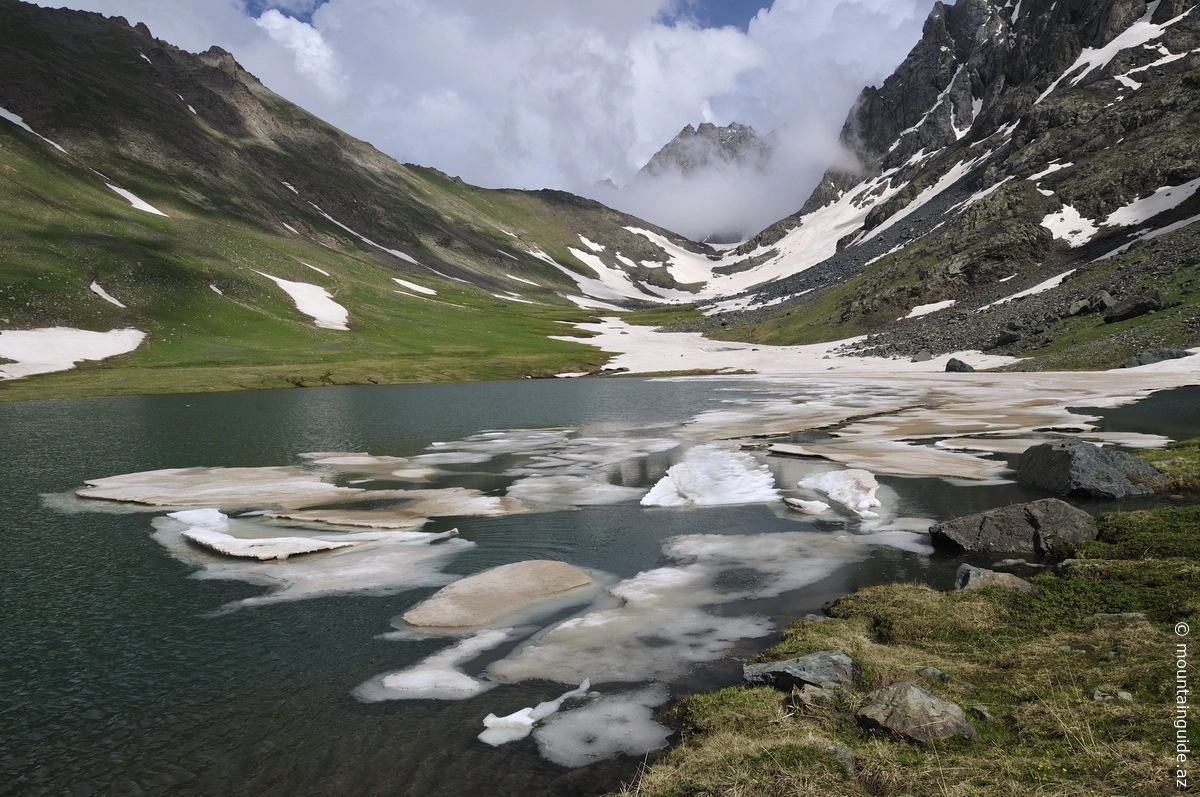 This makes the park a significant site for nature photographers, biologists, and scientific researchers. Within the park, 217 bird species, 32 mammal species, and 77 rare plant species make it a prime destination for biodiversity tours. Zangezur National Park also holds great potential for cultural and historical tourism. Gemigaya and surrounding areas feature rock carvings, historical monuments, and examples of cultural heritage, attracting history and culture enthusiasts. The park's mountain rivers, springs, and cool summer climate provide favorable conditions for summer tourism. Its undeveloped and untouched nature offers tranquility and solitude for visitors. Ecological education camps, nature tours, and guided hikes can contribute to the region’s socio-economic development.
Absheron National Park
Year of establishment: 2005
Area (hectares): 783
Location: Within the territory of Khazar District of Baku city, Absheron Peninsula.
Absheron National Park was established by the Decree of the President of the Republic of Azerbaijan dated February 8, 2005, on an area of 783 hectares, based on the Absheron State Nature Reserve. The National Park is located at the southeastern end of the peninsula — in the Shah Dili area. The main purpose of establishing Absheron National Park is to ensure environmental protection and its sustainable use, preserve rare and endangered species of flora and fauna (Caspian seal, gazelle, crested grebe, silver gull, mallard, etc.), develop ecotourism, create tourism and recreation zones, carry out ecological monitoring, and promote environmental awareness among the population. The fauna of Absheron National Park is very rich. Among birds, species such as the silver gull, whooper swan, greylag and red-breasted geese, pintail, mallard, white-eyed duck, crested grebe, great egret, sandpiper, coot, marsh harrier, and sea scoter can be found. Among mammals, gazelle, wolf, jackal, jungle cat, raccoon, long-eared hedgehog, fox, badger, hare, as well as seals and various species of fish in the waters of the Caspian Sea inhabit the park. A significant population of Caspian seals is found in the Caspian Sea area of Absheron National Park. This species is the only representative of pinnipeds that has been included in the Guinness Book of Records as the smallest seal in the world ocean.

Significance for Tourism
Due to its proximity to Baku, unique nature, and rich biodiversity, Absheron National Park is an accessible and attractive ecotourism destination for both local and foreign tourists. Its access to the Caspian Sea, sandy shores, and steppe-desert landscapes turn the park into a unique area that serves as a bridge between urban life and nature.
Within the park, it is possible to encounter rare animals such as gazelles, Caspian seals, wolves, raccoons, and jungle cats, as well as crested grebes, silver gulls, ducks, geese, herons, and other water birds. These features make the park an excellent destination for birdwatching, wildlife photography, and nature walks.
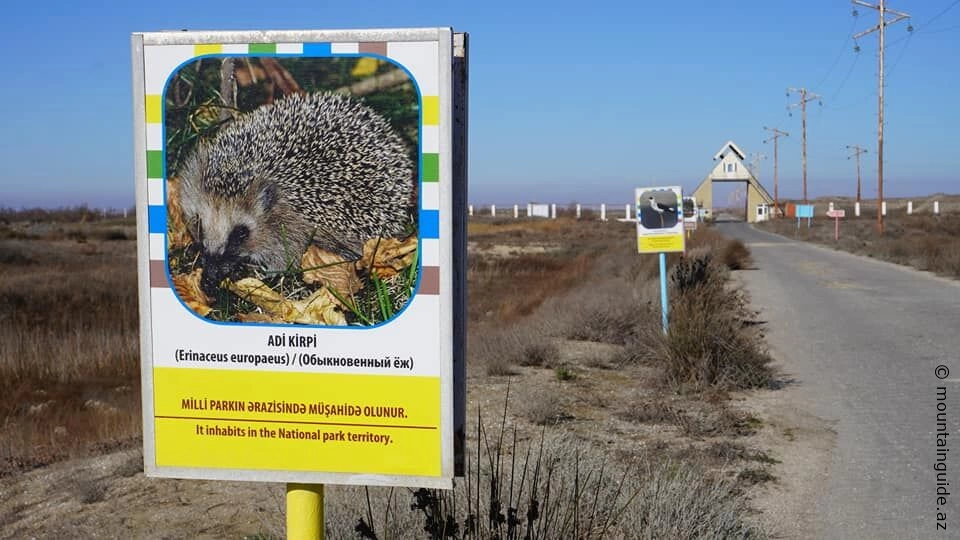
The widespread presence of the Caspian seal makes Absheron National Park one of the rare and remarkable wetland ecosystems in the region. The park is especially attractive for those who wish to observe seals and spend time close to nature along the Caspian coast. The Caspian seal is the smallest representative of pinnipeds included in the Guinness Book of Records, which creates additional interest for tourists.
Located just a few hours from Baku, Absheron National Park is suitable for both day trips and ecological educational excursions. Along with ecotourism activities, environmental protection and ecological education initiatives can also be carried out here.
Through the creation of tourism routes, informational stands, guide services, and nature observation points, visitors can both relax and gain knowledge about the surrounding natural environment.
Altigach National Park
Year of establishment: 2004
Area (hectares): 11035
Location: Within the territories of Khizi and Siyazan districts.
Brief information: Altigach National Park was established on an area of 11,035 hectares on the basis of the Altigach State Nature Reserve and the adjacent state forest fund lands. The main purpose of establishing the National Park is to preserve the natural landscapes of the southeastern slopes of the Greater Caucasus, restore flora and fauna species, strengthen the protection of natural complexes, carry out ecological monitoring, as well as create conditions for tourism and recreation, and ensure environmental education of the population.
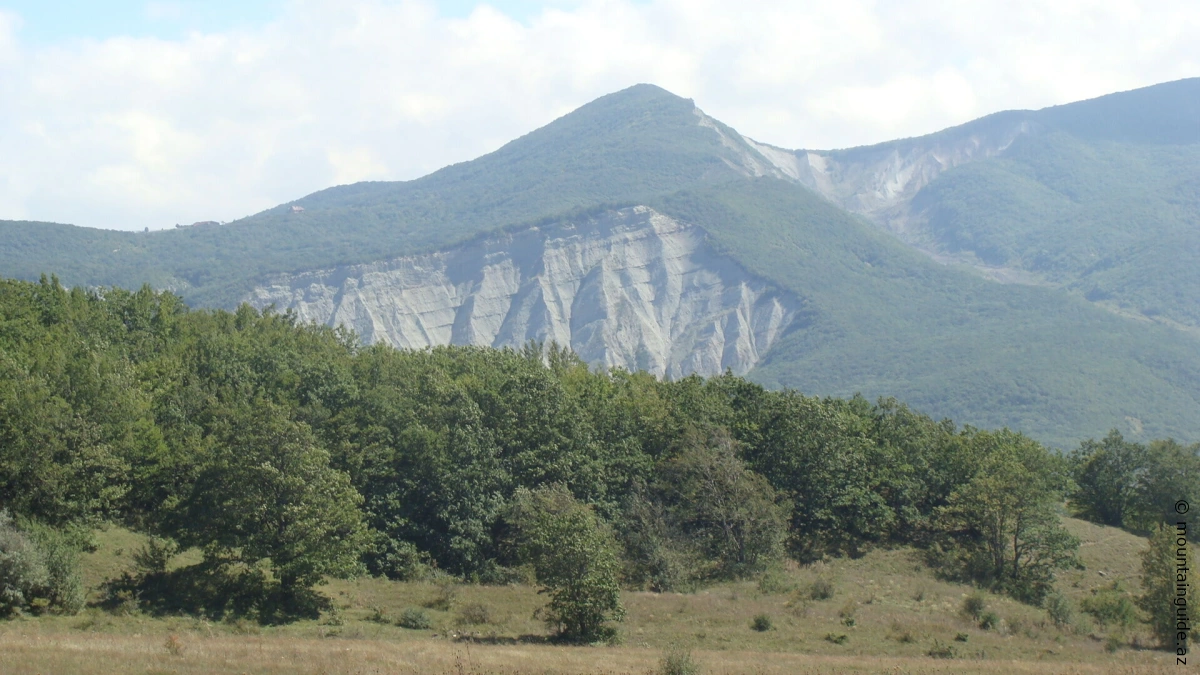
Within the territory of the National Park, soil types such as brown mountain-forest, humus-carbonate mountain-forest, chestnut mountain-forest, steppe-like mountain-meadow, and others are widespread. The area is dominated by moderately warm climates with dry winters and moderately warm climates with dry summers. Forests cover a large part of the National Park’s territory. The main tree species forming these forests are Caucasian oak, Caucasian hornbeam, Oriental beech, common ash, and maple. Shrub plants such as hawthorn, blackberry, medlar, blackthorn, and rosehip prevail here. Among mammals found in Altigach National Park are roe deer, brown bear, wild boar, lynx, raccoon, hare, fox, squirrel, and wolf. Among birds, species such as pheasant, snowcock, quail, shrike, steppe eagle, partridge, starling, and others can be encountered. Special attention is drawn to mammal and bird species such as the brown bear and steppe eagle, whose names are included in Azerbaijan’s “Red Book.”
Significance for Tourism
Altigach National Park, with its rich natural resources located on the southeastern slopes of the Greater Caucasus and its favorable geographical position, is of great importance for the development of ecotourism in Azerbaijan. Due to its proximity to Baku, this park is an excellent destination for day trips, family recreation, nature walks (hiking), and educational excursions.
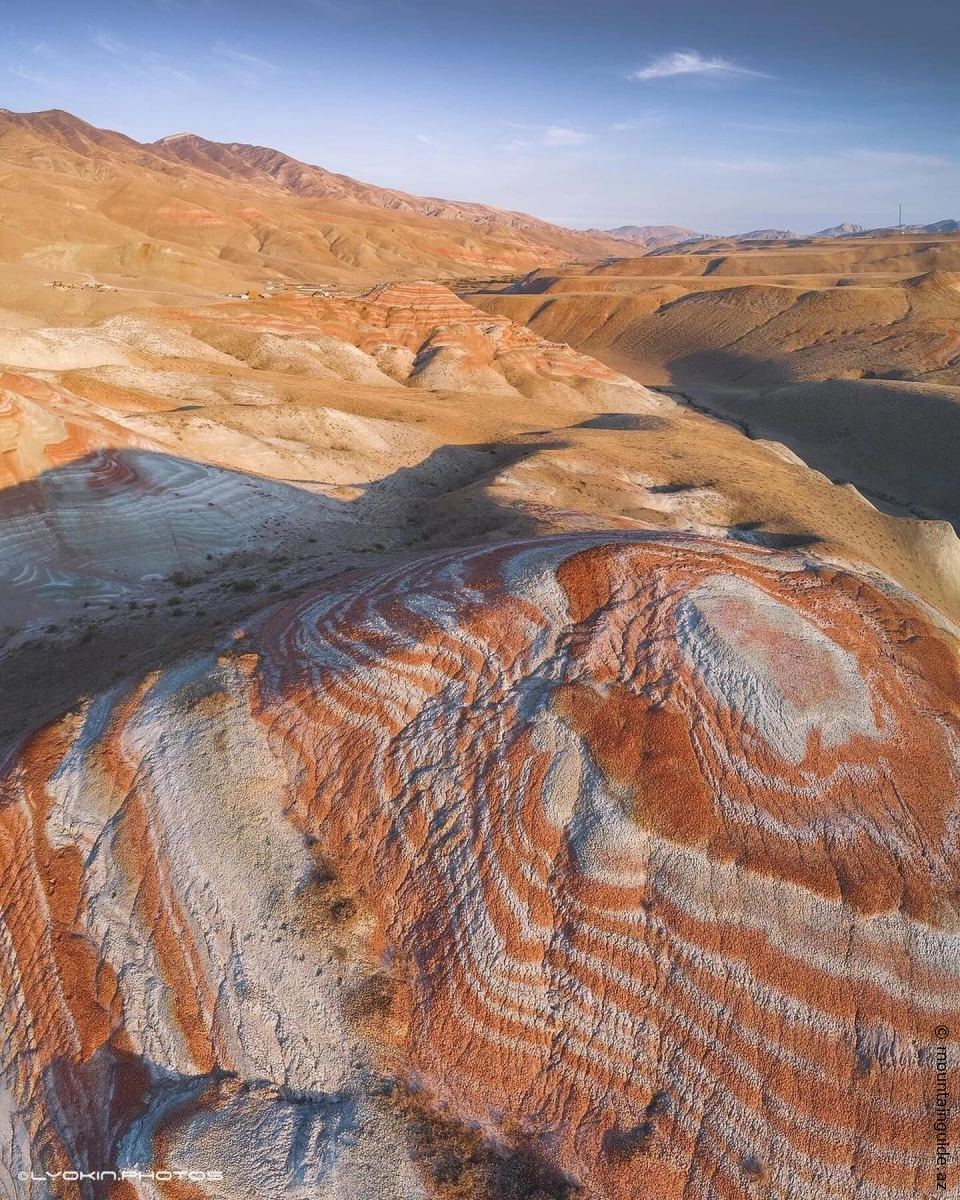 The extensive forest areas, mountain-meadow landscapes, rare trees such as Caucasian oak, hornbeam, and Oriental beech, as well as fruit-bearing shrubs like blackberry, rosehip, and hawthorn create both visually appealing scenery and a close-to-nature experience for tourists. This area is also suitable for seasonal tourism – lush greenery in spring and colorful forests in autumn have a special charm.
The park’s fauna also offers great opportunities for ecotourism. Rare animal and bird species such as the brown bear, lynx, steppe eagle, partridge, roe deer, and hare can be observed here. This creates favorable conditions for wildlife watching, photography tours, and nature research. Species listed in the “Red Book,” such as the brown bear and steppe eagle, are of particular interest.
Altigach National Park is also a valuable destination for those seeking tranquility and wishing to escape city life and be alone with nature. Tourism routes, picnic and recreation areas, ecological information boards, and guide services established throughout the area can further enhance the park’s attractiveness.
Altigach National Park occupies an important place on Azerbaijan’s nature tourism map and presents a rich ecosystem with unique natural resources for both local and foreign tourists.
Goygol National Park
Year of establishment: 2008
Area (hectares): 12755
Location: Within the territories of Goygol, Goranboy, and Dashkasan districts.
Brief information: By Decree No. 2744 of the President of the Republic of Azerbaijan dated April 01, 2008, Goygol National Park was established on an area of 12,755 hectares within the administrative territories of Goygol, Goranboy, and Dashkasan districts. The National Park was created on the basis of the Goygol State Nature Reserve and adjacent forest and state lands.
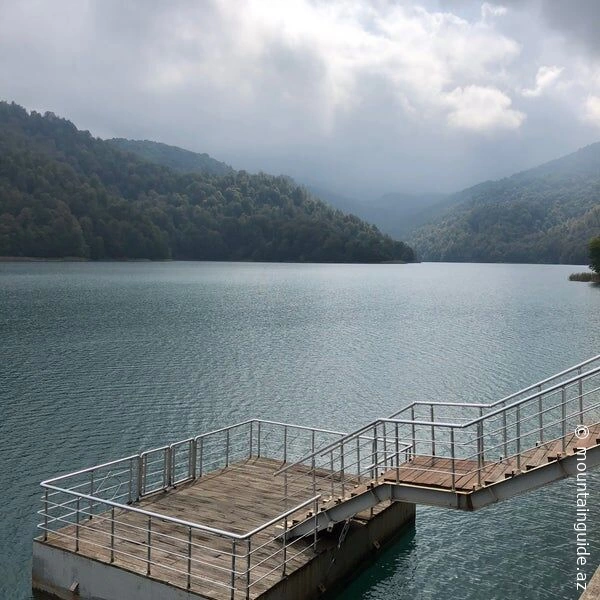 The reserve was established to preserve and ensure the cleanliness of Goygol’s water as a drinking water source, protect, conserve, and study the typical landscapes, fauna, and flora of the Lesser Caucasus. The relief of the main part of Goygol National Park is characterized by deep gorges, long watersheds, and slopes of varying steepness. The territory is significantly dissected by the valleys of various rivers. Cold climates with dry winters and moderately warm climates with dry winters prevail in the area. The average annual air temperature ranges between 4–10°C. Annual precipitation amounts to 600–900 mm. Part of the subalpine zone of the northern slopes of the Lesser Caucasus, the middle mountain forests, and the ecosystems of Goygol, Maral, and Zali lakes are among the main protected objects of the reserve. The park’s fauna consists of many wild mammal and bird species, including the noble Caucasian red deer, bear, roe deer, badger, wildcat, marten, lynx, hare, squirrel, and birds such as the Caspian snowcock, black vulture, partridge, and others. The names of two animals inhabiting the area—the East Caucasian tur and the Transcaucasian brown bear—are included in the “Red Book.” The Red Books also list the protected trout living in Goygol and many bird species. The main part of Goygol National Park has rich vegetation cover. Mountain-forest, mountain-steppe, subalpine, and alpine mountain-meadow plant ecosystems are widespread here. Mountain forests covering elevations of 1100–2200 m have very rich vegetation, comprising up to 80 species of trees and shrubs. The forests are mainly composed of broadleaf trees such as Oriental beech, Oriental oak, Caucasian hornbeam, birch, common ash, field maple, and linden, and coniferous trees such as hook-shaped pine. Shrub plants include cornelian cherry, barberry, rosehip, medlar, currant, blackberry, and others. Herbaceous plants include Caucasian violet, alpine dandelion, Steven’s dandelion, small-flowered ziboldia, bellflower, chamomile, ribbed buttercup, white clover, thistle, and others.
Significance for Tourism
Goygol National Park is one of Azerbaijan’s most famous and beloved nature tourism destinations. With its beautiful and unique nature, rich flora and fauna, and enchanting lakes, this park is an excellent place for ecotourism, recreation, and educational visits.
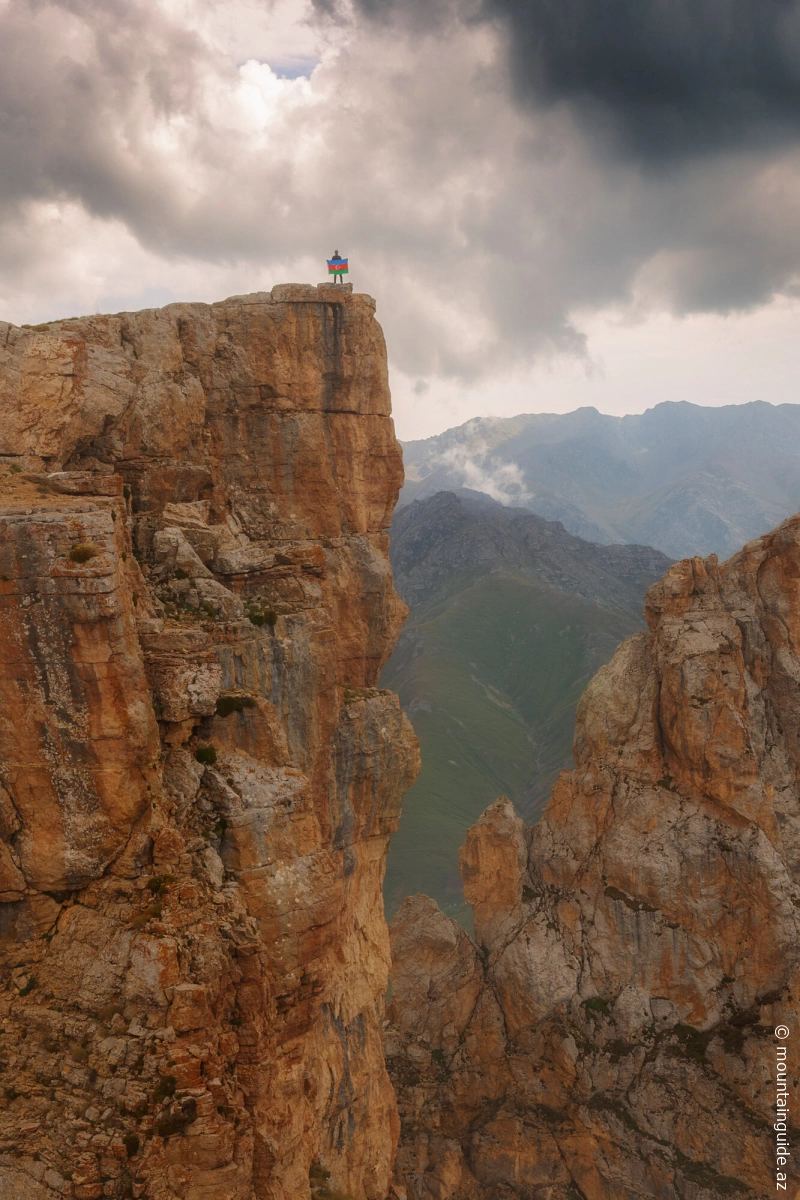 One of the park’s main attractions, Goygol Lake, offers a unique landscape with its pristine nature, crystal-clear waters, and surrounding forests. This lake attracts not only nature lovers but also tourists interested in photography, videography, trekking, and meditation. Alongside Goygol, Maral and Zali lakes, mountain rivers, and valleys complement the park’s enchanting scenery.
As the area encompasses various mountain ecosystems—mountain forests, subalpine, and alpine meadows—visitors can enjoy different tourism experiences depending on the season. In spring, scarlet tulip fields and flowered meadows; in summer, forest walks and cool weather; and in autumn, colorful foliage and romantic landscapes attract tourists.
The park’s fauna is also of great interest to ecotourists. Rare and protected animals such as the Caucasian red deer, East Caucasian tur, Transcaucasian brown bear, lynx, and wildcat can be encountered here. For birdwatchers, the Caspian snowcock, black vulture, partridge, and other birds provide exceptional observation opportunities.
Goygol National Park is also an excellent venue for nature-based education and environmental awareness programs, educational tours, and youth camps. Its mountainous relief, climatic diversity, and rich plant and animal life make it important for ecological research and scientific excursions.
Recreation areas, routes, guide services, and tourism infrastructure established along the road to Goygol make the park accessible and comfortable for thousands of visitors throughout the year.
Goygol National Park holds high value as a unique destination that instills love for nature and presents Azerbaijan’s tourism potential to the world.
Shahdag National Park
Year of establishment: 2006
Area (hectares): 115,895
Location: Within the territories of Quba, Qusar, Ismayilli, Gabala, Oghuz and Shamakhi districts.
Brief information: Shahdag National Park was established by Decree No. 1814 of the President of the Republic of Azerbaijan dated December 8, 2006. Its initial area was 115,895 hectares, of which 21,014 hectares belonged to the Ismayilli and Pirgulu State Nature Reserves, 81,797 hectares were lands of the state forest fund located within the administrative territories of Quba, Qusar, Ismayilli, Gabala, Oghuz and Shamakhi districts, and 13,084 hectares consisted of high-altitude unused summer pastures within the boundaries of these districts.
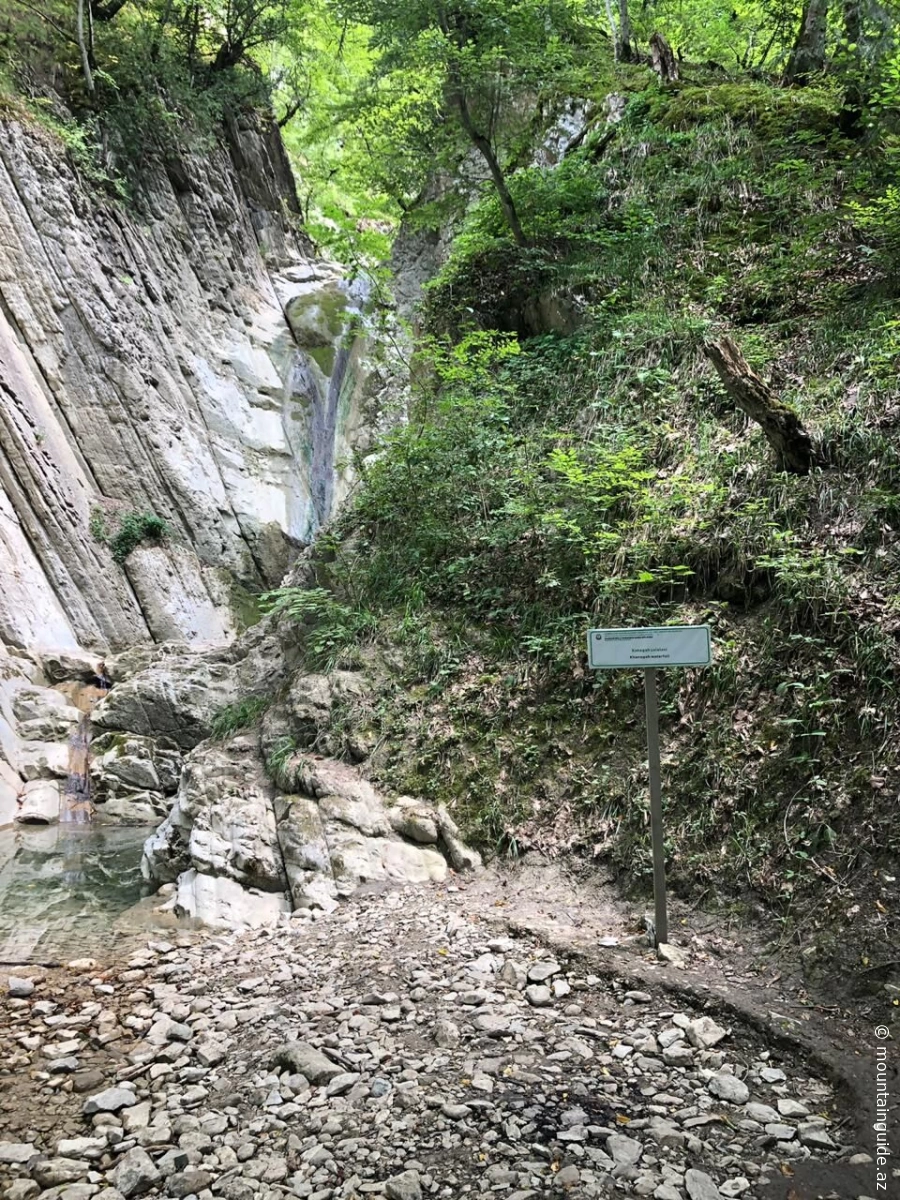 By Resolution No. 193/S of the Cabinet of Ministers of the Republic of Azerbaijan dated July 8, 2010, the territory of Shahdag National Park was expanded by 14,613.1 hectares, reaching a total area of 130,508.1 hectares. The purpose of establishing Shahdag National Park is the restoration, protection and management of globally significant mountain forests and high-mountain pasture ecosystems, including numerous endemic and endangered species as well as transboundary migratory animals; preservation of fertile soil layers; protection, increase and enrichment of flora and fauna species characteristic of the area; regulation of the stability of natural complexes; creation of more favorable conditions for scientific research; as well as environmental monitoring, ecological education of the population, and the development of ecotourism in an area with great tourism potential. The altitude at which the National Park is located has had a significant impact on the diversity of its climate, vegetation cover, soils and wildlife. The forests here are famous for creating rich, enchanting and beautiful landscapes. Vertical variation and fragmentation of the relief, complex climatic conditions and soil cover have resulted in a very high diversity of vegetation in this area.
Importance for Tourism
Shahdag National Park is considered one of the main ecotourism centers of the country, being one of the largest and richest natural areas of Azerbaijan and the South Caucasus in terms of tourism. Covering an area of more than 130,000 hectares, this park offers rare natural and recreational opportunities for both local and foreign tourists.
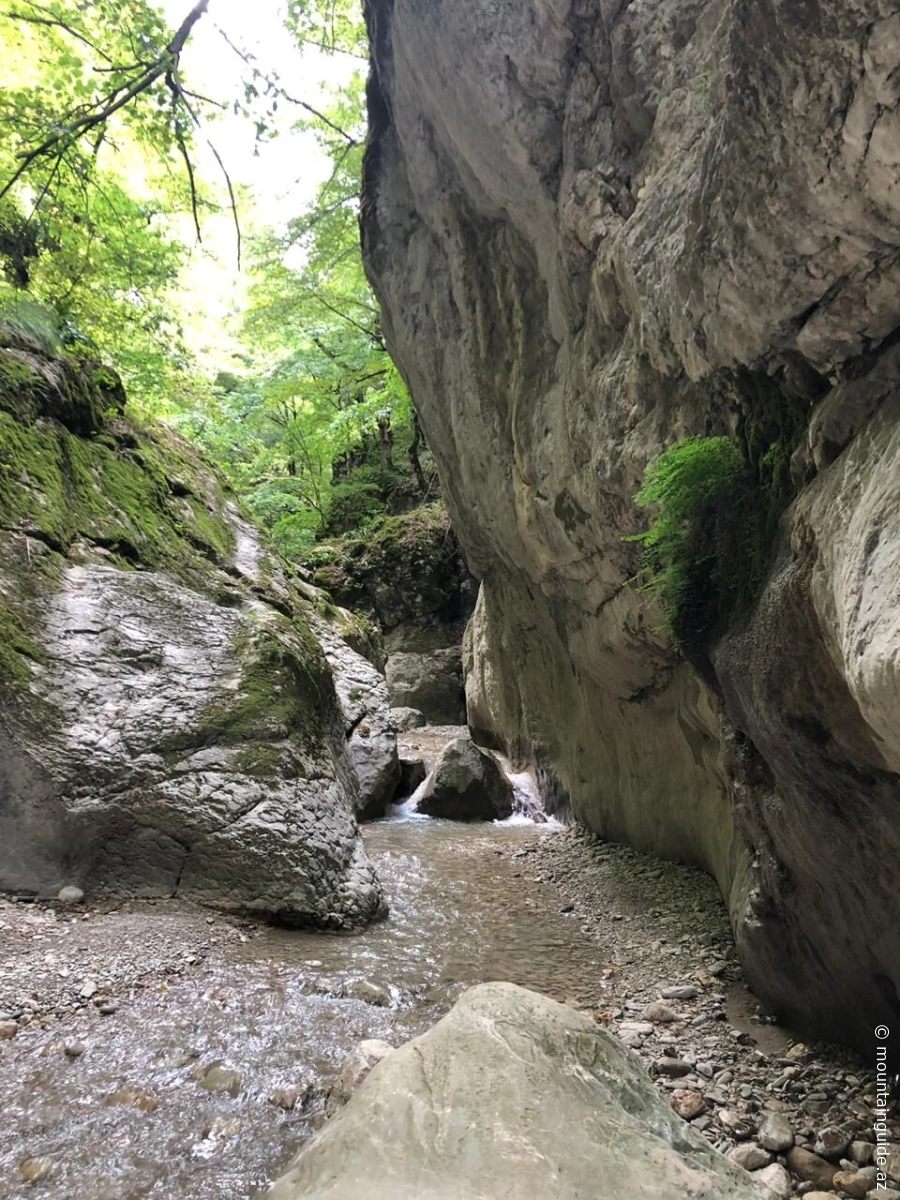 The districts of Quba, Qusar, Ismayilli, Gabala, Oghuz and Shamakhi, where the park is located, are already well-known tourism regions. Shahdag National Park brings together the natural potential of these regions, creating large-scale opportunities for ecotourism and active tourism. The area’s location at various altitudes, climatic variability and rich landscape lead to a wide range of tourism activities. In summer, activities such as hiking and trekking, mountain biking tours, photo tours, nature observation (birdwatching, wildlife watching) are widespread. In winter, the nearby Shahdag Winter-Summer Tourism Complex offers tourists alpine skiing, snowboarding and other types of winter tourism. The endemic and rare animal and plant species found in the park create unique observation opportunities for nature lovers, researchers and ecotourism enthusiasts. For ecotourists interested in observing and photographing animals such as the Caucasian tur, roe deer, bear, lynx and eagle, this park is an irreplaceable destination. Shahdag National Park also offers excellent conditions for ecological education and educational programs in natural sciences. Educational trips, summer camps and nature classes for students and schoolchildren can be widely implemented here. Tourism routes laid out in the park, guide services, transport accessibility and tourism infrastructure further enhance its tourism value. Shahdag National Park can also serve as an important example for establishing a sustainable tourism model in the region. All these opportunities make Shahdag National Park an ideal and multifunctional destination for nature tourism, ecotourism, sports tourism and scientific-educational trips. The park is also one of the strategic locations contributing to the development of Azerbaijan’s domestic and international tourism potential.
Samur-Yalama National Park
Year of establishment: 2012
Area (hectares): 11,772.45
Location: Within the territory of Khachmaz district.
Samur-Yalama National Park was established within the administrative territory of Khachmaz district by a Decree of the President of the Republic of Azerbaijan dated November 5, 2012. It covers an area of 11,772.45 hectares as indicated in the additional land-use planning of the state forest fund lands located within the administrative territory of Khachmaz district of the Republic of Azerbaijan. The flora of the National Park widely includes rosehip, ivy, thyme, buttercup, lemon balm and other medicinal plants. The soils are meadow-forest, chestnut and light chestnut. Meadows and shrubs are widespread. Lowland forests are also present. The main representatives of the fauna of Khachmaz include wild boar, raccoon, pheasant, partridge, and others. Coastal waters are rich in fish. There are thermal and mineral water springs. Khachmaz has favorable conditions for hunting and fishing, and the Hunters’ Society operates here. The “Gulalan Lake” reserve functions under this Society.
 Importance for Tourism
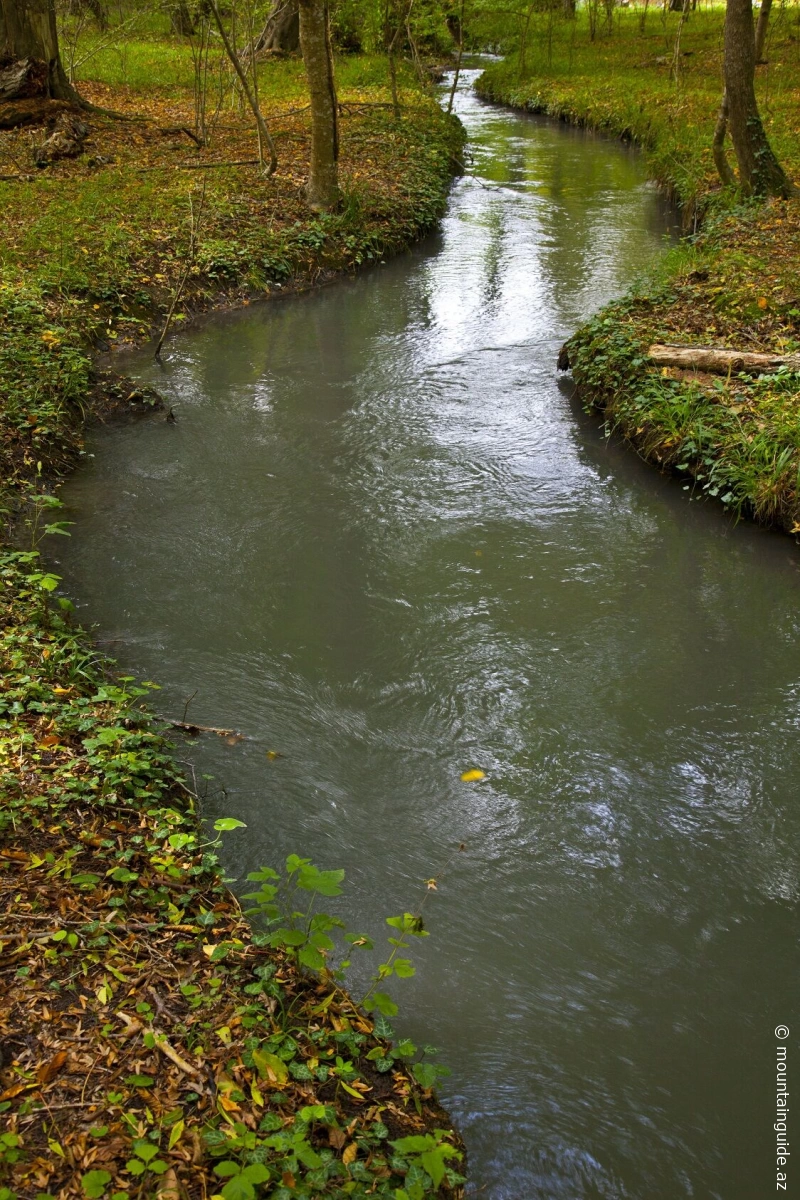
Samur–Yalama National Park is distinguished by its location in the north-east of Azerbaijan—within the territory of Khachmaz district—and by being situated in a natural transition zone stretching from the Caucasus Mountains to the Caspian coast. This geographical position makes the park a very favorable destination for ecotourism and recreation. With its proximity to the Caspian Sea, coastal forests, meadows, thermal springs and rich fauna and flora diversity, the park possesses unique tourism resources.
The extensive lowland forests, shrubs and nature rich in medicinal plants create opportunities for tourists to relax, unwind, walk and gain ecological experiences. Rare and healing plants found in the park’s flora, such as rosehip, ivy, lemon balm and thyme, particularly attract nature lovers, photographers and botanical researchers.
Animal species included in the fauna of the National Park, such as wild boar, raccoon, pheasant and partridge, create favorable opportunities for wildlife watching and hunting tourism. The Hunters’ Society operating in the area and the “Gulalan Lake” reserve under its supervision have potential for organizing tourism activities such as sport hunting and fishing.
Since the coastal waters in the area are rich in fish, fishing tourism, as well as the presence of thermal and mineral springs, creates fertile conditions for the development of health and spa tourism. This can attract a broader tourist audience—those seeking active recreation, nature lovers and travelers focused on wellness.
Samur–Yalama National Park also has great potential for family recreation, camping tours and ecological educational trips for schoolchildren. The park’s proximity to the capital and other major cities, developed road infrastructure, and the availability of accommodation and service infrastructure in the region can accelerate the development of tourism in this area.
All these factors make Samur–Yalama National Park one of the important regions for Azerbaijan’s sustainable ecotourism development strategy. The park is an alternative destination for both domestic and foreign tourists, offering opportunities for relaxation and connection with nature.
Qizilagach National Park
Year of establishment: 2018
Area (hectares): 88,400
Location: Lankaran, Masalli and Neftchala
Qizilagach National Park is located on the south-western coast of the Caspian Sea, within the territory of Lankaran district, 35 km from the center of Lankaran city, in the direction of the Sara Peninsula. The reserve was established on June 3, 1929, and was granted National Park status on September 26, 2018. The territory of the National Park includes Qizilagach Bay, Little Qizilagach Bay and their coastal zones.
The reserve was named due to the abundance of alder trees in the area. Alder is a tree species that grows on forest edges and along river and lake shores, characterized by broad reddish leaves.
Qizilagach National Park is considered the largest reserve in Azerbaijan by area and the third by date of establishment. The park’s initial area was 180,000 hectares, while its current area is 88.4 thousand hectares.
The main purpose of establishing the National Park is to study the natural complex of the area, protect the plant and animal species living here, and increase their populations.
In 1976, Qizilagach Reserve was recognized under UNESCO’s “Convention on Wetlands of International Importance Especially as Waterfowl Habitat” (the Ramsar Convention) as one of 12 reserves of international importance in terms of bird habitation. Therefore, the territory of the National Park is considered a reserve of international importance.
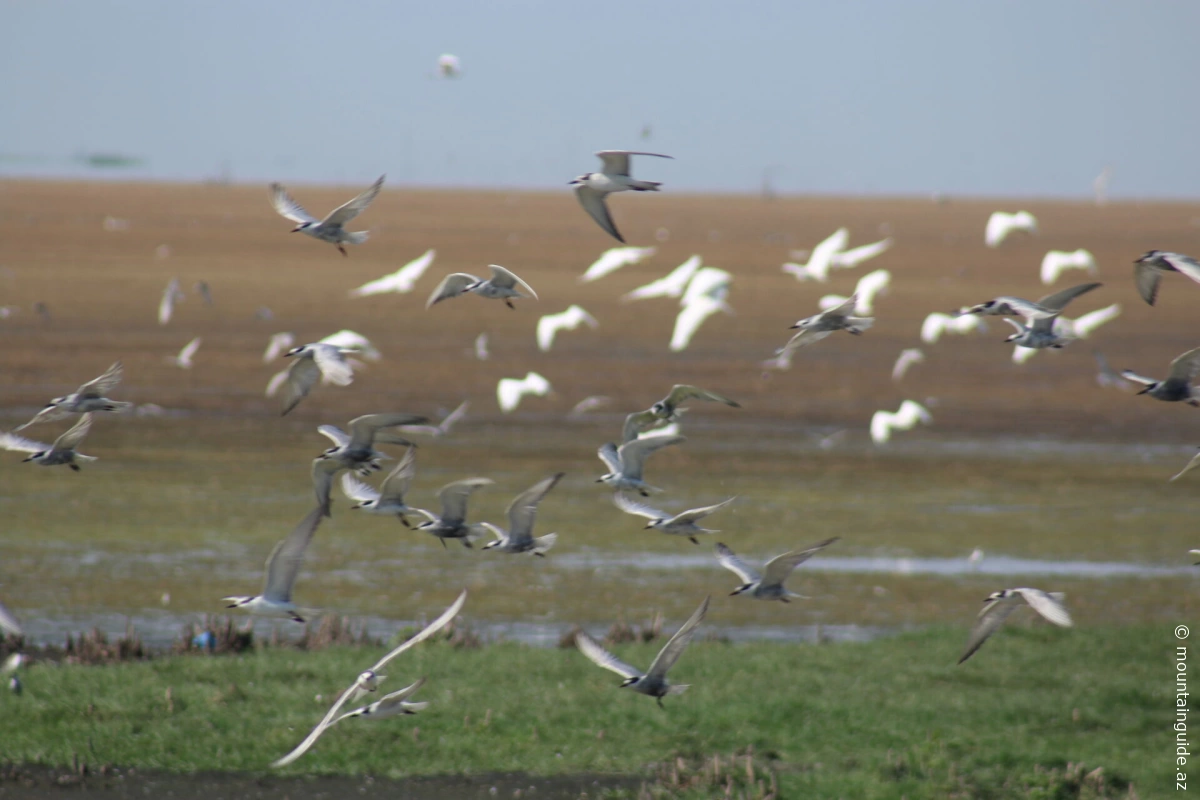
Most bird species listed in Azerbaijan’s “Red Book” inhabit the National Park and its surrounding areas. A total of 248 bird species, more than 30 fish species, and many other animal species live here. Nearly 300 bird species inhabit the National Park each year. These include the Dalmatian pelican, greater flamingo, black stork, white-tailed eagle, imperial eagle, grey partridge, francolin, little bustard, purple swamphen, avocet, greater flamingo, and others. Every year, many bird species migrate here to overwinter from Western Siberia, Kazakhstan, the Southern Urals, and Northern Europe.
Alongside the National Park, the Little Qizilagach State Nature Sanctuary has been operating here since February 1978. The sanctuary is located in the central and southern parts of Little Qizilagach Bay.
Importance for Tourism
Located on the south-western coast of the Caspian Sea, Qizilagach National Park has great importance for tourism due to its rich nature and biodiversity. The park is an excellent destination for birdwatching tourism, as nearly 300 bird species inhabit the area each year, including rare species such as the greater flamingo and black stork. The park also offers a natural haven for visitors interested in ecotourism and natural landscapes. In particular, its wetlands and forests rich in alder trees make it an attractive destination for nature lovers and photographers.
Hirkan National Park
Year of establishment: 2004
Area (hectares): 21,435
Location: Astara–Lankaran
The territory of the National Park has been expanded to 40,358 hectares. The main purpose of establishing the National Park is the comprehensive protection of nature in the area, conservation of relic and endemic plant species of the Tertiary period, preservation of typical flora and fauna species included in the “Red Book” of the Republic of Azerbaijan, implementation of environmental monitoring, public awareness, as well as creating conditions for research, tourism, and recreation.
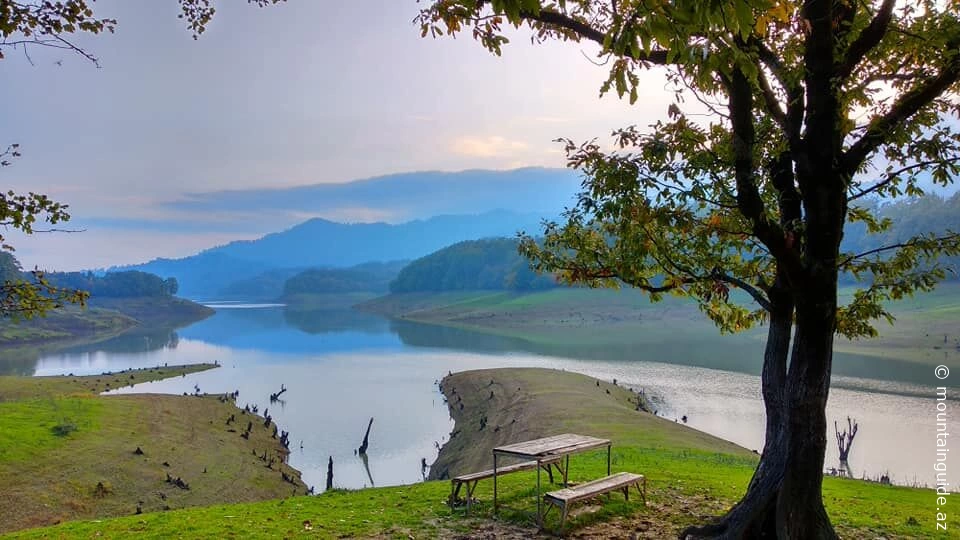
Hirkan National Park was established on February 9, 2004, by Decree No. 81 of the President of the Republic of Azerbaijan. The National Park is located in the south-eastern part of Azerbaijan, within the administrative territories of Lankaran and Astara districts. Its area is 21,435 hectares. The National Park covers natural areas of the Talysh Mountains distinguished by their unique natural complexes. By the Decision of the Cabinet of Ministers of the Republic of Azerbaijan dated April 23, 2008, most of the territory of Hirkan National Park is covered by forests and a chain of mountains stretching from the north-west to the south-east. The area is mainly characterized by a warm-temperate climate with dry summers. Summers are dry, autumns are humid, and winters are mild. Although the territory of Hirkan National Park does not rise very high vertically (up to 1,000 m), as one moves from east to west and ascends the mountains, changes in forest vertical zones can be observed: in the lower parts, forests dominated mainly by chestnut-leaved oak, ironwood, and hornbeam (together with silk acacia, Caspian gleditsia, Hirkan fig, Caucasian persimmon, and azat) are widespread. With increasing altitude, ironwood and partly chestnut-leaved oak decrease, giving way to beech forests.
The richness of the vegetation of the area has enabled numerous animals to inhabit it. The fauna of the park is very rich. Among mammals, species such as leopard, spotted deer, lynx, badger, wild boar, roe deer, raccoon, and others can be found. Amphibian species common in the area include the smooth newt, crested newt, Syrian spadefoot toad, Caucasian parsley frog, and common toad. Reptiles present in the National Park include the Mediterranean tortoise, striped glass lizard, round-headed worm lizard, ruin lizard, Aesculapian snake, and others.
Bird species included in the ornithofauna of Hirkan National Park such as the black stork, imperial eagle, Dalmatian pelican, francolin, marbled teal, Talysh pheasant, Hirkan bee-eater, and others are listed in the “Red Book” of Azerbaijan. The entomofauna of the National Park is rich in endemic species. Among insect species listed in the “Red Book,” one can encounter the dark-red Talysh longhorn beetle, Talysh blue butterfly, three-winged Talysh skipper, oak discera, euphema, Talysh bramea, large vine hawk-moth, Oxyme golden butterfly, Alexandra’s fritillary, Talysh velvet butterfly, and other insects.
In the forests of the National Park, bear’s breech, Hirkan ivy, Hirkan boxwood, spindle tree, and various lianas are widespread. Most of these plants are included in the “Red Book” of Azerbaijan. One of the most characteristic features of the subtropical forests of the Lankaran zone, where Hirkan National Park is located, is the good preservation of Hirkan-type forests and the wide distribution of many endemic and rare tree and shrub species. Hirkan National Park is also famous for its rare natural monuments. There are more than 100 natural and cultural monuments here. One of the most famous natural forest monuments is located near Zungulesh village of Astara district. The proximity of the Caspian Sea and the diversity of nature create favorable conditions for the development of ecotourism and environmental studies in the area.
Project estimate documentation has been prepared and submitted for the inclusion of the Hirkan forests in the UNESCO World Cultural and Natural Heritage List.
Importance for Tourism
Hirkan National Park is a unique area located in the south-eastern part of Azerbaijan with rich natural heritage. This park has great importance for tourism, as it offers numerous opportunities for both ecotourism and cultural tourism.
The diversity of flora and fauna of the park, especially endemic plant species, numerous rare and protected animals, as well as rich ornithofauna, create favorable conditions for nature lovers and photographers to explore natural beauty. The Hirkan forests, unique natural complexes of the Talysh Mountains, and subtropical climate make this park attractive for both nature enthusiasts and researchers, showcasing diverse aspects of nature and ecosystems.
The park also offers excellent conditions for ecotourism activities, walking tours, trekking, and travel. In particular, observation of special bird species such as the Hirkan bee-eater, black stork, and imperial eagle provides unique experiences for birdwatchers and nature lovers.
Hirkan National Park is also of great importance in terms of cultural tourism. There are more than 100 natural and cultural monuments here. Zungulesh village located near the park and other natural monuments are unique places where history and nature come together.
The proximity of the Caspian Sea and the presence of various natural monuments further enhance the tourism potential of the park. For the purposes of ecotourism and environmental conservation, this park offers both local and foreign tourists the opportunity to be close to nature, breathe fresh air, and closely study ecology.
This area, which has applied for inclusion in the UNESCO World Cultural and Natural Heritage List, has great potential for tourism development and is an important component of Azerbaijan’s ecotourism sector. Hirkan National Park also brings economic benefits to the local population and creates conditions for employment opportunities in this field.
Ilisu National Park
Year of establishment: 2025
Area (hectares): 13,966
Location: Gakh–Zagatala
Ilisu National Park is one of the protected areas with high natural value, located in the north-west of the Republic of Azerbaijan, on the southern macro-slope of the Greater Caucasus Mountains. The main purpose of establishing the park is the comprehensive protection of mountain-forest ecosystems characteristic of this region, alpine and subalpine meadows, rare flora and fauna species, the conduct of scientific research, organization of ecological monitoring, and the creation of conditions for sustainable tourism.
The National Park covers an elevation range from 550 to 2,500 meters above sea level. This altitude difference further enhances landscape diversity: foothill meadows and river valleys, steep mountain forests, rocky areas, as well as alpine and subalpine meadows coexist here in parallel. Such rich landscape diversity increases the park’s strategic ecological importance.
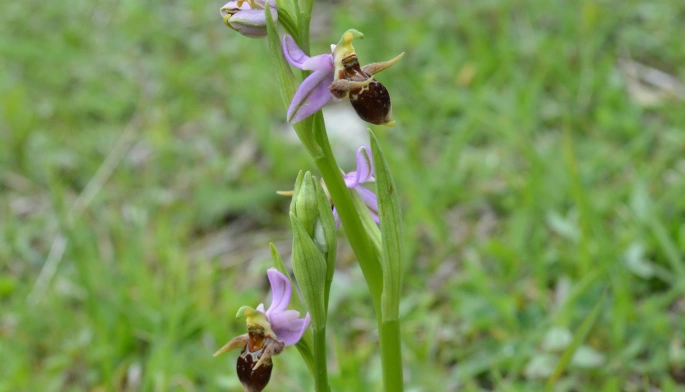
The vegetation cover of Ilisu National Park is very rich. Valuable tree and shrub species such as Oriental beech, Oriental oak, Caucasian hornbeam, Trautfetter maple, Litvinov birch, berry-bearing black currant, Caucasian pear, and Caucasian medlar are widespread in the area. At the same time, rare orchid species such as Mozalan bird orchid, yellow-flowered orchid, and satyr-like steveniella further enhance the park’s floristic value. Some of these plants are included in the “Red Book” of the Republic of Azerbaijan.
The fauna is also one of the park’s main strengths. Mammals such as wild boar, brown bear, grey wolf, red fox, rock squirrel, badger, wildcat, European hare, Eurasian lynx, European roe deer, Caucasian shepherd dog, East Caucasian tur, and Caucasian red deer can be found here. The park is also distinguished by its rich bird fauna; rare bird species such as Caucasian black grouse, Caucasian snowcock, golden eagle, and bearded vulture inhabit the area. Some of these species are included in the protected fauna list of the “Red Book.”
Significance for Tourism
Ilisu National Park is considered one of the most promising areas in Azerbaijan in terms of ecotourism and active recreation. Mountainous terrain, wide panoramas, clean air, and rich biodiversity make this area attractive for nature lovers, hiking enthusiasts, and photographers.
The park’s alpine and subalpine meadows create favorable conditions for trekking and hiking routes. Thanks to different altitude zones, tourists can observe various landscape types over short distances and discover natural scenery that changes with the seasons. Its rich wildlife also offers broad opportunities for wildlife observation and birdwatching.
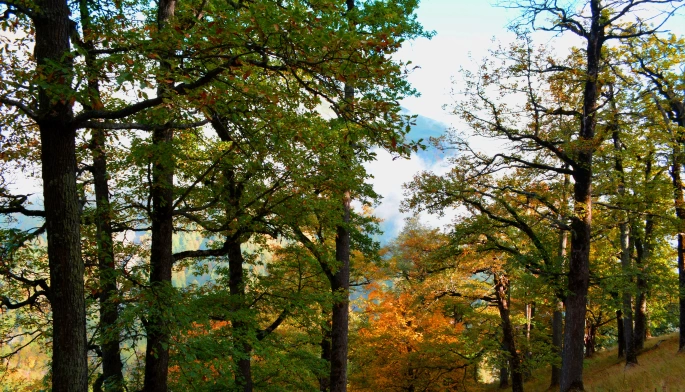
Ilisu National Park also plays an important role in combining tourism with the cultural and natural heritage of the region. Mountain villages located near the park, especially the Ilisu area, enrich the tourism experience with their historical and architectural heritage and local way of life. This creates favorable conditions for the development of cultural tourism alongside ecotourism.
Managed according to sustainable tourism principles, Ilisu National Park contributes to the creation of new economic opportunities for the local population, increased employment in the region, and the balanced development of tourism alongside nature conservation. In this regard, the park holds strategic importance as one of the main pillars of ecotourism in the north-western region of Azerbaijan.
Axar-Bakhar National Park
Year of establishment: 2025
Area (hectares): 23,901.99
Location: Gakh, Samukh and Yevlakh
Axar-Bakhar National Park was established as an ecologically strategic area covering the central and north-western parts of the Republic of Azerbaijan. The main purpose of establishing the park is the comprehensive protection of semi-desert, grey mountain, tugay forests, and riparian ecosystems, the conservation of rare and endemic flora and fauna species, as well as the creation of conditions for scientific research, ecological monitoring, and the development of sustainable tourism.
The National Park has a complex geographical structure. The area is characterized by grey mountain landscapes with juniper and pistachio woodlands, arid semi-desert steppes dominated by xerophytic and ephemeral plant associations, as well as tugay forests and reed beds stretching along the Ganikh River. This landscape diversity significantly enhances the park’s biodiversity and ecosystem value.
The flora of Axar-Bakhar National Park is represented by rich and rare species. Along with valuable tree and shrub species such as heavy-scented juniper, pistachio tree, white poplar, Oriental oak, and Eldar pear, rare and protected plants such as Caucasian kharibulbul, spotted orchid, Eichler mountain tulip, saline-area ornithogalum, and Georgian iris are found here. Most of these species are included in the “Red Book” of the Republic of Azerbaijan.
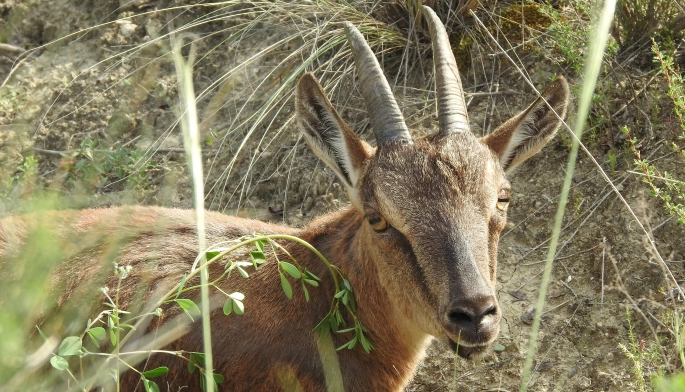
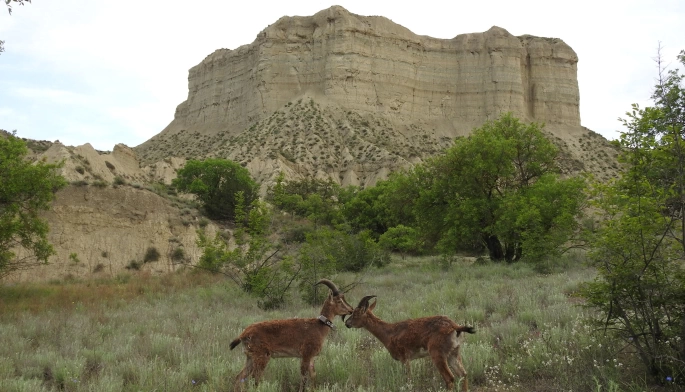
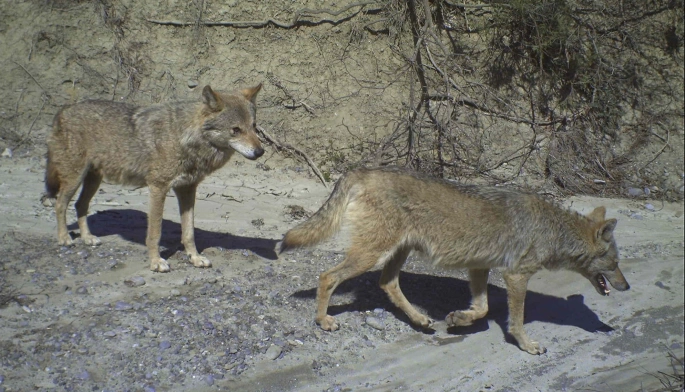
The fauna of the park is also distinguished by high diversity. Mammal species such as wild boar, brown bear, grey wolf, red fox, rock squirrel, badger, wildcat, European hare, Eurasian lynx, jungle cat, striped hyena, Eurasian otter, marten, and gazelle inhabit the area. The territory also has rich ornithofauna: rare bird species such as imperial eagle, black vulture, griffon vulture, short-toed snake eagle, common kingfisher, white-tailed eagle, black stork, steppe eagle, and greater spotted eagle are important ecological indicators of the park. A significant part of these fauna representatives are included among the protected species listed in the “Red Book.”
Significance for Tourism
Axar-Bakhar National Park has broad potential for ecotourism and nature-based tourism. The park’s diverse landscapes, ranging from semi-desert steppes to riparian tugay forests, allow visitors to observe different natural environments over short distances. This feature makes the park attractive for nature photographers, researchers, and adventure-oriented travelers.
 The tugay forests and wetlands located along the Ganikh River valley are of particular interest for birdwatching. Observation of rare birds of prey and migratory species brings this area to the forefront in terms of ornithological tourism. At the same time, the semi-desert and grey mountain zones offer a distinctive ecological experience for tourists interested in biodiversity.
Axar-Bakhar National Park is also favorably located for the formation of interregional tourism routes. Connecting the districts of Gakh, Samukh, and Yevlakh, this area enables the parallel development of nature tourism and the promotion of the local cultural environment. If managed according to sustainable tourism principles, the park can become an important ecotourism center serving both nature conservation and the formation of long-term socio-economic benefits for local communities.
Source: https://nationalparks.az/parklar/qizilagac-milli-parki