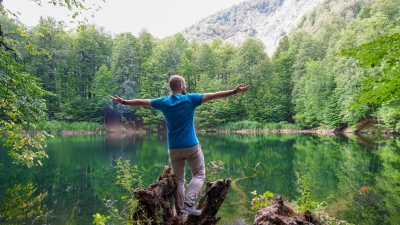
Spending three days in nature can noticeably help restore the brain's attention, memory, and creativity functions. Disconnecting from digital stimuli reduces stress levels and strengthens mental balance. Time spent in natural surroundings helps the nervous system function more steadily. Well-planned outdoor experiences make these benefits safer and more effective.

Introduction: “Overloaded” Minds in the Modern World
From the sound of the morning alarm to the last notification before going to sleep, our brains are exposed to thousands of stimuli. Emails, messages, traffic noise, screens, stressful commutes between home and work, and daily responsibilities... As modern people become increasingly disconnected from nature, they also become more dependent on technology.
But is there a way to restore ourselves amid this constant flow of information?
Science says: Yes, there is.
And that path leads through nature.
Introducing the “3-Day Effect” — the transformative impact that 72 hours spent in nature can have on the brain and creativity.
What Is the “3-Day Effect”?
The “3-Day Effect” refers to the positive neurobiological changes that occur in the human brain after spending at least 72 consecutive hours in a natural environment. During this period, the mind moves away from the constant stimuli of urban life and transitions into a more natural, stable, and balanced mode of functioning.
Time spent in nature influences the brain's attention and emotional regulation mechanisms, creating an internal process of “recalibration.” As a result, thoughts become calmer and more structured.
The main benefits include:
Increased creative thinking
Reduced stress levels
Improved attention span
Greater mental clarity and focus
More stable decision-making
Reduced emotional tension and improved inner balance
This is no longer just an observation — it is an increasingly researched phenomenon supported by scientific studies and field observations.
Scientific Background: Who Discovered It?
This effect was first observed by Ken Sanders, a rare-book dealer based in Salt Lake City and a former rafting guide. During multi-day trips in nature, he noticed significant changes in participants' behaviour, attention levels, and overall energy starting on the third day. These changes were no longer appearing to be random but rather following a consistent pattern.
Later, neuroscientist David Strayer from the University of Utah became scientifically interested in these observations and began investigating the phenomenon. In a multi-day hiking study conducted in 2012, participants were given cognitive tests before and after their hiking experience.
The result: participants demonstrated an approximately 47% improvement in creative problem-solving and attention performance. This finding showed that nature's impact on the human brain could be measured and was real.
Attention Restoration Theory (ART)
This research is consistent with the Attention Restoration Theory (ART). According to this theory, natural environments help restore the prefrontal cortex, the part of the brain responsible for functions such as planning, decision-making, and concentration.
In urban environments, the brain constantly operates in a state of “directed attention” — traffic signals, notifications, and visual noise gradually exhaust our attention. In nature, however, attention is drawn more gently and naturally. This process reduces mental fatigue and allows the brain to recover.
Simply put: nature helps renew the brain.
The Key Factors Behind the 3-Day Effect
The impact of the “3-Day Effect” is not accidental — specific and recurring factors lie behind this transformation. Working together, these factors reduce mental overload and help establish a more stable internal rhythm.
1. Connecting with Nature: Forests, mountains, lakes, and seas are environments to which the human brain has adapted over millions of years. In these settings, visual and auditory stimuli are more natural and balanced. Green landscapes, birdsong, and the rhythmic movement of the wind help calm the nervous system and regulate the body's internal balance.
2. Digital Detox: Checking our phones dozens of times a day and spending hours in front of screens keep the brain in a constant state of “alertness.” This can lead to mental fatigue and a reduced ability to concentrate.
One of the main strengths of the 3-Day Effect lies in breaking this cycle. Switching your phone to airplane mode, staying away from social media, and taking a break from the internet significantly reduce the brain's information load and help activate its recovery processes.
3. Being Present and Practising Mindfulness: Time feels different in nature. Clocks and schedules give way to the movement of the sun, changing light, and the sounds of the surrounding environment. This shifts the mind away from the constant cycle of “past and future” and brings it into the present moment.
As a result, attention becomes more stable, the flow of thoughts slows down, and people begin to perceive their surroundings more deeply.
How Is It Different from Forest Bathing?
Forest bathing (Shinrin-yoku) is a practice that originated in Japan and aims to reduce stress through short periods of immersion in nature. This approach focuses primarily on engaging the senses — seeing, hearing, and feeling the surrounding environment to promote mental relaxation.
It usually lasts a few hours and is recommended as a regular practice to maintain its benefits.The “3-Day Effect,” on the other hand, is a longer and deeper process. Its purpose is not simply relaxation but also the renewal of mental functioning at a deeper level. Spending 72 consecutive hours in nature can have a stronger impact on the brain's attention, focus, and creativity mechanisms.
A Brief Comparison:
Forest Bathing → Short-term relaxation and stress management
3-Day Effect → Deeper renewal of mental and creative processes
Real-Life Examples
History and modern experience show that nature has been used not only for relaxation but also as an integral part of the thinking and decision-making process. Steve Jobs considered walks in nature an important part of his daily thinking and decision-making routine. For him, these walks were more than just physical activity; they provided an environment that encouraged mental clarity. Henry David Thoreau, meanwhile, spent an extended period living near Walden Pond, reflecting deeply on simple living and the connection with nature in his writings. This experience had a direct influence on his way of thinking and writing style. Today, many people working in creative fields — including designers, writers, and entrepreneurs — continue to use nature as a way to restore their minds and improve concentration. This approach is becoming more than just an individual preference; it is turning into a conscious habit.
Benefits
The “3-Day Effect” does more than provide short-term relaxation — it contributes to the renewal of mental functioning at a deeper level.
Increased Creativity: When the brain moves away from familiar stimuli, it begins to develop new ways of thinking. Once the constant flow of repetitive daily information is interrupted, the mind can function more freely, making it easier for new ideas to emerge.
Stress Reduction: Cortisol levels gradually decrease in natural environments. The body physically relaxes, mental tension is reduced, and an overall sense of inner balance becomes stronger.
Mental Renewal: The automatic patterns of thinking created by daily routines are interrupted. This allows the mind to function again in a clearer and more structured way. As a result, people can think with greater focus and stability.
How Can You Benefit from the “3-Day Effect”?
The key to experiencing this effect is not simply being in nature — it is structuring the experience properly. A planned and conscious approach allows you to experience the benefits more clearly.
Make Time for It: Plan ahead to spend at least three consecutive days in nature. This period is essential for allowing the brain to move away from the rhythm of urban life and adapt to a new mode of functioning.
Choose the Right Location: Give preference to quiet places away from the city, where you can connect directly with nature. Mountains, lakesides, and camping areas provide particularly suitable environments for this experience.
Disconnect Digitally: Put your phone on silent mode and minimise internet use. This is an essential step in interrupting the constant flow of information and reducing mental overload.
Adapt to Nature's Rhythm: Waking up with the sunrise, following the natural daylight cycle, and embracing darkness at night help regulate the body's and brain's internal rhythms.
Observe Your Surroundings: Actively engage with the environment: listen to the sounds, pay attention to details, and take short walks. This strengthens your ability to focus on the present moment.
Put It into Practice After Returning: To maintain the mental clarity gained in nature, try to put new ideas and decisions into practice without delay after returning to your daily routine.
Conclusion: A Break in Nature — A Necessity, Not a Luxury
Three days spent in nature are more than just a holiday.
It is an opportunity for the brain to regain balance, restore attention, and naturally reactivate creativity.
Taking a break from the fast pace of modern life is not a sign of weakness — it is a conscious choice that helps us think more clearly and make better decisions.
Sometimes, moving forward does not require working harder. All we need is to pause and reconnect with nature.
Who Is This Experience Suitable For?
This experience is designed for people who feel tired, mentally overloaded, or distracted by the pace of everyday life. In particular, those who work in fast-paced environments and are constantly exposed to information overload may experience a significant “recharging” effect from spending time in nature.
Who Can Benefit Most?
People Constantly Under Stress and Information Overload: For those experiencing mental fatigue due to numerous daily messages, work assignments, and screen time, natural environments can help restore inner calm and balance.
People Working in Creative Fields (Designers, Writers, Entrepreneurs, etc.): For those involved in creative work, new ideas often emerge during moments of “mental space.” Nature naturally creates this space, allowing thoughts to flow more freely.
People Who Need a Break from Urban Life: For those who want to escape noise, traffic congestion, and constant social pressure, this experience offers an opportunity to transition to a calmer and more balanced rhythm of life.
People Who Want to Improve Mental Focus and Decision-Making: For those who struggle with distractions and making decisions, natural environments can create favourable conditions for clearer and more structured thinking.
What Does the Experience Feel Like?
The first 72 hours spent in nature gradually establish a new internal rhythm. This process is not immediate — the mind renews itself step by step as it disconnects from everyday habits.
Day One – Adaptation and Disconnecting from Everyday Thoughts: Since the brain has not yet fully moved away from the rhythm of city life, thoughts frequently return to daily responsibilities. Being without a phone and adjusting to a new environment require an initial period of adaptation.
Day Two – Mental Calm and a Slower Rhythm: Internal noise begins to fade, and the flow of thoughts becomes calmer and more stable. Adaptation to the surrounding environment deepens, while mental tension noticeably decreases.
Day Three – Focus, Clarity, and a Sense of Inner Balance: The mind begins to function in a clearer and more structured way. Attention improves, decision-making becomes easier, and an overall sense of inner balance develops.
Scientific Credibility Note
Note: This concept is based on existing scientific research, including Attention Restoration Theory (ART), as well as field observations. Results may vary depending on individual characteristics, the environment, and the conditions of the experience.
The Outdoor Perspective
Experiences of this kind can be carried out more comfortably and effectively with proper planning, appropriate equipment selection, and a safe environment. This approach improves the overall quality of the experience and helps ensure that time spent in nature is more consistent, comfortable, and manageable.
A Deeper Impact
Three days spent in nature are more than just a break.
It is a “reset” for the brain — a process of restoring attention, regaining inner calm, and clearing the flow of thoughts.
Sometimes, the greatest progress begins with the quietest pause.