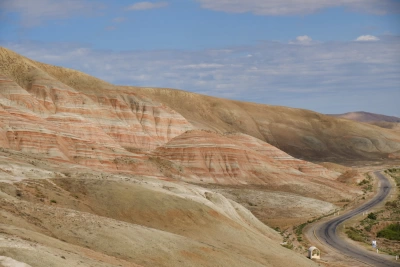
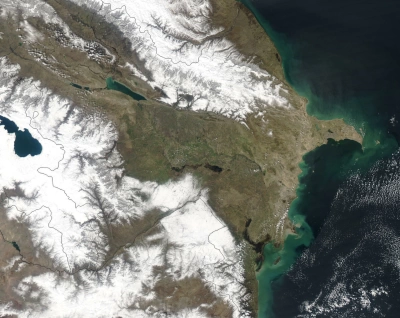
Mountaineering is a popular outdoor sport carried out in various mountainous regions of Azerbaijan and around the world. With types such as rock climbing, alpinism, ice climbing, and trekking, it provides both entertainment and physical endurance. Safety equipment and technical skills are essential requirements of mountaineering. Adventure-filled routes and training opportunities are available for both mountaineering enthusiasts and professionals.
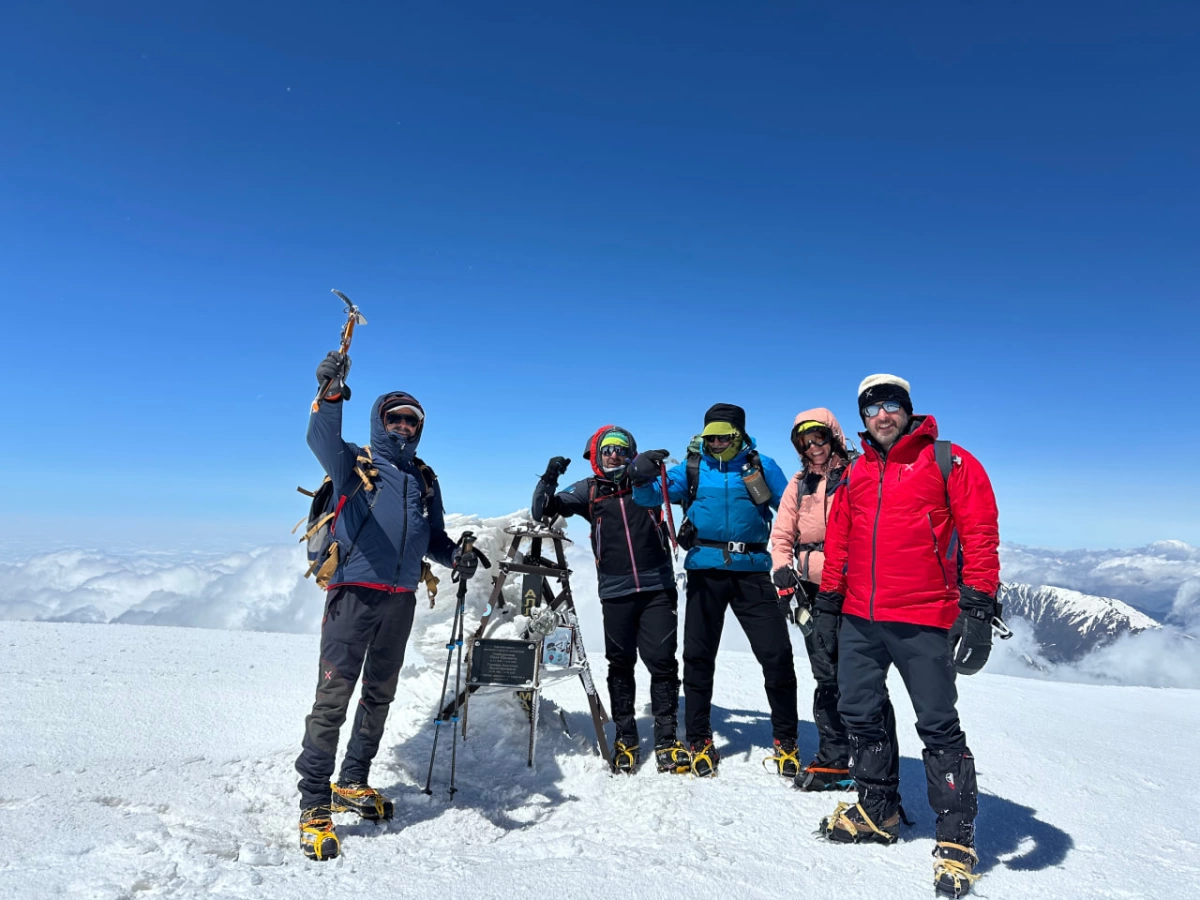
Mountaineering
Mountaineering — is a nature sport that includes hiking in mountains, setting up camps, and climbing activities using technical equipment. In the 18th–19th centuries, it started to develop as a sport mainly among Europeans (especially English and French) seeking to spend their leisure time and escape the routine of daily life in search of new adventures. By the early 20th century, other nations also began to show interest in mountaineering.
Mountaineering was recognized as an international sport in 1931 with the establishment of the International Climbing and Mountaineering Federation (UIAA), headquartered in Geneva. In the following years, with the development of technical and safety methods, mountaineering evolved into a sport with its own discipline and principles, while also paving the way for the emergence of other outdoor sports.
Today, mountaineering is one of the most popular outdoor sports. However, due to fewer innovations and the younger generation turning to other outdoor activities, it has partially lost the popularity it enjoyed in the early 20th century.
Types of Mountaineering
1. Alpine Style (Alpinism) — reflects the core spirit of mountaineering, emphasizing speed, lightness, and technical climbing. In this "clean climbing" method, no traces or artificial aids are left on the route; the climber faces all risks and challenges relying solely on their skills. For this reason, the alpine style is considered a form of climbing fueled by the "adventure spirit".
2. Rock Climbing — mountaineering on natural rock surfaces or artificial walls using handholds and footholds. Requires physical strength, technique, balance, and concentration.
Types of Rock Climbing
Sport Climbing — performed on routes with pre-installed bolts and anchors. Safety is ensured by fixed protection points, so the focus is on developing technique, strength, and speed, making it safer for beginners compared to trad climbing.
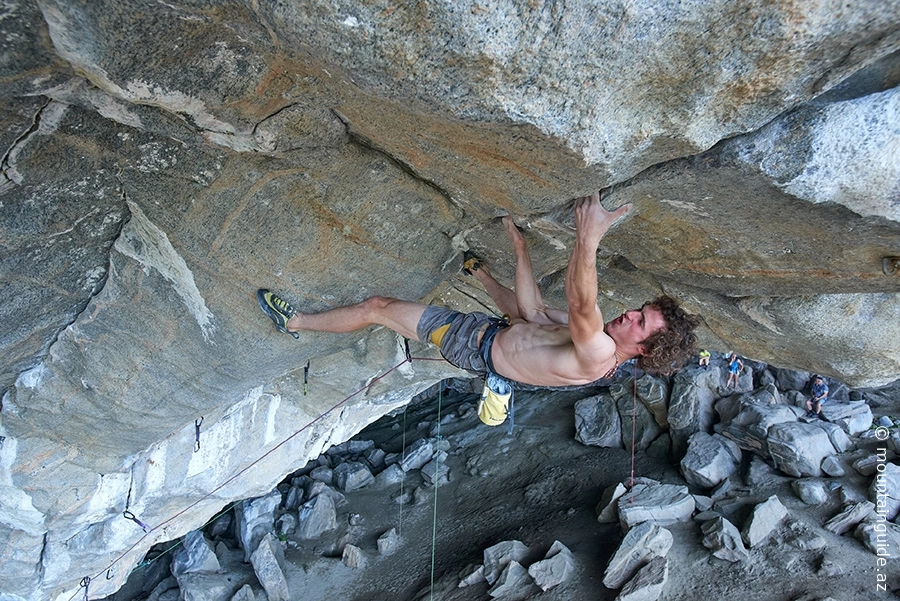
Trad (Traditional) Climbing — a climbing style where no pre-placed bolts or anchors are used; protection is placed by the climber into natural cracks and gaps using special equipment (cams, stoppers, etc.). Requires high technical knowledge, risk assessment skills, and experience. The goal is a safe ascent with minimal impact on the rock.
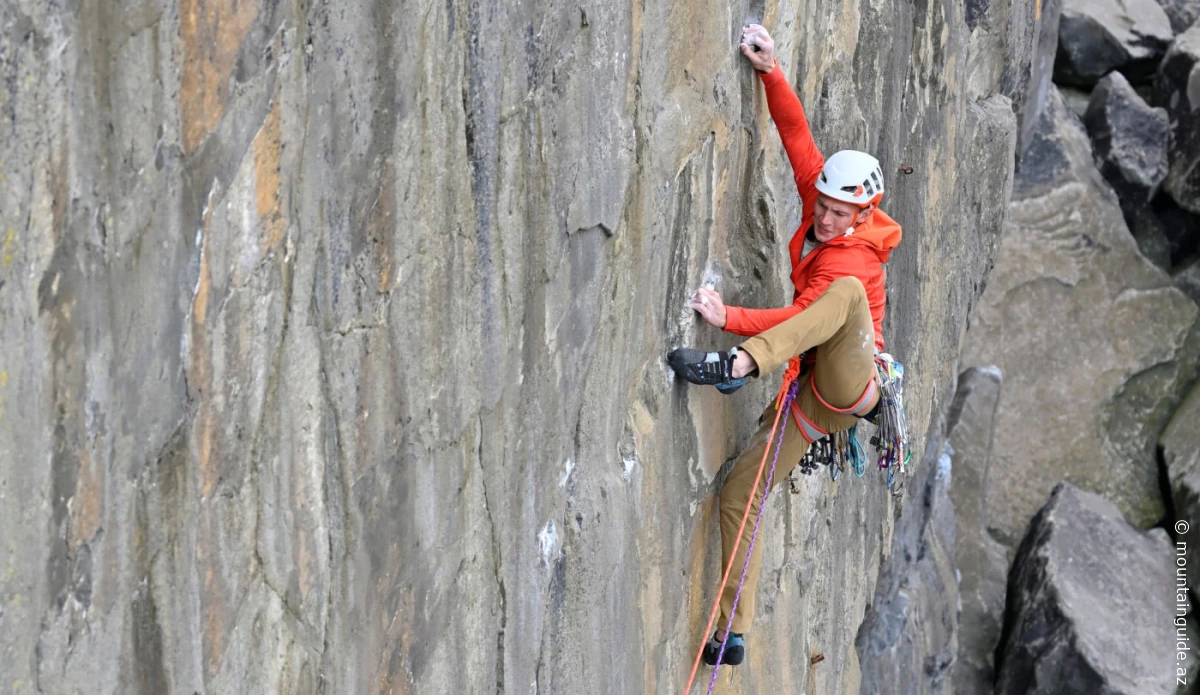
Bouldering — climbing on low-height (usually 3–5 m) rocks or artificial walls without ropes. Safety is ensured using special mats (crash pads). Bouldering emphasizes strength, technique, balance, and problem-solving skills.
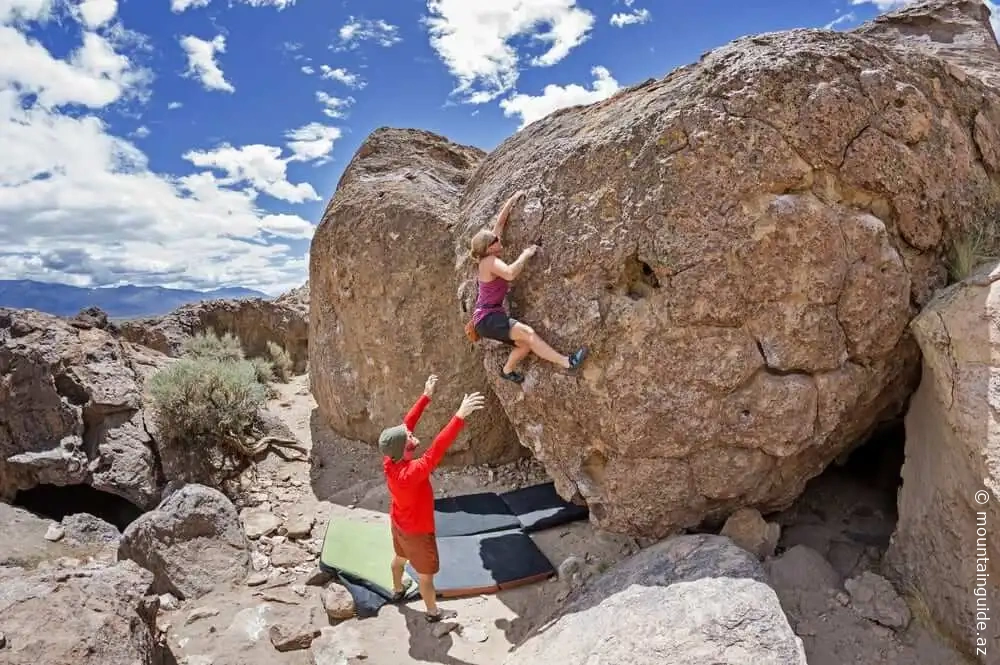
Multi-pitch Climbing — climbing routes consisting of several rope lengths (pitches) in stages. At the end of each pitch, an intermediate station is set up, safety is reorganized, and the next stage continues.
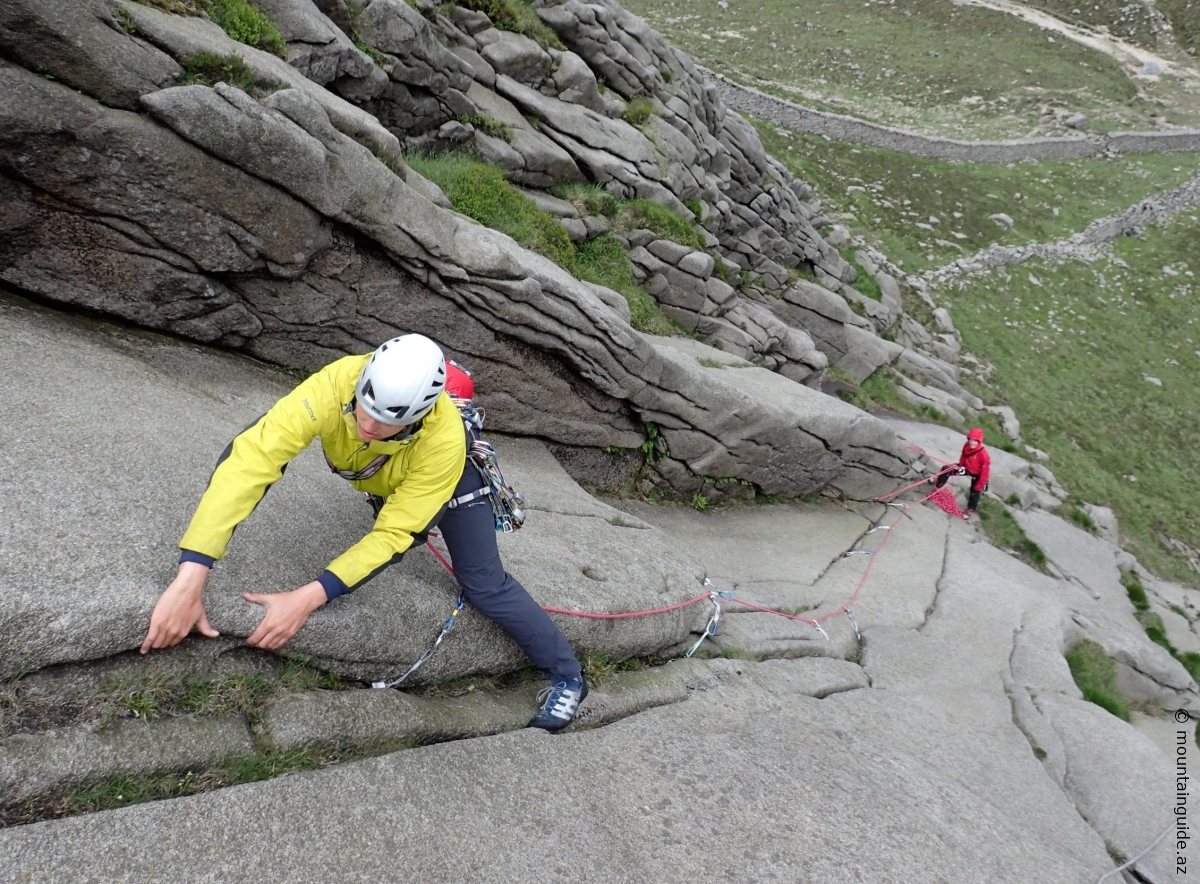
Free-solo — a high-risk climbing style performed without any safety equipment (rope, protection, helmet). Requires maximum attention, technique, and physical endurance.
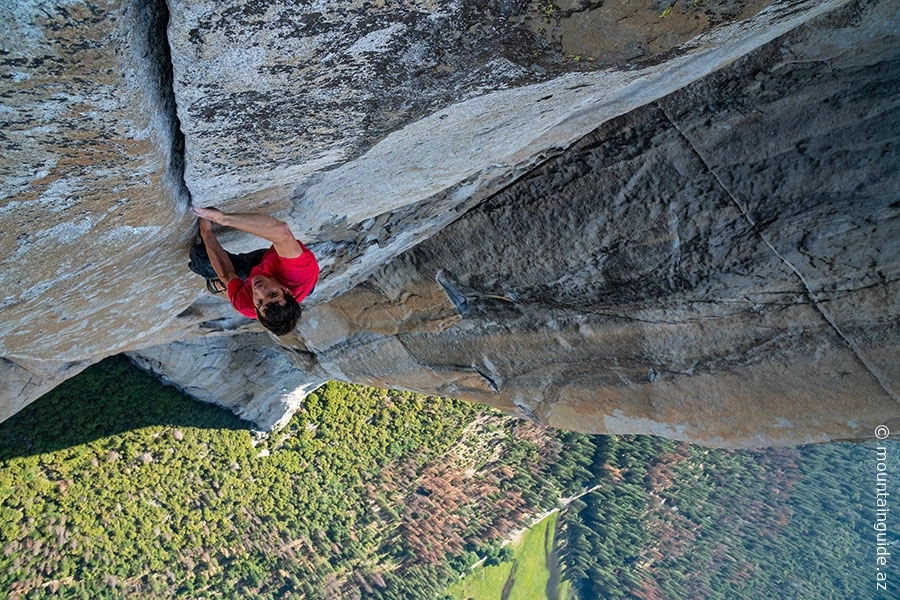
Top-rope Climbing — climbing with the rope anchored at the top and the climber belayed from above. Particularly safe and educational for beginners.
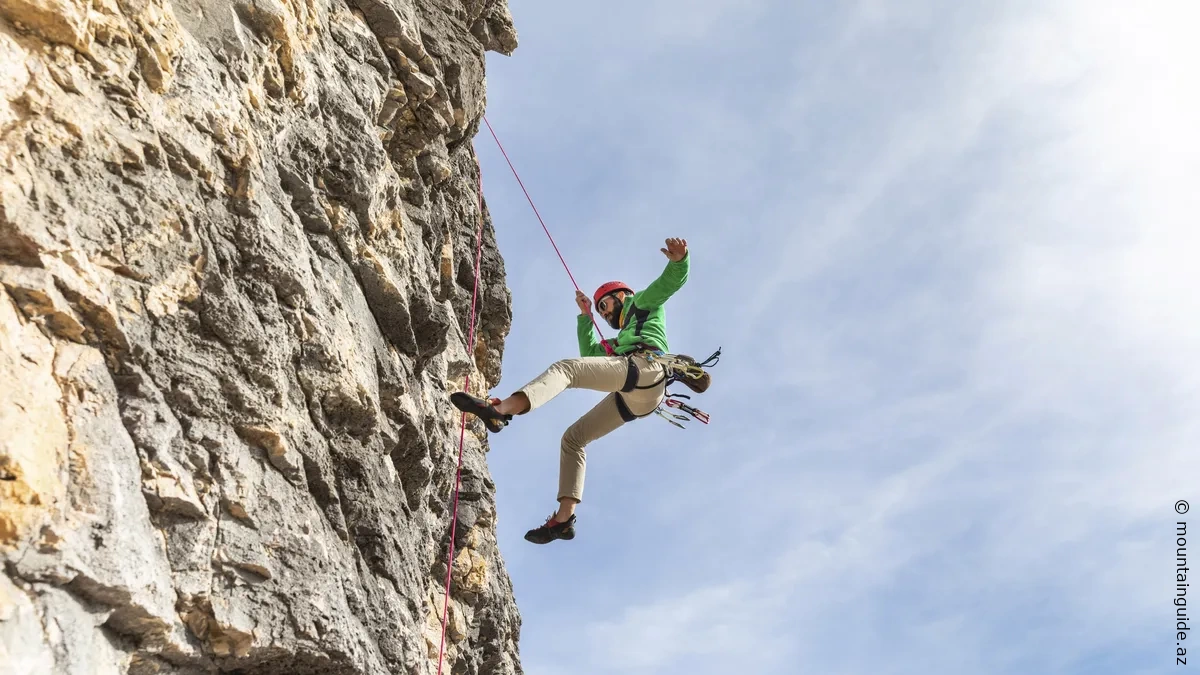
Free Climbing — progressing using only hand and foot techniques. Rope and protection are used only to prevent falls.
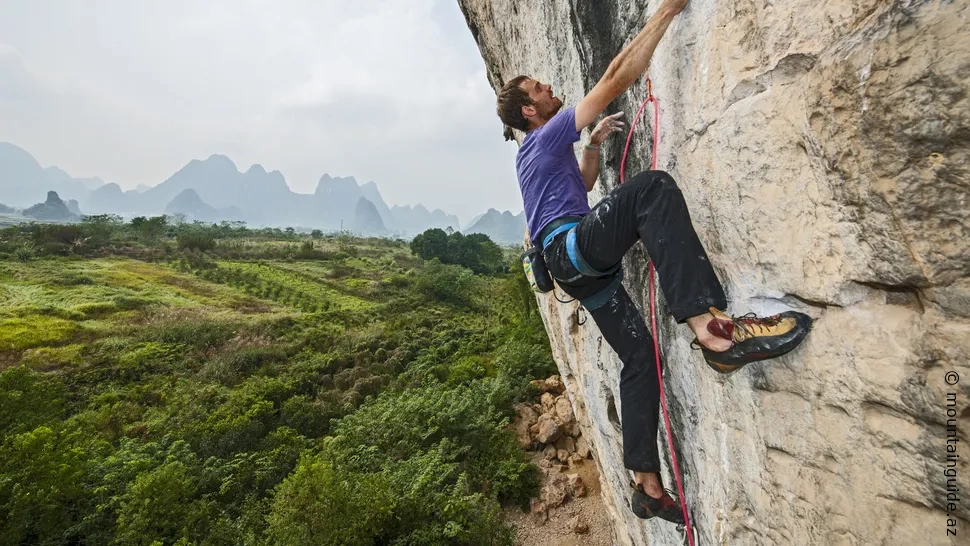
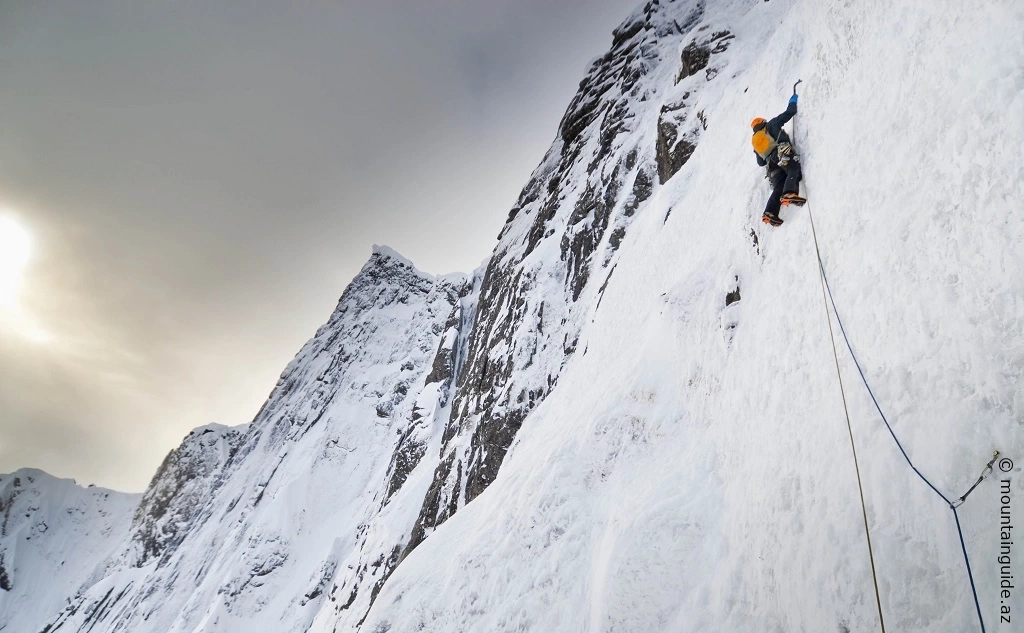
3. Ice Climbing — performed on frozen waterfalls, ice walls, and glacier surfaces using ice axes, crampons, and other specialized equipment. Requires high technical skill, physical strength, and safety knowledge.
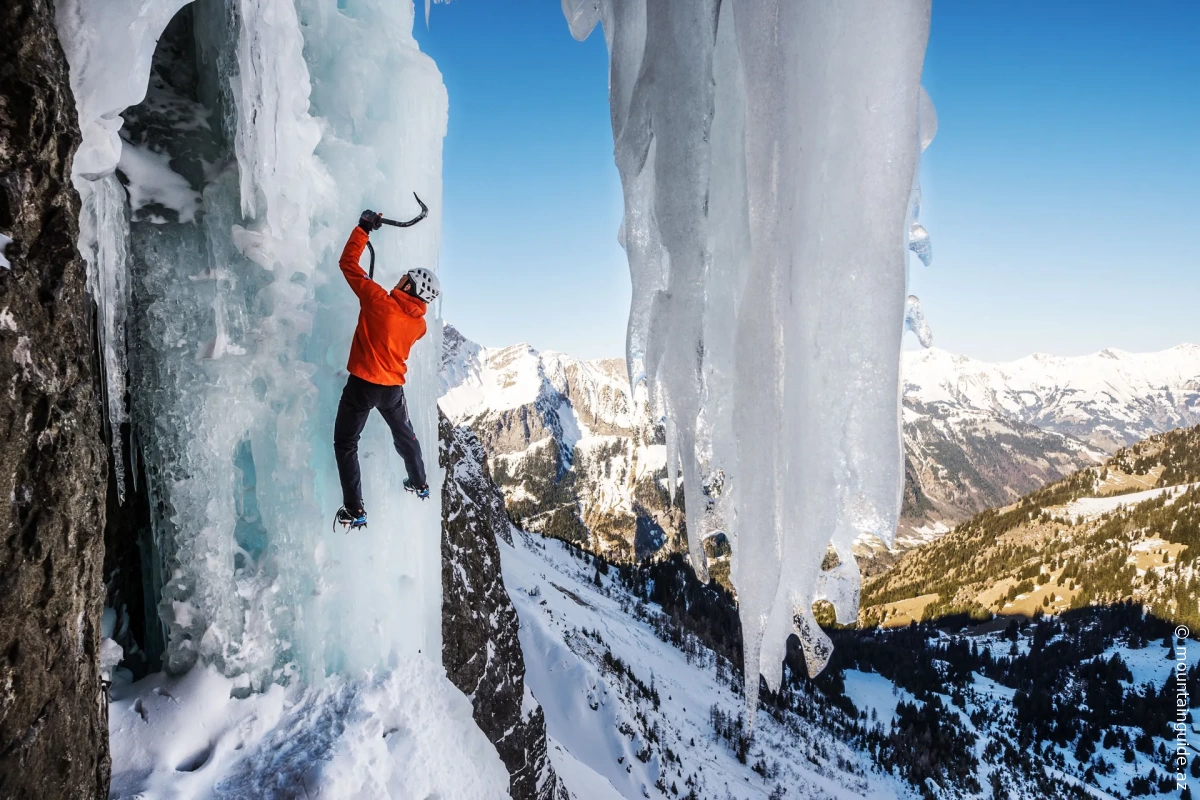
Subtypes:
Dry Tooling — a sport performed in a gym using ice climbing tools on climbing holds, simulating ice climbing. Competition routes are made more interesting and challenging.
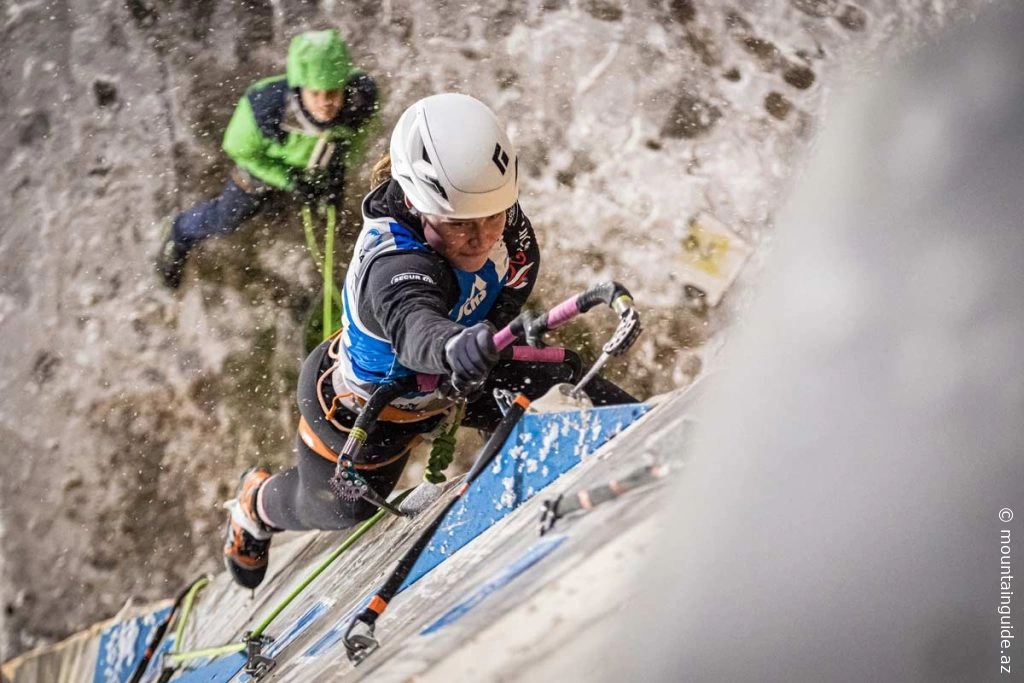
Mixed Climbing — combines climbing on rock, ice, and snow in the same route. Requires specialized technical skills, equipment, and physical endurance.
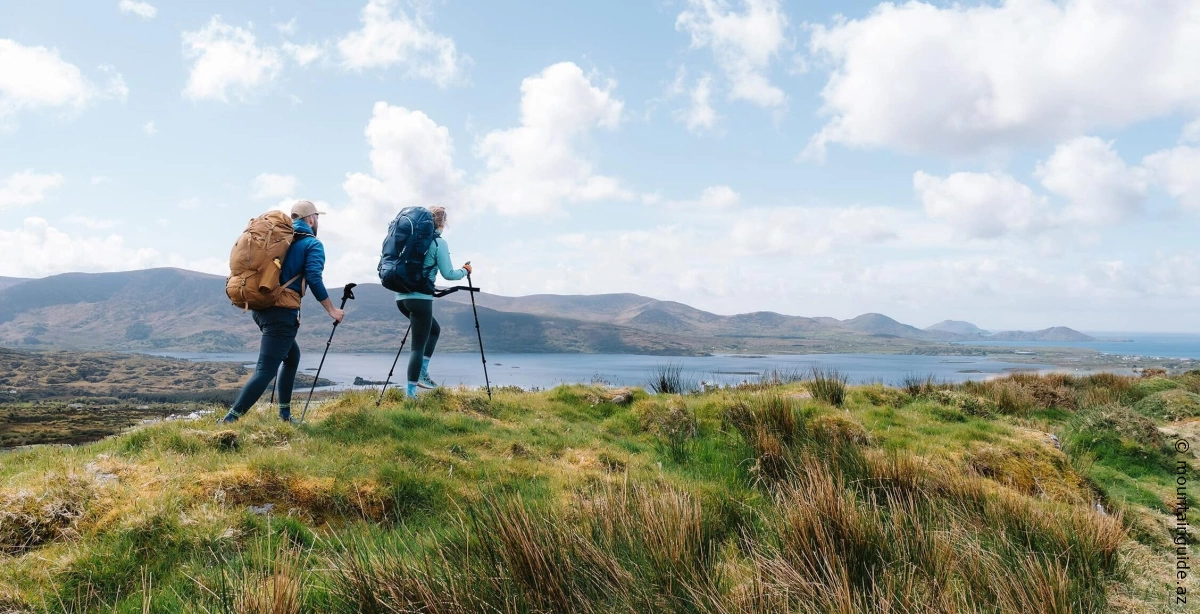
4. Hiking — short to medium-distance walks on marked and relatively easy trails without specialized technical equipment. The goal is active recreation and exploring nature.
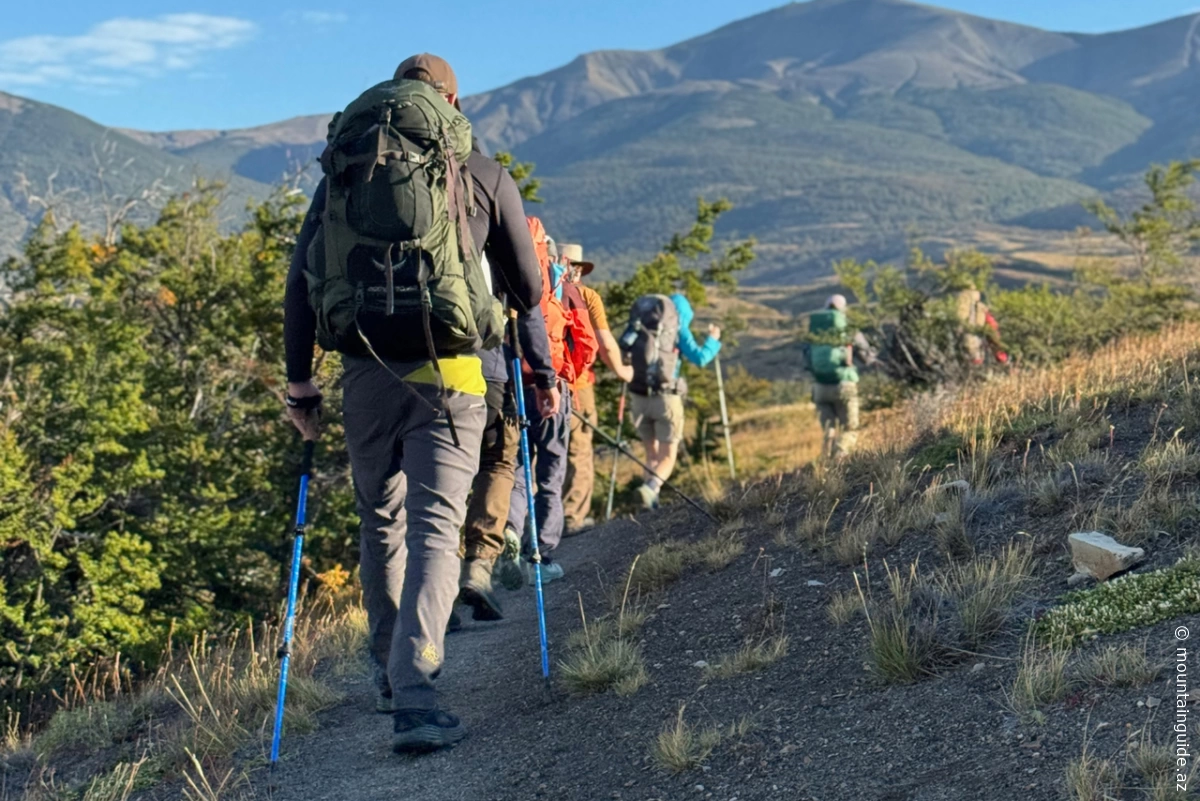
5. Trekking — long-distance walks lasting several days in mountainous or rugged terrain. Camping, basic mountaineering skills, and physical endurance are important.
6. Indoor Sport Climbing — performed on artificial climbing walls with pre-installed bolts and protection systems. Three main types: speed climbing, bouldering, and lead climbing.
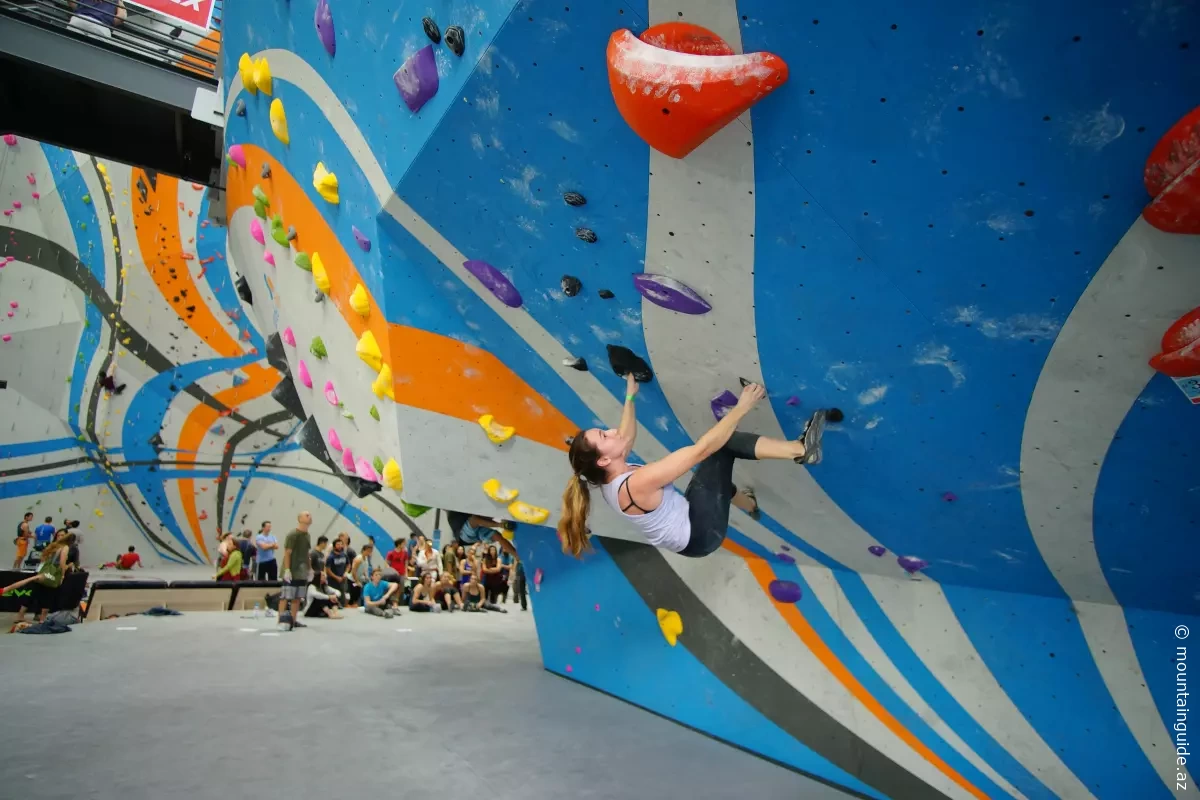
7. Via Ferrata — routes equipped with metal ladders, cables, and safety lines. Makes climbing technical rocks safer for beginners.
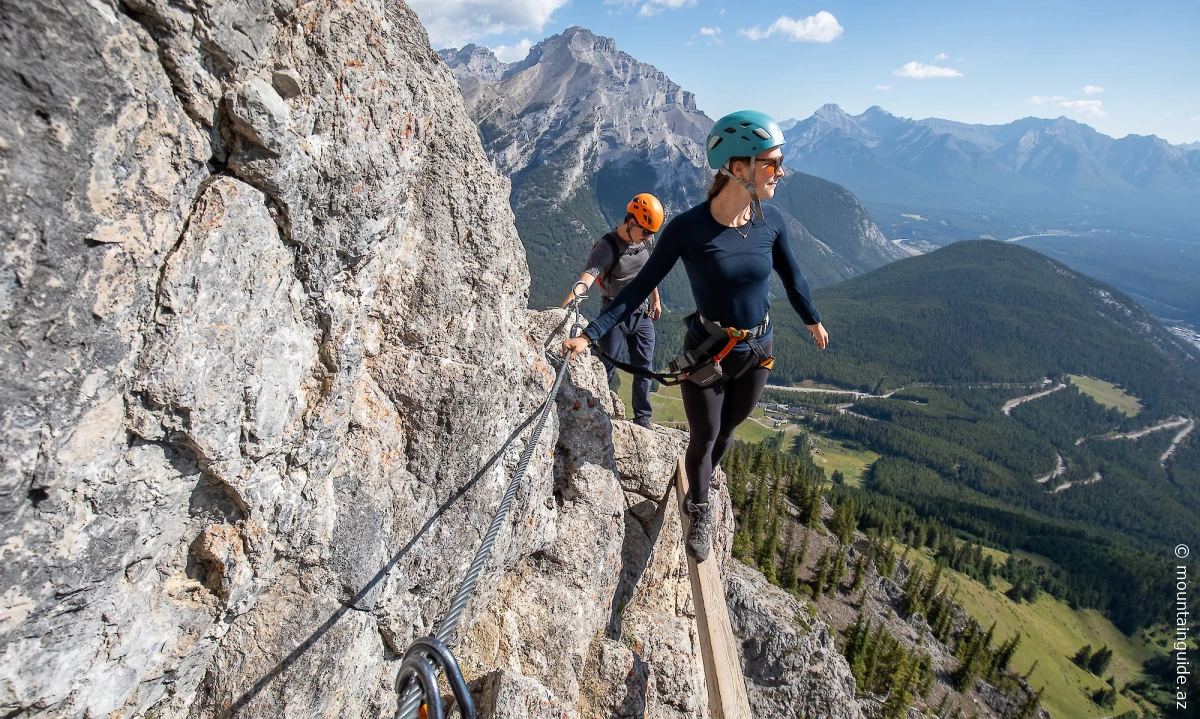
8. Canyoning — extreme outdoor sport involving walking, swimming, sliding, and rope descents in narrow gorges, riverbeds, and waterfalls.
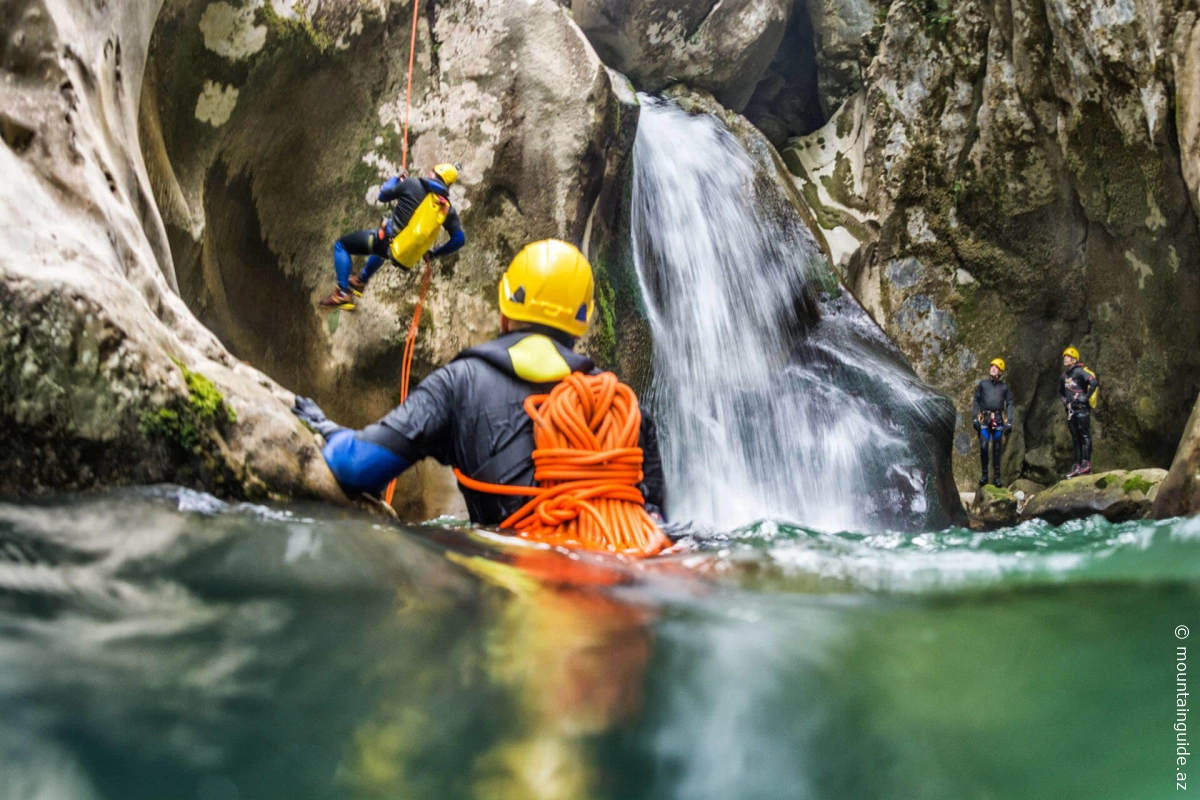
9. Expedition — long-term, planned mountaineering activity in difficult and remote mountainous areas. Requires logistics, teamwork, high endurance, and risk management.
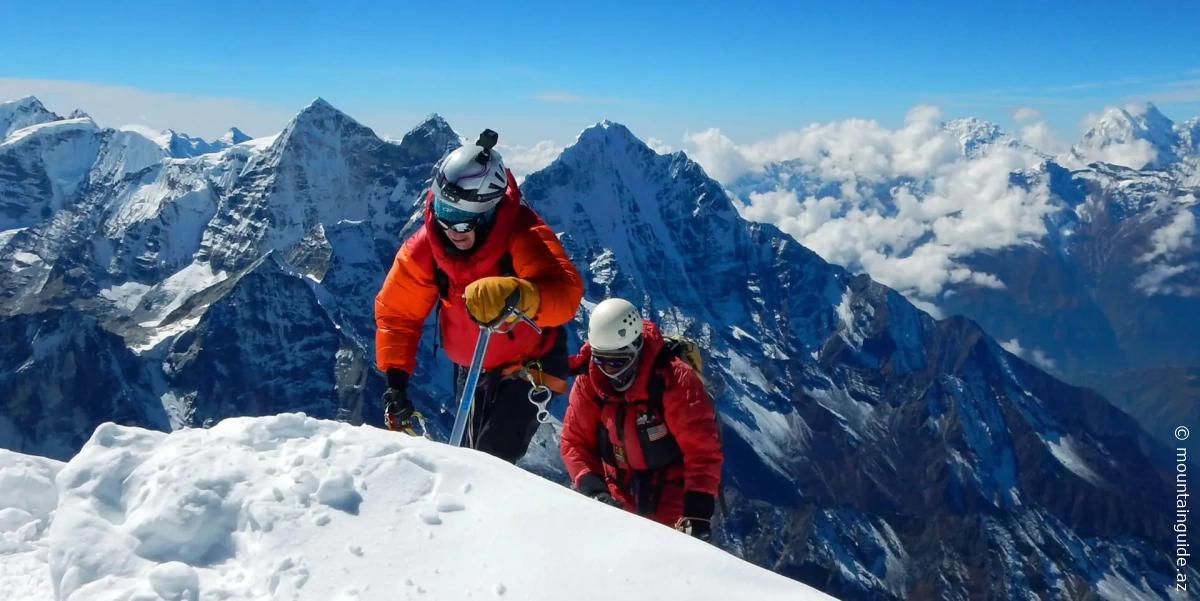
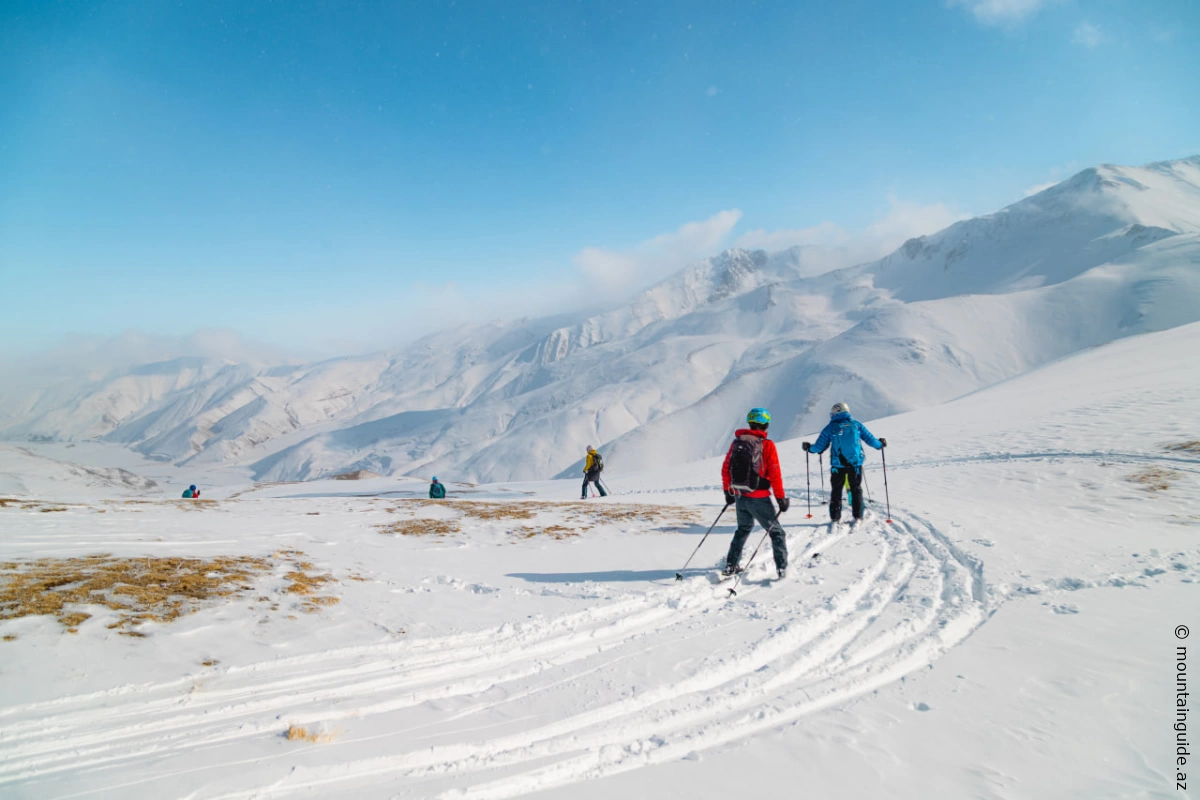
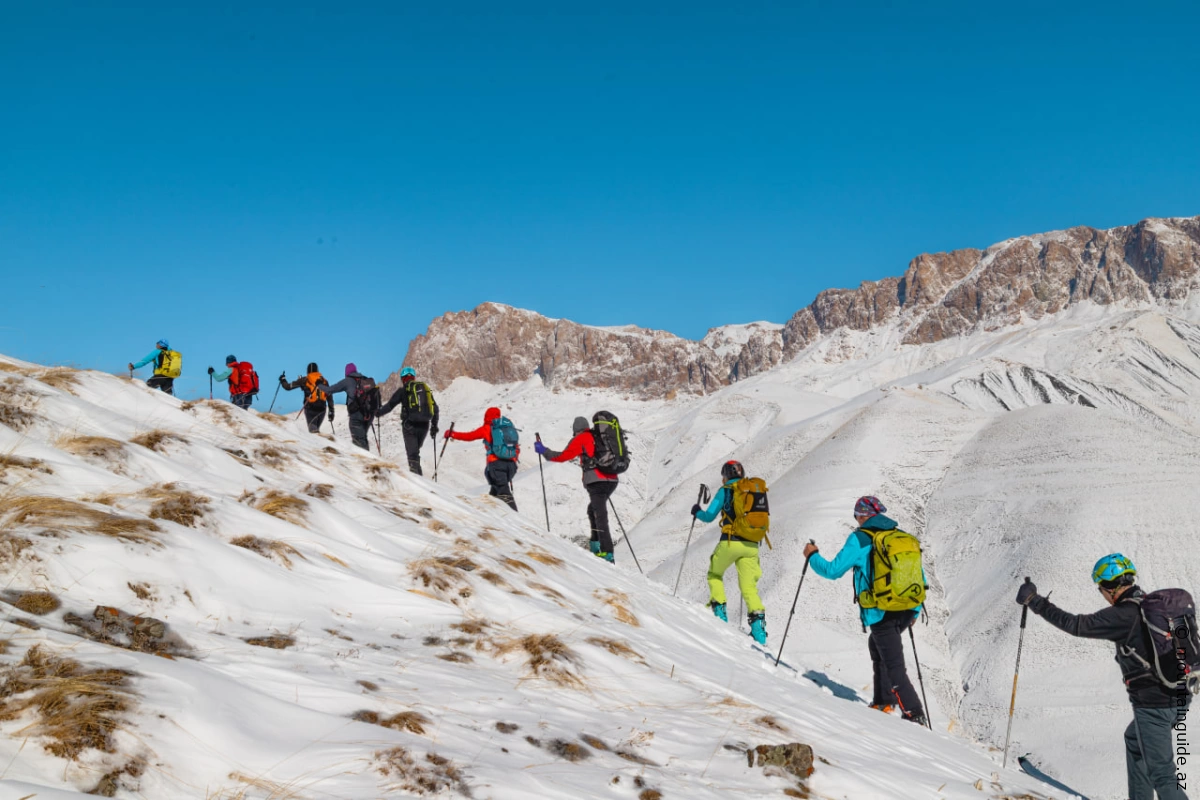
10. Ski-Alpinism — mountaineering that combines uphill and downhill skiing techniques. Skiing and specialized equipment (ski skins, poles, alpine skis, etc.) are used in snow-covered mountainous areas.