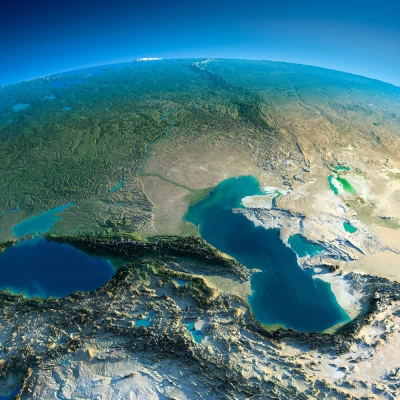
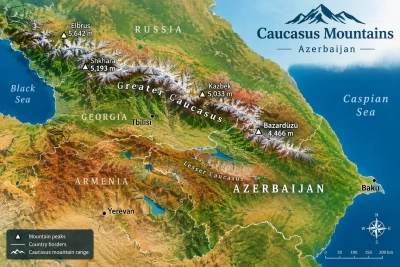
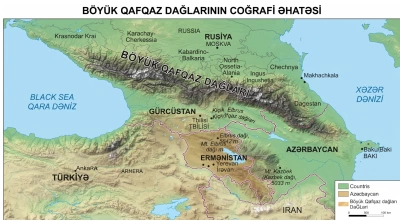
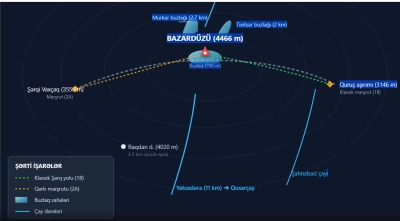
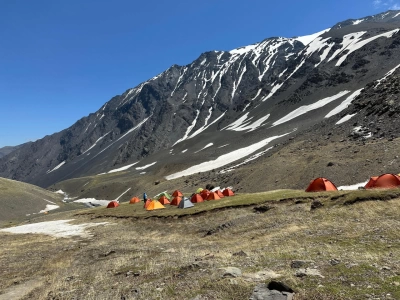
Zangezur National Park is a protected area located in the southwestern part of Azerbaijan, distinguished by its rich mountain landscapes and unique biodiversity. The park features alpine and subalpine meadows, dense mountain forests, and rare plant species. It is home to many wildlife species, including rare fauna listed in the “Red Book.” Zangezur National Park is an ideal destination for ecotourism, hiking, and nature observation.
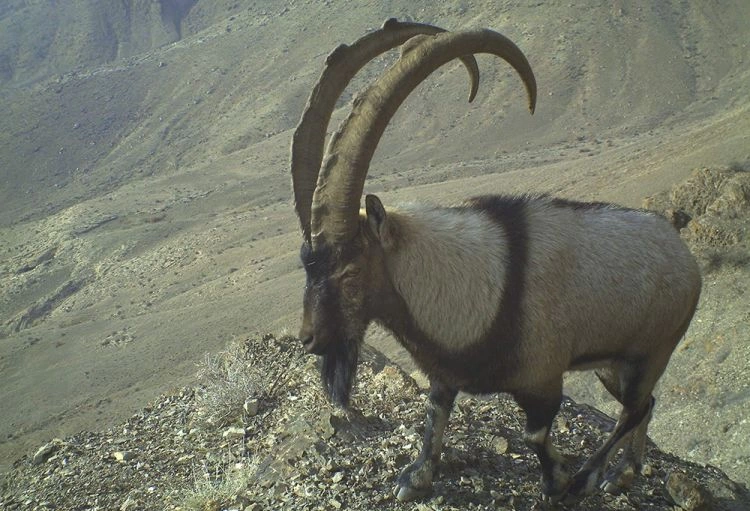
Zangezur National Park (Azerbaijani: Zəngəzur Milli Parkı) is located in the Ordubad district of the Nakhchivan Autonomous Republic of Azerbaijan and covers 42,797 hectares of mountainous terrain within the Zangezur Range of the Lesser Caucasus. The park was established on November 25, 2009, through the expansion of former protected areas—including Ordubad National Park and Shahbuz State Nature Reserve—and was named after the prominent Azerbaijani ecologist and academician Hasan Aliyev.
The park’s landscape includes steep slopes, cliffs, narrow valleys, and erosion-shaped rock formations. The average elevation is approximately 3,200 meters, with the highest peak reaching 3,906 meters. Various habitat types exist here, including pastures, forests, and grass-covered meadows. Rivers such as the Gilanchay, Vanadchay, and Ordubadchay flow through the area and join the Araz River, which forms the border with Iran.
The park’s cold climate is characterized by dry summers and annual precipitation ranging from 300 to 800 mm, supporting the conservation of endemic flora and fauna and protecting habitats threatened within the region. The park borders the Ordubad State Nature Reserve and protected areas of Armenia, highlighting conservation efforts in a geopolitically sensitive border zone of the South Caucasus.
Geography
Location and Borders
Zangezur National Park is located in the Ordubad district of the Nakhchivan Autonomous Republic and covers an area of 42,797.4 hectares. The park lies on the southeastern foothills of the Lesser Caucasus Mountains, close to the Armenian border. Its approximate coordinates are 39°9'43" North and 45°55'46" East. The park was established on November 25, 2009, through the expansion and renaming of the former Ordubad National Park (originally 12,131 ha). The area lies along the Araz River basin and adjoins rugged mountainous terrain extending toward Armenia.
The park’s boundaries are defined by mountain ridges, river valleys, and natural features along the international border with Armenia. To the west and south, it borders Armenia’s Zangezur State Reserve. The northern and eastern borders follow administrative lines within the Ordubad district, connecting to surrounding state forests and agricultural lands of Nakhchivan. These borders emphasize the park’s role in protecting transboundary ecosystems, although geopolitical tensions related to transport corridor discussions in the Zangezur region do not directly affect the park’s protected status.
Relief and Climate
Zangezur National Park features rugged mountainous relief within the Zangezur Range of the Lesser Caucasus, including steep slopes, narrow valleys, cliffs, and erosion-formed rock structures. Traces of ancient glacial activity can be observed in colder zones, particularly in higher-altitude sectors. Mount Soyuq is located within the park, with elevations ranging from 2,000 to 3,000 meters, creating diverse microhabitats.
Due to its high elevation, the park contains a wide range of microhabitats, from lower river valleys to high mountain zones.
The climate is classified as warm-summer humid continental (Köppen Dfb). Summers are mild, while winters are harsh and cold due to the internal relief. Average January temperatures range from −30°C to −10°C, while July temperatures range between 10°C and 25°C. Annual precipitation varies from 300 to 800 mm, mainly from rainfall and snowmelt, sustaining the park’s river systems but limiting overall humidity. This semi-arid continental climate influences altitudinal zoning, with drier conditions at lower elevations and snow- and water-rich environments at higher altitudes.
History and Establishment
Historical Context of the Zangezur Region
The Ordubad area, as part of the eastern Zangezur Range of Nakhchivan, was historically under the influence of the Safavid Empire in the early modern period, occupied by the Ottoman Empire in 1724, and later returned to Persian control during the reign of Nader Shah. Subsequently, it was incorporated into the Russian Empire under Russo-Persian treaties.
Ordubad was organized as a distinct uyezd within the Elisabethpol Governorate, separate from the neighboring Zangezur uyezd. In the early 20th century, territorial disputes over Zangezur intensified during the periods of the First Republic of Armenia (1918–1920) and the Azerbaijan Democratic Republic. During the Soviet era (1920–1921), border demarcations drawn under Joseph Stalin transferred most of Zangezur to the Armenian SSR despite objections from the Azerbaijan SSR, restricting Nakhchivan’s direct access and severing pre-1917 railway connections.
Establishment and Development
Zangezur National Park traces its origins to Ordubad National Park, which was established on June 16, 2003, by presidential decree and initially covered 12,131 hectares in the Ordubad district. This initiative aimed to protect the unique biodiversity of the Zangezur Mountains, including forests, mountain meadows, and semi-desert ecosystems.
On November 25, 2009, the park was significantly expanded, renamed by Cabinet of Ministers decree, and increased to 42,797 hectares. It was named after Academician Hasan Aliyev. This expansion integrated former state reserves and protected areas, ensuring ecosystem conservation across elevations ranging from 700 to 3,300 meters and prioritizing habitat protection for endemic species.
Subsequent management improvements included cooperation with WWF-Caucasus on Caucasian leopard monitoring and habitat restoration programs starting in the early 2010s. The park was also included in Azerbaijan’s Emerald Network sites and is managed under standardized biodiversity action plans. Infrastructure development remains limited due to rugged terrain and access restrictions, with a focus on sustainable ecotourism and anti-poaching measures rather than large-scale construction projects.
Biodiversity
Flora
The flora of Zangezur National Park includes a wide range of plant species adapted to the region’s arid mountainous relief and comprises 39 rare plant species listed in the Red Book of the Republic of Azerbaijan.
These include rare endemic species and xerophytes such as:
Iris elegantissima (elegant iris),
Himantoglossum formosum (beautiful lizard orchid),
Ferula glabrum (smooth-stemmed giant fennel).
These species thrive successfully in the park’s steppe and semi-desert habitats.
The park also hosts woody species of the Rosaceae family—various Crataegus (hawthorn) and Rosa (rose) species—which form sub-communities in forest-adjacent shrublands, supporting ecological structure and contributing to associated biodiversity.
Conservation measures focus on protecting these sensitive plant species from regional drought and human impact.
Fauna
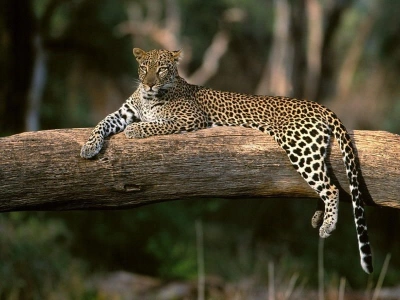
The fauna of Zangezur National Park is characteristic of the Lesser Caucasus ecoregion and includes species adapted to alpine meadows, forests, and rocky slopes. Mammals include large predators and ungulates, many of which face threats from habitat fragmentation and illegal hunting. The Persian leopard (Panthera pardus tulliana) is a threatened species inhabiting the park. In late 2023, camera traps recorded one adult female and two cubs in the area.
Other significant mammal species include:
Bezoar goat (Capra aegagrus) — a wild goat species inhabiting steep rocky terrain;
Mouflon (Ovis gmelini) — endemic to the region;
Brown bear (Ursus arctos);
Grey wolf (Canis lupus);
Golden jackal (Canis aureus);
Striped hyena (Hyaena hyaena);
Red fox (Vulpes vulpes);
European badger (Meles meles);
Wildcat (Felis silvestris).
These species use the park’s varied elevations for feeding and breeding. Conservation initiatives led by WWF Azerbaijan focus on leopard restoration and habitat protection.
A total of 217 bird species have been recorded, including eagles and golden eagles nesting in valleys. Reptiles and amphibians comprise 46 species, including lizards, snakes, and frogs inhabiting terrestrial and riverine environments. Additionally, less-documented invertebrates form the foundation of the ecosystem. Ongoing monitoring highlights the park’s role in regional wildlife corridors, especially given its proximity to international borders.
Conservation and Management
Protected Species and Initiatives
Zangezur National Park protects rare and threatened species, including the Persian leopard (Panthera pardus tulliana) and the mouflon (Ovis orientalis), which inhabit the park’s rugged mountainous terrain.
The park participates in regional conservation programs, such as WWF-Caucasus initiatives focused on leopard monitoring and habitat protection, with the aim of conserving biodiversity in the Lesser Caucasus.
Management primarily focuses on ecological monitoring, habitat conservation, and regulated use to protect endemic flora and fauna from regional pressures. The park’s ranger service enforces regulations to prevent illegal activities and promote sustainable practices.
Threats and Challenges
Major threats include illegal hunting, which targets mouflon and other species. Unregulated livestock grazing also contributes to habitat fragmentation and degradation within protected areas.
Human activity and climate variability further challenge ecosystem integrity, necessitating continuous monitoring and preventive measures.
Geopolitical Context of Zangezur National Park
Regional Disputes and Highlands
The Zangezur region, historically encompassing parts of present-day Armenia’s Syunik Province and the Azerbaijani territory where Zangezur National Park is located, has long been a subject of dispute between Armenia and Azerbaijan. These disputes date back to the early 20th century, particularly the Zangezur expedition of 1919–1920, during which Azerbaijani forces attempted unsuccessfully to integrate the region.
In the modern period following the Second Karabakh War, Azerbaijan renewed claims over parts of Syunik, referring to them as Western Zangezur and emphasizing their importance for territorial integrity. President Ilham Aliyev has repeatedly presented maps indicating that Syunik, including areas near the national park, historically belonged to Azerbaijan, framing this as a correction of Soviet-era borders that separated Nakhchivan from mainland Azerbaijan.
At the center of the dispute is the proposed Zangezur Corridor—a transport route through Syunik intended to connect mainland Azerbaijan with Nakhchivan without infringing on Armenia’s sovereignty. This initiative is based on Article 9 of the November 9, 2020 trilateral ceasefire statement between Azerbaijan, Armenia, and Russia, which calls for the unblocking of all economic and transport links in the region. Azerbaijan interprets this as a right of free passage, while Armenia insists on customs control and sovereignty. Statements by Azerbaijan indicating possible military measures if diplomacy fails have heightened regional tensions.
Since May 2021, border confrontations have intensified. Azerbaijani forces have taken positions near the park’s boundaries in Syunik, citing border clarification based on Soviet maps, creating security risks for the park’s 42,000-hectare area and complicating conservation efforts in militarized zones. Armenia views these actions as territorial claims and has reinforced its positions, while Iran opposes the corridor, citing concerns over regional access and geopolitical balance.
Implications for the Park
Ongoing border tensions between Armenia and Azerbaijan, particularly related to the Zangezur Corridor, have placed Zangezur National Park in a high-risk zone, complicating conservation management and scientific research. For example, in 2022, entomologists documented newly discovered rare butterfly species while passing through active conflict zones.
Persistent confrontations—including ceasefire violations up to June 2024 and clashes in April—limit ranger patrols and monitoring, increasing the risks of illegal hunting and unregulated resource use. Border delimitation talks continue, but tensions remain unresolved.
The proposed Zangezur Corridor, intended to connect mainland Azerbaijan with Nakhchivan, could negatively impact ecosystems through habitat fragmentation and affect water basins and shared migration routes with Armenia’s highlands. Azerbaijan and Turkey view the corridor as an economic and transport link, while Armenia stresses sovereignty and the need for environmental guarantees.
No official environmental impact assessments for the corridor have yet been published. However, other infrastructure projects in Syunik, such as mining expansions, have caused environmental damage, including soil and water pollution, suggesting similar pressures could arise from increased transport or railway development.
Despite its diverse mountain forests and alpine meadows, the park’s tourism and ecotourism potential remains limited due to regional instability. Visitor numbers are reduced by security concerns, and photographs reveal military fortifications in the area. Resolving the corridor dispute through border delimitation could enable bilateral ecological monitoring and restorative conservation measures, as seen in other post-conflict regions. However, current conditions weaken the park’s regional biodiversity role. Since 2020, Azerbaijan’s restoration of surrounding areas has prompted Armenia to reinforce defenses in Syunik, further hindering sustainable management.