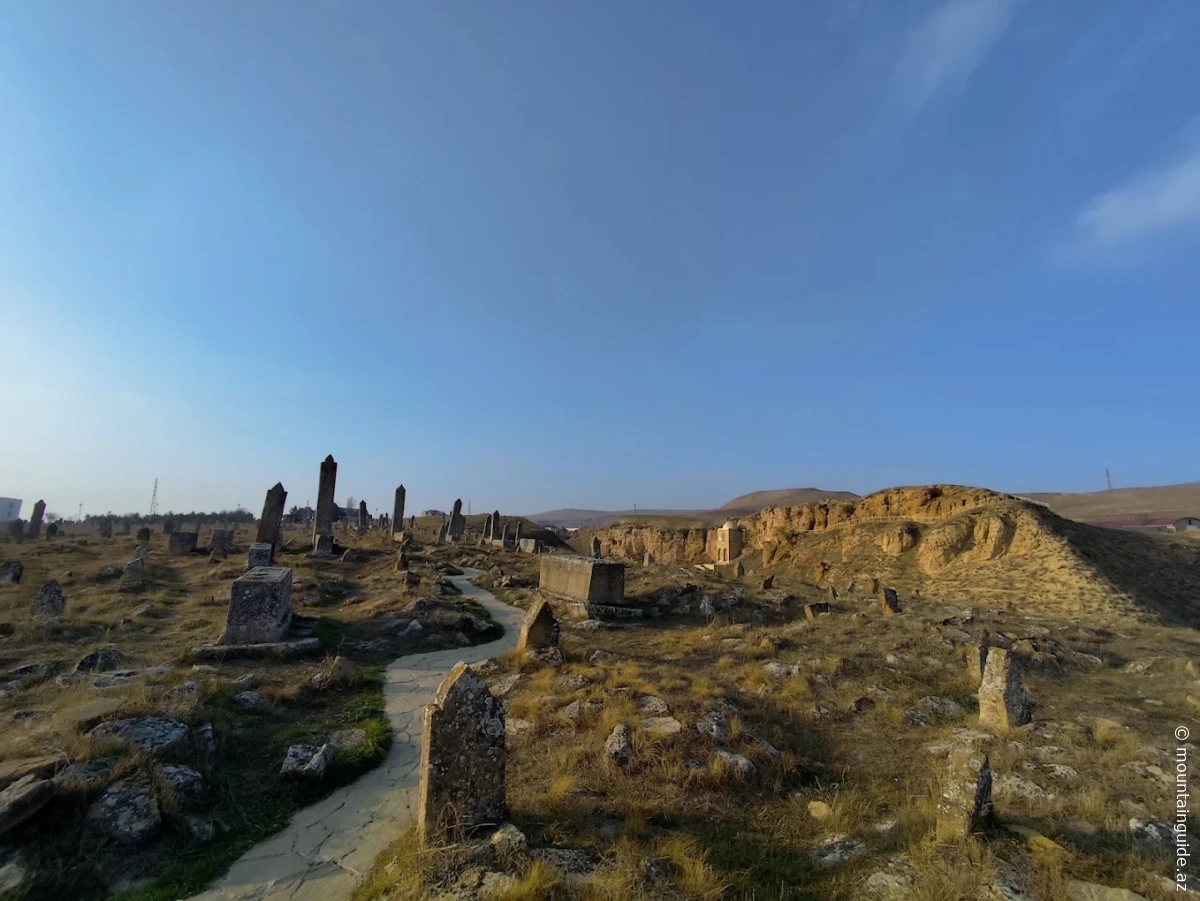
The Diri Baba Mausoleum, located in the village of Mərəzə in the Gobustan district, is a unique Sufi pilgrimage site of historical and architectural significance. The monument is ideal for religious ceremonies, prayer, and spiritual meditation. This two-story mausoleum, built into the rocks, is considered a gem of 15th-century Shirvan-Absheron architecture. Visitors experience a combination of historical, architectural, and mystical ambiance here.
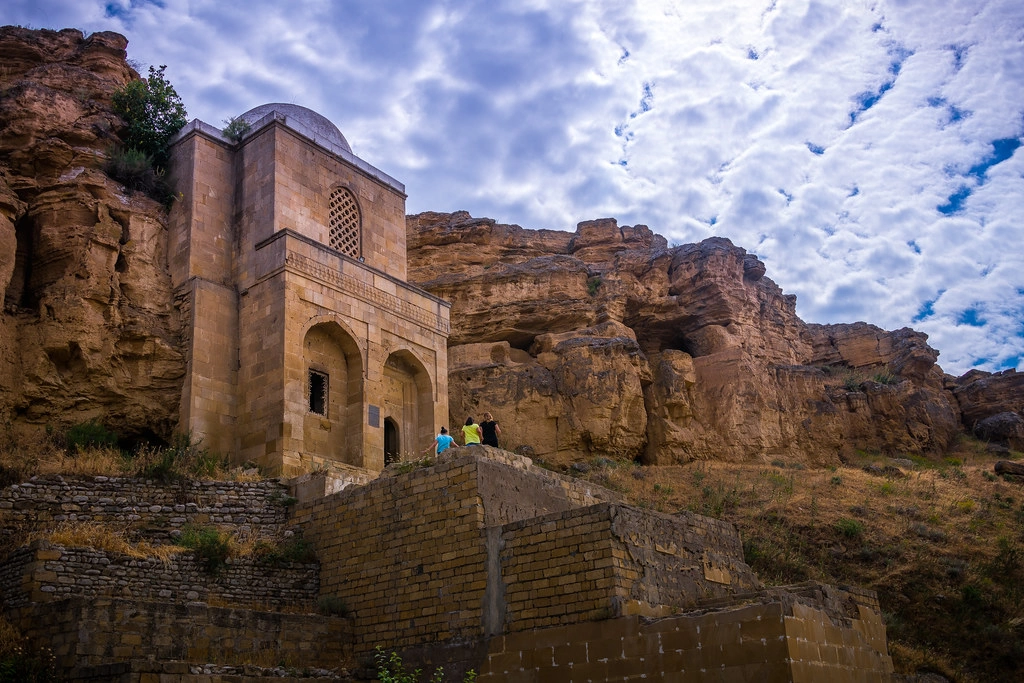
The Diri Baba Mausoleum, which holds a unique place among Azerbaijan's historical and architectural monuments, is located in the village of Mərəzə in the Gobustan district. This monument, built into the rocks, is significant historically, religiously, and aesthetically, and has been regarded as a sacred site by the local population for centuries.
History
The Diri Baba Mausoleum (inv. 297), a state-protected national architectural monument, is located in Gobustan city, 1.5 km from the Baku-Shamakhi highway, along one of Azerbaijan's main northwestern tourist routes.
According to the monument's inscription, it was built in 1402 (805 AH) by order of Shirvanshah Ibrahim (1382-1417), the ruler of the Shirvanshahs state. The interior walls of the mausoleum bear the inscription "Ustad bin Hacı" (son of Ustad Hacı).
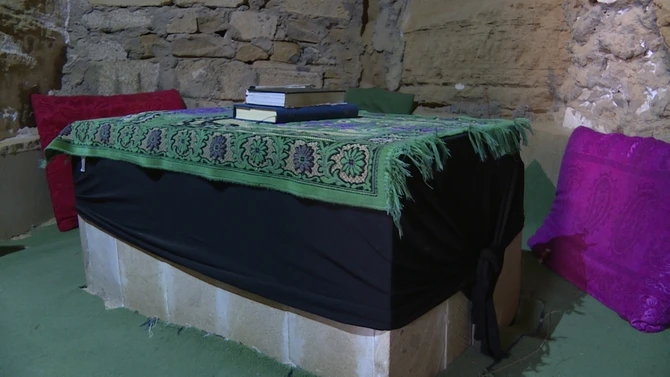
The mausoleum, which houses the tomb of an unknown Sufi sheikh, is considered a sacred pilgrimage site by locals. Situated along the historic Silk Road, the Diri Baba Mausoleum has attracted the attention of European diplomats and travelers for centuries. In the 17th century, German traveler Adam Oleari, Ottoman traveler Evliya Çelebi, and in the early 18th century Cornelius de Brun visited the monument. Their engravings serve as valuable sources for understanding the mausoleum's historical appearance.
Architectural Features
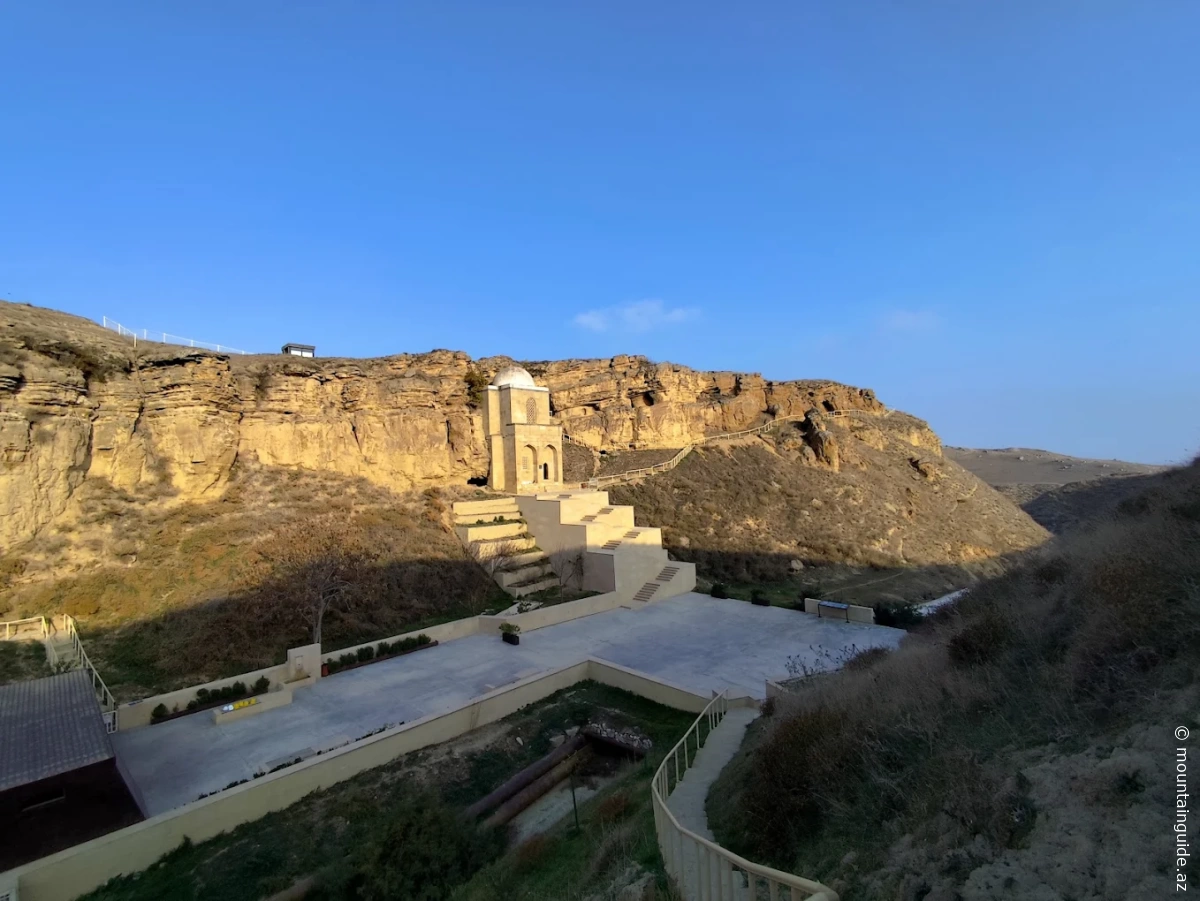
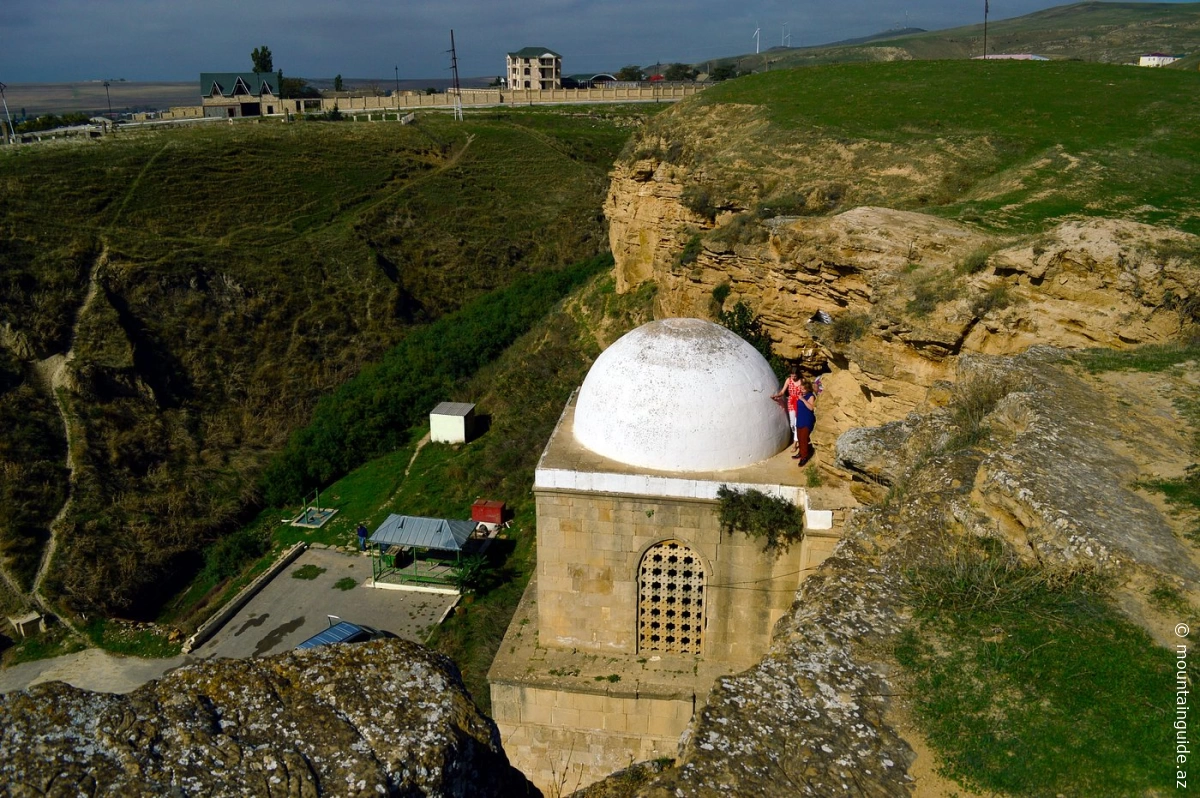
The Diri Baba Mausoleum stands out for its uniqueness, as it is built directly into the rocks and follows the natural terrain. This design provides both structural stability and a mystical appearance. The walls are tightly fitted to the rocks, and the combination of wood and stone elements enhances both aesthetic and functional aspects. Inside the mausoleum, narrow and tall halls, staircases, and tight passageways provide visitors with both a physical challenge and a spiritual experience. The placement among the rocks, the elevated viewing perspective, and the surrounding nature make Diri Baba Mausoleum unique historically and architecturally.
Built into the Rocks: The monument is constructed directly into the rocks. This ensures preservation and creates a dramatic and mystical appearance. Visitors experience a mystical atmosphere while navigating narrow, stone-covered paths.
Rock-Aligned Design: The walls follow the natural terrain and are tightly fitted to the rocks. This architectural feature provides stability and ensures the monument harmonizes with its natural surroundings.
Combination of Wood and Stone Elements: Wooden doors, windows, and supporting structures give the monument a distinctive historical appearance. The combination of wood and stone is significant for both aesthetics and durability.
Narrow and Tall Halls: The narrow and tall halls inside the mausoleum serve both preservation purposes and provide visitors with a spiritual experience. The staircases and tight passageways add an additional mystical effect.
Aesthetic and Mystical Atmosphere: Diri Baba creates a mystical atmosphere through its architecture and location. The placement among rocks, elevated perspective, and surrounding nature offer visitors a historical and spiritual experience.
Legends
Various theories and assumptions exist about the mausoleum. According to one legend, a Sufi sheikh named Baba is buried here. The sheikh spent his last days in seclusion, reciting divine verses from sacred texts when he passed away. His disciples, believing him still alive for several days after his death, named the mausoleum Diri Baba ("Living Baba").
According to some sources, a Sufi who lived during the time of Sheikh Ibrahim Khalillullah is buried here. Legends say that a person named Sheikh Muhammad died in prostration during prayer, and his body remained uncorrupted for 300 years. The Soviet Encyclopedia notes: "It is likely that the architect of the Diri Baba Mausoleum is buried in the cave."
F. Deminski wrote: "The ancient Arabs say that when Prophet Muhammad declared himself a prophet, his uncle and his uncle's sons attempted to kill him. Subsequently, Allah revealed the Surah 'Abtar'. Abu Lahab's son, Amir, accepted Islam. He had two sons, Atam and Akam, considered close to Muhammad. After the Prophet's migration from Mecca to Medina, Atam led a group to Shirvan. Atam died here and was buried near the village of Mərəzə in the Diri Baba Mausoleum. Based on these events, Atam ibn Amir followed the path of Prophet Muhammad and was a representative of the Khalwatiyya Sufi order. He practiced worship in the cave and was buried there after his death. The site later became a pilgrimage destination."
Sufi and Islamic Worship Center
The Diri Baba Mausoleum is an important monument in Azerbaijan both historically and architecturally. The mausoleum is primarily intended for the worship of Sufi and Islamic followers. Historical sources show that it was built for religious ceremonies, prayer, and visitation purposes.
The narrow and tall halls, paths integrated into the natural rocks, and meditation areas provide visitors with unique spiritual experiences. This design enhances the monument's mystical atmosphere while offering visitors peace and inner harmony.
In summary, the Diri Baba Mausoleum is:
-
For Sufi and religious visitors
-
For meditation and spiritual worship
-
Suitable for religious ceremonies and prayers
With these features, Diri Baba is not only a historical monument but also considered a spiritual and meditation center in Azerbaijan. Visitors can experience historical, architectural, and spiritual depth simultaneously.