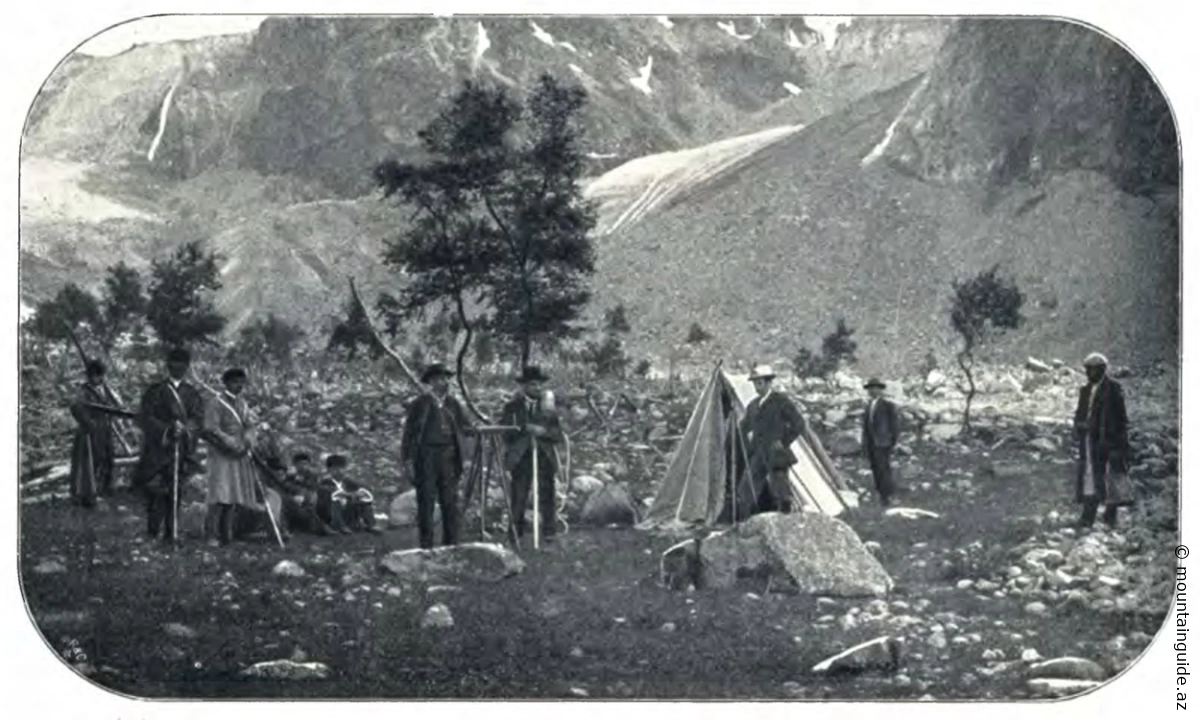
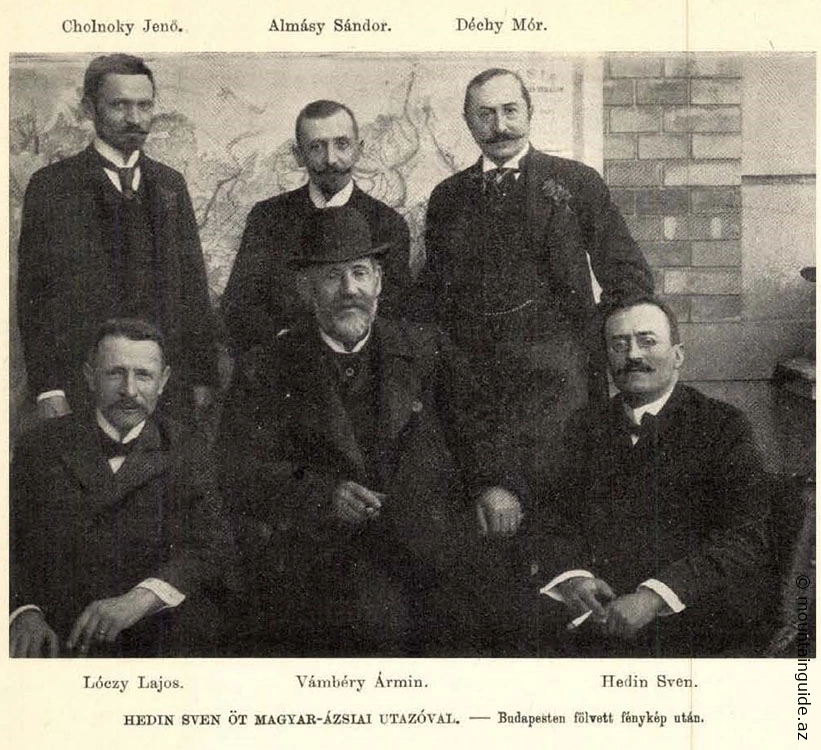
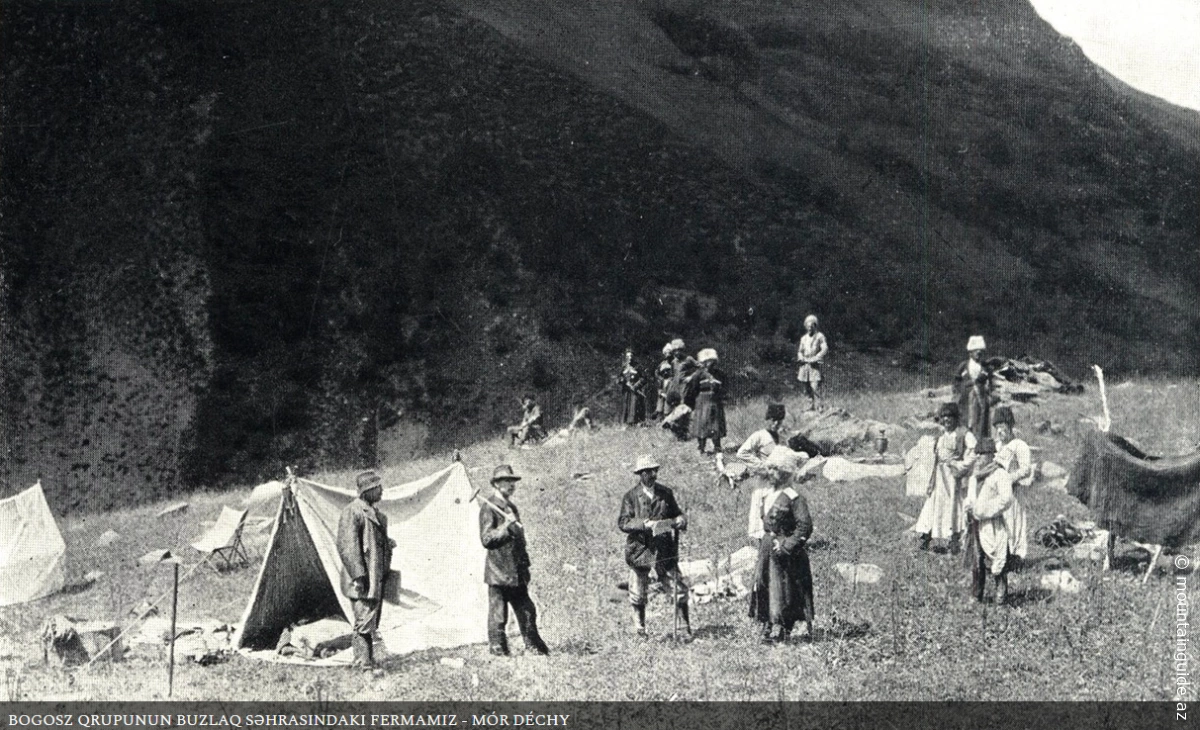
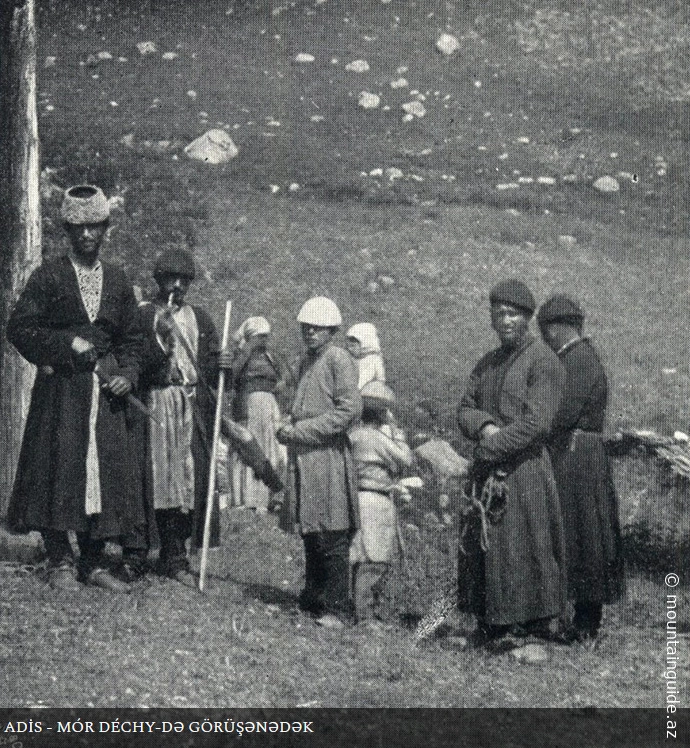
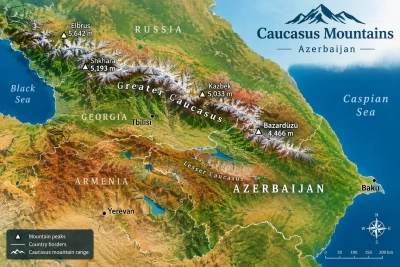
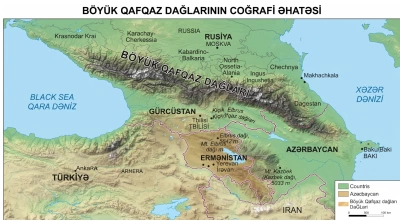
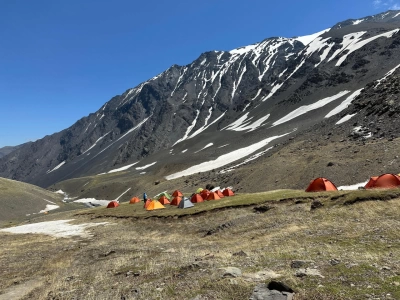
In 1902, Hungarian traveler Dechy Mor visited Bazardüzü Mountain in Azerbaijan, documenting the region's natural and geographical features. His expedition contributed to increased scientific interest in the Caucasus Mountains and helped the area gain recognition among foreign researchers.
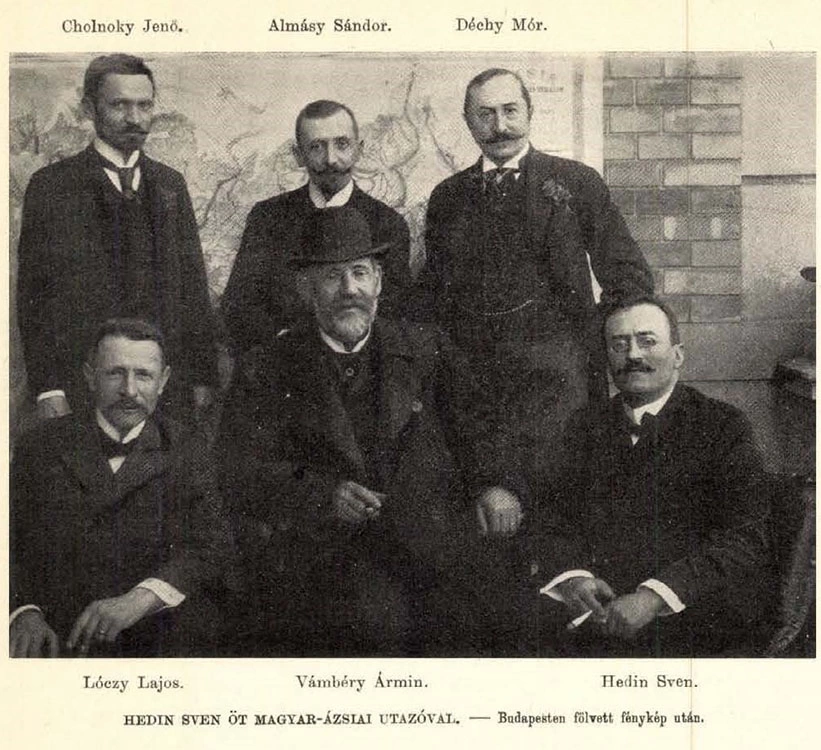
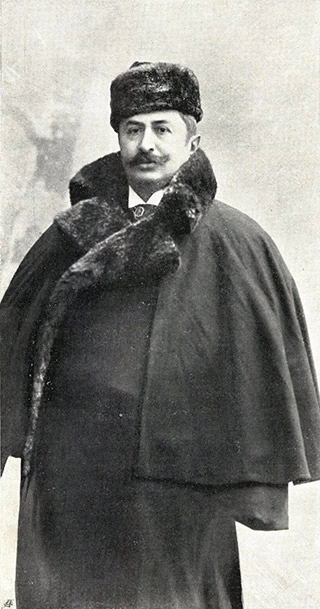
Dechy Mor
Born on November 4, 1851, in Pest.
Died on February 8, 1917, in Budapest.
Dechy Mor received excellent education thanks to his wealthy father, a railway engineer. He studied at the Piarist high schools in Timișoara and Pest, where his father emphasized learning foreign languages. He completed his university studies in Budapest and Vienna, specializing in law and geology. While still a student, he began climbing high mountains in the Alps, exploring the Bernina Group and, two years later, conquering Jungfrau (4158 m) and Monte Rosa (4556 m), as well as becoming the first Hungarian to reach Mont Blanc (4807 m).
In 1872, he became a founding member of the Hungarian Geographical Society and later served as vice-president and honorary president. In 1874, he was invited by the Hungarian Carpathian Association to the Tatra Mountains and became the first to ascend the Tatra peak on September 3 (one of its side peaks and the nearby Deši Pass still bear his name).
Mor Dechy's Travels in Asia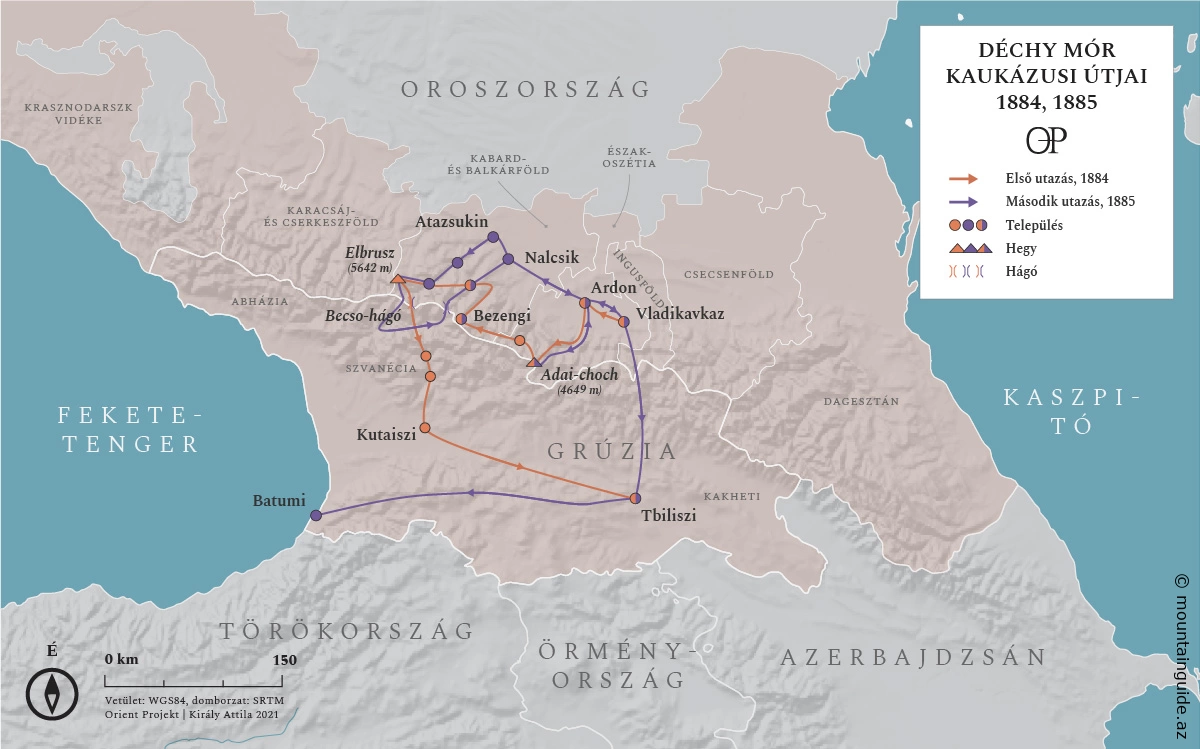
First Trip to Asia – 1879
Dechy Mor traveled to Darjeeling to visit the tomb of Sándor Kőrösi Csoma. He initially planned to cross from India to Tibet via the Himalayas, but contracted near-fatal malaria in the Terai region. He suffered from severe fever for six weeks but survived, thanks to the care of his companion, Swiss mountain guide Alexander Maurer.
First Caucasus Expedition – Summer 1884
Together with Swiss guides Alexander Burgener and Peter Ruppen, and a gymnasium teacher acting as translator (Dolbisev), he explored the Caucasus under a recommendation from the Russian Caucasus governor. They first climbed Adai-Choch (4647 m) and then headed to Elbrus. On August 23, 1884, Dechy, with his climbing expertise and local hunter Mollei Tirbolasz, became the first Hungarian to reach the main summit of Elbrus (5642 m). He recorded raising his country's flag on the summit, waving in the wind at the highest point of the Caucasus.
Second Caucasus Expedition – 1885
To expand research, botanist Lojka Hugó joined the team to study the region's flora. They traversed the Ardon valley, the eastern sources of the Rioni River, crossed Baksan via Kabarda, reached Svaneti, and later explored the northern Caucasus and the Bezingi Glacier region.
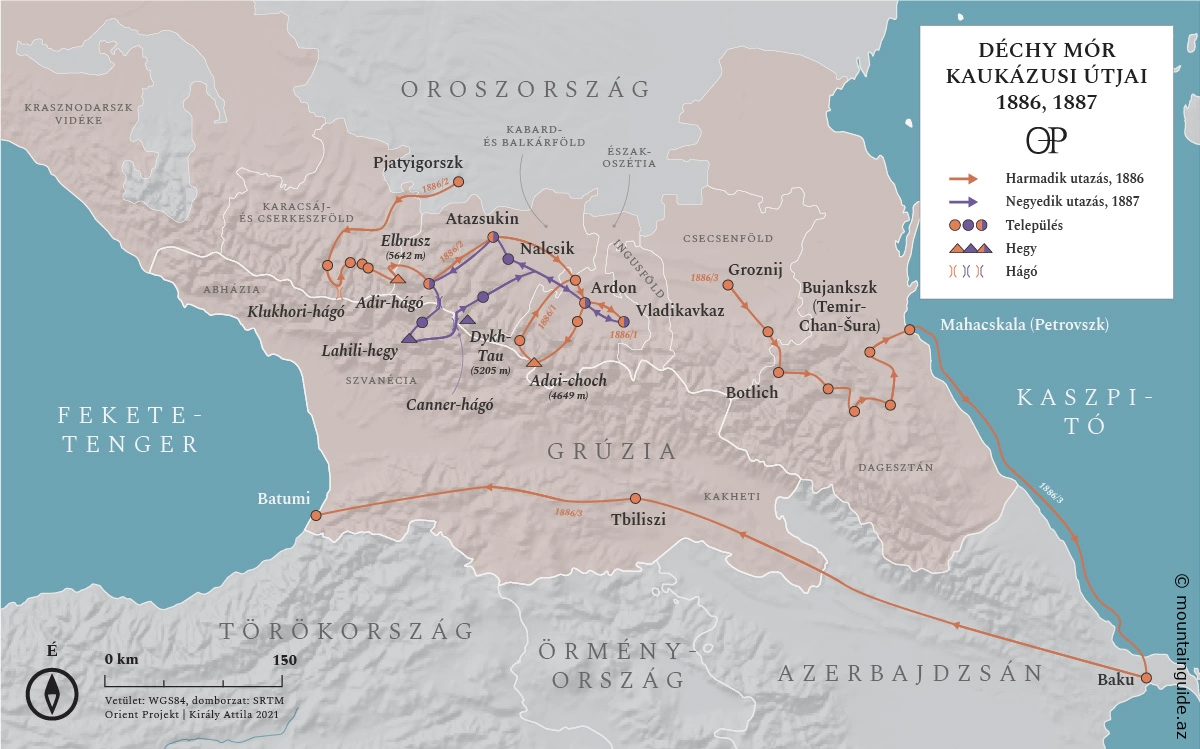
Third Caucasus Expedition – 1886
Along with geologist Schafarzik Ferenc, he studied the main range of the Caucasus (between Kazbek and Elbrus), including Ceja and Urach valleys, Baksan valley, and surrounding glaciers.
Fourth Caucasus Expedition – 1887
Together with Douglas W. Freshfield, they traversed Baksan and Svaniyan highlands, crossed the Zanner Glacier, and climbed to Kostantau (5145 m). The expedition produced significant mountaineering results and extensive photographic documentation. Afterwards, family obligations paused his expeditions for ten years.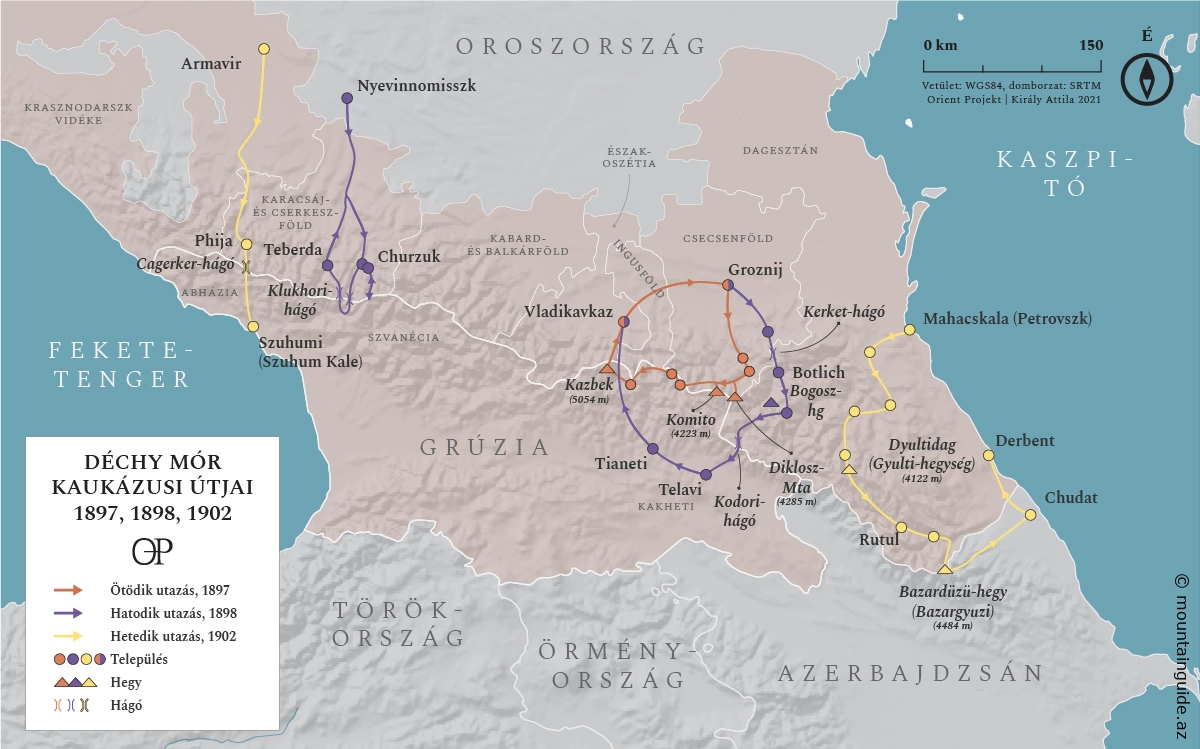
Fifth Caucasus Expedition – 1897
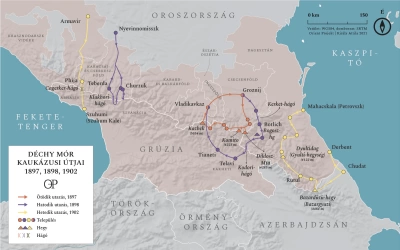
Explored the middle and eastern parts of the range with a Tyrolean guide, achieving summits: Kazbek (5033 m), Mahkos-Mta (3809 m), and Datah-Kor (4272 m), along with extensive glacier studies.
Sixth Caucasus Expedition – 1898
Two Hungarian scientists, geologist Papp Károly and botanist Hollós László, joined the expedition. After exploring the Western Caucasus and several mountain passes (Gondarai, Kluhor, Maruk), they conducted natural science research in the Kuban and Dagestan regions.
Seventh Caucasus Expedition – 1902
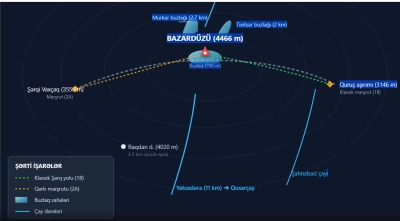
Accompanied by geologist Laczkó Dezső, Dechy Mor conquered Bazardüzü peak (4487 m) for glaciation research and also spent extended periods in Dagestan, the Laba region, and along the Black Sea coast.
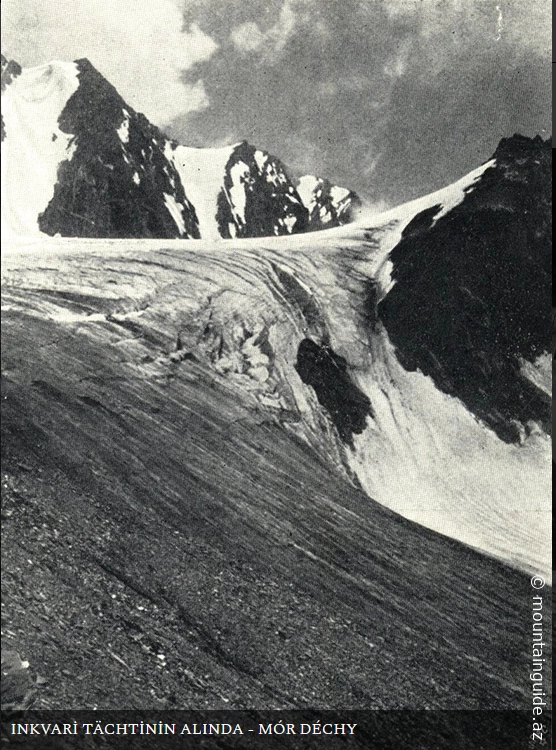
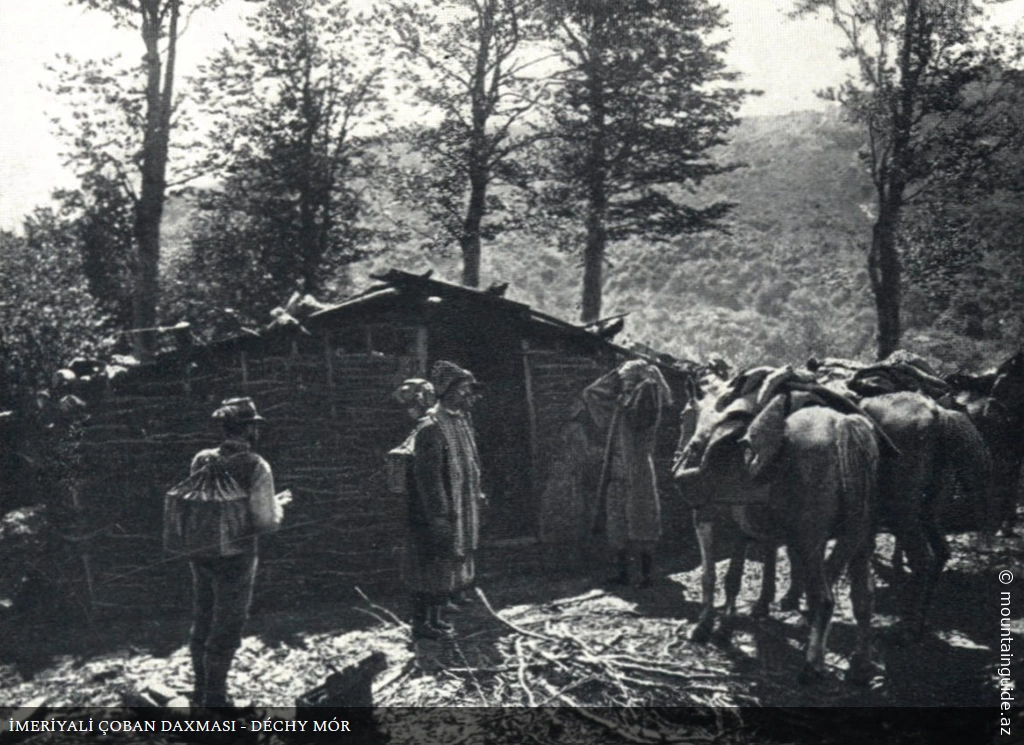
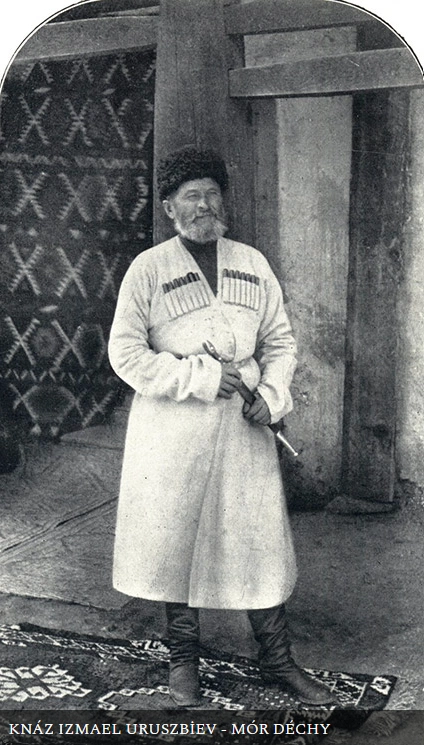
Dechy’s planned and systematic expeditions achieved significant international recognition, especially pioneering results in glacier research. Most early findings on snow line changes, glacier extent, and thickness in the Caucasus are attributed to him. His unique photography documented both high-mountain landscapes and local ethnography.
Mór Déchy – Legacy
Déchy’s handwritten sketches of the Adai-Choch glaciers, illustrated in his Alpine Journal article "The Glaciers of Adai-Choch" (Vol. XII), visualized the topographic and physical features of the glaciers and served as scientific visual documentation for mountaineering and glaciology research of the era.
Déchy Mór's Legacy at the University of Debrecen Geography Library
On November 4, 2005, 154 years after his birth, Déchy Mór was commemorated at the University of Debrecen’s Geography Institute library by faculty and students. A small exhibition in the library foyer displayed his life, achievements, and maps, providing visitors with detailed insight into his contributions.