The Ateshgah Fire Temple is one of the most fascinating monuments reflecting Azerbaijan’s ancient history and religious heritage. Located in the Surakhani settlement near Baku, this historic temple served as a place of worship for Zoroastrians, Hindus, and Sikhs for centuries. Ateshgah preserves the historical roots of Azerbaijan’s reputation as the “Land of Fire.” By visiting this unique site, you can discover the country’s rich culture and ancient beliefs.
Azerbaijan has historically been known for natural phenomena associated with fire and flames. The country's rich oil and gas reserves, particularly the natural gas emerging from deep underground and igniting on the Absheron Peninsula, have attracted people's attention since ancient times. These extraordinary natural phenomena gradually influenced the development of religious beliefs and fire-related rituals.
The Ateshgah Fire Temple, located in the Surakhani settlement near Baku, is one of the most fascinating examples of this historical tradition. Used as a place of worship by Zoroastrians, Hindus, and Sikhs during different periods, the site is now considered one of Azerbaijan's important historical and cultural monuments.
1. Where Is Ateshgah Located?
The Ateshgah Temple is located on the Absheron Peninsula, approximately 30 kilometres from Baku, in the Surakhani settlement. The name of the temple comes from the Persian word "Ateshgah", meaning "place of fire" or "house of fire".
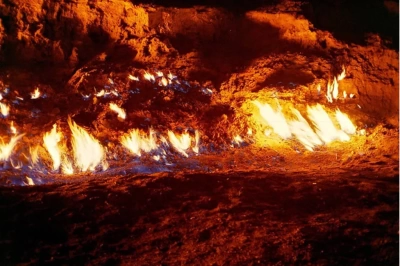
The choice of this location was no coincidence. Surakhani and other parts of the Absheron Peninsula are rich in underground natural gas reserves. In the past, natural gas escaping through the ground would ignite, creating natural flames in the area. People regarded these flames as extraordinary and sacred phenomena, and places of worship gradually developed around them.
2. The History and Origins of Ateshgah
The historical roots of Ateshgah are associated with Azerbaijan's ancient beliefs surrounding fire. The veneration of fire and its special role in religious ceremonies were important traditions in the region's ancient culture.
Zoroastrianism is one of the ancient religions known for its religious rituals associated with fire. However, the question of whether this religion originated specifically in Azerbaijan remains a subject of historical debate. The natural gas seeps of the Absheron Peninsula, meanwhile, created favourable conditions for the development of fire-related beliefs and worship traditions from ancient times.
The Ateshgah complex that we see today was built mainly during the 17th and 18th centuries. The earliest surviving structure is believed to date back to approximately 1713. Built at different times, the individual cells and place of worship were later brought together to form a single architectural complex.
3. The Architectural Structure of the Temple
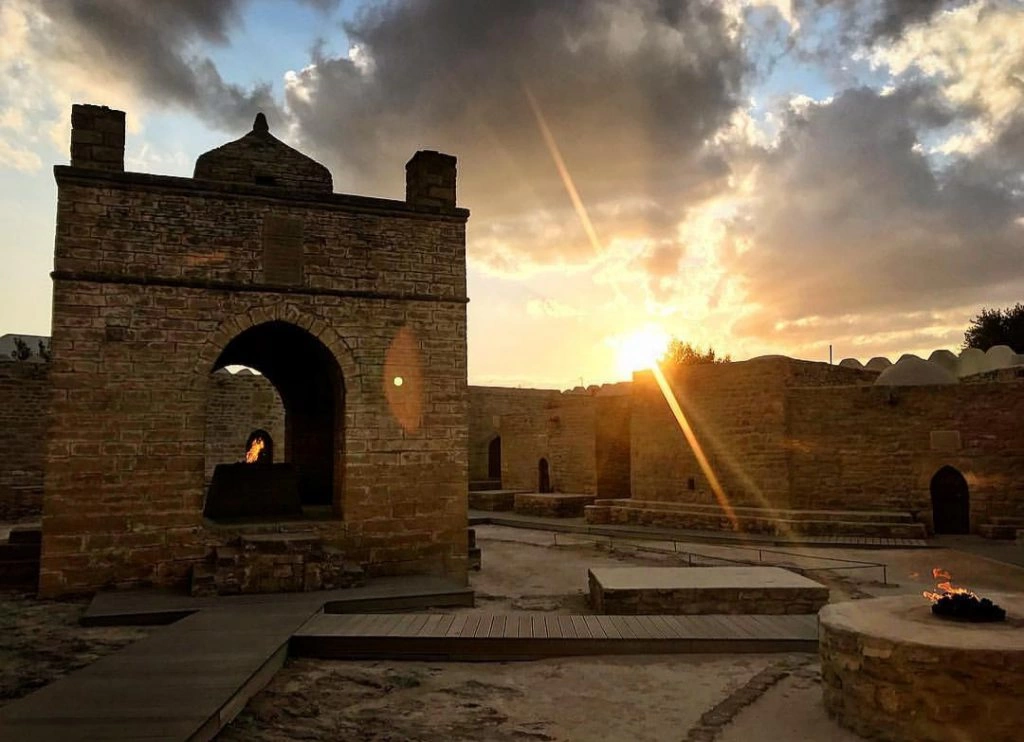
The architectural design of Ateshgah immediately captures the attention of visitors. At the centre of the complex stands the main sanctuary, where the sacred flame was once kept burning. Surrounding it are individual cells opening onto the inner courtyard.
The temple consists of 24 cells and a central sanctuary. Its simple stone architecture, courtyard layout, and the arrangement of the cells give the complex its distinctive appearance.
The cells were used at different times to accommodate pilgrims and worshippers visiting the temple. The central sanctuary was considered the main religious area of the complex.
4. Ateshgah and Different Religious Traditions
One of the most interesting features of Ateshgah is that it was used by people belonging to different religions. During certain periods, the temple served as a place of worship for Zoroastrians, Hindus, and Sikhs.
The area, where natural gas emerged from the ground and ignited, also attracted pilgrims from distant countries. They came here to worship, perform religious ceremonies, and stay in the temple's cells.
This unique feature makes Ateshgah one of the historical sites reflecting not only Azerbaijan's religious heritage but also the wider religious and cultural connections of the region.
5. Eternal Flames and Travellers' Accounts
In the past, continuous natural flames burned in the area surrounding Ateshgah as underground gas escaped to the surface and ignited. This remarkable sight attracted the attention of both local residents and foreign travellers for centuries.
In the 18th century, Jonas Hanway, an English traveller and writer, was among those who documented the fire temples around Baku in 1744. His accounts provide an insight into the existence of religious sites associated with fire in the region during that period.
In August 1842, Russian traveller I. Berezin also paid particular attention to the natural flames around Baku. He emphasised that these flames were among the region's most unusual and fascinating sights for travellers.
Over time, the natural flames around Ateshgah went out as the flow of natural gas decreased. Today, the flame seen within the complex differs from the natural conditions that once existed at the site.
6. Ateshgah Today
Today, the Ateshgah Fire Temple is an interesting destination for tourists wishing to discover Azerbaijan's historical and cultural heritage. The stone cells, central sanctuary, and courtyard offer visitors an insight into the religious life that once existed here.
Visiting Ateshgah provides an opportunity not only to explore an ancient architectural monument but also to gain a deeper understanding of the historical and cultural roots behind Azerbaijan's reputation as the "Land of Fire".
7. Is Ateshgah Worth Visiting?
If you are travelling to Baku, the Ateshgah Fire Temple is one of the historical sites you should not miss on the Absheron Peninsula. It brings together ancient beliefs, different religious traditions, and fascinating stories connected with Azerbaijan's natural resources.
You can also combine a visit to Ateshgah with other attractions on the Absheron Peninsula. Such a trip is a wonderful opportunity to discover Azerbaijan's history, culture, and natural heritage more closely.