Almost everyone who wants to cover long distances on natural trails eventually realizes how important trekking poles are. Mountain and forest paths seriously challenge both the body and balance. For this reason, trekking poles are among the most commonly used equipment to reduce the load and stabilize each step. When chosen correctly, they reduce pressure on the knees and make both ascents and descents safer.
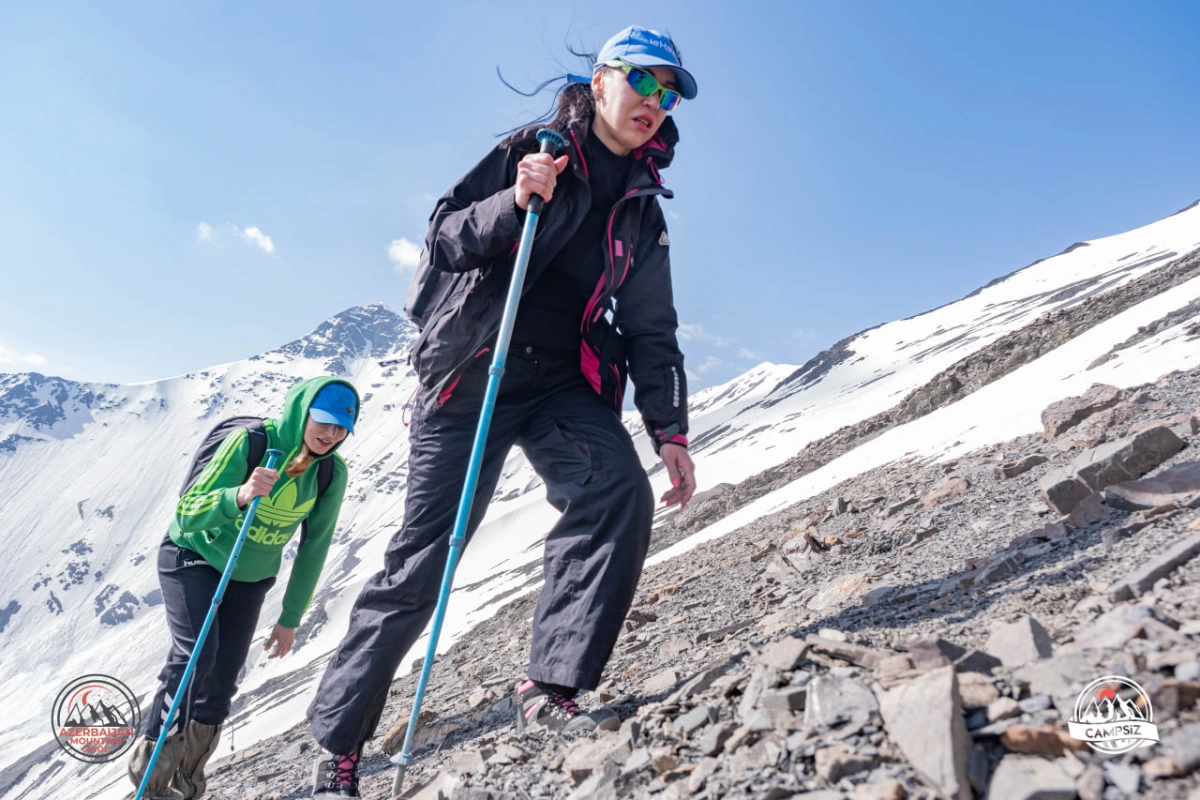
Trekking poles show their true value especially on routes with frequent ascents and descents. During uphill sections, part of the body weight is transferred to the arms, reducing the pressure on the legs. On descents, the poles help pull the body backward, preventing slipping and significantly reducing the load on the knees. This becomes even more important on rocky terrain, loose soil, or wet vegetation. Shifting ground, minor slips, or unexpected small gaps can easily disturb a hiker’s balance. In such moments, a trekking pole can literally become a lifesaving tool.
Transitions in nature can vary greatly: thick tree roots, rocky sections, flowing riverbanks, or soft muddy areas. In such mixed terrain, the stability provided by trekking poles is a major advantage. Since you gain a wider support base with your hands, each step becomes more secure. Poles also help distribute energy more evenly and significantly reduce fatigue over long distances.
One of the key aspects to consider when choosing trekking poles is the locking mechanism. Clip-lock systems (which can be adjusted with one hand) are faster and more practical, while twist-lock systems are more traditional but relatively slower to adjust. On long routes with frequently changing elevations, clip-lock poles offer a clear advantage. The tips of the poles should also match the intended use: carbide tips are ideal for hard ground and rocky surfaces, while rubber tips are better suited for asphalt or indoor areas.
Pole usage varies by season. In summer, the main challenges are body heat and fatigue, so lighter poles are preferred. In autumn and winter, when the risk of slipping increases, both the condition of the tips and the size of the baskets play a major role. On snowy hikes, without wide baskets, poles sink into the snow and fail to provide proper support. Paying attention to such small details can completely change your hiking experience.
Proper use of trekking poles is just as important as choosing the right ones. Many beginners see poles not as support but as extra weight to carry and therefore fail to benefit from them. In reality, when used with the correct rhythm, trekking poles make body movement more harmonious and walking more stable and rhythmic. This is a major advantage, especially on long routes, in terms of saving energy.
Below are a few additional points to consider during use:
-
Adjust the pole length frequently according to the terrain.
-
Fast-paced hikers should synchronize pole movement with their steps.
-
Using both poles on long routes helps distribute body weight more evenly.
-
On descents, placing the poles slightly in front of your body provides more stability.
-
Regularly check the tips and locking mechanisms and tighten any loose parts.
Care and maintenance of trekking poles:
-
After each hike, clean the poles from mud and dust, extend the telescopic sections, and dry them.
-
Check the locking mechanisms and clean them with a soft brush if necessary.
-
Regularly inspect the tips (carbide and rubber) and replace them if worn.
-
For long-term storage, keep the poles in a dry place, preferably extended and disassembled.
-
Check carbon poles for cracks or damage; do not use them if any issues are found.