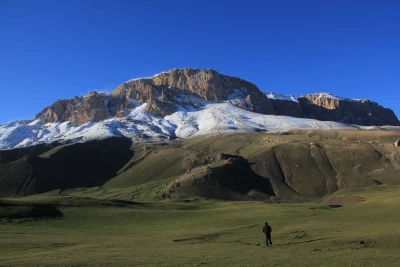
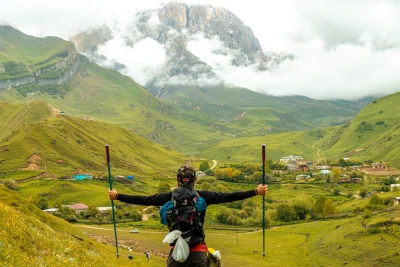
Bazardüzü Peak rises majestically in the Greater Caucasus range as a towering guardian, embodying natural grandeur and cultural significance. Standing at an impressive 4,466 meters above sea level, this magnificent peak stretches along the border between Azerbaijan and the Republic of Dagestan in Russia, captivating attention with its unshakable beauty and historical allure.

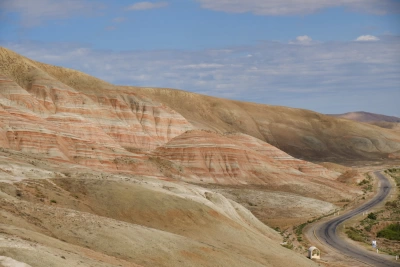
The name comes from the Bazardüzü plain at the foot of the mountain, which was a marketplace area located at its base. Situated within the valleys of the Şahnabad and Yatıq rivers, this plain long served as a hub for merchants, shaping the region's ethnotoponymy and embedding rich cultural heritage into the peak itself. Traders arrived at this market from near and far regions in the upper part of Şahyaylaq. Roads were built to transport goods from villages like Kurush in Dagestan, Qəbələ, Xınalıq, and Laza. Many of the paths, carved into the steep rocks, still exist today.
Bazardüzü Peak, composed of three distinct summits, rises as Azerbaijan’s highest point, a symbol of national pride and a natural wonder. Its vastness has fascinated researchers and adventurers for centuries, drawing them to its challenging slopes and panoramic vistas.
The history of Bazardüzü exploration began in 1847 when Russian topographer A. Alexandrov embarked on an advanced expedition to conquer its summit. His daring ascent highlighted the allure and difficulty of the Caucasus Mountains, marking the first documented conquest of the peak. Alexandrov’s lasting legacy is further etched into history through his detailed mapping efforts and extended stay on Bazardüzü in the 1850s, uncovering the secrets of this towering peak and laying the groundwork for future explorations.
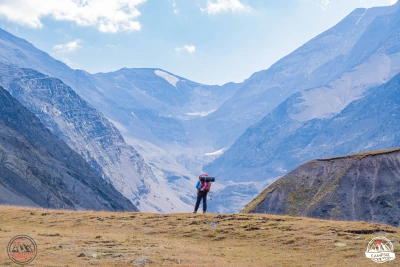
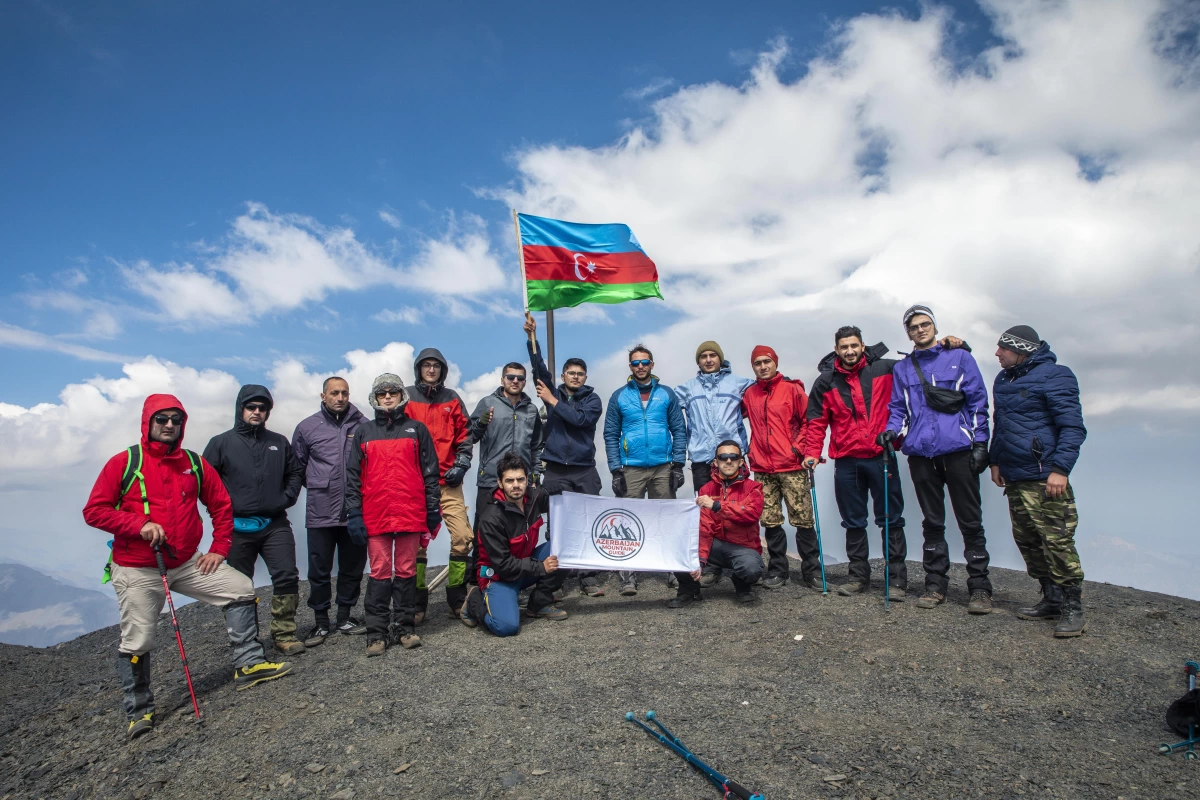
Despite its historical past, Bazardüzü continues to challenge adventurers and mountaineers on its massive slopes. In the summer months, it attracts climbers from many countries around the world.
One of the most notable pages of Bazardüzü’s modern history was written on August 29, 1993, under the leadership of Elman Mübariz oğlu Rəhimov. This expedition reignited interest in the mountain and reinforced its reputation as a prime destination for mountaineering enthusiasts. Moreover, the first winter ascent of Bazardüzü was completed in 2017 by İsgəndərov Babək Ağabala oğlu, marking an important milestone in the ongoing exploration of this remarkable peak. Nevertheless, amidst its breathtaking beauty and historic conquests, Bazardüzü faces the grave threat of climate change. Its centuries-old glaciers are steadily retreating, serving as a stark reminder of environmental degradation. While a small portion of the glaciers remains on the Dagestan side, climate disruption has begun reshaping the mountain’s fragile ecosystem. Once frozen expanses now host plant life at higher elevations, and habitats for local wildlife such as mountain goats, wolves, foxes, and even bears are undergoing profound transformation.
In essence, Bazardüzü Peak is not only a testament to human effort and exploration but also a reminder of the urgent need to protect the environment in a changing climate. As adventurers continue to be drawn to its challenging slopes and breathtaking vistas, preserving this natural wonder becomes crucial for future generations.